
Beauty Unlocked
Truth or TV: Is Grey’s Anatomy’s Parkinson’s ‘Cure’ Real?
May
Note: This article is for informational and editorial purposes only. It is not medical advice, diagnosis, or treatment guidance. Anyone with Parkinson’s disease symptoms or treatment questions should speak with a licensed neurologist or qualified healthcare professional.
The Big Question: Did Grey’s Anatomy Predict the Future?
Grey’s Anatomy has always had a special talent for making medicine look like a mixture of genius, heartbreak, caffeine, and very expensive lighting. One minute a character is giving a speech in a hallway, the next minute someone is performing a surgery so advanced it makes your high school biology textbook quietly close itself in shame.
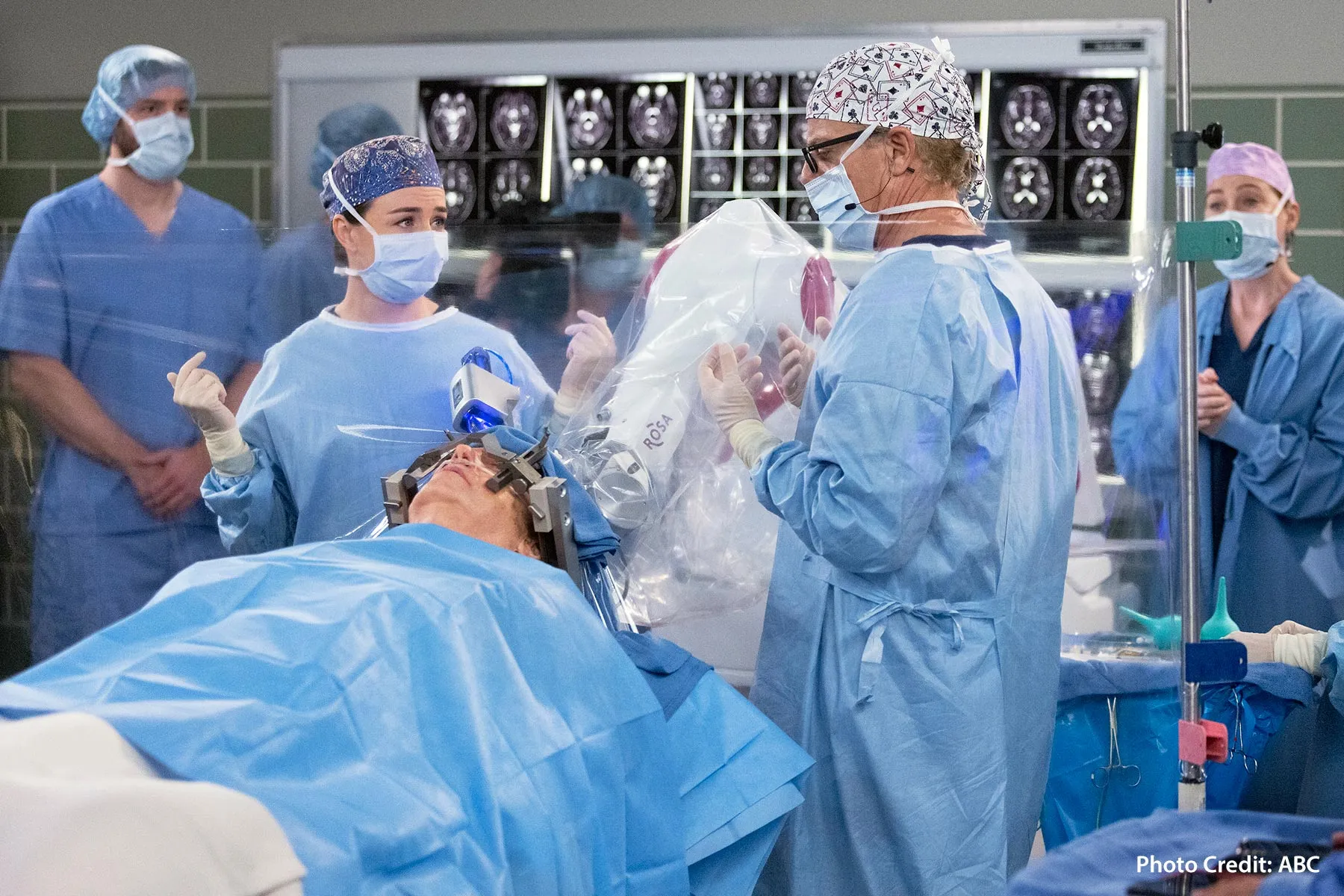
That is exactly why the show’s Parkinson’s disease storyline grabbed so much attention. In Season 18, Meredith Grey, Amelia Shepherd, Kai Bartley, and the team work on an experimental cell therapy for Dr. David Hamilton, a surgeon living with Parkinson’s disease. The drama presents the procedure as a potentially groundbreaking “cure” involving stem-cell-based treatment delivered to the brain. Dramatic? Absolutely. Scientifically random? Surprisingly, no.
So, is Grey’s Anatomy’s Parkinson’s “cure” real? The honest answer is: not yet. The idea behind it is real, the science is real, and clinical trials are very real. But there is currently no widely approved cure for Parkinson’s disease in the United States. TV Meredith can move faster than peer review. Real-world medicine, annoyingly but wisely, asks for safety data, long-term follow-up, regulatory review, manufacturing standards, and a mountain of paperwork tall enough to need its own elevator badge.
What Parkinson’s Disease Actually Is
Parkinson’s disease is a progressive neurological disorder that affects movement and many non-movement functions. It is often linked to the loss of dopamine-producing nerve cells in a brain region involved in movement control. Dopamine is a chemical messenger, and when the brain has less of it, movement can become slower, stiffer, shakier, and less coordinated.
The most familiar symptoms include tremor, muscle rigidity, slowed movement, changes in walking, balance problems, and reduced facial expression. But Parkinson’s is not just a “shaking disease.” Many people also experience sleep problems, constipation, mood changes, fatigue, speech changes, cognitive concerns, and other non-motor symptoms. In other words, Parkinson’s does not politely stay in one lane. It cuts across traffic like a villain in a medical drama finale.
Current treatments can improve symptoms and quality of life, but they do not erase the disease. Medications such as levodopa help replace or mimic dopamine activity. Deep brain stimulation, often called DBS, can help selected patients with motor symptoms when medications are no longer working smoothly. Physical therapy, occupational therapy, speech therapy, exercise, nutrition support, and careful neurological care also play important roles.
However, none of these options is considered a cure. They manage symptoms. They may help people move better, function better, or feel more in control of daily life, but they do not fully replace the lost brain cells or stop the underlying disease process for every patient.
What Did Grey’s Anatomy Show?
The show’s Parkinson’s plot centers on experimental cell therapy. In simple terms, the fictional procedure aims to place new dopamine-producing cells into the brain to replace cells lost to Parkinson’s disease. This is not the same as taking a vitamin, flipping a switch, or waving a surgical wand while violins play dramatically in the background. It is a complex idea rooted in regenerative medicine.
On the show, the team’s work looks like a daring medical breakthrough. The storyline condenses years of research, regulatory steps, patient screening, lab preparation, safety monitoring, and clinical trial design into television time. That is not a criticism. Nobody wants to watch Meredith spend 14 episodes arguing with a grant application portal. But it does mean viewers should separate the real scientific concept from the TV-speed version of the process.
The realistic part is the basic goal: replacing or restoring dopamine-producing neurons. Scientists have been exploring whether stem cells can be turned into specialized neurons and transplanted into the brain. The less realistic part is the suggestion that one surgery could quickly and cleanly equal a cure. In real Parkinson’s research, even promising treatments must prove that they are safe, durable, consistent, and meaningfully helpful across many patients.
Is Stem Cell Therapy for Parkinson’s Real?
Yes, stem cell therapy for Parkinson’s disease is a real area of research. Scientists are studying cell replacement therapies that may help restore dopamine signaling in the brain. The basic hope is to create or transplant cells that can function like the dopamine-producing neurons Parkinson’s damages.
Researchers have used several approaches, including embryonic stem cells, induced pluripotent stem cells, and other lab-grown cell sources. Induced pluripotent stem cells, often shortened to iPSCs, are especially interesting because they can be created from adult cells and reprogrammed into a more flexible state. From there, researchers try to guide them into becoming dopamine-producing neurons.
This is not science fiction. It is serious science. Early clinical trials have reported encouraging safety signals and possible motor improvements in some participants. Some companies and research groups are now moving more advanced cell therapy programs into later-stage trials. That is a big deal. In medical research terms, it is the difference between “cool idea in the lab” and “we are carefully testing this in humans under strict rules.”
Still, “promising” is not the same as “proven cure.” A therapy can look hopeful in early studies and still face major questions. Do the transplanted cells survive long-term? Do they connect properly in the brain? Do they improve symptoms enough to matter in daily life? Can they be manufactured consistently? What are the risks of immune reaction, abnormal growth, infection, or surgical complications? Can the benefit last for years?
Those are not tiny details. They are the entire plot.
Why a Parkinson’s “Cure” Is Harder Than It Sounds
The word “cure” sounds simple. Disease enters, cure arrives, credits roll. Parkinson’s disease is not that tidy. It affects complex brain circuits and includes both motor and non-motor symptoms. Replacing dopamine-producing neurons may help movement symptoms, but Parkinson’s can also involve sleep, mood, digestion, thinking, balance, and autonomic functions. A cell therapy that improves movement may not fix everything.
That distinction matters. A person might experience better motor control but still deal with fatigue, constipation, depression, speech changes, or cognitive symptoms. So even if cell replacement therapy becomes a major treatment breakthrough, calling it a complete cure may be too generous, at least based on what researchers currently know.
Another challenge is timing. Parkinson’s is often diagnosed after many dopamine-producing cells have already been lost. Researchers must figure out which patients are most likely to benefit, when treatment should happen, and how to measure success. A treatment that helps one group may not work the same way for everyone.
Then there is safety. The brain is not a casual neighborhood for experimental procedures. Any therapy involving implanted cells and surgery must be tested with extreme care. Doctors need to know not only whether symptoms improve, but also whether the treatment creates new problems over time.
What Treatments Are Available Right Now?
Today, Parkinson’s treatment is focused on symptom management and quality of life. Levodopa remains one of the most effective medications for motor symptoms. Other medicines may be used depending on the patient’s age, symptoms, side effects, and stage of disease. Doctors often adjust treatment over time because Parkinson’s changes, and the body’s response to medication can change too.
Deep brain stimulation is another established option for certain people. DBS uses implanted electrodes and a device that sends electrical signals to targeted areas of the brain. It can reduce tremor, stiffness, slowness, and medication-related motor fluctuations in selected patients. However, DBS is not a cure. It is more like a highly sophisticated volume knob for abnormal brain signals, not a delete button for Parkinson’s disease.
Exercise is also important. Regular movement, balance training, strength work, flexibility exercises, and physical therapy may support mobility and daily function. This does not mean exercise cures Parkinson’s, but it can be a powerful part of care. Think of it as the supporting actor who deserves more screen time.
Why the Grey’s Anatomy Storyline Still Matters
Even if the show’s “cure” is not currently available in real hospitals, the storyline has value. Popular TV can make complicated medical research easier to talk about. A viewer who had never heard of cell replacement therapy might watch the episode and then search for real Parkinson’s research. That curiosity matters.
Medical dramas can also bring emotional truth to scientific topics. Parkinson’s disease is not just a diagnosis on a chart. It affects identity, independence, work, relationships, confidence, and daily routines. The idea of a cure is powerful because it represents hope. The danger is when hope becomes hype.
That is the tightrope. Grey’s Anatomy is allowed to be dramatic. It is television, not a neurology board exam. But audiences deserve clarity: real researchers are making meaningful progress, yet no one should assume that a TV procedure is available, approved, or guaranteed.
The Difference Between Hope and Hype
Hope says, “Researchers are testing new cell therapies, and the field is moving forward.” Hype says, “A cure is already here, just pay this clinic a suspicious amount of money.” Hope is careful. Hype wears a lab coat in a stock photo and asks for your credit card.
This difference is especially important because some clinics advertise unapproved stem cell treatments for serious diseases, including Parkinson’s. Patients and families searching for answers can be vulnerable to bold claims. Real clinical trials have oversight, eligibility criteria, informed consent, monitoring, and published data. Unproven commercial treatments may lack solid evidence and can carry serious risks.
A good rule of thumb: if someone promises a guaranteed Parkinson’s cure, especially outside a legitimate clinical trial or recognized medical center, your eyebrows should leave your forehead and file a complaint.
So, Is the Parkinson’s Cure on Grey’s Anatomy Real?
The best answer is: the concept is real, but the cure is not. Stem cell and cell replacement therapies for Parkinson’s disease are among the most exciting areas in neurological research. They aim to address one of the core biological problems in Parkinson’s: the loss of dopamine-producing neurons. That makes the Grey’s Anatomy storyline more scientifically grounded than a lot of TV medicine.
But the show compresses the timeline and amplifies the certainty. In real life, cell therapy is still being studied. Some programs have advanced into clinical trials, and early results have created optimism. But scientists still need more data on long-term safety, effectiveness, patient selection, dosing, immune response, and real-world benefit.
Calling it a “cure” today would be premature. Calling it one of the most watched research frontiers in Parkinson’s treatment? That is fair.
Experience Section: Watching the Storyline as a Curious Viewer
Watching the Parkinson’s storyline in Grey’s Anatomy can feel like riding two emotional elevators at once. One elevator is hope: the idea that scientists might one day replace damaged cells and give people with Parkinson’s better movement, more independence, and more time feeling like themselves. The other elevator is skepticism: the quiet voice saying, “Wait, did they just solve a major neurodegenerative disease between dramatic hallway conversations?”
That mixed reaction is normal. The episode works because it touches something deeply human. People do not watch medical dramas only for surgical accuracy. They watch because illness is scary, doctors are fascinating, and hope looks great under operating room lights. When a character faces Parkinson’s disease, viewers may think about parents, grandparents, teachers, neighbors, or public figures who have lived with tremor, stiffness, or movement changes. The story becomes personal quickly.
For many viewers, the episode may also create a “research rabbit hole” moment. You finish watching and suddenly you are reading about dopamine neurons, stem cells, clinical trials, and deep brain stimulation at midnight like you have accidentally enrolled in medical school. That is one of the best things entertainment can do: turn passive watching into active learning.
At the same time, the experience can be frustrating for people who know Parkinson’s is not easily cured. TV breakthroughs are emotionally satisfying because they offer resolution. Real chronic illness rarely offers such clean endings. Patients may spend years adjusting medication schedules, dealing with side effects, managing fatigue, going to therapy appointments, and adapting to changes in movement or mood. Their courage happens in ordinary rooms, not just cinematic operating suites.
The most useful way to experience the episode is to treat it as a conversation starter, not a medical announcement. It is fair to be excited by the science. It is also fair to ask hard questions. Is this approved? Has it been tested in large trials? Who qualifies? What are the risks? Does it treat motor symptoms only, or does it help non-motor symptoms too? How long does the benefit last?
That kind of curiosity is healthier than either blind belief or total dismissal. The show did not invent the idea from nowhere. Parkinson’s cell therapy research is real and advancing. But real progress moves carefully because patients deserve more than a dramatic promise. They deserve treatments that are proven, monitored, ethical, and safe.
So the viewing experience lands in an interesting place: Grey’s Anatomy gives us the fantasy version of tomorrow’s medicine, while real scientists work through the slower, harder, more responsible version. The TV version gets the music swell. The real version gets the clinical trial protocol. Honestly, both matter. One inspires imagination; the other protects lives.
Final Verdict
Grey’s Anatomy’s Parkinson’s “cure” is not real in the sense that patients can receive it as a proven, standard, FDA-approved cure today. But it is inspired by genuine science. Cell replacement therapy is one of the most promising research areas in Parkinson’s disease, and recent clinical trials suggest the field is moving forward.
The smartest takeaway is not “TV lied” or “the cure is here.” The smartest takeaway is: the future of Parkinson’s treatment may look more regenerative, more personalized, and more ambitious than today’s care. But until rigorous research proves safety and effectiveness, the word “cure” should stay in quotation markspreferably supervised by a neurologist with excellent fact-checking skills.

