
Skincare
Russian Blogger Makes Parodies Out Of Celebrity Photos, And More Than 20,000 Followers On Instagram Approve
Aug
Celebrity photography is built on fantasy. There are designer gowns, dramatic lighting, expensive locations, professional makeup teams, and poses that appear to require both a chiropractor and a signed waiver. Then there is Russian blogger Yuriy Isterika, who looks at all that polished glamour and asks a much more practical question: “Could this outfit be recreated with a mop, a frying pan, and something suspicious from the vegetable drawer?”
The answer, apparently, is yes.
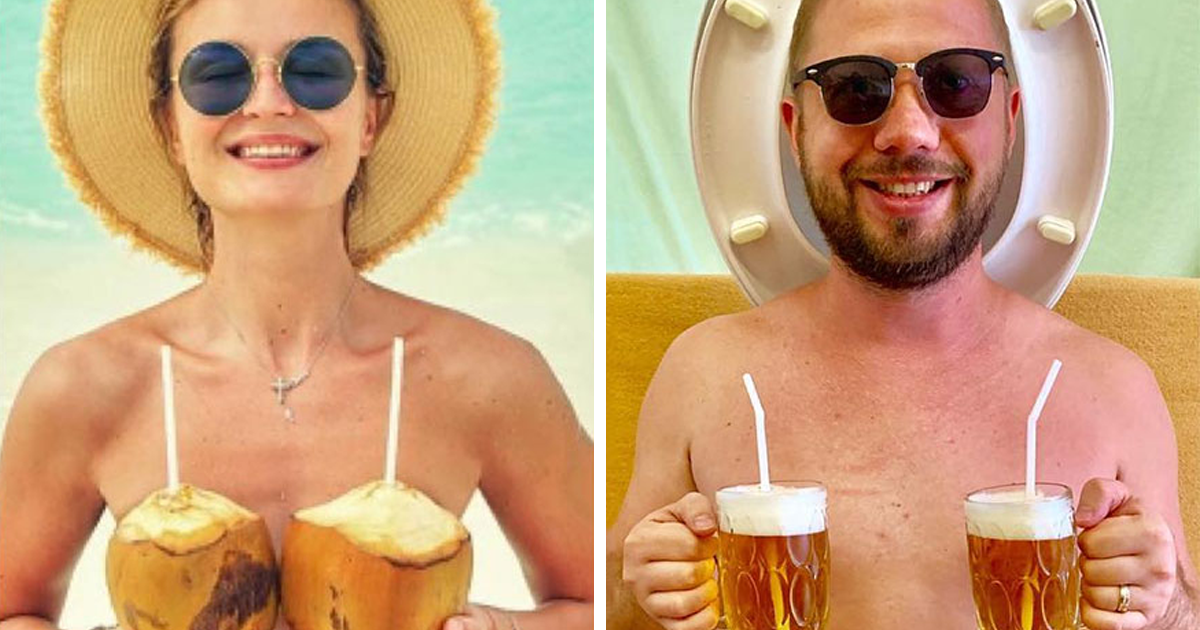
Isterika became an online favorite by producing low-budget celebrity photo parodies with ordinary household objects. Instead of ordering custom couture, he searches his surroundings for curtains, plastic bags, cleaning supplies, kitchen utensils, artificial flowers, food, and whatever else can be persuaded to become fashion for five minutes. The finished images place the original celebrity photograph beside his homemade recreation, allowing viewers to appreciate both the resemblance and the glorious absurdity.
When his work attracted widespread attention in 2019, his Instagram account had already gained more than 20,000 followers. Later coverage reported that his audience had grown beyond 64,000. The numbers are impressive, but the real achievement is simpler: he discovered how to turn the intimidating perfection of celebrity culture into a joke everyone could understand.
Who Is Yuriy Isterika?
Yuriy Isterika, whose name is sometimes written as Yuri Isterika, is a Russian comedian and blogger associated with the Instagram account @mataharik. He has described himself as a Moscow resident who worked as a holiday organizer, a profession that makes sense once you see his talent for costumes, staging, visual gags, and theatrical expressions.
His parody project reportedly began after he encountered a photograph of a Russian celebrity and decided to imitate it with friends. The first recreation was posted without grand expectations. It performed surprisingly well, encouraging him to turn a spontaneous joke into a recurring creative series.
That origin story is important because his work does not feel like a campaign invented in a marketing conference room. There was no twelve-page brand strategy titled “Disrupting Celebrity Fashion Through Vegetable-Based Storytelling.” It began with friends entertaining themselves, using materials that were already available and creating something funny enough to share.
How His Celebrity Photo Parodies Work
The formula appears simple: choose a recognizable photograph, recreate the outfit and pose, photograph the result, and publish both images together. However, the best parody photos require considerably more thought than merely putting a towel on your head and hoping people recognize Ariana Grande.
He Identifies the Photograph’s Visual Signature
Every memorable celebrity image contains one or two elements that make it instantly recognizable. It might be an unusually shaped dress, an enormous hairstyle, a dramatic headpiece, an exaggerated facial expression, or a pose that says, “I have been standing like this for 45 minutes, but fashion demands sacrifice.”
Isterika focuses on those essential visual details. He does not need to reproduce every bead, seam, or accessory. He only needs to capture the photograph’s silhouette, color arrangement, posture, and attitude. Once those features are recognizable, the viewer’s imagination completes the comparison.
He Replaces Luxury With Household Objects
This substitution is the heart of the joke. A sculptural gown may become a collection of plates. A glamorous hat may be rebuilt with cables. A textured hairstyle may involve food. A designer accessory may be replaced by a shopping bag that normally carries onions.
The objects are inexpensive and familiar, which creates an immediate contrast with the original celebrity image. One side presents exclusivity, wealth, and professional styling. The other presents the contents of a kitchen cabinet after someone has made several questionable decisions.
He Commits to the Facial Expression
The costumes attract attention, but Isterika’s expressions often deliver the final laugh. He does not stand passively beside his props. He copies the celebrity’s mood, gaze, posture, and emotional intensity, sometimes exaggerating them just enough to expose how theatrical the original pose really is.
A celebrity may look mysterious, powerful, seductive, or dramatically uninterested in ordinary human concerns. Isterika mirrors the same expression while wearing cookware, sausages, cardboard, or cleaning equipment. The serious face makes the ridiculous outfit even funnier.
From Kim Kardashian to Billie Eilish
Although many of Isterika’s earliest subjects were Russian entertainers, his collection expanded to include internationally recognized musicians, actors, models, political figures, and fashion personalities.
His recreated subjects have included Kim Kardashian, Ariana Grande, Billie Eilish, Beyoncé, Rihanna, Taylor Swift, Madonna, Lady Gaga, Cardi B, Gigi Hadid, Penélope Cruz, Angelina Jolie, Elton John, Rita Ora, and others. He has also parodied images connected with Queen Elizabeth II, Angela Merkel, Donald Trump, and Melania Trump.
Each celebrity offers a different kind of material. Lady Gaga’s adventurous fashion invites outrageous prop choices. Billie Eilish’s oversized silhouettes allow ordinary fabrics to become exaggerated costumes. Elton John provides colorful glasses, dramatic accessories, and an unmistakable stage presence. The Kardashian universe supplies poses and styling that are already halfway to visual theater.
One Christmas-themed recreation transformed the formal styling of Donald and Melania Trump with popcorn and cleaning materials. Another parody used plates and a brightly colored dustpan to imitate a high-fashion ensemble. In yet another image, kitchen objects and leaves helped reproduce a model’s editorial look.
The joke is not simply that the replacement materials are cheap. It is that many luxurious fashion photographs rely on shapes and textures that can be surprisingly well imitated by objects from ordinary life. A couture masterpiece and a shower curtain may have more in common than either industry would like to admit.
Why These Celebrity Parodies Are So Funny
They Deflate the Pressure of Online Perfection
Instagram has long been associated with carefully selected images, flattering angles, polished lifestyles, luxury vacations, and bodies apparently untouched by gravity. Research on social media has repeatedly examined how exposure to idealized images can encourage upward comparison, particularly when viewers measure their everyday lives against celebrities and influencers.
Isterika interrupts that comparison. His photos remind viewers that an impressive image is a constructed object. Lighting, styling, makeup, editing, location, and performance all contribute to the final illusion. By rebuilding that illusion with household junk, he reveals the machinery without delivering a lecture.
His work essentially says, “Yes, the celebrity looks magnificent, but please notice that a bag of vegetables can achieve a surprisingly similar silhouette.”
They Use the Power of Recognition
Visual parody works best when viewers recognize the source immediately. The brain sees the celebrity image, understands its status and seriousness, and then encounters an imitation made from absurd materials. The distance between expectation and reality creates the laugh.
This is why side-by-side presentation is so effective. Viewers do not need a lengthy caption explaining the joke. The comparison delivers the setup and punchline almost simultaneously, making the content easy to understand across languages and cultures.
They Feel Playful Rather Than Cruel
Some celebrity humor depends on insults, personal attacks, or humiliating observations. Isterika generally follows a gentler path. His primary targets are the photographs, costumes, poses, and conventions of glamorous visual culturenot the worth of the people appearing in them.
The distinction matters. His images often feel more like affectionate cosplay than hostile mockery. Several celebrities have reportedly reacted positively, leaving approving comments, liking the recreations, or sharing them with their own audiences.
When the subject can laugh too, the parody becomes a shared joke instead of a digital food fight.
The Surprisingly Difficult Work Behind a Cheap Costume
Low-budget does not mean low-effort. Isterika has explained that creating the images can involve long periods of experimentation. First, he must determine which household materials can reproduce the original outfit. Then the pieces have to be assembled, positioned, and kept in place long enough to take the photograph.
Posing can also take hours. A recreation may require holding an uncomfortable position while another person adjusts the camera, props, background, and lighting. Isterika has joked about losing feeling in his hands or feet after demanding shoots.
One reported incident illustrates the hazards of extreme improvisation. During a recreation involving a large leaf in India, he experienced a physical reaction after coming into contact with a poisonous plant. It was a memorable reminder that “found materials” should ideally be identified before they are wrapped around anyone’s body.
The results may look spontaneous, but the strongest images depend on preparation, persistence, collaboration, and careful visual observation. Comedy often appears effortless only because the audience does not see the seventeen failed attempts, collapsing props, uncomfortable poses, and friend behind the camera asking, “Are you sure the frying pan goes on your head?”
What the Follower Count Really Represents
The original “more than 20,000 followers” headline captured a specific moment in Isterika’s rise. By 2021, published profiles described his Instagram audience as exceeding 64,000 followers. That growth demonstrates the long-term appeal of a concept that is easy to recognize but flexible enough to repeat.
Follower numbers alone, however, do not explain why people respond. The audience is approving several things at once:
- The creativity required to see fashion materials in ordinary objects.
- The accuracy of the poses and facial expressions.
- The relief of seeing celebrity glamour made less intimidating.
- The accessibility of humor that does not require translation.
- The satisfying contrast between enormous fashion budgets and homemade solutions.
The images also invite participation. Viewers can suggest celebrities, debate which recreation is most accurate, tag friends, and imagine how they would create their own versions. Instead of presenting creativity as something reserved for wealthy professionals, the series makes visual comedy feel available to anyone with a phone, a recognizable idea, and a kitchen full of potential accessories.
Part of a Larger Celebrity Parody Tradition
Isterika is not the only creator to find comedy in the gap between celebrity imagery and normal life. Australian comedian Celeste Barber became internationally famous for recreating polished celebrity posts with deliberately ordinary settings, realistic physical reactions, and less cooperative furniture.
Other online creators have inserted fictional relatives into celebrity photographs, reconstructed red-carpet outfits with food, or transformed pets and household objects into glamorous models. These projects differ in style, but they all use parody to question the seriousness of curated online culture.
Celebrity photographs are particularly effective source material because they are designed to command attention. They often contain dramatic styling, controlled poses, and visual excess. Parody does not have to invent that spectacle; it simply redirects it.
In legal terms, parody and fair use can be complicated, especially when copyrighted photographs are reproduced commercially. U.S. fair-use analysis considers several factors, including purpose, transformation, the nature of the original work, the amount used, and the potential effect on the market. Creators should therefore avoid assuming that labeling something “parody” automatically settles every copyright question.
Likewise, anyone turning a humorous account into an influencer business should clearly disclose material relationships with brands. The joke may involve a vacuum cleaner worn as a hat, but advertising rules still apply if the vacuum cleaner company paid for the appearance.
What Content Creators Can Learn From Isterika
A Strong Concept Is More Valuable Than Expensive Equipment
The appeal of Isterika’s work comes from the idea, not the production budget. The images succeed because viewers understand the comparison immediately. A clever concept photographed on a phone can outperform expensive content with no clear point.
Constraints Can Improve Creativity
Limited materials force unexpected solutions. A professional stylist can order the correct fabric. A parody creator must look at a broom, three oranges, a roll of foil, and a laundry basket until they become a red-carpet ensemble.
That restriction creates originality. Instead of asking, “How can this be copied perfectly?” the creator asks, “What completely unrelated object has the same shape?” The second question is where the comedy lives.
Consistency Builds Recognition
A single funny recreation may go viral, but a recognizable series gives viewers a reason to follow. Isterika repeats the same basic promise while changing the celebrity, costume, props, and visual joke. Audiences know what type of experience they will receive without knowing the exact punchline.
Humor Travels Well
Complex jokes can depend on language, local references, or cultural knowledge. Visual contrast is more universal. A viewer does not need to speak Russian to understand that an expensive headpiece has been replaced with electrical cables.
The Experience of Creating a Celebrity Photo Parody
Creating a convincing celebrity parody begins with choosing the right source image. The most famous photograph is not always the best choice. A successful recreation needs a clear shape, strong expression, unusual clothing, or distinctive prop. A standard headshot may be recognizable, but it offers less room for transformation. A celebrity wearing an enormous feathered coat while standing beside a gold statue is practically submitting an application.
The next experience is one of visual deconstruction. Instead of seeing a complete gown, the creator studies separate components: a circular shoulder, a metallic surface, a red stripe, a tall hairstyle, and a narrow accessory. These details are then matched with available objects. A lampshade may supply the shoulder shape. Aluminum foil can provide shine. A towel becomes the stripe. A bundle of charging cables produces the hair. The accessory may turn out to be a kitchen brush that has finally discovered its true calling.
Assembly is usually less elegant than the final image suggests. Tape refuses to cooperate. Fabric slides. Food changes shape. A cardboard structure looks perfect until it is placed on a human body and immediately develops architectural problems. The creator adjusts, photographs, reviews, and tries again.
This trial-and-error process is valuable because it trains practical creativity. The goal is not technical perfection. It is recognizable imperfectionthe image must be accurate enough to identify the original but absurd enough to remain funny.
Posing introduces another challenge. Celebrity photographs often feature positions that look natural only because a professional model held them for a fraction of a second. Recreating the angle may require twisted shoulders, carefully positioned hands, raised eyebrows, and a facial expression suggesting complete emotional control while a colander slowly slides down the forehead.
A second person can make the experience far easier. The photographer can compare the pose with the reference image, adjust the frame, correct the angle, and warn the performer when an unstable tower of vegetables is leaning toward disaster. Collaboration also makes the process more playful, which is visible in the final result.
Editing should remain restrained. Basic cropping, brightness correction, and side-by-side placement may strengthen the comparison, but excessive digital alteration can weaken the handmade charm. Part of the pleasure comes from seeing that the recreation was physically attempted rather than manufactured entirely through software.
Publishing the image creates a different experience. Some viewers respond to the celebrity reference, others to the household materials, and others to the expression. Comments may suggest new subjects or notice tiny details the creator did not expect anyone to catch. That audience feedback becomes an informal creative workshop.
The most important lesson is that parody requires both admiration and distance. The creator must study the original closely enough to reproduce its visual language while remaining detached enough to recognize its absurd possibilities. Great celebrity photo parodies do not merely say, “This looks silly.” They say, “This image is so visually memorable that it can survive being rebuilt with a mop.”
Why the Parodies Still Matter
Social media platforms have changed dramatically since Isterika first passed the 20,000-follower mark. Short-form video has become more important, recommendation systems have evolved, and creators now compete with professional studios, brands, artificial intelligence, and an endless river of content.
Yet his underlying idea remains strong because it is based on human creativity rather than a particular platform feature. People still recognize celebrities. Fashion photography is still dramatic. Household objects are still available. And audiences still enjoy watching inflated glamour meet an aggressively ordinary frying pan.
The series also offers a healthier way to interact with polished celebrity imagery. Instead of responding only with envy or criticism, viewers are invited to play. The photograph becomes raw material for imagination. Luxury is transformed into accessibility, perfection into participation, and status into comedy.
Conclusion
Yuriy Isterika’s celebrity photo parodies prove that memorable entertainment does not require a designer wardrobe or a Hollywood budget. It may require patience, an expressive face, several helpful friends, and permission to remove the curtains temporarily.
By rebuilding glamorous celebrity photographs with household objects, Isterika creates images that are recognizable, affectionate, and wonderfully ridiculous. His growing Instagram audience did not simply approve of cheap costumes. Followers responded to the intelligence behind them: the careful observation, visual problem-solving, commitment to the pose, and ability to expose online perfection without becoming bitter or cruel.
Celebrity culture may continue producing impossible gowns, mysterious poses, and accessories that resemble furniture. As long as it does, parody creators will have material. Somewhere, a star is preparing for a dramatic photo shoot. Somewhere else, Yuriy Isterika may be looking at a laundry basket and quietly thinking, “Perfect.”
Editorial note: The headline’s 20,000-follower figure reflects reporting published in 2019. Later coverage in 2021 reported more than 64,000 followers. This original article synthesizes historical profiles, interviews, platform information, social-media research, copyright guidance, and reporting on visual parody without reproducing source text.

