
Hair Care
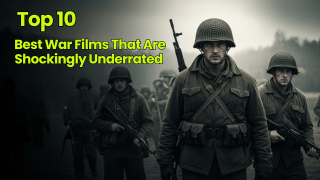
Top 10 Best War Films That Are Shockingly Underrated – Dumb Little Man
Jun
Some war movies arrive with marching bands, Oscar campaigns, and the cultural footprint of a tank rolling through wet cement. Others sneak in quietly, do something brilliant, and then get left behind while everyone re-watches Saving Private Ryan, Platoon, or Apocalypse Now for the 47th time. Nothing against the classics, of course. They earned their medals. But the war film genre has a whole hidden regiment of great movies waiting in the cinematic foxhole, waving politely and wondering why nobody invited them to movie night.
This list is for those films: the overlooked, the under-discussed, the too-weird-for-mainstream-glory, the “how did I not hear about this?” war dramas that deserve a much bigger audience. These underrated war films do not simply show battles; they explore survival, fear, loyalty, moral confusion, class conflict, cultural misunderstanding, and the small absurdities that appear when humans are pushed into impossible situations.
Below are ten shockingly underrated war films that deserve a place beside the heavy hitters. Some are lean and brutal, some are poetic, some are darkly funny in the way only soldiers under pressure can be funny, and some are so tense you may find yourself gripping the popcorn like it personally betrayed you.
1. A Midnight Clear (1992)
Why it deserves more attention
Keith Gordon’s A Midnight Clear is one of the most quietly devastating World War II films ever made. Set in the Ardennes near the end of the war, it follows a small American intelligence unit that encounters a group of German soldiers who may not want to fight anymore. That setup sounds simple, but the movie turns it into a haunting meditation on youth, fear, trust, and the tragic difficulty of choosing peace when everyone around you is trained for suspicion.
The film’s cast includes Ethan Hawke, Gary Sinise, Peter Berg, Kevin Dillon, and Arye Gross, all playing young men who are far less heroic than they are exhausted, confused, and desperate to survive. Instead of giant battle sequences, the film focuses on silence, snow, nervous glances, and the strange emotional weather between enemies who realize they have more in common than their uniforms suggest.
Why is it underrated? Probably because it is too gentle to be sold as an action movie and too sad to be sold as a holiday movie, even though its title sounds like it belongs on a Christmas playlist. Its power is in restraint. It does not shout. It waits patiently, then hits you right in the feelings with the accuracy of a sniper who studied poetry.
2. The Train (1964)
War, art, and one extremely stressed railway system
John Frankenheimer’s The Train is a World War II thriller about the French Resistance trying to stop Nazi officers from transporting stolen art out of France. That premise alone is fascinating: is a painting worth risking lives for when the war is almost over? The film refuses to offer an easy answer, which is one reason it still feels sharp today.
Burt Lancaster gives a physically intense performance as Labiche, a railway inspector and resistance member who is pulled into a mission he does not romanticize. Paul Scofield is icy and obsessive as Colonel von Waldheim, a Nazi officer who treats art as a prize of civilization while participating in civilization’s collapse. The irony is not subtle, but it is effective.
What makes The Train special is its practical filmmaking. Real trains, real locations, heavy machinery, and precise editing give the movie a muscular realism modern viewers may find refreshing. There is no digital polish, no superhero physics, and no need for anyone to say, “Enhance the satellite image.” It is just metal, smoke, strategy, and tension.
It remains underrated because it sits in an odd space between action thriller, resistance drama, and philosophical war film. But that is exactly why it works. It asks whether culture can survive barbarism, then answers with one of cinema’s most gripping games of railway chess.
3. The Steel Helmet (1951)
The Korean War film that arrived before Hollywood knew what to do with Korea
Samuel Fuller’s The Steel Helmet was one of the first American films about the Korean War, and it still feels startlingly raw. Made on a low budget, it follows a hard-bitten sergeant and a mixed group of soldiers trying to survive behind enemy lines. The production may be modest, but the emotional force is not.
Fuller was a combat veteran, and his understanding of soldiers gives the film an authenticity that money cannot buy. The dialogue is blunt, the characters are tense, and the story includes moral and racial conflicts that were unusually direct for early 1950s Hollywood. This is not a polished recruitment poster. It is a dirty boot with a camera attached.
What makes The Steel Helmet underrated is how much it accomplishes with so little. The film does not need massive sets to communicate danger. It uses faces, fatigue, suspicion, and the feeling that every moment of rest may be temporary. Fuller’s style is punchy, almost tabloid-like, but beneath the toughness is a genuine concern for the human cost of war.
For viewers who think older war films are automatically stiff or sanitized, this one is a wake-up call. It has the energy of a filmmaker kicking down the studio door and yelling, “Actually, war is messy, and I brought receipts.”
4. Attack! (1956)
A war movie with no patience for shiny hero worship
Robert Aldrich’s Attack! is a bitter, tense World War II drama about a front-line unit trapped under poor leadership. Jack Palance plays Lieutenant Costa, a tough officer whose fury grows as he watches men suffer because of Captain Cooney, played by Eddie Albert, a commander dangerously unfit for the job. Lee Marvin adds another layer of pressure as a calculating superior officer.
Many 1950s war films leaned toward clear heroism and patriotic uplift. Attack! chooses a nastier route. It is about cowardice, ambition, class privilege, and institutional failure. In other words, it brings the office politics of a terrible workplace into a combat zone, except the coffee machine has been replaced by artillery.
The film was controversial because it presented military leadership in a deeply unflattering light. That edge is precisely what makes it feel modern. Aldrich strips away decorative nobility and asks what happens when the person in charge is not brave, wise, or even basically competent.
It is underrated because it is uncomfortable. Viewers looking for clean inspiration may bounce off its anger. But anyone interested in war movies that challenge authority rather than salute automatically will find Attack! brutally compelling.
5. The Hill (1965)
Sean Connery without Bond glamour, and better for it
Sidney Lumet’s The Hill is technically a war film, but it contains no traditional battlefield action. Instead, it takes place in a British military prison in North Africa during World War II. The “hill” of the title is a punishing mound of sand prisoners are forced to climb again and again as part of their discipline. It is simple, symbolic, and absolutely miserable. Nobody is adding it to their vacation bucket list.
Sean Connery, stepping far away from James Bond cool, plays one of the prisoners. The film’s real battle is psychological: men trapped inside a system where authority becomes cruelty and obedience becomes moral surrender. Lumet, one of cinema’s great directors of pressure-cooker drama, turns the prison camp into a furnace of humiliation, resentment, and resistance.
The black-and-white cinematography makes the heat feel almost physical. Faces sweat, tempers rise, and every command lands like a slap to the soul. Yet the film is not just grim for the sake of it. It studies how institutions can protect abusers when everyone else is trained to follow orders.
The Hill is underrated because it does not offer the usual pleasures of war cinema. There are no grand offensives or heroic speeches. But as a study of power, masculinity, and moral courage, it is one of the strongest military dramas of the 1960s.
6. Go Tell the Spartans (1978)
The Vietnam War before the Vietnam War movie boom
Before Apocalypse Now, Platoon, and Full Metal Jacket became the big cultural reference points for Vietnam War cinema, there was Go Tell the Spartans. Directed by Ted Post and starring Burt Lancaster, the film is set in 1964, during the advisory phase of American involvement in Vietnam. That early setting is crucial. The movie is not about the war at its most familiar cinematic peak; it is about the warning signs people ignored.
Lancaster plays Major Asa Barker, a weary professional soldier who has seen enough history to recognize bad ideas wearing fresh uniforms. The story revolves around a small outpost and a mission that feels doomed from the start. The film’s power comes from hindsight: viewers know where Vietnam is heading, while the characters are still stuck in the fog of policy, pride, and wishful thinking.
Unlike louder Vietnam films, Go Tell the Spartans is dry, fatalistic, and quietly angry. It does not need psychedelic chaos to make its point. Its tragedy is bureaucratic as much as military. The machine is already moving, and everyone can hear the gears grinding.
It remains underrated because it arrived just before the major Vietnam film wave fully reshaped American cinema. But for anyone interested in how wars begin long before they explode on the evening news, this is essential viewing.
7. The Beast (1988)
A tank movie that feels like a pressure cooker on tracks
Kevin Reynolds’ The Beast, also known as The Beast of War, is set during the Soviet-Afghan War and follows a Soviet tank crew that becomes lost in hostile territory after an attack on an Afghan village. The tank should be a symbol of power, but the film cleverly turns it into a moving prison. It is protection, weapon, coffin, and workplace nightmare all at once.
The movie is unusual because it focuses heavily on Soviet soldiers while also giving weight to the Afghan fighters pursuing them. The result is not a simple good-guys-versus-bad-guys cartoon. It is a survival thriller about ideology breaking down under heat, fear, guilt, and bad leadership.
George Dzundza plays the brutal tank commander Daskal with terrifying authority, while Jason Patric’s character becomes increasingly disturbed by what he sees. The drama inside the tank is as intense as the danger outside it. Imagine the worst road trip ever, then add moral crisis, military paranoia, and no air conditioning.
The Beast is underrated partly because it did not become a mainstream hit and partly because its setting was less familiar to American audiences at the time. Today, it feels ahead of its moment: compact, tense, politically charged, and painfully human.
8. Hell in the Pacific (1968)
Two enemies, one island, zero room for speeches
John Boorman’s Hell in the Pacific has one of the cleanest premises in war cinema: an American pilot and a Japanese naval officer are stranded on the same remote island during World War II. The cast is basically Lee Marvin and Toshiro Mifune. That is it. Two screen legends, one island, and enough tension to make a coconut nervous.
At first, the men continue the war in miniature, stalking and threatening each other because that is what they have been trained to do. Gradually, survival becomes more important than victory. The film becomes an allegory about nationalism, communication, pride, and the absurdity of enemies who must cooperate because nature does not care about uniforms.
The minimal dialogue makes the performances even more important. Marvin and Mifune communicate through posture, expression, frustration, and physical behavior. The film trusts viewers to understand what is happening without constant explanation, which is refreshing in an age when some movies act as if the audience needs a PowerPoint presentation every six minutes.
It is underrated because it is small, strange, and philosophical. It is not built like a standard war epic. But its simplicity is the point. Strip away armies, flags, and speeches, and you are left with two men trying not to die and slowly realizing the enemy is also human.
9. The Big Red One (1980)
Samuel Fuller’s survival epic that had to be rescued later
The Big Red One is Samuel Fuller’s semi-autobiographical World War II epic, inspired by his own service in the U.S. Army’s 1st Infantry Division. Lee Marvin stars as a veteran sergeant leading a squad played by, among others, Mark Hamill, Robert Carradine, Bobby Di Cicco, and Kelly Ward. The film follows them through North Africa, Sicily, D-Day, and beyond.
The movie’s reputation has grown over time, especially after the longer reconstruction helped restore more of Fuller’s intended scope. Even so, it remains underrated among casual viewers, perhaps because it does not behave like a conventional war epic. Fuller is less interested in clean narrative arcs than in accumulated experience: waiting, marching, surviving, joking, freezing emotionally, and moving forward because stopping is not an option.
Its greatness lies in its survivor’s perspective. The film understands that war is not one dramatic moment but a series of moments that pile up until the people inside them are changed forever. Lee Marvin’s sergeant is not a speechmaker. He is a professional survivor, and his silence says more than most monologues.
If The Big Red One had received its ideal release from the beginning, it might be discussed more often with the giants of the genre. Instead, it became a film many people discover late, then immediately ask, “Why did nobody tell me about this?” Consider this the telling.
10. Cross of Iron (1977)
Sam Peckinpah’s Eastern Front nightmare
Sam Peckinpah’s Cross of Iron is one of the most unusual World War II films of the 1970s. Set on the Eastern Front, it focuses on German soldiers during the retreat from Soviet forces. James Coburn plays Sergeant Steiner, a battle-hardened soldier who clashes with Captain Stransky, played by Maximilian Schell, an aristocratic officer obsessed with winning the Iron Cross.
The film is less about ideology than corruption, ego, class conflict, and survival inside a collapsing military structure. Peckinpah, famous for his violent westerns and fractured masculinity, brings his signature style to the war genre. The result is chaotic, angry, and morally exhausted.
It is also a rare major English-language war film that centers German soldiers without turning the story into simple sympathy or easy condemnation. That uncomfortable perspective may be one reason the film has never been as widely embraced as more familiar Allied-centered World War II stories.
Cross of Iron is underrated because it is messy in a way that feels intentional. It does not deliver comfort. It shows men trapped between enemy fire, internal politics, and personal vanity. It is not a film about glory. It is a film about the machinery of war grinding down everyone inside it, including those who think medals will save them.
Why These Underrated War Films Still Matter
The best underrated war films often succeed because they do not chase the obvious version of greatness. They do not always have the biggest explosions, the most famous posters, or the kind of awards-season glow that makes critics use phrases like “towering achievement” while adjusting their scarves. Instead, they find smaller, sharper angles.
A Midnight Clear looks at the fragile possibility of mercy. The Train asks whether art is worth sacrifice. The Steel Helmet confronts racial and moral tensions inside combat. Attack! tears into failed leadership. The Hill examines cruelty inside military discipline. Go Tell the Spartans studies the early warnings of a disastrous war. The Beast turns a tank into a moral trap. Hell in the Pacific reduces war to two stranded men. The Big Red One treats survival as the real story. Cross of Iron shows ambition and decay inside a losing army.
Together, they prove that war cinema is not a single lane. It can be action, tragedy, satire, chamber drama, survival story, political critique, or psychological pressure cooker. Sometimes it can be all of those before breakfast, which is impressive and also a sign that everyone involved needed a nap.
Viewing Experience: Watching Underrated War Films With Fresh Eyes
Watching underrated war films is a different experience from watching the famous ones. With the classics, viewers often arrive carrying expectations. You already know the beach landing will be intense, the helicopter sequence will be iconic, or the drill instructor will be quoted by people who probably should not be quoting him at family dinners. With lesser-known war movies, there is more room for discovery. You are not simply revisiting cinema history; you are exploring the back roads.
The best way to approach these films is to slow down and let them define their own rhythm. A Midnight Clear is not trying to be a battlefield spectacle. It works like a winter ghost story about young men who briefly imagine escape from the roles assigned to them. If you watch it expecting constant action, you may miss the quiet dread that makes it memorable. The suspense is not only about who fires first; it is about whether trust can survive in a world designed to destroy it.
The Train, on the other hand, is a reminder that practical filmmaking has a special kind of weight. When real locomotives move through real spaces, the audience feels the danger differently. Modern effects can be spectacular, but there is something thrilling about watching a movie where the logistics themselves seem heroic. You can almost hear the crew behind the camera whispering, “Please, let this giant machine stop where it is supposed to stop.”
Films like The Hill and Attack! are especially interesting because they shift attention away from the external enemy and toward internal failure. They suggest that a military unit can be damaged by cowardice, pride, cruelty, and bureaucracy as much as by opposing forces. That makes them uncomfortable, but also valuable. They are not anti-soldier films; they are anti-stupidity films. Frankly, cinema could always use more anti-stupidity.
Hell in the Pacific and The Beast create another kind of experience: stripped-down survival. These movies reduce war to pressure, environment, and human behavior. They are not interested in big strategic maps with arrows moving across countries. They ask what happens when people are trapped, hungry, frightened, and forced to decide whether hatred is more useful than cooperation. Spoiler for humanity: hatred is usually terrible at building shelters.
Then there is Samuel Fuller, represented here by both The Steel Helmet and The Big Red One. Fuller’s war films feel as if they were made by someone who distrusted pretty lies. His characters are not polished symbols. They are tired, sarcastic, scared, loyal, selfish, brave, and contradictory. In other words, they are people. Watching Fuller can feel rough at first because his style is direct and unsentimental, but that directness is the point. He does not decorate war. He reports it from the inside of memory.
The experience of watching these underrated films also changes how you see the famous ones. After Go Tell the Spartans, later Vietnam films feel like chapters in a story that had already begun quietly. After Cross of Iron, World War II cinema feels less tidy and more morally unstable. After A Midnight Clear, even the idea of “enemy soldiers” becomes more complicated. That is what great war films do: they do not simply entertain; they widen your understanding.
For a movie night, these films work best when paired with discussion rather than background scrolling. Put the phone away. Yes, even if it buzzes. The algorithm can survive without you for two hours. Notice the faces, the silences, the small decisions. Ask why a director chooses a prison camp instead of a battlefield, a train instead of a tank division, or two stranded men instead of two armies. Those choices are where the meaning lives.
Underrated war films reward patient viewers because they often carry less cultural baggage. They can surprise you. They can irritate you. They can make you wonder why some movies become household names while others wait decades for rediscovery. Most importantly, they remind us that the war genre is not about spectacle alone. At its best, it is about human beings under pressure, trying to hold onto judgment, compassion, humor, and dignity when history is doing its best to confiscate all four.
Conclusion
The world does not need another list telling you that Saving Private Ryan is intense or that Apocalypse Now is a masterpiece. Those ships have sailed, returned, been restored in 4K, and received a commemorative podcast series. What viewers do need is a reminder that great war films exist beyond the obvious canon.
These ten underrated war movies prove that the genre is far richer than the usual highlight reel. They explore forgotten conflicts, uncomfortable perspectives, moral pressure, and the strange, fragile humanity that appears in the middle of chaos. Some are grim. Some are elegant. Some are angry. A few are so tense they should come with a complimentary stress ball.
If you love war cinema, do not stop at the famous titles. Dig deeper. The hidden gems are waiting, and they have plenty to say.
Note: This article is written from research across reputable film references, critic archives, classic film databases, and historical movie resources. Source links are intentionally not inserted into the publishable body to keep the HTML clean for web publication.

