
Beauty Tools & Accessories
Queer Person Shares Family Texts Over A Period Of 12 Years To Show How People Change
Jun
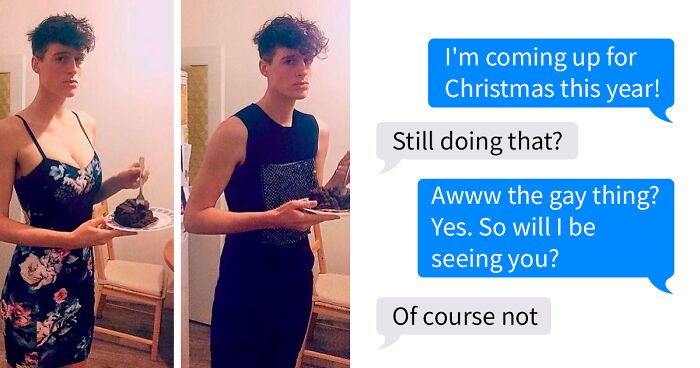
Some family stories arrive with violins, soft lighting, and the emotional subtlety of a holiday commercial. Others arrive as screenshots. In the viral story of model, actor, and activist Rain Dove, a series of family text messages spanning more than 12 years became something bigger than internet content: it became a tiny museum of human change, preserved one awkward text bubble at a time.
The story began with old pain. Rain Dove, who is widely known for challenging gender norms in fashion and activism, shared messages showing how relatives reacted across the years as their identity, independence, and family relationships evolved. The early exchanges reflected rejection and distance. Later messages showed warmth, gifts, invitations, and a kind of emotional repair that many queer people hope for but do not always receive. In short: the family group chat had character development.
That is why the post resonated far beyond one person’s experience. It spoke to LGBTQ+ family acceptance, coming out, queer identity, forgiveness, boundaries, and the slow, sometimes messy process of learning how to love someone better. It also reminded readers that people can change, though usually not on the schedule we would personally choose. Human growth, unfortunately, does not come with a “skip intro” button.
Why Rain Dove’s Family Texts Went Viral
The power of the screenshots was not that every message was perfect. Actually, perfection would have made the story less believable. What made the post compelling was the contrast: years of misunderstanding followed by signs of acceptance. Viewers could see the emotional timeline almost like rings inside a tree. Each message marked a season: rejection, distance, caution, reconnection, and finally, tenderness.
Rain Dove’s story also landed because family text messages are deeply familiar. A formal apology can sound staged, but a small text asking about holiday plans can carry the emotional weight of a courtroom confession. A message about pillows, bourbon, dinner, or a simple “we love you” can say what families sometimes struggle to say directly: “I am trying now.”
For many queer people, that kind of effort matters. Coming out is not just a personal milestone; it often forces an entire family system to confront its assumptions. Some relatives respond with immediate support. Others panic, argue, deny, Google the wrong things, say the worst possible sentence, and then years later pretend they have always been emotionally evolved. Growth is beautiful, yes, but sometimes it wears a suspiciously convenient memory.
The Bigger Meaning Behind LGBTQ+ Family Acceptance
Family acceptance is not just a sentimental bonus. It can shape mental health, safety, self-esteem, housing stability, and the ability to imagine a future. Research and advocacy organizations have repeatedly emphasized that LGBTQ+ youth and adults are not harmed by being queer; they are harmed by rejection, stigma, discrimination, and isolation.
The Family Acceptance Project has long focused on helping families reduce health and mental health risks for LGBTQ+ children and youth by increasing supportive behaviors. The Trevor Project’s national surveys also show how powerful affirming communities can be for LGBTQ+ young people, especially when they are dealing with bullying, political hostility, or fear of rejection. The CDC similarly notes that strong bonds with adults, families, schools, and communities can protect adolescent mental health.
In everyday terms, acceptance is not complicated. It can look like using the right name. Respecting pronouns. Asking thoughtful questions. Not turning a dinner table into a debate stage. Not treating someone’s identity as a temporary software glitch. It can also look like apologizing without adding, “I’m sorry you were offended,” which is not an apology; it is a tiny cactus wearing a nametag.
How People Change: Slowly, Awkwardly, Then All At Once
One of the most important lessons from Rain Dove’s family texts is that change is often uneven. A relative may begin with denial, move into silence, then test the waters with a birthday text, then finally show up with real affection. From the outside, this may look inconsistent. From the inside, it may be a person dismantling years of fear, misinformation, religion-based anxiety, social pressure, or old-fashioned stubbornness.
This does not mean queer people are required to wait forever, educate everyone, or accept mistreatment in the name of “family.” Boundaries matter. Safety matters. Emotional survival matters. Rain Dove’s own reflections on the story emphasized autonomy: acceptance is meaningful when it is freely given, not when it is demanded as a survival requirement.
That distinction is crucial. The healthiest version of family reconciliation does not ask the queer person to shrink, beg, or perform respectability to earn love. Instead, it asks relatives to grow up emotionally, take responsibility, and understand that love without respect is just control wearing a sweater.
Why This Story Feels So Hopeful
The viral reaction to the 12-year text timeline was not just about Rain Dove. It was about the possibility that a painful chapter does not have to be the final chapter. Many LGBTQ+ people know the heartbreak of being misunderstood by people who once felt like home. Seeing a family move from rejection toward acceptance can feel like watching a locked door open, even if it opens slowly and makes a terrible squeaking sound.
Hope is powerful because it offers emotional oxygen. But realistic hope is even better. This story does not promise that every family will change. Some will not. Some may become supportive only after distance, therapy, education, loss, or time. Others may never offer the apology that is deserved. The point is not to romanticize waiting. The point is to recognize that transformation is possible while still honoring the pain that came before it.
Coming Out Is Not A Single Moment
Popular culture often treats coming out like one dramatic announcement followed by applause, tears, and possibly a tasteful indie soundtrack. Real life is usually less cinematic and more administrative. Queer people may come out repeatedly: to parents, siblings, grandparents, coworkers, doctors, landlords, new friends, old friends, and the one aunt who heard everything already but wants “the official version.”
Pew Research Center has found that many LGBTQ+ adults became aware of their identity at a young age but told others later. That gap matters. It shows that coming out is shaped by safety, timing, trust, and the social environment. A person may know who they are long before they have the support needed to say it out loud.
Rain Dove’s family texts capture that long arc. Identity was not the only thing changing. The family’s ability to understand that identity changed too. That is why the screenshots feel so human. They show that acceptance can be learned, but like any serious skill, it requires practice. Preferably more practice than most families put into assembling furniture from a box.
Digital Storytelling And Queer Visibility
Social media can be a swamp, a circus, a library, and a support group all before breakfast. But stories like this show why digital platforms still matter. When a queer person shares a private journey publicly, it can help others feel less alone. A teenager stuck in a hostile home may see a post like Rain Dove’s and think, “Maybe my future is bigger than this room.”
Online storytelling also gives people language. Someone who has never heard the phrase “chosen family” may suddenly understand why friends, mentors, partners, and community spaces can become lifelines. Someone struggling with a parent may learn that boundaries are not cruelty. Someone who once rejected a queer relative may realize, with a thud, that they still have time to do better.
Of course, no one should feel pressured to turn personal trauma into public education. Queer people are not walking search engines with better outfits. But when someone chooses to share, their story can become a map for others.
What Families Can Learn From A 12-Year Text Thread
1. First reactions matter, but they are not the whole story
A harmful first reaction can leave a lasting wound. Still, families who responded badly can choose repair. That repair requires honesty, not denial. “I didn’t understand then, but I want to understand now” goes much further than “Let’s pretend I never said anything terrible.” The delete button is not a therapist.
2. Acceptance is shown through behavior
Support is not just a rainbow emoji in June. It is how relatives act in private, at holidays, in emergencies, and when the queer person is not in the room. It is correcting someone who misgenders them. It is inviting their partner. It is learning without demanding a full PowerPoint presentation from the person who is already exhausted.
3. Boundaries can make love healthier
Sometimes distance gives everyone room to grow. A queer person may need to step away from relatives who are cruel, dismissive, or unsafe. That boundary can be temporary or permanent. Either way, it is not selfish. It is maintenance. Even phones need charging; human hearts are not unlimited data plans.
4. Change requires humility
The relatives who truly change are usually the ones willing to be embarrassed by their past selves. That is not easy. Nobody enjoys realizing they were the villain in someone’s saved screenshots. But humility opens the door to repair. Defensiveness locks it and then complains about being misunderstood.
The Role Of Chosen Family
Rain Dove’s message to people in difficult homes also points toward chosen family. For many LGBTQ+ people, chosen family is not a cute slogan; it is survival architecture. It can include friends, partners, mentors, neighbors, online communities, local LGBTQ+ centers, affirming teachers, and anyone who says, “You can be yourself here,” and means it.
Chosen family does not always replace biological family. Sometimes it supports a person until biological family catches up. Sometimes it becomes the primary home forever. Both outcomes are valid. Love is not less real because it is chosen. In fact, chosen love can be especially powerful because it is deliberate. Nobody accidentally becomes your emergency contact after one brunch.
Why Society Still Has Work To Do
Even as more Americans identify as LGBTQ+ and public awareness grows, acceptance remains uneven. Gallup has reported rising LGBTQ+ identification in the United States, especially among younger adults. Pew Research Center has also shown that LGBTQ+ adults see more acceptance today than in the past, but acceptance differs sharply across identities. Transgender and nonbinary people often report less social acceptance than gay and lesbian people.
This matters because family attitudes do not form in a vacuum. Parents and relatives are influenced by media, politics, religion, schools, workplaces, and community norms. When society spreads fear, families may absorb it. When society offers accurate information and visible representation, families have a better chance of responding with curiosity instead of panic.
That is why Rain Dove’s story is not just personal. It is cultural. It asks a simple question: if one family can move from rejection to love, what would happen if more families were given the tools, language, and courage to do the same?
Experiences Related To Queer Family Change Over Time
Many queer people describe family acceptance as less like flipping a switch and more like waiting for an old computer to install 47 updates. At first, nothing seems to happen. Then everything freezes. Then someone restarts the conversation six months later and acts as if this was the plan all along. It can be funny in hindsight, but while it is happening, it can feel lonely, frustrating, and deeply uncertain.
Consider the common experience of a young queer adult who comes out to a parent and receives silence. Not screaming. Not rejection. Just silence. At first, that quiet can feel like a wall. Weeks pass. The parent changes the subject whenever identity comes up. Then one day, they send a link to an article, awkwardly, with no punctuation and too many question marks. It is not perfect support, but it is movement. Later, they ask whether the person is bringing “a friend” to dinner. Eventually, they learn the partner’s name. The progress is clumsy, but it is real.
Another familiar experience involves pronouns. A family member may resist at first, claiming it is “too hard” to change language. Yet the same person can remember 19 streaming passwords, every neighbor’s parking habits, and the exact year a cousin ruined Thanksgiving stuffing. The issue is rarely memory alone. It is willingness. Over time, when a relative practices, corrects themselves, and stops making every mistake into a dramatic one-person theater production, trust begins to rebuild.
Some queer people also experience acceptance through small practical gestures. A parent may not deliver a perfect speech, but they may ask whether a partner has food allergies. A sibling may start defending them in family conversations. A grandparent may use the right name on a birthday card. These moments can seem ordinary from the outside, but inside a family history shaped by fear or rejection, ordinary kindness can feel enormous.
There are also harder experiences. Not every family changes. Some queer people must choose distance to stay healthy. They may build holidays with friends, find mentors, join community groups, or create homes where nobody has to brace before opening a text message. That path is not a failure. It is a form of courage. The goal is not to force every biological bond to heal. The goal is for queer people to live with dignity, safety, and love, whether that love comes from relatives, chosen family, or both.
The most hopeful experiences often share one pattern: the queer person stops making their identity dependent on someone else’s approval. That does not erase the desire for family acceptance. It simply puts the steering wheel back where it belongs. When relatives later change, their acceptance becomes a gift, not a lifeline. That difference can turn reconciliation into something healthier, freer, and more joyful.
Rain Dove’s 12-year text timeline matters because it shows that change can be documented in tiny messages. A cold sentence can become a careful question. A careful question can become an invitation. An invitation can become a relationship rebuilt with better materials. It may take years. It may come with mistakes. But sometimes, love learns. Sometimes, people surprise us. And sometimes, the family member who once did not understand becomes the one texting to ask what you want for the holidays. That may not fix everything, but it is a pretty good plot twist.
Conclusion: A Story About Texts, Time, And The Possibility Of Repair
“Queer Person Shares Family Texts Over A Period Of 12 Years To Show How People Change” is more than a viral headline. It is a reminder that families are living systems, not fixed monuments. They can hurt people. They can also learn, apologize, and rebuild. Rain Dove’s story does not ask queer people to endure rejection indefinitely, nor does it guarantee that every relative will transform. Instead, it offers something more honest: evidence that change is possible when love becomes stronger than fear.
For families, the lesson is simple. Do not wait 12 years to become kind. Start with respect. Learn the language. Ask better questions. Apologize without tap dancing around accountability. For queer people, the lesson is equally important: your worth is not on layaway until someone else accepts it. You are already whole. Acceptance from others can be beautiful, but it should never be the receipt that proves you are real.

