
Beauty Unlocked
10 Amazing Big Cats
Aug
Big cats are nature’s way of proving that elegance and raw power can occupy the same set of paws. They stalk silently, leap astonishing distances, climb trees while carrying dinner, and occasionally look directly into a camera as though judging the photographer’s life choices.
Scientifically, the term big cat can be surprisingly slippery. It traditionally refers to members of the genus Panthera, including lions, tigers, jaguars, leopards, and snow leopards. In everyday language, however, people also use it for large wild felines such as cheetahs, cougars, clouded leopards, lynxes, and caracals. U.S. wildlife law similarly uses a broad definition that includes lions, tigers, leopards, snow leopards, clouded leopards, jaguars, cheetahs, and cougars.
This list takes the broader approach. From a striped heavyweight capable of hunting in snowy forests to a long-eared acrobat that can snatch birds from the air, here are 10 amazing big cats that deserve far more than a casual “nice kitty.”
1. Tiger: The Striped Heavyweight Champion
The tiger is the largest living cat species, and it carries that title with considerable confidence. Adult males of the biggest tiger populations can weigh hundreds of pounds, yet these enormous predators can still move through dense vegetation with remarkable stealth.
Every tiger has a unique pattern of stripes. The markings break up the animal’s outline among tall grasses, shadows, and forest vegetation, making a bright orange cat much harder to spot than you might expect. Its striped skin even mirrors the pattern visible in its coat.
Unlike lions, tigers usually live and hunt alone. Their habitats range from tropical forests and grasslands to cold northern woodlands. Some populations are comfortable in snow, while others patrol mangrove forests and swim between muddy islands. Tigers are strong swimmers and may enter the water to cool down, travel, or pursue prey.
Unfortunately, habitat loss, illegal wildlife trade, and declining prey populations continue to threaten wild tigers. Protecting a tiger also means protecting the enormous landscapes, rivers, forests, and prey species it needs to survive.
2. Lion: The Social Superstar
The lion is the most social of the world’s big cats. While most wild felines prefer a largely solitary lifestyle, lions form groups called prides. A pride commonly includes related females, their cubs, and one or more adult males.
Living together offers several advantages. Lionesses can cooperate while hunting, defend cubs, and protect territory. They may approach prey from different directions, with some individuals driving the target toward others waiting in ambush. It is organized teamwork, except nobody schedules a meeting that should have been an email.
A lion’s roar is one of the most recognizable sounds in the animal kingdom. Roaring helps individuals communicate across long distances and warns neighboring lions that a territory is occupied. Male lions also use their manes as visual signals. A large, dark mane may make a male appear more formidable to rivals.
Most wild lions now live in sub-Saharan Africa, although a smaller population of Asiatic lions survives in and around India’s Gir Forest. Their future depends on maintaining connected habitats, healthy prey populations, and practical ways for people and lions to coexist.
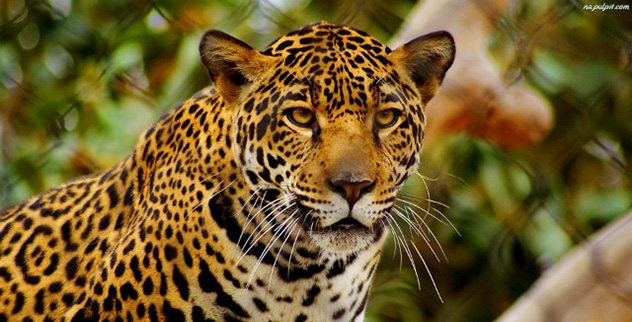
3. Jaguar: The Jungle Powerhouse
The jaguar is the largest wild cat in the Americas and arguably the heavyweight jaw champion of the feline world. Its short, muscular body and broad head are built for delivering an exceptionally forceful bite.
Jaguars may kill prey by biting through the skull or shell rather than relying only on a throat hold. Their menu can include deer, capybaras, peccaries, turtles, fish, and caimans. In other words, the jaguar does not glance at armored prey and think, “That seems inconvenient.”
Although jaguars resemble leopards, the two species live on different continents. Jaguars occur in the Americas, while leopards are native to Africa and Asia. Jaguars are generally stockier, with larger heads and blockier rosettes that often contain spots in the center.
Jaguars are also unusually comfortable around water. They swim well and thrive in wetlands, river systems, rainforests, and seasonally flooded habitats. Habitat fragmentation, illegal killing, and conflict over livestock remain serious conservation challenges across their range.
4. Leopard: The Master of Adaptability
If big cats received awards for flexibility, the leopard would need a larger trophy shelf. Leopards inhabit an impressive variety of environments across Africa and Asia, including forests, mountains, grasslands, scrublands, and areas relatively close to human communities.
The leopard’s spotted coat provides excellent camouflage. Its markings are arranged in rosettes, helping the animal disappear into broken light and vegetation. Black leopards, commonly called black panthers, are not a separate species. They are melanistic leopards whose dark coats still contain faintly visible rosettes.
Leopards are skilled climbers and frequently rest in trees. They are famous for hauling prey onto branches, placing the meal beyond the reach of lions, hyenas, and other professional lunch thieves. Their powerful shoulders allow them to lift animals that may be surprisingly heavy compared with their own body weight.
Because leopards are opportunistic hunters, they consume everything from insects and birds to monkeys and antelope. Adaptability has helped them survive in many regions, but habitat loss, illegal trade, shrinking prey populations, and conflict with people continue to cause declines.
5. Snow Leopard: The Ghost of the Mountains
Snow leopards inhabit some of the harshest landscapes occupied by any cat. They roam the steep mountains of Central and South Asia, where thin air, freezing temperatures, rocky slopes, and deep snow make an ordinary morning commute look like an expedition.
The snow leopard’s pale, smoky coat blends into rock and snow. Wide, fur-covered paws distribute its weight like natural snowshoes, while strong hind legs help it leap across broken terrain. Its extremely long tail provides balance and can be wrapped around the body for warmth while resting.
Despite belonging to the genus Panthera, snow leopards cannot produce the full roar associated with lions and tigers. They communicate through growls, chuffs, hisses, meows, and purr-like sounds.
Snow leopards are difficult to study because they live at low densities in remote terrain. Camera traps, genetic analysis, satellite tracking, and environmental DNA are helping researchers understand where these elusive cats travel. Major threats include poaching, habitat degradation, declining wild prey, climate change, and retaliatory killing after livestock losses.
6. Cheetah: The Feline Speed Machine
The cheetah is the fastest land mammal, but speed is only part of its engineering. Nearly every feature of its body contributes to rapid acceleration and controlled pursuit.
A lightweight frame, long legs, flexible spine, enlarged nasal passages, and specialized muscles help the cheetah sprint. Its claws do not retract as completely as those of most cats, giving it additional traction. Meanwhile, the long tail acts like a rudder, helping the animal balance and change direction while chasing agile prey.
Cheetahs can maintain top speed only briefly. A high-speed chase produces tremendous heat and consumes substantial energy, so the cat must recover after a sprint. That recovery period can leave it vulnerable to lions, leopards, and hyenas that may steal its meal.
The dark lines running from a cheetah’s eyes toward its mouth are often called tear marks. They may reduce glare and help the animal focus on prey in bright, open habitats. Unlike roaring cats, cheetahs can purr, chirp, hiss, and produce birdlike calls used for communication.
7. Cougar: The Cat With Many Names
Cougar, puma, mountain lion, panther, and catamount are all names used for Puma concolor. Very few animals have accumulated so many aliases without becoming an international spy.
The cougar has the broadest geographic range of any wild land mammal in the Western Hemisphere. Its distribution extends from parts of Canada and the United States through Central America and deep into South America. Cougars occupy forests, deserts, mountains, wetlands, and grasslands.
These cats rely on stealth rather than long pursuits. A cougar typically approaches prey quietly, then launches a powerful burst from close range. Its muscular hind legs also make it an exceptional jumper.
Although large, cougars cannot roar like lions or jaguars. They can purr and produce whistles, growls, chirps, and startling screams. Cougar kills also support wider ecosystems. Meat left behind may feed scavenging mammals, birds, insects, and other organisms, turning one successful hunt into a temporary banquet for an entire neighborhood.
8. Clouded Leopard: The Treetop Acrobat
The clouded leopard looks as though someone combined a leopard, a gymnast, and a mythical forest spirit. Native to parts of South and Southeast Asia, this medium-sized cat is named for the large, cloud-shaped markings along its body.
Clouded leopards are superb climbers. Flexible ankle joints allow them to rotate their hind feet, helping them descend tree trunks headfirst. They can also move beneath branches and use their long tails to maintain balance high above the ground.
Relative to body size, the clouded leopard has some of the longest canine teeth among living cats. Its skull and teeth have occasionally earned it comparisons with prehistoric saber-toothed predators, although the two are not close equivalents.
Dense forests provide clouded leopards with cover, travel routes, and hunting opportunities. Deforestation, habitat fragmentation, hunting, and illegal wildlife trade threaten populations. Because the cats are elusive and often nocturnal, researchers still have much to learn about their behavior in the wild.
9. Eurasian Lynx: The Forest Shadow
The Eurasian lynx is the largest of the lynx species. It ranges across portions of Europe, Russia, Central Asia, and East Asia, occupying forests and rugged landscapes where camouflage and patience are valuable hunting tools.
Its most recognizable features include a short, black-tipped tail, cheek ruffs, and pointed ears topped with dark tufts. Scientists have proposed several possible functions for those tufts, including communication and enhanced hearing, but their exact purpose remains uncertain.
Large paws help the Eurasian lynx travel through snow. Its long legs and thick seasonal coat are similarly useful in cold environments. The cat hunts hares, rodents, birds, and hoofed animals, depending on local prey availability.
Eurasian lynxes usually avoid people and are rarely seen, even where they are present. Conservation outcomes vary by region. Some populations have recovered through legal protection and reintroduction, while others remain affected by poaching, habitat fragmentation, vehicle collisions, and conflict with livestock owners.
10. Caracal: The High-Jumping Hunter
The caracal is a sleek wild cat found across parts of Africa, the Middle East, and Asia. It is sometimes called the desert lynx, but it is not a true lynx. Its closest relatives include the serval and African golden cat.
A caracal’s long black ear tufts are impossible to ignore. The tufts may play a role in communication, camouflage, or keeping insects away, although researchers continue to debate their precise function. The name caracal comes from a Turkish term meaning “black ear.”
Caracals are famous for their vertical leaps. A hunting cat can spring approximately six feet into the air and strike birds with its paws. Historical accounts describe trained caracals being used to hunt birds, giving rise to the expression “putting the cat among the pigeons.” For the pigeons, this was presumably not a charming cultural event.
Caracals also hunt rodents, reptiles, hares, and small antelope. They survive in dry habitats partly by obtaining moisture from prey, although they drink when water is available.
Why Big Cats Matter
Big cats are not simply impressive animals sitting at the top of a food chain. By influencing prey numbers and behavior, large predators help shape entire ecosystems. Their presence can affect vegetation, scavenger communities, smaller predators, rivers, and even the movement of grazing animals.
Many big cats also function as umbrella species. Protecting the extensive territory required by a tiger, jaguar, lion, or snow leopard can conserve habitat for thousands of plants, mammals, birds, reptiles, insects, and local communities that depend on the same landscapes.
Yet nearly every species on this list faces some combination of habitat destruction, fragmented migration routes, poaching, illegal trade, prey depletion, road development, and conflict with people. Effective conservation therefore requires more than fences and warning signs. It involves wildlife corridors, community partnerships, responsible tourism, livestock protection, law enforcement, scientific research, and economic opportunities that make coexistence practical.
Experiences That Make Big Cats Unforgettable
Reading big cat facts is fascinating, but certain responsible experiences can transform a collection of statistics into a lasting appreciation for wildlife. The safest and most ethical encounters are those that keep animals wild, respect their space, and support professional conservation.
Hearing a Lion Before Seeing It
On a guided African safari, a lion’s roar may be heard long before the animal appears. The sound seems to travel through the ground as much as through the air. A distant roar at dawn can instantly change the mood inside a safari vehicle. Conversations stop, cameras rise, and everyone begins scanning the grass. When the lion finally appears, it may do something hilariously ordinary, such as rolling onto its back and falling asleep. That contrast between overwhelming power and world-class lounging is part of the animal’s appeal.
Searching for a Jaguar by Boat
Wetland tours in jaguar habitat offer a very different experience. Travelers move quietly along rivers, watching banks, fallen trees, and patches of reeds. Most sightings begin with uncertainty: a dark shape, a flicking tail, or a guide whispering that something has moved near the water. A jaguar walking along a riverbank looks surprisingly comfortable beside the water. Seeing one swim makes it clear that this is not simply a forest cat that tolerates rivers; it is a predator designed to use them.
Finding Tracks Instead of the Cat
In mountain lion, lynx, tiger, or snow leopard country, the animal itself may remain invisible. Tracks can become the main event. A trained guide might point out a rounded paw print, a scrape, fur caught on bark, or disturbed soil along a trail. These small signs reveal how close an elusive predator may have passed. The experience encourages patience and changes how visitors examine a landscape. A forest stops looking empty and begins to look full of concealed movement.
Watching Enrichment at an Accredited Zoo
A well-managed, accredited zoo can provide another valuable big cat experience. Enrichment activities may involve hidden scents, puzzle feeders, elevated platforms, unfamiliar objects, or food positioned to encourage natural movement. Watching a tiger investigate a scent trail or a clouded leopard navigate branches shows that animal care involves far more than placing food in an enclosure. Keeper talks can also explain veterinary care, breeding programs, field research, and the challenges of maintaining healthy populations.
Reviewing Camera-Trap Images
Some conservation organizations invite volunteers or citizen scientists to help classify camera-trap photographs. The work can involve long sequences of waving grass, curious antelope, blurry birds, and animals that appear to be only half a tail. Then a leopard, cougar, or tiger suddenly fills the frame. Even though the photograph may have been taken weeks earlier, identifying the species, location, and time can contribute useful information about wildlife movement.
Learning From Local Communities
Perhaps the most important experience is listening to people who share landscapes with big cats. A lion, jaguar, or snow leopard may inspire excitement in a visitor while representing lost livestock or financial danger to a nearby family. Community-led conservation programs reveal the practical side of coexistence: predator-resistant livestock enclosures, compensation programs, better grazing practices, wildlife tourism income, and rapid-response teams. These conversations replace simplistic ideas with a deeper understanding of what successful conservation actually requires.
No ethical wildlife experience guarantees a sighting. That is precisely the point. Big cats are not performers following a schedule. Waiting quietly, respecting distance, and accepting uncertainty are part of seeing wildlife responsibly. The most memorable moment may be a tiger crossing a road, a cheetah scanning the horizon, a paw print in fresh snow, or simply the knowledge that a wild cat is living unseen in the landscape nearby.
Conclusion
These 10 amazing big cats demonstrate how many forms feline excellence can take. Tigers dominate by size, cheetahs specialize in speed, jaguars bring astonishing bite power, clouded leopards turn trees into walkways, and snow leopards treat vertical mountains as perfectly reasonable neighborhoods.
Their differences are extraordinary, but their futures are connected. Big cats require healthy habitats, abundant prey, room to travel, and communities that benefit from protecting them. Admiring these animals is easy. The meaningful challenge is ensuring that future generations can still encounter them in forests, wetlands, grasslands, deserts, and mountainsnot only in photographs of what the world once had.

