
Beauty Tools & Accessories
Storage: Naoto Fukasawa Hanger
Jun
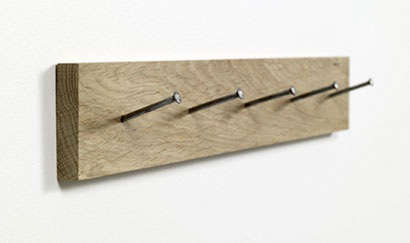
The Naoto Fukasawa Hanger is not the kind of storage object that shouts, waves, or begs guests to admire its cleverness. It simply waits on the wall, quietly doing its job with the calm confidence of someone who has never lost a set of keys. Designed by Japanese industrial designer Naoto Fukasawa for Galerie kreo in 2008, this limited-edition hanger turns one of the most ordinary home ritualsplacing something on a hookinto a refined design moment.
At first glance, the piece may look almost too simple: a natural oak form, aluminum nails, compact proportions, and no unnecessary decoration. But that is exactly the point. Fukasawa’s work is famous for making everyday actions feel intuitive, natural, and almost invisible. The best storage does not lecture you about organization. It just makes the right action feel easier than the wrong one. In that sense, the Naoto Fukasawa Hanger is a small object with a surprisingly large lesson: good design can make tidiness feel automatic.
What Is the Naoto Fukasawa Hanger?
The Naoto Fukasawa Hanger is a limited-edition wall-mounted storage piece produced by Galerie kreo. It was created in France in 2008 and belongs to the designer’s world of quiet, useful, highly considered objects. According to gallery information, the Hanger was made in a limited edition of 50 pieces plus two prototypes, with numbered and signed examples. Its dimensions are compact: about 25.19 inches long, 3.54 inches high, and 2.75 inches deep. Materials include natural oak wood and aluminum nails.
Those details matter because they place the object somewhere between functional storage, collectible design, and domestic sculpture. It is not a plastic hook bought in a panic because guests are arriving in 11 minutes. It is also not a giant mudroom system with cubbies, baskets, labels, and the faint energy of a kindergarten classroom. It is a precise, beautiful, disciplined hanger that asks a simple question: how much design does storage actually need?
Why Naoto Fukasawa’s Design Philosophy Matters
Naoto Fukasawa was born in Yamanashi, Japan, in 1956 and graduated from Tama Art University in 1980. His early career included work at Seiko Epson, followed by time in the United States with ID Two, the San Francisco firm that later became part of IDEO. He eventually returned to Japan, founded Naoto Fukasawa Design in 2003, and became known internationally for products, furniture, electronics, and interiors that favor simplicity over spectacle.
One of the key ideas associated with Fukasawa is “without thought.” This does not mean careless design. It means the opposite. It means design that is so carefully tuned to human behavior that users do not need instructions, diagrams, or a small emotional support group to operate it. You pull a cord, hang a coat, place a bag, set down a cup, or turn on an appliance because the object makes the action obvious.
His famous MUJI wall-mounted CD player is a perfect example. The user pulls a cord, and the object behaves in a way that feels familiar, almost like turning on a fan. That same sensitivity appears in the Hanger. A hanger is not complicated, but it can still be improved. The shape, material, placement, and tactile impression can all encourage people to use it naturally.
The Beauty of Minimalist Storage
Minimalist storage often gets misunderstood. It is not about owning three shirts, one cup, and a chair that looks afraid of comfort. Real minimalism is about reducing friction. It helps the home work better by giving each object a clear, graceful place to belong.
The Naoto Fukasawa Hanger fits this idea beautifully. It does not attempt to store everything. It does not promise to solve your entire life, reorganize your garage, or finally make sense of that drawer full of mystery cables. Instead, it focuses on one simple action: hanging. Coats, scarves, hats, bags, or light daily accessories can be kept visible and accessible. The object creates a pause point between outside and inside, between wearing and storing, between clutter and calm.
Natural Oak and Aluminum: A Smart Material Pairing
The use of natural oak gives the Hanger warmth. Oak has visual texture, durability, and a familiar domestic character. It feels appropriate in an entryway, hallway, bedroom, boutique, studio, or office. The aluminum nails add a small industrial counterpoint. The pairing is not flashy, but it has tension: wood softens the object, metal sharpens it.
This material balance is one reason the piece feels both practical and collectible. A purely decorative hook may look lovely but become useless under real daily use. A purely utilitarian hook may work well but make the wall look like a storage aisle at a hardware store. Fukasawa’s Hanger sits between those extremes.
How the Hanger Works in Real Interiors
The best place for a designer hanger is wherever daily movement tends to produce clutter. In many homes, that means the entryway. Shoes collect by the door, jackets land on chairs, tote bags slump on the floor, and keys vanish into another dimension. A wall-mounted hanger can interrupt that chaos before it spreads.
In a small apartment, the Hanger can serve as a compact landing zone. Install it near the front door and pair it with a slim shoe rack, a small tray, or a low bench. This creates a practical sequence: remove shoes, hang coat, drop keys, enter home like a civilized person instead of a tornado wearing sneakers.
In a bedroom, it can hold the pieces worn often but not ready for laundry: a cardigan, robe, hat, or favorite canvas bag. In an office, it can support a work jacket or visitor coat without making the room feel like a waiting area. In a boutique or gallery-like interior, it can display garments as part of the visual composition.
Storage Lessons From the Naoto Fukasawa Hanger
1. Store Only What Belongs There
A hanger works best when it has a clear purpose. The entryway should not become a museum of every jacket you have owned since 2014. Keep daily-use items nearby and move off-season coats, extra bags, and rarely worn accessories elsewhere. The fewer decisions users must make, the more likely they are to stay organized.
2. Use Vertical Space
Wall-mounted storage is powerful because it frees the floor. In tight homes, every inch matters. A hanger can make use of an empty wall, hallway end, or narrow nook. It is especially effective in apartments where bulky furniture would block movement.
3. Make Storage Beautiful Enough to Use
People are more likely to maintain systems they enjoy looking at. This is the quiet genius of design-forward storage. A beautiful hanger turns organization into a pleasant habit. It does not shame you into tidiness. It seduces you with oak.
4. Avoid Overloading
Minimalist hangers are not meant to carry the emotional weight of an entire household. Use them selectively. A coat, bag, scarf, or hat can look intentional. Seven puffer jackets and a backpack full of receipts will not. Even a masterpiece deserves breathing room.
Naoto Fukasawa Hanger vs. Ordinary Coat Hooks
Ordinary coat hooks are judged mostly by price, strength, and convenience. The Naoto Fukasawa Hanger adds another category: experience. It considers how the object feels in the room, how naturally people approach it, and how it contributes to the atmosphere of a home.
A basic hook may disappear because it is visually forgettable. Fukasawa’s Hanger disappears in a different way: it becomes so compatible with the user’s behavior and environment that it feels inevitable. That is a much harder trick. A cheap hook says, “Hang things here.” A well-designed hanger says, “Of course this is where your coat goes.”
Who Is This Hanger For?
The Naoto Fukasawa Hanger is ideal for design collectors, interior stylists, architects, boutique owners, and anyone who appreciates functional objects with museum-level restraint. It is not the most practical choice for a large family mudroom where backpacks, sports gear, lunch bags, and emergency umbrellas are engaged in daily combat. For that job, a full storage bench or hall tree may be more realistic.
But for a curated entry, quiet bedroom, gallery wall, compact apartment, or refined office, it offers something special. It provides storage without visual noise. It is useful without becoming bulky. It makes a simple action feel dignified.
How to Style a Space Around the Naoto Fukasawa Hanger
Because the Hanger is compact and understated, it works best with other objects that respect space. Pair it with natural materials such as oak, walnut, linen, wool, ceramic, or matte metal. Avoid crowding it with overly ornate frames, bright plastic organizers, or decorative signs that say “Live Laugh Love,” unless your goal is to make the hanger silently file a complaint.
For an entryway, install it at a comfortable shoulder-to-eye height depending on what it will hold. Add a small tray for keys, a narrow bench below, or a woven basket for slippers. For a bedroom, place it near a closet or dressing area. For a workspace, install it near the door so coats do not end up draped over task chairs.
Color Palette Suggestions
Natural oak works beautifully with soft whites, warm grays, stone, charcoal, muted green, clay, beige, and black accents. The goal is to let the hanger feel integrated, not isolated. A simple wall color can make the oak grain more visible and emphasize the object’s material honesty.
The Collector’s Angle
Because the Naoto Fukasawa Hanger was produced in a limited edition, it has a different status from mass-market storage accessories. Collectible design often lives in a fascinating category: it is functional, but its value is also cultural. A chair can be sat in and still belong to design history. A lamp can illuminate a desk and still be part of a museum collection. A hanger can hold a coat and still express a philosophy.
That does not mean the Hanger should be treated like a fragile relic. Fukasawa’s best objects are meant to connect with daily life. Still, its rarity, signed status, and gallery context make it the kind of piece that deserves thoughtful placement and gentle use.
Why This Small Object Feels So Relevant Today
Modern homes are full of storage solutions, but many of them create as much visual clutter as they solve. We buy bins for bins, labels for boxes, shelves for baskets, and then somehow still cannot find the umbrella. The Naoto Fukasawa Hanger feels refreshing because it is focused. It does one thing with clarity.
That is a useful lesson for contemporary interiors. Storage does not always need to expand. Sometimes it needs to become more intelligent. Instead of adding more furniture, better design can make one daily behavior smoother. A hanger in the right place can prevent clutter before it starts.
Experience Notes: Living With the Idea of the Naoto Fukasawa Hanger
The most interesting experience related to a piece like the Naoto Fukasawa Hanger is not dramatic. No one installs a minimalist hanger and suddenly hears orchestral music while their coats levitate into perfect alignment. The magic is quieter. It appears after a week, when the chair near the door no longer wears three jackets. It appears when a guest enters and instantly understands where to place a bag. It appears when leaving the house feels smoother because the scarf, cap, and tote are exactly where the hand expects them to be.
In practical use, a Fukasawa-inspired storage setup works best when it is treated as a daily station, not a dumping ground. The wall hanger should hold the items that move in and out of the home most often. A light jacket, a favorite canvas tote, a dog leash, or a wool scarf can belong there. The object becomes part of a routine: arrive, hang, breathe. Leave, grab, go. That tiny rhythm can change the emotional tone of an entryway.
One common mistake is expecting a beautiful hanger to fix too many habits at once. If the surrounding floor is crowded with shoes, packages, and bags, even the most elegant oak hanger will look like it accidentally wandered into a yard sale. The better approach is to build a small ecosystem around it. Place a slim shoe tray below, a small catchall dish nearby, and maybe a mirror above or beside the arrangement. Suddenly, the entryway has a logic. It says, “This is where the day begins and ends.” Very polite. Very Japanese. Very useful.
Another experience worth noting is how material affects behavior. Natural wood invites a gentler kind of use than cold plastic or thin wire. People tend to treat warm, tactile materials with more care. A wooden hanger encourages users to hang items deliberately rather than fling them in the general direction of storage and hope physics cooperates. Aluminum details add durability and a crisp visual note, reminding the user that this is not rustic decoration; it is designed utility.
In a small apartment, the biggest benefit is psychological. Compact storage reduces visual decision fatigue. When every object has a visible, reasonable place, the home feels less demanding. A hanger like Fukasawa’s does not hide life behind doors; it edits life on the wall. That is a different kind of organization. It accepts that certain things need to be accessible, but it insists they can still look calm.
For people who appreciate design, the experience is also educational. The Hanger teaches restraint. It proves that a useful object does not need a dramatic silhouette, a complicated mechanism, or twelve “innovative” features. Sometimes the highest form of design confidence is knowing when to stop. That lesson applies far beyond coat storage. It applies to furniture, rooms, wardrobes, websites, and possibly group chats.
Over time, the best storage objects become almost invisiblenot because they are boring, but because they fit. The Naoto Fukasawa Hanger represents that ideal. It is storage as habit, design as quiet assistance, and beauty as something that makes daily life less annoying. In a world full of overdesigned objects screaming for attention, that kind of calm usefulness feels almost radical.
Conclusion
The Storage: Naoto Fukasawa Hanger is more than a wall-mounted object for coats and accessories. It is a compact expression of Naoto Fukasawa’s larger design philosophy: objects should fit naturally into human behavior, support daily rituals, and improve life without making a fuss. With natural oak, aluminum details, limited-edition production, and a beautifully restrained form, the Hanger shows how storage can be practical, collectible, and emotionally calming at the same time.
For homeowners, designers, and collectors, its biggest lesson is simple: good storage is not always bigger storage. Sometimes the smarter choice is a precise object in the right place, doing exactly what is needed and nothing more. The Naoto Fukasawa Hanger proves that even a place to hang your coat can carry a philosophyquietly, gracefully, and without dropping your scarf on the floor.

