
Skincare
After Becoming A Single Dad, He Learned How To Do His Daughter’s Hair And Now Teaches Other Dads
Jun
Some parents learn to cook. Some learn to assemble tiny furniture with instructions written by a mysterious committee of owls. And some, like single dad Philippe Morgese, learn the ancient art of the ponytail, the braid, the bun, and the “please sit still for twelve seconds” morning routine.
After becoming a single dad, Morgese found himself facing a challenge many fathers know well but rarely admit out loud: his daughter Emma had hair that needed care, styling, patience, and more than a hopeful swipe with a brush. Instead of surrendering to messy ponytails forever, he taught himself how to do his daughter’s hair. Then he did something even betterhe started teaching other dads.
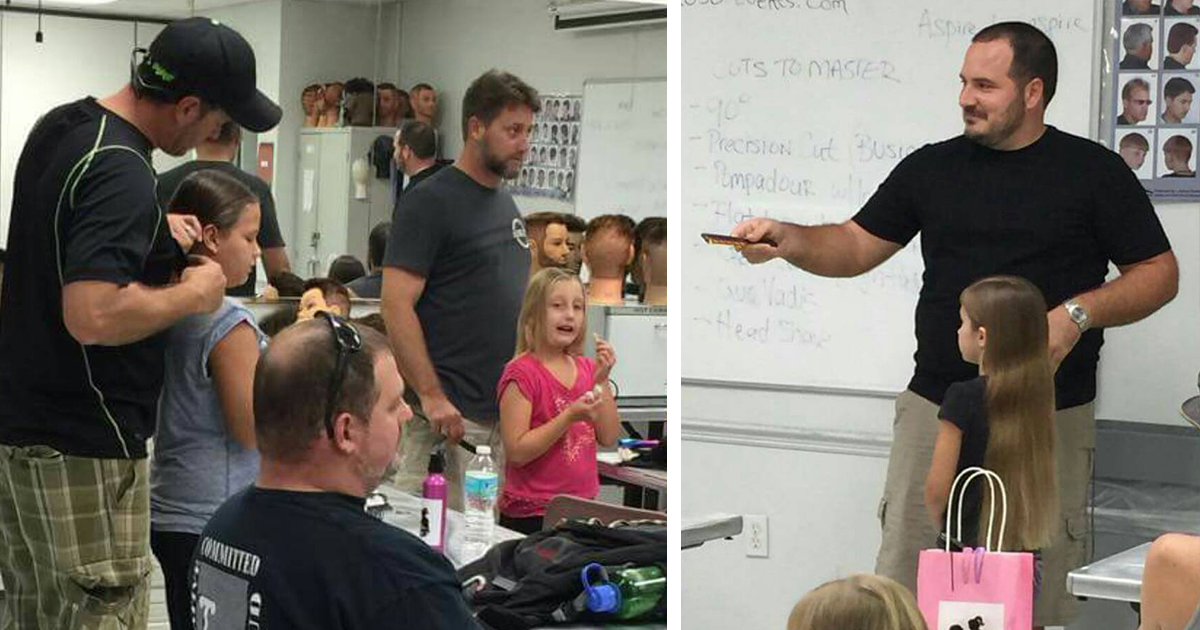
His idea grew into the Daddy Daughter Hair Factory, a hands-on class where fathers learn basic brushing, detangling, ponytails, braids, buns, and the confidence to show up for their daughters in one of the most ordinary yet meaningful parts of daily life. What began as one father trying to help his little girl feel confident became a heartwarming lesson in modern fatherhood: love is not always dramatic. Sometimes love is a three-strand braid that finally stays in place.
A Single Dad, A Daughter, And One Very Intimidating Hairbrush
Philippe Morgese did not start as a hair expert. Like many dads, he began with good intentions and limited technical ability. When his daughter Emma was little, he realized that her hair care would become part of their everyday routine. He could either avoid it, outsource it, or learn. He chose to learn.
At first, the process was not glamorous. There were failed attempts, loose braids, uneven ponytails, clips placed with the confidence of a person defusing a cartoon bomb, and probably a few mornings where the brush seemed to have its own legal department. But Morgese kept practicing. He watched tutorials, experimented with simple styles, and learned by doing.
Over time, he moved from survival-level styling to real skill. Ponytails became neater. Braids became cleaner. Buns stopped looking like emergency bird nests. Most importantly, Emma began enjoying the routine. The mirror became less of a battleground and more of a bonding spot.
Why Hair Became More Than Hair
At first glance, learning how to do a child’s hair may seem like a small parenting task. But for many children, hair is tied to identity, confidence, comfort, and self-expression. A child who leaves home feeling cared for often carries that feeling into the classroom, the playground, and the rest of the day.
For a father, learning hair care can also change the emotional rhythm of parenting. It turns a stressful morning chore into a few minutes of closeness. A dad standing behind his daughter with a brush in hand is not just solving tangles. He is saying, “I can learn what matters to you.”
That is why Morgese’s story resonated with so many families. He did not become famous because he discovered a new chemical formula for conditioner. He became admired because he took a task often assigned to mothers and treated it as part of his job, too. In a world full of parenting advice, this was refreshingly practical: show up, learn the skill, keep practicing, and do not panic when the hair tie launches across the bathroom.
The Birth Of Daddy Daughter Hair Factory
Once Morgese became more confident, other fathers began asking him for advice. They wanted to know how he created certain styles, what tools he used, and how they could avoid turning their daughters’ hair into a morning mystery novel.
Instead of keeping the knowledge to himself, Morgese created a free class for dads and daughters. The early sessions were simple and welcoming. Fathers learned the basics: how to brush gently, how to detangle without causing tears, how to make a ponytail, how to do a three-strand braid, and how to create a standard bun.
The genius of the class was not that it turned dads into professional stylists overnight. It did not need to. The goal was confidence. A dad who enters the room unable to braid and leaves with one slightly crooked but functional braid has gained something valuable. He has proof that he can learn. His daughter has proof that he cares enough to try.
Why Other Dads Needed This Class
Many fathers want to be involved in every part of their children’s lives, but they may feel awkward asking for help with tasks they were never taught. Hair styling can feel especially intimidating because it combines technique, patience, and a moving child who suddenly remembers she has urgent opinions about unicorn clips.
Daddy Daughter Hair Factory created a comfortable space where dads could be beginners without embarrassment. That matters. A father is more likely to learn when he is not being judged. A child is more likely to cooperate when the moment feels playful instead of tense.
The class also challenged outdated gender roles. Hair care is not “mom work.” It is parent work. Brushing, braiding, washing, detangling, and styling are all part of helping a child feel clean, comfortable, and ready for the day. When dads learn these skills, they expand what fatherhood looks like in everyday life.
What Dads Actually Learn In A Hair Class
A good dad-and-daughter hair class starts with the basics. No one needs to begin with a fishtail braid shaped like a butterfly while the child is late for school. The first goal is control, comfort, and consistency.
1. Gentle Detangling
Detangling is often where the drama begins. The best approach is to start from the ends of the hair and slowly work upward. This helps reduce pulling and breakage. A wide-tooth comb, detangling spray, or leave-in conditioner can make the process smoother, especially for thick, curly, or textured hair.
2. The Reliable Ponytail
The ponytail is the dad starter pack. It teaches sectioning, smoothing, grip, and hair-tie control. A neat ponytail can be a school-day lifesaver and a confidence booster for a dad who previously believed hair ties were tiny elastic traps.
3. The Three-Strand Braid
The three-strand braid looks complicated until someone breaks it down. Left over middle. Right over middle. Repeat. The first braid may resemble a relaxed rope, but with practice, it becomes smoother and tighter.
4. The Bun
A bun can be practical for dance class, sports, hot weather, or days when the hair simply refuses diplomacy. Dads learn how to gather, twist, secure, and pin hair without creating a scalp-tight situation that makes their daughter look surprised until lunchtime.
5. Letting The Child Participate
The best hair routine is not a silent construction project. It is a conversation. Daughters can choose clips, headbands, parting styles, or whether today feels like a braid day or a “just get it out of my face” day. Giving children choices helps them feel respected.
The Emotional Lesson Behind The Braid
What makes this story powerful is not just the cuteness of dads holding combs and concentrating like NASA engineers. It is the emotional message beneath the routine. Children notice effort. They remember who helped them get ready, who listened to them, who learned something new because it mattered to them.
For single dads especially, daily caregiving moments can carry extra meaning. They are not only managing schedules, meals, school drop-offs, and bedtime. They are also building trust through repetition. A daughter who sees her dad patiently learning her hair learns something bigger: care is active.
That message can last longer than any hairstyle. The braid may come loose by recess. The memory of being cared for can stay.
Modern Fatherhood Is Hands-On
Morgese’s story fits into a larger shift in how society talks about fatherhood. More dads are rejecting the old idea that being a good father simply means providing financially or showing up for major milestones. Modern fatherhood is also about lunches, laundry, doctor visits, bedtime stories, emotional support, and yes, hair care.
Hands-on fathering does not require perfection. In fact, the imperfect attempts may be the most memorable. A dad who makes a lopsided braid but laughs with his daughter is still building connection. A dad who asks a stylist for help is modeling humility. A dad who keeps trying after a rough first attempt is showing resilience.
These lessons are useful far beyond hair. Children learn that adults can practice. They learn that skills are not fixed. They learn that love sometimes looks like effort, not expertise.
Another Hair Dad Who Inspired Parents
Philippe Morgese is not the only father whose hair journey captured public attention. Greg Wickherst, a single dad from Colorado, also became known for learning how to style his daughter Izzy’s hair. He reportedly asked cosmetology students for guidance and eventually mastered styles such as French braids, fishtail braids, buns, and creative themed looks.
Wickherst’s story reinforces the same lesson: dads do not need to know everything at the beginning. They just need to care enough to learn. Whether a father learns from a beauty school, a YouTube tutorial, a salon class, or another dad, the message is the same. Parenting skills are built one attempt at a time.
Practical Tips For Dads Learning Their Daughter’s Hair
If you are a dad staring at a brush like it owes you money, start small. Hair care is learnable, and nobody begins as a braid wizard.
Build A Simple Hair Kit
Keep a small basket with a detangling brush, wide-tooth comb, soft hair ties, clips, spray bottle, leave-in conditioner, and a few headbands. Having everything in one place prevents the classic morning treasure hunt where the only visible hair tie is somehow wrapped around a toy dinosaur.
Learn Your Child’s Hair Type
Straight, wavy, curly, coily, fine, thick, dry, oily, and textured hair all need slightly different care. Curly and coily hair often benefits from moisture and gentle detangling. Fine hair may need lighter products. When in doubt, ask a stylist for guidance.
Practice When You Are Not Rushed
Do not learn French braiding seven minutes before school starts. That is not parenting; that is a hostage negotiation with a comb. Practice on weekends, after bath time, or while watching a movie.
Keep The Mood Light
Hair time should not feel like a disciplinary hearing. Talk, joke, play music, or let your daughter hold a mirror. If a style fails, call it “version one” and try again tomorrow.
Celebrate Progress
The first braid does not need to be perfect. Take a picture. Laugh at it kindly. Try again. The goal is not a magazine cover. The goal is connection, confidence, and fewer tears before breakfast.
Why This Story Went Viral
The internet loves wholesome parenting stories because they remind people that goodness still exists between the arguments, ads, and suspiciously perfect pancake videos. Morgese’s story went viral because it was simple, visual, and emotionally clear. A dad learned a skill for his daughter. Then he helped other dads do the same.
It also made people rethink assumptions. Many viewers saw dads who were nervous at first but eager to learn. They saw daughters smiling as their fathers practiced. They saw a task that had once been treated as small become a symbol of care.
That is the secret power of the story. It does not ask for applause because a father brushed hair. It invites us to notice how many little tasks shape a child’s sense of being loved.
The Community Impact Of Teaching Other Dads
When a father learns a parenting skill, one family benefits. When he teaches other fathers, a community benefits. Daddy Daughter Hair Factory gave dads a reason to gather, ask questions, laugh at mistakes, and leave with practical tools.
That kind of community matters for single parents, co-parents, stay-at-home dads, widowed fathers, grandfathers, uncles, and male caregivers who want to be more involved. Many men are willing to help but have not always been invited into caregiving spaces. A class designed for dads sends a powerful message: you belong here.
It also benefits daughters. When girls see fathers taking hair care seriously, they receive a broader picture of love and responsibility. They learn that care is not limited by gender. They learn that men can be gentle, patient, and attentive. That lesson can shape how they understand relationships later in life.
Experience-Based Reflections: What This Story Teaches Parents
The most useful lesson from Morgese’s journey is that parenting confidence often comes after action, not before it. Many dads wait until they feel ready. But most parents are never fully ready. They become ready by trying, failing, adjusting, and trying again. Hair care is a perfect example because the feedback is immediate. The braid either holds or it does not. The child either says, “That feels good,” or delivers the brutally honest review only children can provide.
One experience many fathers share is the fear of doing it wrong. They worry they will hurt their child while brushing, choose the wrong product, make the style look silly, or be judged by teachers and other parents. But children usually care less about perfection than adults think. They care about patience. They care about whether the parent listens when they say something pulls. They care about whether the morning feels safe or stressful.
Another important experience is learning that routines become rituals. At first, doing hair may feel like one more task on a crowded list. Over time, it can become a daily check-in. A father might learn about playground drama while parting hair. He might hear about a spelling test while making a ponytail. He might notice when his daughter seems quieter than usual. Those few minutes can become a window into her world.
There is also a practical confidence that comes from mastering small caregiving skills. A dad who learns hair care may become more confident about shopping for clothes, packing a dance bag, handling school picture day, or helping with other personal-care routines. One skill opens the door to another. The message shifts from “I do not know how” to “I can figure this out.”
For single dads, this confidence can be especially meaningful. Single parenting often comes with pressure from every direction. There are schedules to manage, bills to pay, emotions to handle, and little emergencies that appear five minutes before bedtime. Learning a skill like hair care may seem minor, but it can reduce daily stress. A smoother morning can change the tone of the whole day.
For daughters, the experience can build self-esteem. When a father takes time to learn her hair, he communicates that her needs are not annoying or unimportant. He shows that her comfort matters. He also gives her language for care: gentle brushing, asking consent before tugging, choosing styles she likes, and respecting her preferences.
Parents can apply Morgese’s example beyond hair. If your child loves soccer, learn the rules. If they love drawing, sit down and sketch badly beside them. If they have curly hair, learn curl care. If they are anxious about school, learn how to support them. Children do not need parents who magically know everything. They need parents who are willing to enter their world with curiosity.
The funny thing about parenting is that the tiny moments often become the big memories. A perfect vacation may blur. A rushed Tuesday morning when Dad finally nails the braid may stay forever. That is why this story matters. It reminds parents that love is built in ordinary rooms, with ordinary tools, through ordinary effort repeated again and again.
Conclusion: The Braid Is Just The Beginning
After becoming a single dad, Philippe Morgese learned how to do his daughter’s hair because he wanted to care for her fully. Then he turned that personal lesson into a gift for other fathers. His Daddy Daughter Hair Factory showed that parenting is not about already knowing every answer. It is about being willing to learn.
For dads everywhere, the message is simple: pick up the brush. Ask for help. Start with the ponytail. Laugh when the braid looks suspicious. Try again tomorrow. The goal is not perfection. The goal is presence.
Because one day, your daughter may not remember every hairstyle. But she will remember that you stood behind her, gently worked through the tangles, and cared enough to learn.

