
Hair Care
Top 10 People Robbed of the Nobel Prize
Aug
The Nobel Prize is often treated like the final boss trophy of human achievement: a shiny medal, a royal handshake, a thunderclap of global prestige, and the permanent right to be introduced at dinner parties with dramatic lighting. But Nobel history is not a perfect scoreboard. It is a human institution, which means it has rules, politics, blind spots, timing problems, and the occasional “Wait… how did they miss that?” moment.
To be fair, “robbed” is a spicy word. Nobody kicked down a laboratory door and ran off with a medal in a getaway carriage. Many Nobel omissions happened because of official limits: no more than three people can share most prizes, and posthumous awards are generally not allowed. Other cases came from sexism, disciplinary boundaries, ideological discomfort, or the old academic habit of giving credit to the person with the bigger office.
This list explores ten famous Nobel Prize snubs: scientists, writers, and peace icons whose contributions changed the world but never received the Nobel recognition many people believe they deserved.
Why Nobel Snubs Happen
Before we bring out the historical popcorn, it helps to understand the machinery. Nobel Prizes are not lifetime achievement participation ribbons. They are selective, limited, and sometimes painfully narrow. The committees often reward a specific discovery rather than the entire ecosystem that made it possible.
That creates problems. Modern science is collaborative. Literature is subjective. Peace is political. Discovery is messy. The Nobel system, meanwhile, prefers clean stories with a small cast. History rarely cooperates.
1. Rosalind Franklin: The DNA Photograph That Changed Biology
The achievement
Rosalind Franklin was a brilliant chemist and X-ray crystallographer whose work helped reveal the structure of DNA. Her famous “Photo 51” gave crucial evidence that DNA had a helical structure, a detail that helped James Watson and Francis Crick build their double-helix model.
Why people call it a Nobel snub
In 1962, Watson, Crick, and Maurice Wilkins received the Nobel Prize in Physiology or Medicine for discoveries concerning the molecular structure of nucleic acids. Franklin was absent from the award. She had died in 1958 at only 37, and Nobel rules prevented a posthumous prize by the time the award was given.
So was she technically eligible in 1962? No. Was her contribution central enough that history still winces? Absolutely. Franklin’s case remains one of the most famous examples of overlooked women in science. The tragedy is not only that she missed the Nobel, but that her public recognition arrived late, as if history had misplaced her name in the lab drawer.
2. Lise Meitner: The Physicist Behind Nuclear Fission
The achievement
Lise Meitner helped explain nuclear fission, the splitting of the atomic nucleus that transformed physics, energy, and warfare. Working with Otto Hahn and Otto Frisch, she provided the theoretical understanding that made sense of experimental results involving uranium.
Why people call it a Nobel snub
In 1944, the Nobel Prize in Chemistry went to Otto Hahn alone. Meitner, who had fled Nazi Germany because of her Jewish background, was left out. The omission looks especially glaring because Nobel discussions and later historical analysis show her scientific role was substantial.
Meitner was nominated many times but never won. Her case is a master class in how politics, exile, gender bias, and disciplinary confusion can blur credit. Hahn did essential work, but fission was not a one-person magic trick. Leaving Meitner out was like applauding the fireworks while pretending nobody invented the fuse.
3. Chien-Shiung Wu: The Experiment That Broke Parity
The achievement
Chien-Shiung Wu designed and led the landmark experiment that proved parity is not conserved in weak nuclear interactions. In simpler terms, physicists once assumed nature behaved the same way in mirror image. Wu showed that, at the subatomic level, nature can be left-handed or right-handed. Tiny particles, apparently, do not care about our symmetry expectations.
Why people call it a Nobel snub
The 1957 Nobel Prize in Physics went to Tsung-Dao Lee and Chen-Ning Yang, whose theoretical work proposed parity violation. Wu’s experimental confirmation was essential, but she was not included.
This is one of the cleanest “how did that happen?” examples in Nobel history. Theory mattered, yes. But without Wu’s precise experiment, the idea might have remained elegant speculation. Her omission is often cited as a major example of gender bias in physics.
4. Jocelyn Bell Burnell: The Graduate Student Who Found Pulsars
The achievement
As a graduate student at Cambridge, Jocelyn Bell Burnell discovered the first pulsars: rapidly rotating neutron stars that emit beams of radiation with astonishing regularity. She noticed unusual signals in radio telescope data and had the persistence to investigate what others might have dismissed as noise.
Why people call it a Nobel snub
In 1974, the Nobel Prize in Physics went to Antony Hewish, her adviser, and Martin Ryle. Bell Burnell was not included, even though she made the initial discovery.
Bell Burnell has responded to the controversy with remarkable grace, but the omission still bothers many scientists. The Nobel committee rewarded leadership and interpretation, but the person who spotted the cosmic heartbeat was left outside the medal circle. If science had a “you had one job” meme, this would be a classic.
5. Dmitri Mendeleev: The Periodic Table Without the Prize
The achievement
Dmitri Mendeleev created the periodic table, one of the most powerful organizing tools in science. He did not merely arrange known elements. He predicted the existence and properties of elements that had not yet been discovered. That is not just chemistry; that is chemistry with a crystal ball.
Why people call it a Nobel snub
Mendeleev was nominated for the Nobel Prize in Chemistry but never received it. The official Nobel record notes his nominations in the early 1900s and acknowledges that his work paved the way for many later laureates.
His omission feels especially strange because the periodic table is not a minor contribution. It is the furniture of chemistry classrooms worldwide. Every student who has stared helplessly at “Na” and wondered why sodium is not “So” is living inside Mendeleev’s intellectual architecture.
6. Oswald Avery: DNA as the Genetic Material
The achievement
Oswald Avery, along with Colin MacLeod and Maclyn McCarty, demonstrated that DNA carries genetic information. Their 1944 work helped overturn the older belief that proteins were the main hereditary material.
Why people call it a Nobel snub
Avery never won the Nobel Prize, despite repeated recognition from scientists who understood the importance of his research. His work was initially underappreciated because the scientific community was not yet ready to accept DNA as the molecule of heredity.
In hindsight, Avery’s omission is almost comical in scale. DNA became the foundation of molecular biology, genetics, biotechnology, forensic science, and enough medical breakthroughs to make a library groan. The Nobel committee missed the seed before the forest grew around it.
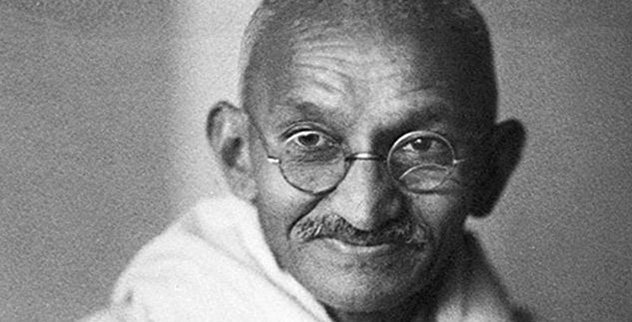
7. Mahatma Gandhi: The Missing Peace Laureate
The achievement
Mahatma Gandhi became one of the most influential figures in modern history through his philosophy of nonviolent resistance. His leadership helped India challenge British colonial rule and inspired civil rights movements around the world.
Why people call it a Nobel snub
Gandhi was nominated for the Nobel Peace Prize multiple times but never received it. The Nobel organization itself has described him as “the missing laureate,” which is about as close as an institution gets to saying, “Yes, this one still haunts the office.”
His omission reflects the political limitations of his era. Early Nobel Peace Prizes often favored European figures and institutional diplomacy. Gandhi’s activism was morally powerful but politically complicated to committee members at the time. Today, the absence of his name from the laureate list looks like a historical pothole large enough to swallow a parade float.
8. Edwin Hubble: The Astronomer Who Expanded the Universe
The achievement
Edwin Hubble helped prove that galaxies exist beyond the Milky Way and showed that the universe is expanding. His work reshaped astronomy and cosmology, turning humanity’s view of the universe from a local neighborhood map into a cosmic atlas.
Why people call it a Nobel snub
Hubble never received a Nobel Prize because astronomy was not treated as a Nobel-worthy branch of physics during much of his lifetime. He pushed for astronomy to be recognized, but the shift came too late for him.
This was not so much a personal rejection as a category failure. The universe expanded; the Nobel definition of physics did not expand quickly enough. That is an awkward look for a prize that celebrates discovery.
9. Fred Hoyle: The Man Who Explained Where Elements Come From
The achievement
Fred Hoyle made major contributions to stellar nucleosynthesis, the theory explaining how stars create many of the chemical elements. If you enjoy carbon, oxygen, iron, or existing at all, Hoyle’s work is relevant to your day.
Why people call it a Nobel snub
In 1983, William Fowler shared the Nobel Prize in Physics for work on nuclear reactions in stars. Hoyle, whose theoretical contributions were foundational, was not included. Some historians and scientists have suggested that Hoyle’s controversial personality and unorthodox views may have hurt his chances.
Hoyle is also famous for coining the term “Big Bang,” even though he opposed the theory. That alone deserves some kind of prize for accidental branding. His Nobel omission shows that scientific achievement and scientific reputation do not always travel in the same suitcase.
10. Leo Tolstoy: The Literary Giant Passed Over
The achievement
Leo Tolstoy wrote War and Peace and Anna Karenina, two novels so monumental that simply carrying them in paperback form can count as light exercise. His moral, philosophical, and literary influence stretched across continents.
Why people call it a Nobel snub
Tolstoy was nominated for the Nobel Prize in Literature but never won. Early Nobel literary decisions were shaped by the Swedish Academy’s interpretation of “ideal” literature, and Tolstoy’s religious, political, and philosophical positions made him a complicated candidate.
The omission became controversial almost immediately. When the first Literature Nobel went elsewhere in 1901, many observers considered Tolstoy the obvious choice. The Academy eventually honored many writers of merit, but skipping Tolstoy still feels like opening a “Greatest Novelists” list and forgetting the alphabet.
What These Nobel Snubs Reveal
The biggest lesson is that prizes are not the same as truth. A Nobel Prize can spotlight greatness, but it cannot manufacture it. Likewise, the absence of a Nobel does not erase achievement. Franklin still helped unlock DNA. Gandhi still reshaped political resistance. Mendeleev still gave chemistry its master chart. Hubble still stretched the known universe.
Nobel snubs also reveal how recognition depends on timing. Some discoveries are too early. Avery’s DNA research was not fully appreciated when it appeared. Some fields are too new. Hubble’s astronomy did not fit the committee’s old definition of physics. Some people die too soon. Franklin’s case is inseparable from the rule against posthumous awards.
Then there are social forces. Women scientists were repeatedly overlooked while male colleagues received formal recognition. Wu, Meitner, Franklin, and Bell Burnell each faced systems that favored senior men, institutional authority, or theoretical framing over experimental brilliance.
The Nobel Prize remains prestigious for good reason. Many laureates truly changed civilization. But Nobel history is also a reminder that genius does not always arrive wearing a name tag the committee can read.
Experiences and Reflections: Reading Nobel History Without Losing Your Mind
Learning about Nobel Prize snubs is a strange emotional experience. At first, it feels like watching the final episode of a prestige drama where the wrong character inherits the kingdom. You read about Rosalind Franklin, Lise Meitner, or Chien-Shiung Wu and feel the urge to reach backward through time, bang on a committee table, and yell, “Excuse me, did everyone misplace their glasses?”
But the more deeply you study these stories, the more complicated they become. The Nobel Prize is not a magic machine that scans history and prints perfect justice. It is a human process. Committees rely on nominations, expert reports, confidential debates, and the scientific understanding available at the time. That does not excuse every omission, but it does explain why some decisions looked defensible then and embarrassing later.
One practical experience from reading Nobel history is learning to separate fame from contribution. Some people become symbols of being overlooked because their stories are easy to tell. Others remain obscure even though their claims may be just as strong. The public remembers Franklin because DNA is famous and the story has dramatic ingredients: a crucial photograph, gender bias, rivalry, early death. Avery’s case is less cinematic, but his contribution to molecular biology was enormous. History, like the internet, has an attention economy.
Another lesson is that credit often flows uphill. Graduate students, technicians, junior collaborators, and experimentalists may do work that makes discovery possible, while senior figures receive the official spotlight. This does not mean every supervisor is a villain twirling a mustache beside a telescope. It means institutions tend to reward rank, visibility, and narrative simplicity. The Nobel Prize, with its three-person limit, intensifies that problem.
These stories also make us better readers of modern science news. When a headline says “Scientist discovers X,” the reality may involve a large team, decades of groundwork, failed experiments, and one exhausted researcher eating vending-machine crackers at midnight. Recognition is often compressed into a neat story because neat stories travel faster than accurate ones.
Finally, Nobel snubs teach humility. We love medals because they create order. They tell us who mattered. But history is not a podium with three slots. It is a crowded room full of people pushing knowledge forward, some loudly, some quietly, some without ever receiving the applause they earned. The healthiest way to read Nobel history is not to throw away the prize, but to look beyond it. The medal is important. The work is more important.
Conclusion
The top 10 people robbed of the Nobel Prize were not all robbed in the same way. Some were trapped by rules. Some were hurt by prejudice. Some were punished by timing. Some were simply too far ahead of their era for committees to understand the full weight of their discoveries.
Still, their legacies survived. The periodic table did not need a medal to become indispensable. DNA did not wait for perfect credit before transforming biology. Nonviolence did not need a Nobel diploma to change political history. The expanding universe did not shrink because Hubble went unrewarded.
That may be the real moral of Nobel snubs: awards matter, but they are not the final court of human achievement. Sometimes history writes the correction in larger letters.

