
Body Care
Fab Freebie: Home Sweet Illustrated Home
Aug
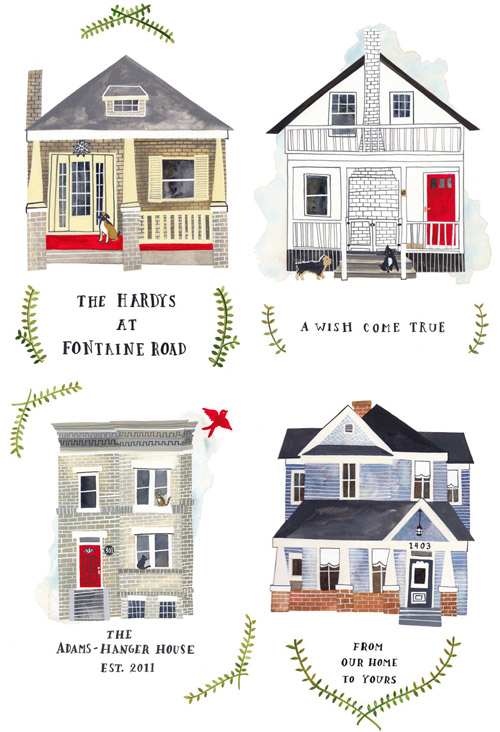
A house portrait does something ordinary real estate photography rarely manages: it turns siding, windows, porch rails, and one stubbornly ofamily story. That is the enduring charm behind Fab Freebie: Home Sweet Illustrated Home, a nostalgic design giveaway centered on custom illustrated house art.
The original Young House Love feature appeared in December 2011 and introduced readers to illustrator Rebekka Seale. The prize combined a gift certificate for a custom house portrait with the winner’s choice of an art print from Seale’s shop. The giveaway itself has long since closed, but the idea remains wonderfully current: celebrate a meaningful home through art rather than buying another decorative object that has never met you and does not know where you hide the good snacks.
Editorial note: This article explores the original giveaway as a design story and provides modern ideas for creating, printing, framing, and gifting illustrated home portraits. It does not represent an active contest.
What Was the Home Sweet Illustrated Home Freebie?
At its heart, the promotion was refreshingly simple. Instead of giving away a mass-produced lamp, rug, or decorative bowl large enough to bathe a hamster, Young House Love highlighted personalized artwork based on a real home.
The featured illustrator would use a photograph of the recipient’s house as the basis for a custom portrait. Architectural details such as the roofline, shutters, porch, front door, landscaping, and exterior colors could be translated into a warm, stylized illustration. The winner also received an additional art print, making the prize both personal and practical.
This was especially fitting during the holiday season. A house portrait could be given to first-time homeowners, parents still living in the family home, newlyweds, or someone preparing to say goodbye to a beloved property. The artwork was not merely a picture of a building. It was a visual container for memories.
Why the Concept Attracted So Much Attention
The original post received thousands of comments. Many readers described first homes, family traditions, homemade presents, holiday reunions, and sentimental gifts. Those responses reveal why illustrated home art resonates: people may care about architecture, but they care even more about what happened inside the architecture.
A crooked porch step may recall a child’s first day of school. A bay window may be where the Christmas tree stood every December. A tiny balcony may have hosted countless morning coffees and at least one argument about whose turn it was to water the basil.
Why Illustrated House Portraits Feel So Personal
Homes are not neutral objects. They accumulate routines, relationships, renovations, celebrations, and mistakes involving paint colors that looked much better on a two-inch sample card.
An illustration can capture that emotional layer because it does not need to reproduce every detail with photographic precision. The artist can simplify distractions, emphasize defining features, soften unattractive elements, and create a version of the house that feels familiar without looking like an appraisal photo.
Illustration Preserves the Character, Not Just the Coordinates
A custom home portrait can highlight the features that make a property recognizable:
- A brightly painted front door
- A deep wraparound porch
- A distinctive chimney or roofline
- Flower boxes, trees, and garden paths
- A mailbox, fence, or favorite porch chair
- A family pet waiting near the entrance
These details help distinguish a meaningful portrait from a generic drawing of “a house.” The goal is not architectural documentation accurate to the last gutter screw. The goal is recognition: the instant feeling of, “Yes, that is our place.”
Affordable Sentimental Art Has a Long History
Printable and illustrated home decor may seem like an internet-era trend, but accessible sentimental prints have decorated American homes for generations. Smithsonian collection notes describe how inexpensive illustrated prints became popular forms of domestic decoration and helped visual stories reach broad audiences. Today’s downloadable art continues that tradition, only now the neighborhood print shop may be an inkjet printer sitting beside a stack of unopened mail.
What Makes a Good Custom House Portrait?
Not every illustration needs to be technically complex. In fact, the strongest house portraits often rely on selective detail, balanced color, and a consistent artistic style.
1. A Clear, Well-Lit Reference Photograph
The artist needs a useful view of the building. A straight-on photograph taken in daylight is usually best. The entire facade should be visible, including the roof, foundation, and major landscaping.
Avoid sending only a dramatic sunset photograph in which the house appears as a mysterious black rectangle. Beautiful vacation photo? Certainly. Helpful architectural reference? Not particularly.
2. Recognizable Architectural Details
The illustration should preserve the property’s most identifiable features. A Cape Cod home, Craftsman bungalow, brick Colonial, modern townhouse, ranch house, or Victorian cottage should retain the proportions and details associated with its style.
Small inaccuracies are rarely fatal, but moving the front door to the opposite side of the building may cause Grandma to wonder whether she has been given a portrait of the neighbor’s house.
3. A Deliberate Color Palette
Some homeowners want exact exterior colors. Others prefer a softer, more decorative palette that coordinates with their interior design. Both approaches can work.
A neutral illustration with cream, charcoal, olive, and muted blue can blend into a calm living room. A brighter version with coral, turquoise, yellow, and green can become a cheerful focal point in an entryway, nursery, or home office.
4. Personal Additions
A date, family name, street name, short phrase, or pet can make the portrait more meaningful. Personalization should remain subtle, however. The house should still be the star. It should not look as if the address has launched a campaign for public office.
How to Create Your Own Home Sweet Illustrated Home
You do not need to win a giveaway to create personalized house art. You can commission an illustrator, purchase a digital portrait service, or make your own simplified drawing.
Option One: Commission an Independent Illustrator
Commissioning an artist offers the most personal result. Look for a portfolio showing buildings similar to yours and pay attention to the artist’s treatment of windows, landscaping, perspective, shadows, and lettering.
Before ordering, confirm what is included:
- Physical artwork, digital file, or both
- Number of revisions
- Expected completion time
- Available print dimensions
- Whether people, pets, cars, or text cost extra
- Personal-use or commercial-use rights
Option Two: Order a Digital Download
Digital artwork is convenient because it can be delivered without shipping and printed locally in multiple sizes. Etsy’s seller guidance notes that downloadable products allow customers to obtain and display new artwork quickly, sometimes within minutes of purchase.
A digital file is also useful when relatives want copies. One family member may choose an 8-by-10-inch print for a desk, while another creates an 11-by-14-inch framed version for the hallway. Always check the artist’s license before producing multiple copies.
Option Three: Draw a Simplified Portrait Yourself
A beginner-friendly house illustration can be created with tracing paper, a tablet, or basic drawing software:
- Choose a clear exterior photograph.
- Trace the main roofline, walls, doors, and windows.
- Remove visual clutter such as power lines or trash bins.
- Add simplified trees, shrubs, steps, and paths.
- Apply a limited color palette.
- Add shadows sparingly to create depth.
- Export a high-resolution file for printing.
Do not worry if your first draft resembles a house drawn by a very organized child. Clean line work improves quickly, and charm often matters more than perfect perspective.
How to Print Illustrated Home Art Successfully
A beautiful digital portrait can lose its magic if it is printed from a blurry screenshot on paper rescued from the bottom of an office drawer.
Start With the Correct Resolution
For small and medium art prints viewed up close, 300 pixels per inch is widely treated as the standard for sharp, detailed results. Adobe recommends setting artwork near 300 ppi for high-quality printing unless a specific printer or service provides different requirements.
As a practical guide, an 8-by-10-inch print at 300 ppi requires approximately 2,400 by 3,000 pixels. Enlarging a tiny social-media image will not create new detail. It merely creates larger blur, which is generous but not especially helpful.
Choose Paper That Supports the Style
Matte heavyweight paper is a strong choice for watercolor-inspired or hand-drawn illustrations. It reduces glare and gives the artwork a softer, more traditional appearance. Smooth fine-art paper works well for delicate lines, while lightly textured paper can add warmth to simple designs.
Glossy photo paper may increase saturation but can make an illustrated portrait feel more like a photograph. Canon notes that inkjet printers are generally better suited than laser printers for photo paper, artwork, and creative media.
Match the Printer Settings to the Paper
Select the correct paper size, media type, orientation, and print-quality setting. HP advises matching the paper setting to the material loaded in the printer so ink is applied properly. Using a plain-paper setting for heavy matte stock can produce dull colors, uneven coverage, or smearing.
Print one test copy before using your last sheet of expensive paper. Printers possess a supernatural ability to detect scarcity.
Framing and Display Ideas for Illustrated House Art
The right frame helps the portrait feel intentional rather than temporarily parked on a shelf beside old batteries.
Keep the Frame Simple
Thin wood, white, black, brass, or natural oak frames usually complement house illustrations. A wide mat gives the artwork breathing room and can make a modest print feel more substantial.
For a colorful portrait, select a neutral frame. For a restrained black-and-white drawing, a warm wood or painted frame can introduce personality.
Hang It at a Comfortable Viewing Height
A commonly used guideline places the center of framed artwork about 57 inches above the floor, although furniture, ceiling height, and the proportions of the room may justify adjustments. The goal is comfortable viewing, not strict obedience to a tape measure wearing a tiny police badge.
Add It to a Meaningful Gallery Wall
Pair a house portrait with family photographs, a neighborhood map, a handwritten recipe, a wedding invitation, vintage keys, or a small drawing made by a child. Designers frequently recommend building gallery walls around meaningful objects rather than purchasing a complete collection in one hurried shopping trip.
Keep approximately two to three inches between frames for a tidy arrangement, and maintain consistent spacing even when frame sizes vary.
When an Illustrated Home Portrait Makes a Great Gift
Personalized house art works especially well when the occasion involves a home, a transition, or a family milestone.
- Housewarming: Celebrate a first home without adding another kitchen gadget.
- Wedding: Illustrate the couple’s first shared residence or ceremony venue.
- Anniversary: Honor the home where a family was established.
- Moving away: Preserve a property before relocation.
- Holiday gift: Give parents or grandparents a portrait of the family home.
- Memorial gift: Remember a home associated with an important person.
- Real estate closing: Offer buyers or sellers a thoughtful keepsake.
The best gift portrait is not necessarily the largest or most expensive. Accuracy, timing, and emotional relevance matter more. An 8-by-10-inch illustration of the right home can outperform a giant generic canvas featuring three beige circles and a title that claims they represent “balance.”
Respecting Copyright and Artist Licenses
A downloadable file is easy to copy, but easy does not automatically mean permitted. Illustrations, graphic art, paintings, prints, and architectural drawings may be protected by copyright. The U.S. Copyright Office explains that visual artists generally control reproduction, distribution, derivative works, and public display of their original artwork.
Before printing, editing, sharing, or selling an illustrated home design, review the license. Personal-use permission may allow you to print a copy for your own wall while prohibiting resale, merchandise, logo use, or distribution of the digital file.
Free artwork also has rules. “Free download” does not always mean “do anything imaginable, including printing it on 700 tote bags and opening a mysterious online boutique.” When uncertain, ask the artist.
Experience: Turning an Ordinary House Photo Into Meaningful Art
Consider a realistic project involving a family preparing to move from the small brick house where they had lived for 18 years. The property was not architecturally grand. It had a shallow porch, white shutters, a narrow driveway, and a maple tree that dropped leaves with the enthusiasm of a confetti cannon.
The homeowners had plenty of photographs, but most were taken during birthday parties, snowstorms, or rushed mornings. The house usually appeared in the background, partially blocked by cars, relatives, inflatable holiday decorations, or a dog refusing to look at the camera.
To create an illustrated portrait, the family began by taking several new exterior pictures on an overcast afternoon. Soft daylight reduced harsh shadows and made the brick, trim, roof, and landscaping easier to see. One photograph was taken directly from the sidewalk, while two angled views helped document the porch and side windows.
The first illustration draft was technically accurate but emotionally incomplete. It showed the correct number of windows and the proper roofline, yet it looked like an attractive stranger’s home. The family then identified the details that carried memories: the blue ceramic planter beside the steps, the porch swing installed after their second child was born, the maple tree, and the small brass house numbers polished every spring.
Those details were added to the revision. The artist also removed a utility wire and shifted a recycling bin out of sight. This was not dishonest. Nobody has ever looked at a portrait and complained that it failed to preserve the historic dignity of a recycling bin.
Choosing colors created another lesson. The first digital proof looked bright and cheerful on a backlit monitor, but the test print appeared darker and slightly warmer. The family adjusted the brick color, lightened the shadows, and printed again on heavyweight matte paper using the printer’s best-quality setting.
The second print looked far better. The lines remained crisp, the muted colors suited the illustration, and the matte surface avoided distracting reflections. An off-white mat and narrow walnut frame connected the art to the family’s traditional furniture without making the piece feel old-fashioned.
Before hanging it, paper templates were taped to the wall above an entry console. The first position was too high, producing the familiar “artwork attempting to escape through the ceiling” effect. Lowering the frame created a stronger relationship with the furniture below it.
The finished portrait was eventually given to the homeowners on their final evening in the house. Its emotional impact came from the accumulated details rather than artistic extravagance. The blue planter recalled gardening attempts. The porch swing represented late-night conversations. The maple tree marked years of changing seasons and repetitive raking complaints.
After the move, the portrait hung near the entrance of the new home. Visitors saw a pleasant illustration. The family saw scraped knees on the front walk, prom photographs on the porch, snow piled near the driveway, and countless ordinary departures and returns.
That experience demonstrates the real value of illustrated home art. The artist does not simply draw a structure. The process identifies which visible details have become attached to invisible memories. A good portrait captures both.
It also proves that presentation matters. A high-resolution file, suitable paper, careful color adjustment, and an appropriately scaled frame can transform a digital image into a lasting decorative object. Skipping those steps may save time, but it can leave meaningful art looking like a flyer for a neighborhood yard sale.
Most importantly, the project shows why personalized pieces often outlast trends. Paint colors change. Furniture moves. Gallery walls expand, shrink, and occasionally suffer unfortunate encounters with overly confident hammers. A portrait of a meaningful home continues to tell the same story even when displayed in a completely different place.
Conclusion: Home Sweet Home, One Line at a Time
Fab Freebie: Home Sweet Illustrated Home began as a charming giveaway, but its appeal reaches beyond the original contest. A custom house portrait combines architecture, memory, illustration, and interior design in one highly personal piece.
Whether commissioned from an independent artist, purchased as a digital download, or drawn at home, the best portrait focuses on recognizable details and emotional significance. Print it carefully, frame it simply, display it thoughtfully, and respect the artist’s usage terms.
In a decorating world crowded with temporary trends, illustrated home art offers something refreshingly durable. It reminds us that a home is more than a roof and four walls. It is the setting where daily life becomes family historyusually while someone is searching for the keys.

