
Beauty Unlocked
Tabletop: Two Simple Trays at Abitare
Aug
A serving tray is one of those household objects that seems almost t It carries coffee. It catches keys. It prevents a collection of remote controls from forming its own independent government.
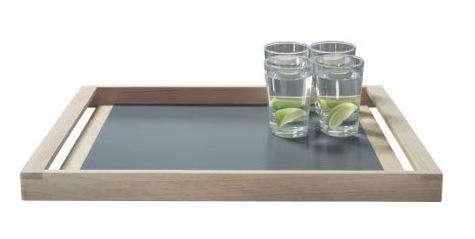
Yet the simplest objects often reveal the most about good design. In 2009, Remodelista highlighted two understated trays sold by Abitare in Brooklyn: an 18-by-11-inch beech-and-melamine serving tray by Danish architect and industrial designer Knud Holscher, then priced at $42, and a molded plastic tray by British designer Jasper Morrison, then priced at $66. ther tray relied on ornament, novelty, or an aggressively fashionable silhouette. Instead, both demonstrated how proportion, material, edge detail, weight, and usability can turn a basic tabletop accessory into something worth keeping for years.
A Small Design Story With Lasting Appeal
The original Abitare feature was brief, but its subject remains relevant. Home accessories have become increasingly elaborate, yet most people still need the same things from a tray: a stable base, a comfortable grip, an easy-to-clean surface, and a shape that works in more than one room.
That practical focus places these trays within a broader tradition of modern industrial design. The Museum of Modern Art describes everyday design as the process of turning ideas and solutions into physical objects that support ordinary life. When an object works especially well, users may barely notice the decisions behind it. ray is therefore a surprisingly tough design assignment. It must be thin but not flimsy, light but not unstable, plain but not dull, and decorative without becoming too precious to use. In other words, it must quietly perform several jobs while pretending it has only one.
The Two Trays at a Glance
| Feature | Knud Holscher Serving Tray | Jasper Morrison Molded Tray |
|---|---|---|
| Primary material | Beech wood and melamine | Molded plastic |
| Visual character | Warm, architectural, Scandinavian | Quiet, seamless, industrial |
| Original listed size | 18 by 11 inches | Not specified in the original feature |
| Historical 2009 price | $42 | $66 |
| Best suited to | Breakfast, tea, coffee, desk organization | Drinks, entertaining, minimalist displays |
| Design philosophy | Precision, usefulness, restrained detailing | Familiar form refined until almost invisible |
Tray One: Knud Holscher’s Beech-and-Melamine Design
Warmth Without Rustic Fuss
Knud Holscher’s tray combines the visual warmth of beech with the practicality of a melamine surface. That pairing is important. An entirely wooden tray can feel traditional or rustic, while an entirely plastic one may appear more utilitarian. Combining wood and melamine creates a middle ground: natural at the edges, efficient where cups and plates actually sit.
Holscher’s wider body of work was known for precision, functional discipline, and respect for the person using the object. His designs ranged from architecture and hardware to household products, but they shared a preference for clear forms and purposeful details rather than decoration for decoration’s sake. 18 by 11 inches, the tray is large enough for two mugs and a small plate without becoming an unwieldy cafeteria platform. That proportion also allows it to serve as a permanent organizer on a console, dresser, kitchen counter, or desk.
Why Beech Works Visually
Beech typically has a relatively even grain and a pale, calm appearance. It looks especially comfortable beside white ceramics, stainless-steel flatware, clear glass, linen napkins, and neutral interiors. The wood adds warmth without shouting, “Welcome to my woodland-themed breakfast experience.”
Wood is a natural material, so its grain, color, and physical behavior vary. Moisture, growth conditions, and construction methods all influence performance, which is one reason a protected or laminated serving surface can be useful in an object exposed to drips and repeated wiping. he Practical Role of Melamine
A melamine surface provides a smooth visual plane and makes routine cleanup easier than it would be on unfinished wood. It is well suited to carrying cups, dry foods, napkins, and dishes. Owners should still follow the maker’s instructions and avoid treating a serving tray like cookware.
The U.S. Food and Drug Administration advises that melamine-based tableware should not be used to heat food in a microwave unless the product is specifically labeled for that purpose. Food can be heated in suitable cookware and then served on melamine tableware. n>
Tray Two: Jasper Morrison’s Molded Plastic Design
A Study in Deliberate Normality
Jasper Morrison’s tray represents another kind of simplicity. Rather than emphasizing the meeting of two materials, it appears to rely on the continuity of a molded form. The base, corners, and rim can be read as one unified object rather than separate components assembled together.
Morrison is closely associated with the idea of “Super Normal” design, developed with Japanese designer Naoto Fukasawa. The concept values objects that feel familiar, intuitive, and quietly useful rather than attention-seeking. Morrison has explained that such objects are understood through daily use and through the atmosphere they create around themselves. per Hewitt has described Morrison’s simple forms as expressions of this philosophy, in which an object earns importance through everyday usefulness. That makes a molded tray an almost perfect example. It does not need a dramatic story. Its story is that the glasses arrived safely. he Advantages of a Molded Form
Molding allows a designer to control transitions between the tray’s base, rim, and corners. Rounded interior corners are easier to wipe than complicated joints, while a continuous lip can help prevent small spills or sliding objects from escaping.
Plastic also offers visual consistency. There is no grain to align and no separate trim competing with the center surface. In a minimalist kitchen or living room, that uniformity can help the tray disappear into the environment until it is needed.
This does not make the tray boring. It makes it adaptable. A simple molded tray can hold cocktails at a party, organize olive oil beside the stove, support perfume bottles on a dresser, or rescue a coffee table from seven unrelated objects scattered like evidence after a very stylish crime.
What Makes a Simple Serving Tray Successful?
1. A Useful Rim
The rim must be high enough to contain objects but low enough for comfortable access. A very shallow edge offers little security, while an oversized wall makes the tray resemble a storage bin. The best profile provides confidence without interfering with cups, bowls, or hands.
2. Balanced Proportions
A good tray offers usable surface area without dominating the table beneath it. Interior-design publications frequently recommend trays as tools for grouping small objects, but they also warn against covering every inch of a tabletop. The goal is organization, not building a decorative airport. . Manageable Weight
The tray should feel stable when empty but remain comfortable when loaded. A heavy stone tray may look magnificent on a console yet become inconvenient for everyday serving. Lightweight molded plastic is easy to carry, while a wood-framed design can provide a reassuring sense of structure.
4. A Surface That Matches the Job
Serving coffee requires resistance to moisture and staining. Displaying candles or books places fewer demands on the finish. Before buying a tray, decide whether it will actually travel around the house or spend its life looking photogenic beneath one candle and a tiny bowl no one is allowed to touch.
5. Comfortable Handling
Handles are not always necessary, but the outer edge should provide a secure place for fingers. The relationship between hand, weight, rim, and balance is more important than decorative cutouts that look clever but pinch when the tray is full.
How to Style Simple Trays Around the Home
On a Coffee Table
Use a tray to define a small zone rather than occupy the whole surface. A book, candle, small bowl, and modest vase are usually enough. Better Homes & Gardens recommends varying object height and using a tray to add texture while organizing individual pieces. Architectural Digest similarly suggests trays for collecting small objects and creating intentional groupings. ve clear space around the arrangement for a drink, a snack, or a guest who does not understand why every horizontal surface has become an exhibition.
In the Kitchen
A compact tray can organize olive oil, salt, pepper, and frequently used seasonings. It can also create a small coffee station containing beans, filters, spoons, and sweeteners. Grouping these items visually makes a counter feel calmer and allows the whole setup to move when the surface needs cleaning. Architectural Digest notes that putting coffee accessories on a tray can turn potential clutter into a cohesive arrangement. n a Desk
A small serving tray can become a landing zone for a notebook, reading glasses, charging cable, and pen. Apartment Therapy has documented how inexpensive minimalist trays can organize a desktop without consuming the entire work surface. important rule is to limit the category of items. A tray labeled “daily desk tools” is useful. A tray containing receipts, coins, mystery screws, three expired coupons, and a hotel key from 2018 is merely clutter with borders.
In an Entryway
Place a tray on a console for keys, sunglasses, and outgoing mail. The edge prevents small items from wandering, while the defined footprint creates a natural limit. When the contents rise above the rim, it is time to edit rather than purchase a second tray and establish a branch office.
For Entertaining
A simple tray can hold a water carafe, glasses, cocktail ingredients, or small bowls of snacks. Architectural Digest recommends serving drinks and snacks from trays and accent bowls because the arrangement is practical while still feeling intentional. restrained appearance of the Holscher and Morrison designs would allow colorful drinks, patterned napkins, or handmade ceramics to become the focus. The tray supports the performance rather than demanding a solo.
Choosing Between Wood-and-Melamine and Molded Plastic
Choose the Holscher Approach When:
- You prefer Scandinavian or warm minimalist interiors.
- Your tableware includes white porcelain, linen, glass, or stainless steel.
- You want an object that can remain on display between uses.
- You enjoy visible material contrast and architectural detailing.
- You want a tray that feels equally natural in a kitchen, office, or bedroom.
Choose the Morrison Approach When:
- You prefer seamless, quiet, industrial design.
- You want a lightweight tray that is easy to move.
- Your home already contains strong colors or patterns.
- You value quick cleanup and simple corners.
- You appreciate objects that become less noticeable as they become more useful.
There is no universal winner. The Holscher tray makes material part of the experience; the Morrison tray makes form and function nearly inseparable. One says, “Notice how thoughtfully I am constructed.” The other says, “Your coffee is in the living room.” Both are persuasive arguments.
Buying a Similar Minimalist Tray Today
The historical Abitare prices should not be treated as current retail prices, and original examples may now appear through vintage dealers or secondary markets. Shoppers can nevertheless apply the same design criteria to contemporary trays.
Inspect the Corners
Look for smooth transitions, secure joints, and surfaces that will not trap crumbs. Weak corners often reveal themselves before the rest of the object does.
Test the Rim
Imagine lifting the tray while it holds two full mugs. Can your fingers grip the edge without tilting the surface? A tray that is beautiful only when empty has misunderstood the assignment.
Measure the Destination
Use painter’s tape or a sheet of paper to mark the proposed footprint on your coffee table or counter. This prevents the classic online-shopping surprise in which a “small tray” arrives with the dimensions and confidence of a dining table.
Check Care Instructions
Determine whether the piece should be hand-washed, wiped only, or protected from prolonged moisture. Do not assume that every decorative tray is food-safe, dishwasher-safe, or suitable for direct food contact.
Prioritize Repeat Use
A neutral tray often offers better long-term value than a highly seasonal one. Color can come from cups, flowers, fruit, books, or napkins. The supporting object does not always need to arrive wearing a costume.
Why These Two Trays Still Matter
The appeal of the two simple trays at Abitare is not based on rarity or spectacle. Their strength lies in restraint. Each designer took a familiar object and refined it through material, proportion, and manufacturing logic.
Dwell’s coverage of modern serving pieces repeatedly shows that classic tray forms remain relevant because they can move between serving, display, organization, and even furniture-like uses. The object survives changing styles because its basic function remains necessary. t flexibility is also a useful lesson for decorating. A home does not need every accessory to be a conversation starter. Some objects should simply make breakfast easier, gather the loose items, protect the table, and look pleasant while doing it.
Simple design is not the absence of thought. It is often the result of removing every detail that cannot defend its existence.
Experience Notes: What Living With a Simple Tray Feels Like
Consider a realistic week in a small apartment with one well-proportioned tray. On Monday morning, it carries coffee, toast, and a phone from the kitchen to a desk. The rim prevents the spoon from sliding off, and the contained arrangement makes an ordinary breakfast feel slightly more civilized. Nothing dramatic happens, which is exactly what should happen when hot coffee is traveling over a pale rug.
After breakfast, the tray does not need to return to a cabinet. It remains on the desk and collects a notebook, glasses, earbuds, and a pen. Suddenly, the difference between “organized” and “temporarily abandoned” becomes visible. Items inside the tray belong there. Items outside it need to be put away.
On Tuesday evening, the same tray moves to the coffee table. It holds two drinks, a small dish of nuts, and the remote control. The setup feels deliberate but not formal. Guests can see where the drinks belong, and when more table space is needed, the entire arrangement moves in one trip. This may not qualify as heroic labor, but carrying five objects at once without dropping the olives deserves at least a modest medal.
By Wednesday, the tray has become a cleaning tool. Instead of lifting bottles and accessories individually from the counter, the whole group moves together. The surface beneath can be wiped in seconds. This is one of the tray’s least glamorous and most convincing benefits: it converts many small interruptions into one simple action.
On Thursday, the tray becomes a visual test. A candle, vase, stack of coasters, bowl, book, and decorative object all fit, but fitting is not the same as belonging. Removing half the pieces improves the arrangement immediately. The remaining objects gain breathing room, and the table looks larger. The tray teaches editing by making excess impossible to ignore.
Friday introduces a spill. A few drops of coffee land inside the rim instead of reaching the table. A smooth melamine or molded surface wipes clean quickly, while the raised edge limits the mess. At this moment, material choice stops being an abstract design discussion and becomes the reason no one is searching for upholstery cleaner.
Over the weekend, the tray moves againperhaps to a bedside table with water and a book, to a bathroom with hand towels and toiletries, or to an entry console with keys and sunglasses. Its identity changes because its design is not overly specific. It does not insist on being a breakfast tray, bar tray, desk tray, or vanity tray. It is simply a useful boundary around a group of objects.
This repeated movement reveals the central difference between good minimalism and empty minimalism. Empty minimalism removes things. Good minimalism improves the things that remain. A thoughtfully designed tray earns its space by reducing visual noise, simplifying cleaning, protecting surfaces, and making small routines easier.
After several days, the best compliment is that the tray no longer feels like a new purchase. It feels obvious, as though the room had always needed it. That is the shared achievement of the two Abitare designs: they turn an ordinary platform with raised edges into a quiet piece of domestic infrastructure.
Conclusion
Knud Holscher’s beech-and-melamine serving tray and Jasper Morrison’s molded plastic tray approach simplicity from different directions. Holscher uses material contrast, warmth, and architectural precision. Morrison uses continuity, familiarity, and a form designed to disappear gracefully into daily life.
Both demonstrate that a successful tabletop accessory does not require decoration piled on top of decoration. It requires sensible dimensions, a useful rim, manageable weight, durable materials, and enough visual restraint to work in several settings.
Whether used for morning coffee, cocktails, desk supplies, or the daily migration of keys and sunglasses, a simple tray can improve both function and atmosphere. It may never become the loudest object in the room. Thankfully, the room probably has enough loud objects already.

