
Beauty Unlocked
What a Spirometry Test Score Can Tell You About Your COPD
Aug
Spirometry numbers may look like alphabet soup served with percentages, decimals, and a side order of confusion. Yet those figuresespecially FEV1, FVC, and the FEV1/FVC ratiocan provide valuable information about whether airflow is obstructed, how severe that obstruction appears to be, and whether your lung function is changing over time.
For people with chronic obstructive pulmonary disease, or COPD, spirometry is one of the most important objective breathing tests. However, no single number can describe your entire condition. Your symptoms, activity level, flare-up history, exposures, other health conditions, and test quality all matter. Think of spirometry as an important chapter in your health story, not the entire autobiography.
What Is a Spirometry Test?
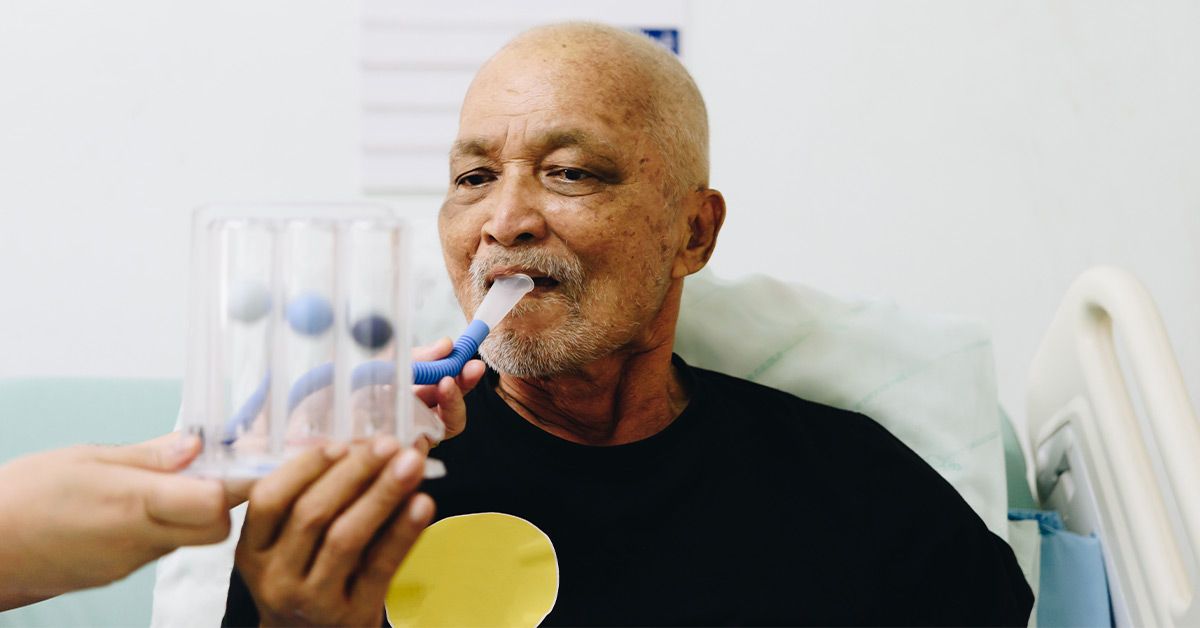
Spirometry is a common pulmonary function test that measures how much air you can forcefully exhale and how quickly you can expel it after taking the deepest breath possible. It is widely used to investigate symptoms such as chronic coughing, wheezing, mucus production, chest tightness, and shortness of breath.
During the test, you usually sit upright, wear a nose clip, seal your lips around a mouthpiece, inhale completely, and then blast the air out as hard and as long as possible. You will normally repeat the maneuver several times so the technician can determine whether the results are acceptable and repeatable. It may feel like trying to blow out 100 birthday candles while someone enthusiastically coaches from the sidelines.
A bronchodilator may then be administered to relax and open the airways. After waiting for the medication to work, the test is repeated. Comparing the measurements before and after the bronchodilator helps clinicians evaluate whether airflow obstruction remains present. Spirometry is generally safe, although forceful breathing may temporarily cause coughing, dizziness, fatigue, chest discomfort, or shortness of breath.
The Three Spirometry Numbers That Matter Most
FEV1: How Much Air You Exhale in One Second
FEV1 stands for forced expiratory volume in one second. It measures how much air you can force out during the first second of your exhalation.
When COPD narrows, inflames, or damages the airways, air cannot escape as rapidly as it should. Your lungs may contain plenty of air, but getting it out quickly becomes the problemrather like trying to empty a swimming pool through a garden hose.
Your report may show the FEV1 in liters and as a percentage of the predicted value. The percentage is particularly useful when grading the severity of airflow limitation after COPD has been confirmed.
FVC: The Total Air You Forcefully Exhale
FVC stands for forced vital capacity. It is the total amount of air you can forcefully breathe out after filling your lungs as completely as possible.
A low FVC does not automatically mean severe COPD. It may occur when air becomes trapped in the lungs, when the exhalation ends too early, when the starting breath was incomplete, or when another condition restricts lung expansion. Obesity, neuromuscular weakness, chest-wall disorders, and interstitial lung disease can also affect lung volumes.
If FVC is unexpectedly low, clinicians may order full pulmonary function testing, including lung-volume measurements and a diffusion-capacity test. Spirometry can suggest a restrictive pattern, but it cannot confirm true restriction by itself.
FEV1/FVC Ratio: The Main Airflow-Obstruction Clue
The FEV1/FVC ratio compares the air expelled during the first second with the total amount exhaled. For example, if your FEV1 is 2.0 liters and your FVC is 3.0 liters, the ratio is approximately 0.67, or 67%.
Current Global Initiative for Chronic Obstructive Lung Disease guidance requires a post-bronchodilator FEV1/FVC ratio below 0.70 to establish persistent airflow obstruction consistent with COPD. The result must still be interpreted alongside symptoms, exposure history, and other possible diagnoses.
How Predicted Values Personalize Your Results
A raw FEV1 value has limited meaning by itself. A result of 2.0 liters might be close to expected for one person but substantially reduced for another. Laboratories therefore compare your measurement with a reference value calculated from characteristics such as age, sex, height, and the reference equation used by the testing facility.
If your FEV1 is 1.8 liters and the predicted value is 3.0 liters, your result is 60% of predicted. That does not mean your lungs are “60% alive” or that you have lost exactly 40% of your lung tissue. It means your measured airflow was 60% of the reference value expected for someone with comparable characteristics.
Some reports also include a lower limit of normal, or LLN, and a z-score. These provide age-sensitive context. The fixed 0.70 ratio is straightforward and remains the GOLD diagnostic criterion, but a ratio naturally declines with age. Consequently, clinicians may examine LLN values, z-scores, symptoms, and repeat testing when a result is borderlineparticularly in younger or older adults.
What Your FEV1 Percentage Says About COPD Severity
Once persistent post-bronchodilator airflow obstruction has confirmed COPD, the post-bronchodilator FEV1 percentage can be used to grade the degree of airflow limitation.
| GOLD Grade | Post-Bronchodilator FEV1 | Airflow Limitation |
|---|---|---|
| GOLD 1 | 80% predicted or higher | Mild |
| GOLD 2 | 50% to 79% predicted | Moderate |
| GOLD 3 | 30% to 49% predicted | Severe |
| GOLD 4 | Below 30% predicted | Very severe |
These grades describe airflow limitation, not every aspect of your health. Two people with an FEV1 of 55% predicted may have dramatically different daily experiences. One may walk several miles with few limitations, while another becomes breathless during dressing because of deconditioning, heart disease, frequent exacerbations, anxiety, muscle weakness, or extensive emphysema.
Modern COPD assessment therefore considers symptom burden and previous exacerbations in addition to spirometry. Your clinician may use tools such as the COPD Assessment Test, the modified Medical Research Council breathlessness scale, and your history of steroid treatments, emergency visits, or hospitalizations.
Three Examples of Spirometry Results
Example 1: An Obstructive Pattern Consistent With COPD
- Post-bronchodilator FEV1: 68% predicted
- Post-bronchodilator FVC: 86% predicted
- Post-bronchodilator FEV1/FVC: 0.62
The ratio remains below 0.70 after bronchodilator treatment, indicating persistent airflow obstruction. If the person also has compatible symptoms and relevant exposures, the findings support COPD. An FEV1 of 68% predicted falls within GOLD 2, or moderate airflow limitation.
Example 2: Low FVC Without a Low Ratio
- FEV1: 66% predicted
- FVC: 64% predicted
- FEV1/FVC: 0.81
The preserved ratio does not meet the spirometric criterion for COPD. The reduced FVC could reflect incomplete effort, early termination, obesity, restriction, or another problem. Full pulmonary function tests may be needed before anyone gives the numbers a dramatic diagnosis and their own television soundtrack.
Example 3: A Borderline Result
- Post-bronchodilator FEV1: 84% predicted
- Post-bronchodilator FVC: 94% predicted
- Post-bronchodilator FEV1/FVC: 0.69
This ratio technically falls below the fixed 0.70 threshold, but it is very close to the cutoff. The clinician may review the flow-volume curves, test quality, LLN, z-score, age, symptoms, smoking or occupational history, and previous measurements. Repeating spirometry on another stable day may be appropriate when the result sits near the diagnostic boundary.
What Spirometry Can Tell You About Your COPD
Whether Persistent Airflow Obstruction Is Present
Symptoms can raise suspicion for COPD, but symptoms alone cannot confirm it. Shortness of breath and coughing may also result from asthma, heart disease, bronchiectasis, anemia, obesity, post-viral conditions, medication effects, or physical deconditioning. Post-bronchodilator spirometry provides objective evidence of persistent expiratory airflow obstruction.
How Limited Your Expiratory Airflow Appears
FEV1 percentage helps quantify the physiologic degree of airflow limitation. Lower values are generally associated with more substantial obstruction, although they do not perfectly predict how breathless you feel.
Whether Lung Function Is Changing Over Time
Repeated high-quality tests can show whether FEV1 is relatively stable or declining. A single lower result does not necessarily prove that COPD has rapidly worsened. Respiratory infections, recent exacerbations, medication timing, fatigue, pain, equipment differences, and test effort can temporarily alter performance.
Clinicians look for a meaningful pattern across comparable tests rather than panicking over every small wiggle. Lungs, like bathroom scales and internet connections, do not produce perfectly identical numbers every day.
Whether Treatment May Be Affecting Measured Airflow
Pre- and post-bronchodilator results show how airflow changes after an airway-opening medication. A noticeable improvement can be useful information, but bronchodilator responsiveness does not automatically prove asthma or exclude COPD. Some people with COPD demonstrate meaningful improvement, while some people with asthma may not show dramatic reversibility during a particular test.
Whether More Testing Is Needed
Spirometry may reveal an unusual or mixed pattern that deserves additional investigation. Lung-volume testing can assess air trapping and confirm restriction. Diffusion-capacity testing evaluates how effectively gases move from the lungs into the bloodstream. Imaging, oxygen measurements, exercise testing, bloodwork, and alpha-1 antitrypsin testing may also be appropriate in selected patients.
What a Spirometry Score Cannot Tell You
Spirometry cannot show exactly how much emphysema is present, locate damaged lung tissue, directly measure blood oxygen, or determine how often you will experience COPD flare-ups. It also cannot fully explain fatigue, exercise tolerance, sleep quality, anxiety, or the impact COPD has on work and relationships.
A person may have significant emphysema on a CT scan while showing only modest spirometric obstruction. Another person may have considerable breathlessness despite an FEV1 that looks relatively preserved. Conditions such as heart failure, pulmonary hypertension, anemia, sleep apnea, depression, and muscle loss can influence symptoms independently of the spirometry grade.
That is why treatment decisions should not be made from FEV1 alone. Inhaler selection, pulmonary rehabilitation, vaccination, smoking cessation, oxygen evaluation, physical activity planning, and flare-up prevention depend on a broader clinical assessment.
Why Test Quality Matters
Spirometry is objective, but performing it requires concentration, coordination, coaching, and substantial effort. A hesitant start may underestimate first-second airflow. Coughing during the first second can distort FEV1. Stopping too soon can reduce FVC. Air leaking around the mouthpiece can make both values inaccurate.
Technicians therefore look for several acceptable efforts that agree closely with one another. Many reports include quality grades or comments describing coughing, inconsistent effort, early termination, or difficulty following instructions. A low-quality test should not be treated like an unquestionable verdict carved into a stone tablet.
Tell the testing team if you have chest pain, recently had surgery, are recovering from an infection, feel faint, or cannot continue. Do not discontinue inhalers before spirometry unless the testing facility or your clinician specifically instructs you to do so. Medication-holding instructions vary according to the purpose of the test and the inhaler involved.
How to Discuss Your Results With Your Clinician
Instead of asking only whether your score is “good” or “bad,” consider asking:
- Was the test acceptable and repeatable?
- Were these measurements taken before or after a bronchodilator?
- Does my post-bronchodilator ratio confirm persistent obstruction?
- What is my FEV1 percentage and GOLD spirometric grade?
- How does this result compare with my previous tests?
- Could another condition be contributing to my symptoms?
- Do I need lung volumes, diffusion testing, imaging, or exercise testing?
- What actions could reduce my symptoms and future exacerbation risk?
Bring a current medication list and describe what happens during real activities. Saying “I get winded” is useful; saying “I must stop halfway up one flight of stairs” gives your clinician a much sharper picture.
Experiences People Commonly Have With COPD Spirometry
The following scenarios are composites created from common patient experiences. They are not descriptions of specific individuals and should not replace personalized medical advice.
The First Test: “I Thought I Had Failed”
A former smoker in his early 60s arrives for spirometry after months of coughing and becoming short of breath while walking uphill. During the first attempt, he coughs into the mouthpiece. During the second, he stops exhaling too soon. By the third attempt, he is frustrated and asks whether he has “failed the lung exam.”
The technician explains that spirometry is not a pass-or-fail school test. Repetition is part of obtaining reliable measurements. After additional coaching, he produces several consistent efforts. His post-bronchodilator ratio is below 0.70, and his FEV1 falls within the moderate airflow-limitation range.
The number is upsetting at first, but it also ends months of uncertainty. His clinician combines the result with his symptoms and exposure history, reviews inhaler technique, discusses smoking abstinence, and refers him to pulmonary rehabilitation. Several months later, his FEV1 has not magically transformed, but he can walk farther and feels less frightened by breathlessness. The experience teaches him that a stable number can coexist with meaningful improvement in daily life.
The Follow-Up Test: A Small Drop That Looked Enormous
A woman with established COPD compares two reports and notices that her FEV1 decreased from 58% to 55% predicted. The three-point difference looks alarming on paper, especially after an evening spent asking an internet search bar questions it was never emotionally prepared to answer.
Her clinician reviews the details. The second test occurred shortly after a respiratory infection, she had slept poorly, and the report noted coughing during one maneuver. Rather than treating one result as proof of sudden deterioration, the clinician considers symptoms, exacerbations, oxygen levels, and prior trends. A later test performed when she is stable returns close to her earlier baseline.
The experience does not mean that changes should be ignored. It demonstrates why trends must be interpreted in context. Technique, temporary illness, and normal measurement variability can influence modest differences.
When Symptoms and FEV1 Do Not Match
Another person has an FEV1 above 80% predicted but becomes breathless while carrying groceries. He assumes a “mild” spirometric grade means the symptoms cannot be important. His clinician disagrees and investigates further.
Additional testing shows emphysema with air trapping, while physical deconditioning and a heart rhythm problem also contribute to his limited stamina. His care plan includes inhaler review, cardiac management, progressive exercise, and breathing strategies.
This experience highlights a crucial point: the spirometry grade measures airflow limitation, not courage, fitness, discomfort, oxygen exchange, or total disease burden. A relatively preserved FEV1 does not make troublesome symptoms imaginary. Likewise, a low FEV1 does not define what a person can achieve with effective treatment, rehabilitation, pacing, and support.
The Useful Lesson Behind the Numbers
People often remember the percentage and forget everything surrounding it. Yet the most useful interpretation usually comes from combining the score with questions such as: Has walking become easier or harder? Have flare-ups increased? Is the inhaler being used correctly? Has smoking stopped? Is pulmonary rehabilitation helping? Are there new symptoms that suggest another condition?
The spirometer contributes objective evidence. Your lived experience supplies the context. Good COPD care needs both.
Conclusion
A spirometry test score can confirm persistent airflow obstruction, grade its severity, and help track lung function over time. The central measurements are FEV1, FVC, and the post-bronchodilator FEV1/FVC ratio. For COPD, a post-bronchodilator ratio below 0.70 is the principal diagnostic threshold, while FEV1 percentage is used to grade airflow limitation.
Still, your score should never be interpreted alone. Test quality, age-sensitive reference values, symptoms, exacerbation history, exercise capacity, imaging, oxygen status, other illnesses, and treatment response all influence what the numbers mean for you.
The best question is not simply, “What percentage did I get?” It is, “What does this result mean when combined with how I feel, what I can do, and how my condition has changed?” That conversation turns a collection of decimals into a practical COPD care plan.

