
Beauty Tools & Accessories
Ocean Explorers Discover Massive Underwater Mountain
Jun
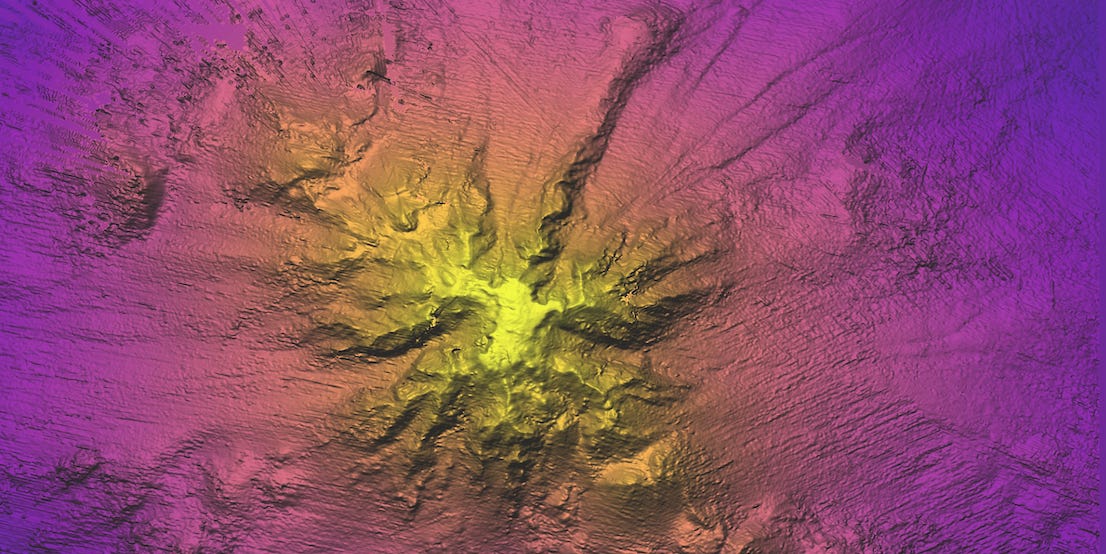
Somewhere far off the coast of Chile, beyond the normal reach of beach towels, cruise brochures, and people asking whether the Wi-Fi works, ocean explorers recently mapped a massive underwater mountain that had been hiding in plain sight beneath the Pacific. The newly documented seamount rises more than 1.9 miles from the seafloor, making it taller than many famous mountains on land and spectacularly inconvenient for anyone who thought Earth had already shown us all its major landmarks.
The discovery, led by scientists associated with Schmidt Ocean Institute aboard the research vessel Falkor (too), took place along the Nazca Ridge, a chain of undersea mountains in international waters roughly 900 miles off Chile. Using advanced sonar mapping and deep-sea robotic exploration, the team revealed not only a giant geological feature but also a thriving deep-sea ecosystem filled with ancient corals, sponge gardens, rare animals, and possible new species. In other words, the mountain was not just a lump of rock. It was more like a hidden apartment building for some of the ocean’s strangest tenants.
What Exactly Did Ocean Explorers Discover?
The newly mapped underwater mountain is known as a seamount, a steep-sided mountain rising from the ocean floor that does not reach the surface. Seamounts are often formed by volcanic activity, although over time they become ecological magnets, collecting currents, nutrients, and marine life in ways that make them unusually rich habitats. Think of a seamount as the ocean’s version of a busy downtown district, except the restaurants are coral gardens and the locals may include squid, sponges, octopuses, and fish that look like they were designed during a very creative lunch break.
This particular seamount is about 3,109 meters tall, or just over 1.9 miles. That means it stands taller than Greece’s Mount Olympus and roughly four times the height of the Burj Khalifa if measured from its base on the seafloor. Its summit remains underwater, so it will not be appearing on hiking apps any time soon, but scientifically it is a major landmark. Mapping it helps fill a blank spot in our understanding of the seafloor and provides a clearer picture of how life is distributed across remote parts of the Pacific.
The expedition also explored one of the mountain’s ridges using a remotely operated vehicle, or ROV. This underwater robot allowed scientists to see the seamount’s slopes in detail, recording video, collecting images, and observing habitats that had likely never been viewed by humans before. The robot’s cameras revealed sponge gardens, deep-sea corals, and unusual creatures that immediately turned a mapping mission into a biodiversity treasure hunt.
Why the Nazca Ridge Is So Important
The Nazca Ridge and the neighboring Salas y Gómez Ridge form one of the most remarkable underwater mountain systems in the southeastern Pacific. These ridges stretch across a vast area of ocean and create stepping-stone habitats for marine life. Because each seamount rises into the water column, it interacts with currents differently from the surrounding abyssal plain. That interaction can concentrate nutrients and attract life from tiny invertebrates to larger predators.
Scientists are especially interested in the region because many species found there may be highly localized. Some deep-sea animals can live only on certain types of hard substrate, at certain depths, or within specific temperature and oxygen conditions. When a seamount is isolated, its communities may evolve in unusual ways. This is one reason researchers often compare seamounts to islands. They are not islands above water, but biologically they can behave like isolated worlds.
The discovery also matters because the Nazca Ridge lies in international waters, beyond the direct jurisdiction of any single country. That makes conservation more complicated. If a rare forest is found on land, a government can create a national park. If a rare ecosystem is found in the high seas, protection requires international cooperation, legal frameworks, scientific evidence, and a great deal of diplomatic patience. The ocean, unfortunately, does not come with a simple “save file” button.
How Scientists Found the Underwater Mountain
Multibeam Sonar: Drawing the Seafloor With Sound
The main tool behind the discovery was multibeam sonar, a mapping technology that sends out fans of sound pulses from a ship. These pulses travel through the water, bounce off the seafloor, and return to the vessel. By measuring how long the echoes take to come back, scientists can calculate depth and build detailed maps of underwater terrain.
This matters because satellite maps can show broad hints of underwater mountains, but they cannot reveal the same level of detail as ship-based sonar. A satellite may suggest that something large is down there; multibeam sonar can show its shape, height, slopes, ridges, and surrounding features. It is the difference between knowing there is furniture in a dark room and finally turning on the lights.
ROV Exploration: Sending a Robot Where Humans Cannot Casually Swim
Once mapping revealed the seamount, scientists used an underwater robot to investigate parts of the ecosystem. ROVs are essential for deep-sea exploration because pressure at great depth is extreme, sunlight disappears, and the environment is not exactly friendly to human visitors. A robot can descend with cameras, lights, sampling tools, and sensors, giving researchers a close look at life on the seafloor.
During this mission, the ROV helped document living communities on the mountain’s ridges. Scientists observed ancient corals, sponge gardens, and rare animals, including a ghostly Casper octopus and unusual siphonophores nicknamed “flying spaghetti monsters.” That nickname may sound like a joke, but it is also a helpful reminder that the deep sea has no obligation to look normal.
A Mountain Full of Strange and Beautiful Life
One of the most exciting parts of the expedition was the discovery of biodiversity. Ocean Census scientists working with the Schmidt Ocean Institute team identified about 20 potentially new marine species during the Nazca Ridge expedition. These organisms will need careful laboratory study before scientists can formally confirm whether they are new to science, but the early findings are already significant.
The team documented sponge gardens, coral habitats, squat lobsters, sea stars, sea urchins, and fish adapted to life in a cold, dark, high-pressure world. Some animals use coral and sponge structures for shelter. Others graze, hunt, filter particles from the water, or drift through the currents like living punctuation marks in the ocean’s longest sentence.
Deep-sea corals are especially important because they grow slowly and can form long-lived habitat structures. Unlike shallow tropical corals, they do not rely on sunlight and photosynthetic algae. Instead, they survive by capturing food particles from the water. Their branches and frameworks provide shelter for many other species, making them biological infrastructure. Damage to these habitats can take decades or centuries to recover, assuming recovery happens at all.
Why Seamounts Are Biodiversity Hotspots
Seamounts interrupt the flatness of the deep ocean floor. Their slopes and peaks alter currents, which can push nutrients upward or concentrate drifting food. That makes them attractive to filter feeders such as sponges and corals. Once those organisms establish themselves, they create habitat for other animals. Over time, a seamount can become a layered ecosystem where geology, chemistry, currents, and biology all work together.
Many seamounts also provide hard surfaces in places where the surrounding seafloor may be soft sediment. For animals that need something solid to attach to, that rock is prime real estate. The result can be dense gardens of life on a mountain surrounded by darker, flatter, less crowded deep-sea plains.
NOAA has estimated that there may be more than 100,000 seamounts at least 1,000 meters tall across the world’s oceans, yet only a tiny fraction have been directly explored. That means discoveries like this are not just isolated curiosities. They are reminders that the ocean floor remains one of Earth’s least understood landscapes.
The Ocean Is Still Shockingly Unmapped
A discovery of a massive underwater mountain may sound surprising, but it becomes less shocking when we remember how little of the ocean floor has been mapped in high resolution. As of April 2026, NOAA Ocean Exploration reported that 28.7% of the global seafloor had been mapped with modern high-resolution technology. That is real progress, but it also means most of the seabed is still known in limited detail.
The deep ocean is difficult and expensive to explore. Ships must travel long distances. Equipment must survive pressure, corrosion, and rough weather. Data must be processed carefully. Even then, seeing the seafloor directly with cameras covers only a microscopic portion of the deep ocean. We have better selfies of lunch than we have visual records of many parts of our own planet.
Projects such as Seabed 2030 aim to create a complete map of the ocean floor by 2030. That goal matters for navigation, climate science, tsunami modeling, habitat protection, fisheries management, and basic curiosity. Humans are naturally nosy creatures. In this case, being nosy may help protect ecosystems we are only beginning to understand.
What This Discovery Means for Conservation
The newly mapped seamount sits in a region that scientists and conservation advocates have identified as a high-priority area for protection. The Nazca and Salas y Gómez ridges support unusual biodiversity, including species that may occur nowhere else. At the same time, deep-sea ecosystems can be vulnerable to fishing, pollution, climate change, and potential future mining interest.
The timing of the discovery is important. The High Seas Treaty, formally known as the Agreement on Biodiversity Beyond National Jurisdiction, entered into force in January 2026 after reaching the required ratification threshold. This treaty creates a legal pathway for establishing marine protected areas in international waters and requiring environmental assessments for certain activities. For remote seamount ecosystems, that framework could be a major step forward.
Scientific data is the foundation of meaningful protection. It is difficult to argue for conserving a place if nobody knows what lives there. By mapping the seamount and documenting its species, ocean explorers give policymakers stronger evidence. The mountain becomes more than a hidden feature on the seafloor; it becomes a known ecosystem with measurable value.
Why Possible New Species Matter
When scientists say they may have found new species, they are not simply handing out novelty stickers. Confirming a new species requires careful comparison with known organisms, sometimes including genetic analysis, physical examination, and consultation with taxonomic experts. Photos and videos can suggest something is new, but formal identification takes time.
Still, potential new species are exciting because they expand our understanding of evolution and adaptation. Deep-sea organisms often survive under conditions that would be hostile to most surface life: high pressure, low temperatures, little food, and complete darkness. Their bodies may contain unusual chemicals, structures, or survival strategies. Studying them can improve knowledge of biology, ecology, and even biotechnology.
There is also an ethical dimension. A species should not have to prove it is useful to humans before it deserves to exist. The discovery of possible new life forms reminds us that the ocean is not just a resource warehouse. It is a living system with its own history, complexity, and wild imagination.
The Funny Side of Serious Exploration
Deep-sea science is serious work, but it also has a habit of producing deeply unserious-looking animals. The “flying spaghetti monster” nickname for Bathyphysa siphonophores is a perfect example. These drifting colonial organisms can look like tangled strings floating through the dark water. To a scientist, they are fascinating examples of marine adaptation. To everyone else, they look like pasta that achieved enlightenment and left the kitchen.
The Casper octopus is another crowd favorite. Pale, delicate, and rarely seen, it looks almost unreal on camera. Its appearance reminds viewers that deep-sea animals often evolve in environments with no sunlight and very different survival pressures. They do not need to impress humans. They need to survive, reproduce, and avoid becoming dinner in a place where dinner options are limited and manners are optional.
What Ocean Exploration Teaches Us About Earth
This discovery challenges a familiar assumption: that the age of exploration is over. On land, most major mountains, rivers, deserts, and forests have been mapped. In the ocean, however, huge discoveries still happen. A mountain taller than Mount Olympus can remain unmapped until modern sonar passes over it. That is not a small gap in knowledge; that is a planetary plot twist.
Ocean exploration also shows how connected Earth systems are. Seamounts influence currents. Currents influence nutrients. Nutrients influence life. Marine life influences carbon cycling, food webs, and ecosystem resilience. A mountain in the deep Pacific may seem remote, but it is part of the same ocean system that helps regulate climate and support life on Earth.
The lesson is simple: exploration is not just about finding things. It is about understanding relationships. The seamount is geology, habitat, archive, and warning sign all at once. It tells us that Earth still holds secrets, and that some of those secrets may be fragile.
Experiences and Reflections: What This Discovery Feels Like From the Human Side
There is something wonderfully humbling about learning that a mountain nearly two miles tall can exist without most of us knowing about it. On land, a mountain that size would have hiking trails, weather reports, souvenir magnets, and at least one coffee shop claiming to be “the highest latte in the region.” Underwater, it can remain quiet for ages, hosting ancient corals and strange animals while humans argue about phone chargers and parking spaces.
For anyone who has ever stood beside the ocean and felt small, this discovery makes that feeling even bigger. The sea surface can look flat and simple, especially on a calm day. But below it may be cliffs, valleys, ridges, volcanoes, canyons, and mountains. The ocean is not a bathtub. It is a hidden continent of landscapes, most of which we have not properly visited.
One experience many ocean lovers share is the sudden realization that “blue water” is not empty water. Whether snorkeling over a reef, watching tide pools, or seeing deep-sea footage online, there is a moment when the ocean changes from scenery into a living world. A seamount discovery creates that moment at a much larger scale. It reminds us that even places far from shore, far from sunlight, and far from human attention can be crowded with life.
The story is also inspiring for young scientists, students, and curious readers. It proves that discovery is not limited to astronauts, archaeologists, or people in adventure movies with dramatic hats. Oceanographers, engineers, taxonomists, ship crews, data specialists, and robot pilots all play a role. Exploration today is often teamwork powered by technology, patience, and the willingness to stare at sonar data until the seafloor starts telling its story.
There is also a practical takeaway for everyday life: curiosity still matters. Many breakthroughs begin with someone asking, “What is down there?” That question may sound simple, but it leads to maps, dives, species records, conservation proposals, and new scientific questions. Curiosity is not a luxury. It is how humans notice what needs protection.
The discovery of a massive underwater mountain also encourages a healthier kind of awe. In a world full of fast news and short attention spans, awe slows us down. It asks us to look at the planet with more respect. Somewhere in the Pacific, a mountain rises through darkness, covered in life that does not know our names and does not need our applause. The least we can do is learn about it before we accidentally damage it.
Finally, this discovery gives us a rare good-news feeling: the world is still bigger, stranger, and more beautiful than we assumed. Not every mystery has been solved. Not every map is finished. Not every creature has been named. The ocean still has chapters waiting to be read, and some of them include underwater mountains, ghostly octopuses, ancient corals, and spaghetti-shaped life forms drifting through the dark like nature’s weirdest parade.
Conclusion: A Hidden Mountain With a Big Message
The discovery of a massive underwater mountain on the Nazca Ridge is more than a headline about a big rock under the sea. It is a window into the hidden architecture of Earth and the rich ecosystems that depend on it. By mapping the seamount and documenting its life, ocean explorers have added an important piece to the global puzzle of marine biodiversity.
The find also arrives at a critical moment for ocean conservation. As high-resolution mapping expands and international protection tools become stronger, scientists have a better chance to identify vulnerable habitats before they are damaged. The deep sea may feel distant, but its health is tied to the health of the planet. Protecting it begins with knowing it.
In the end, the newly discovered seamount is a reminder that Earth is not finished surprising us. Beneath the waves, mountains rise, corals grow, strange animals drift, and entire ecosystems continue their quiet work in the dark. The ocean still has secrets. Luckily, explorers are still listening.

