
Skincare
How to Clean Outdoor Furniture of All Kinds
Jul
Outdoor furniture lives a demanding life. It gets baked by the sun, showered by rain, dusted with pollen, decorated by birds, and occasionally introduced to a plate of barbecue sauce at unsafe speeds. Even weather-resistant patio furniture eventually needs more than a polite wipe with yesterday’s paper towel.
The safest cleaning method depends on what the furniture is made from. A solution that brightens plastic may discolor wood, while the vinegar that works on synthetic wicker can etch a natural-stone tabletop. This guide explains how to clean outdoor furniture of nearly every kind, including wood, metal, plastic, wicker, fabric, rope, glass, stone, and concrete.
Before Cleaning Outdoor Furniture, Identify the Material
Start by checking the furniture label, owner’s manual, retailer listing, or manufacturer’s website. Two chairs that look almost identical may require very different care. “Wicker,” for example, can describe natural plant fibers or weather-resistant synthetic resin. Likewise, a stone-looking tabletop could be marble, sealed concrete, porcelain, or molded composite material.
When no care instructions are available, begin with the gentlest reasonable method: remove loose debris, wash with diluted mild dish soap, rinse with clean water, and dry thoroughly. Test any cleaner in a hidden area before treating the entire piece.
Avoid assuming that stronger equals cleaner. Abrasive pads, concentrated bleach, harsh solvents, and high-pressure water can strip finishes, scratch surfaces, weaken woven fibers, or drive moisture into joints. For most patio furniture, a garden hose and soft brush are safer than a pressure washer.
Basic Outdoor Furniture Cleaning Supplies
You do not need a laboratory full of colorful bottles. A practical patio furniture cleaning kit includes:
- A bucket of warm water
- Mild dish soap or a manufacturer-approved cleaner
- Microfiber cloths and nonabrasive sponges
- A soft-bristled nylon brush
- An old toothbrush for seams and narrow spaces
- A vacuum with an upholstery or brush attachment
- A garden hose with a gentle spray nozzle
- Clean towels, gloves, and a plastic tarp
Move the furniture onto a washable surface or tarp before starting. Remove cushions, pillows, umbrellas, and decorative accessories. Brush or vacuum away dry dirt first; otherwise, adding water may turn a light layer of dust into premium patio mud.
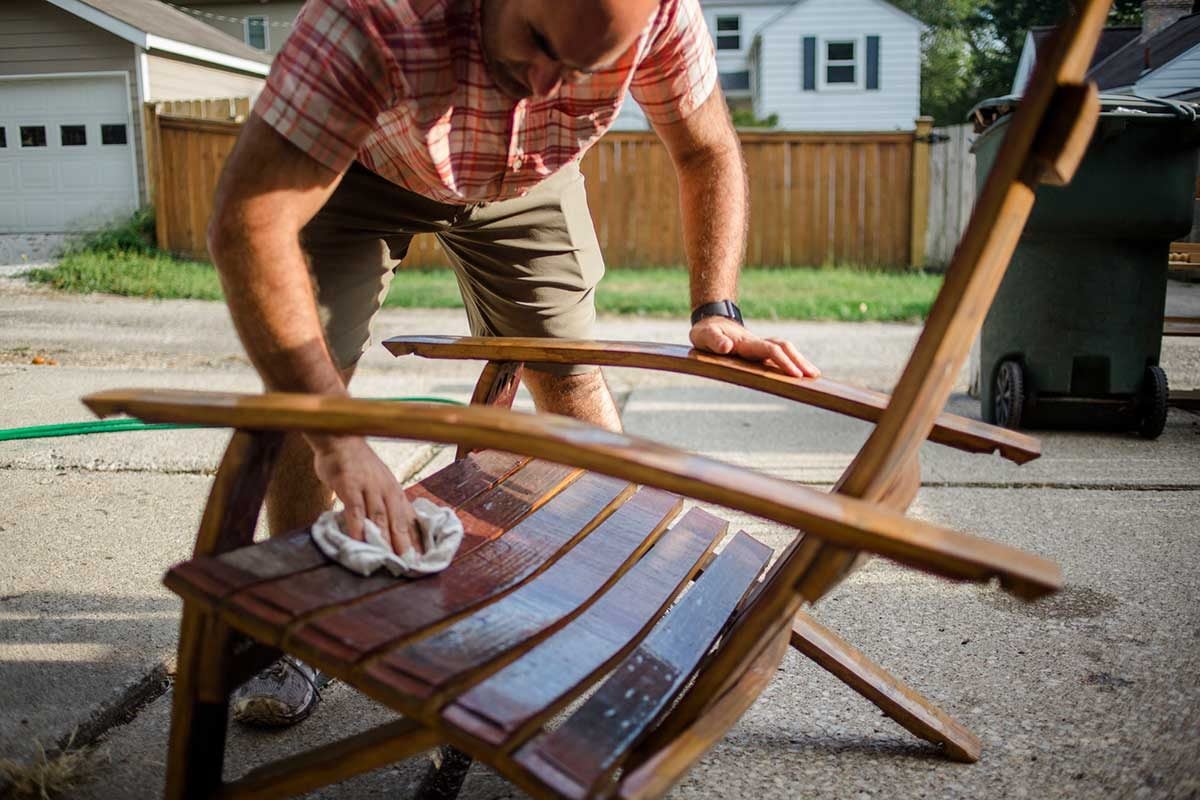
How to Clean Wood Outdoor Furniture
Teak, eucalyptus, acacia, cedar, and other outdoor woods are durable, but they still need a gentle touch. Excessive soaking can cause swelling, raised grain, splitting, or finish damage.
Routine Wood Cleaning
- Brush away leaves, pollen, cobwebs, and loose soil.
- Mix a small amount of mild dish soap into warm water.
- Scrub gently with a soft brush, working in the direction of the wood grain.
- Clean joints, slats, and hardware with a toothbrush.
- Rinse briefly with a hose or wipe repeatedly with a clean damp cloth.
- Let the furniture dry completely in a ventilated location.
Do not leave wet cushions on the wood while it dries. Trapped moisture creates ideal conditions for discoloration and mildew.
Restoring Weathered Wood
Gray teak is not necessarily dirty. The silver-gray color is a natural weathering effect, and many owners prefer it. To restore a warmer golden tone, use a cleaner specifically labeled for teak, followed by light sanding and an appropriate teak protector if recommended by the furniture maker.
For cedar, eucalyptus, acacia, or painted wood, follow the finish manufacturer’s directions before sanding or applying oil. Furniture oil is not universal; the wrong coating may become sticky, attract dirt, or interfere with an existing sealer.
Avoid routine pressure washing of natural wood furniture. The force can roughen the surface, remove protective coatings, and weaken joints. Mild soap, controlled moisture, and complete drying are safer for regular maintenance.
How to Clean Metal Patio Furniture
Most aluminum, steel, stainless-steel, and wrought-iron furniture can be cleaned with warm water, mild soap, and a soft sponge. The bigger issue is recognizing oxidation or rust before it spreads.
Aluminum Furniture
Wash aluminum with mild soap and rinse thoroughly. Avoid abrasive powders, stiff metal brushes, and strongly alkaline cleaners, including ammonia or trisodium phosphate, because they may contribute to oxidation or damage the finish.
For minor oxidation on unfinished aluminum, use a product specifically made for aluminum or a manufacturer-approved metal polish. Painted and powder-coated surfaces should be treated more gently because aggressive polishing can remove the coating.
Steel and Wrought Iron
Inspect welded joints, feet, screw holes, and chipped paint for rust. Remove loose rust with fine-grit sandpaper or a wire brush, taking care not to scrape intact surrounding paint. Wipe away the residue, allow the area to dry, and apply a rust-inhibiting primer and outdoor metal paint.
Dry metal furniture after rinsing, especially around joints and hardware. Water left in crevices has a remarkable talent for finding the one unprotected spot you hoped it would overlook.
How to Clean Plastic, Resin, and HDPE Furniture
Plastic outdoor furniture is generally low-maintenance, but textured surfaces collect sunscreen, pollen, food grease, and airborne grime. Start with mild dish soap and a soft nylon brush. Work around grooves and molded details, rinse well, and let the furniture dry.
For stubborn marks on light-colored plastic, try a paste made from baking soda and water. Apply it with a soft cloth, rub gently, and rinse. Baking soda is mildly abrasive, so test it first and avoid aggressive scrubbing on glossy finishes.
Never use steel wool or gritty scouring powder. These products create tiny scratches that trap more dirt and make the surface look permanently dull. Chlorine bleach should be used only when the manufacturer specifically approves it and provides dilution instructions.
HDPE lumber and marine-grade resin may tolerate stronger cleaning methods than ordinary molded plastic, but the product manual remains the final authority. POLYWOOD, for example, provides material-specific instructions and pressure limits rather than treating every plastic product identically.
How to Clean Wicker and Rattan Furniture
Natural Wicker and Rattan
Natural wicker dislikes prolonged moisture. Begin with a vacuum brush attachment, soft paintbrush, or dry toothbrush to remove dirt from the weave. Wipe the piece with a cloth dampened in lightly soapy water, using as little liquid as possible.
Do not saturate natural wicker or leave it in direct blazing sun to dry. Too much water can swell the fibers, while extreme heat may make them brittle. Place the furniture in a shaded, breezy location until completely dry.
Synthetic Resin Wicker
Synthetic wicker is more water-resistant and can usually be washed with mild dish soap, a soft brush, and a gentle hose rinse. Brush along the weave rather than against it. Clean beneath the seat and around the frame, where leaves and damp debris frequently gather.
Natural and synthetic wicker may look similar, so confirm the material before introducing a hose. One enjoys a rinse; the other may react as though you have challenged it to a duel.
How to Clean Outdoor Cushions and Upholstery
Read the care label before removing or washing cushion covers. A zipper does not automatically mean a cover is machine-washable. Some covers are intended to remain on the insert because removing them can distort seams, damage waterproof barriers, or make reassembly difficult.
Routine Cushion Cleaning
- Vacuum both sides, including seams, piping, buttons, and zippers.
- Blot fresh spills instead of rubbing them deeper into the fibers.
- Apply diluted mild soap with a soft cloth or brush.
- Work from the outside edge of a stain toward the center.
- Rinse thoroughly so soap residue does not attract new dirt.
- Stand cushions upright on their edges to improve drainage and airflow.
- Wait until the fabric and inner filling are completely dry before storing or replacing them.
For removable covers, machine-wash only when permitted by the label. Close zippers first, use the recommended water temperature and cycle, and air-dry unless machine drying is explicitly approved.
Mildew on Outdoor Fabric
Mildew often grows on dirt, food residue, pollen, or other organic material trapped on fabric. Start with the gentlest approved cleaning solution. Bleach can permanently fade or weaken many textiles, so use it only when the fabric manufacturer says it is safe.
Solution-dyed acrylic fabrics such as certain Sunbrella products may have manufacturer-approved bleach-cleaning instructions for mold and mildew. Those directions apply to the specified fabricnot automatically to every beige cushion currently living on your porch. Never mix bleach with ammonia, vinegar, or another cleaning chemical.
How to Clean Mesh, Sling, and Outdoor Rope Furniture
Vinyl sling seats, synthetic mesh, and woven outdoor rope can be cleaned with mild soap and water. Use a soft brush to lift grime from textured areas, then rinse at low pressure.
Support loose or aging sling material from behind while scrubbing so you do not stretch it. On rope furniture, clean along the direction of the weave and avoid snagging fibers with stiff brushes, jewelry, or sharp tools.
Dry these materials fully before covering them. Rope intersections and folded sling edges can remain damp long after the visible surface appears dry.
How to Clean Glass Outdoor Tables
Remove grit before wiping a glass tabletop; otherwise, the dirt may act like sandpaper. Wash both sides with mild soap and water, rinse, and finish with glass cleaner and a clean microfiber cloth.
Pay attention to the rim where the glass meets the frame. Food residue and moisture often collect there. If the top can be removed safely, follow the manufacturer’s lifting instructions and ask for help with large tempered-glass panels.
Do not pour boiling water onto cold outdoor glass or apply very cold water to glass heated by direct sun. Sudden temperature changes can stress the material.
How to Clean Stone and Concrete Furniture
For granite, marble, limestone, travertine, and other natural stone, use a pH-neutral stone cleaner or a small amount of mild dishwashing liquid in warm water. Rinse completely and dry with a soft cloth.
Avoid vinegar, lemon juice, and acidic bathroom cleaners on acid-sensitive stone. They can etch marble, limestone, and travertine, leaving dull spots that ordinary cleaning cannot reverse.
Concrete tables can usually be washed with mild soap and a nylon brush. However, decorative concrete may have a sealer that reacts poorly to bleach, solvents, acidic cleaners, or pressure washing. Check the product instructions before treating stains. Reapply a compatible sealer when water stops beading or when the manufacturer recommends it.
How to Remove Common Outdoor Furniture Stains
Bird Droppings
Wear gloves, soften the residue with damp paper towels, and lift it away without grinding it into the surface. Clean the area with mild soap and rinse. Avoid dry scraping, which can scratch finishes and scatter particles.
Pollen
Vacuum or brush pollen away before adding water. Wet pollen can smear into yellow or green streaks, particularly on pale cushions and textured plastic.
Tree Sap
Remove sap according to the material’s instructions. On washable fabric, a manufacturer-approved stain remover may help. On hard surfaces, soften the spot with warm soapy water before gently lifting it with a plastic scraper. Avoid acetone or mineral spirits unless the manufacturer confirms that the finish can tolerate the solvent.
Mold, Moss, and Algae
Move affected furniture away from people, pets, and delicate plants. Wear gloves and clean outdoors in a ventilated area. Mild soap, an approved mildew cleaner, or a material-safe vinegar solution may work on certain surfaces, but vinegar should never be used on acid-sensitive natural stone. Follow the cleaner label, allow the recommended contact time, scrub with a nylon brush, and rinse thoroughly.
Rust Stains
Rust on metal furniture should be removed before repainting. Rust transferred onto stone or fabric may require a specialized product. Avoid experimenting with random acids, especially on natural stone, where the attempted cure may leave a larger mark than the original stain.
How Often Should Patio Furniture Be Cleaned?
Give frequently used furniture a light cleaning every few weeks during the outdoor season. Brush away leaves and pollen, wipe up spills promptly, and check cushions after rain.
Plan a deeper cleaning at the beginning and end of the season. Homes near busy roads, saltwater, trees, construction, or heavy pollen may need more frequent maintenance.
Use breathable, properly fitted covers when the furniture is not in use. Never cover damp furniture or wet cushions. Moisture trapped beneath a cover can create mildew, corrosion, and odors more efficiently than almost any cleaning mistake.
Real-World Experiences and Lessons From Cleaning Outdoor Furniture
Practical patio cleaning rarely unfolds like a five-minute social media video. The furniture is usually dirtier than expected, the hose is somehow kinked in three places, and one cushion remains mysteriously wet until the following fiscal quarter. A few real-world lessons can make the project less frustrating.
Experience 1: Dry Cleaning First Saves Considerable Work
A common mistake is spraying dusty furniture immediately. On a resin-wicker sectional covered with spring pollen, that first blast of water can turn loose yellow powder into sticky paste inside every groove. Vacuuming the seats and brushing the weave first may feel like an extra step, but it greatly reduces scrubbing time. The same lesson applies to cushions: remove pet hair, crumbs, and pollen while they are dry.
Experience 2: More Soap Is Not More Effective
During a first deep cleaning, it is tempting to squeeze half a bottle of dish soap into the bucket. The furniture becomes impressively foamy, but rinsing takes forever. Soap left behind creates streaks and may attract dirt, causing the newly cleaned table to feel tacky within days. A modest amount of cleaner, sufficient agitation, and thorough rinsing usually produce better results.
Experience 3: Cushions Require Patience, Not Just Sunshine
A cushion can feel dry on the surface while the filling remains wet. Placing it flat on a deck often traps water underneath. Standing cushions on edge, rotating them periodically, and opening zippers when the manufacturer permits can improve airflow. On humid days, moving them beneath a fan in a protected area may be more effective than leaving them outside overnight, where dew cheerfully reverses the afternoon’s progress.
Experience 4: Small Rust Spots Deserve Immediate Attention
A tiny chip on a steel chair may not seem urgent, especially when the rest of the set looks fine. After several rainstorms, however, rust can creep beneath the paint and create a much larger repair. Cleaning, drying, sanding, priming, and touching up the chip early is easier than refinishing an entire chair later. Checking feet, bolts, and welded joints during every deep cleaning helps catch trouble before it becomes a weekend-long restoration project.
Experience 5: One Cleaner Should Not Be Used Everywhere
Many patios contain a mix of materials: teak chairs, aluminum legs, acrylic cushions, a glass top, and a limestone side table. Carrying one spray bottle from item to item is convenient but risky. Vinegar may be helpful on certain synthetic surfaces yet damage limestone. A rust remover suitable for bare metal may stain fabric or strip paint. Labeling buckets or spray bottles for each material prevents accidental cross-use.
Experience 6: Prevention Is the Least Annoying Cleaning Method
The most successful maintenance routines are small and frequent. Wiping up sunscreen from chair arms, brushing pollen away weekly, bringing cushions inside before prolonged rain, and keeping furniture out from beneath sap-producing trees can prevent difficult stains. Five minutes of attention today can save an hour of scrubbing laterand spare you from staring accusingly at a chair while wondering how it became greener than the lawn.
These experiences point to one overall strategy: identify the material, begin gently, clean in manageable sections, rinse completely, and allow plenty of drying time. Outdoor furniture is designed to handle weather, but it still appreciates being treated like furniture rather than a driveway.
Conclusion
Knowing how to clean outdoor furniture begins with understanding what each piece is made from. Mild soap and water work for many surfaces, but the details matter. Wood should not be saturated, natural wicker needs minimal moisture, metal requires rust inspections, cushions must dry completely, and natural stone should be protected from acidic cleaners.
Start with the least aggressive method and escalate only when the material’s care instructions allow it. With regular brushing, prompt stain treatment, seasonal deep cleaning, and sensible storage, your patio furniture can remain comfortable, attractive, and ready for everything from morning coffee to an ambitious backyard barbecue.

