
Skincare
Dot-Matrix Printer Brings Old School Feel To Today’s Headlines
May
There are many ways to read the news in 2026. You can unlock your phone, get ambushed by seventeen alerts, accidentally watch three videos about celebrity soup, and somehow emerge thirty minutes later knowing less than when you started. Or, if you prefer your morning headlines with a little drama, a little paper, and the unmistakable sound of tiny mechanical hammers doing their best tap-dance routine, you can get them from a dot-matrix printer.
That is the charm behind the renewed fascination with a wonderfully odd project: using a vintage dot-matrix printer to print modern daily headlines. It feels like a mashup of a 1980s office, an old newsroom wire service, and a Raspberry Pi hobby bench. The result is not just retro for retro’s sake. It is a clever reminder that sometimes the best way to improve technology is to make it slower, louder, and slightly more inconvenientin the most delightful way possible.
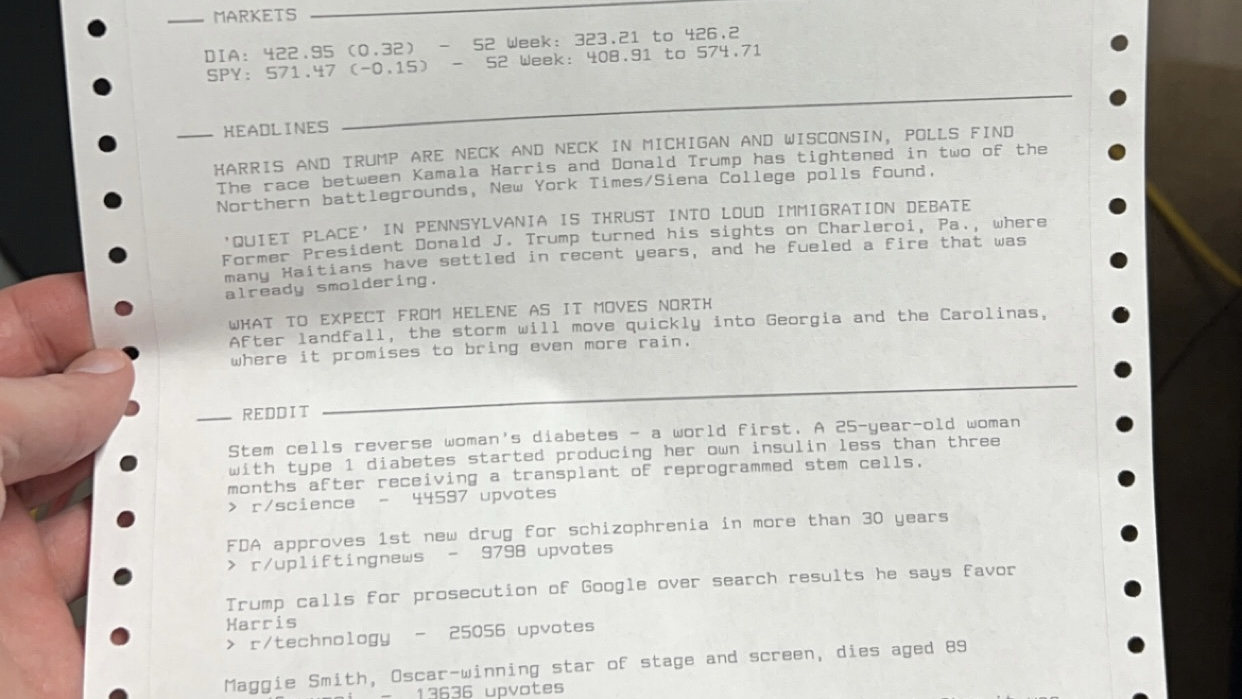
The idea gained attention after developer Andrew Schmelyun built a personal “daily newspaper” using a vintage Star Micronics dot-matrix printer, a Raspberry Pi Zero W, a USB adapter, and a PHP script. Instead of starting the day by doom-scrolling through social media and news feeds, the system prints a custom front page with selected information: weather, stocks, major headlines, and a few online community highlights. It is a small project with a big point: news feels different when it lands on paper.
Why a Dot-Matrix Printer Makes Modern Headlines Feel Different
A dot-matrix printer is an impact printer. Unlike inkjet printers, which spray ink, or laser printers, which use toner and heat, a dot-matrix printer uses a print head filled with tiny pins. Those pins strike an inked ribbon against paper, forming letters and images out of dots. In other words, every character is physically punched into existence. It is less “cloud-connected productivity device” and more “miniature typewriter with a caffeine problem.”
That physicality matters. A headline on a phone is temporary. It appears, disappears, refreshes, and gets replaced by the next alert. A headline printed on tractor-feed paper feels more deliberate. You can tear it off. Fold it. Put it beside your coffee. Scribble a note in the margin. Ignore it without a glowing rectangle trying to lure you back with breaking-news confetti.
Modern digital news is optimized for speed and engagement. Printed news is naturally limited. A single page can only hold so much. That limitation is the magic. A dot-matrix daily news printer turns the endless feed into a beginning, middle, and end. You read what matters, then you are done. No infinite scroll. No algorithmic rabbit hole. No “one more article” that somehow turns into a deep dive on abandoned shopping malls, rare frogs, and why your printer needs a firmware update at the worst possible moment.
The Project: Old Printer, New Internet
The most charming version of this idea uses a vintage Star NP-10 dot-matrix printer, a model associated with the mid-1980s home-computing era. Schmelyun reportedly picked one up secondhand, cleaned it, adjusted the ribbon, and brought it back to life. The printer connects to a Raspberry Pi Zero W through a printer adapter, and Linux recognizes it as a device that can receive raw text output.
From there, the project becomes beautifully straightforward. A script gathers information from online sources, formats it into a readable layout, and sends it to the printer. A scheduled cron job runs the process automatically so the day’s “front page” is ready in the morning. The hardware may be older than many people’s parents’ first email address, but the workflow is very modern: APIs, scripts, automation, and lightweight computing.
What Goes on the Printed Page?
A good personal news printout does not need to reproduce an entire newspaper. In fact, it works better when it does not try. The ideal format is short, useful, and scannable. Think of it as a paper dashboard rather than a full publication.
- Weather: Today’s temperature, forecast, and maybe a warning if the sky is planning emotional damage.
- Top headlines: A small selection of major national, world, technology, or local stories.
- Market or stock updates: Useful for readers who track specific companies or indexes.
- Community highlights: Top posts from selected forums, newsletters, or RSS feeds.
- Personal notes: Calendar reminders, birthdays, chores, or a gentle reminder to buy printer paper before pretending you are a newsroom editor again.
The beauty is customization. One person might print global headlines and weather. Another might print tech news, baseball scores, public transit alerts, and the price of coffee futures. A parent might print a family morning bulletin. A teacher could create a classroom news ticker. A writer could print daily prompts. The machine does not care. It will clatter through whatever text you feed it.
Why This Feels Like an Old Newsroom
Before smartphones, push notifications, and social media timelines, newsrooms were full of machines that made information audible. Teleprinters and wire-service machines brought in dispatches from organizations such as the Associated Press, United Press International, Reuters, and weather services. They printed continuously, producing a stream of stories, alerts, sports scores, market updates, and urgent flashes.
Those machines created atmosphere. They made the news feel like something arriving from the outside world with weight and urgency. A breaking story was not just a banner on a screen; it was paper rolling out of a noisy machine. The sound itself became part of the drama. Television news sets even used the visual language of clattering printers to signal seriousness. Nothing says “important update” like a machine loudly attacking paper in the corner.
A dot-matrix headline printer recreates a tiny piece of that feeling. It does not pretend to be the fastest or most efficient way to consume news. That would be silly. A modern smartphone can fetch a thousand headlines instantly. But a dot-matrix printer makes each headline feel chosen. It gives digital information a body. It turns the news from an endless stream into an object.
The Rise, Fall, and Weird Survival of Dot-Matrix Printers
Dot-matrix printers were once everywhere: offices, schools, homes, warehouses, repair shops, banks, and small businesses. They were especially popular during the 1980s and early 1990s because they were relatively affordable, durable, and flexible. They could print text, basic graphics, forms, invoices, banners, labels, and long reports on fanfold paper.
Then inkjet and laser printers took over mainstream home and office printing. They were quieter, sharper, faster for many document types, and far better for images. Dot-matrix printers became the beige dinosaurs of the printer world: respected, noisy, and increasingly pushed into corners.
But here is the twist: dot-matrix printers never truly disappeared. They still survive in places where impact printing does something inkjet and laser printers cannot do as well. Because the print head physically strikes the page, dot-matrix printers can create multipart forms with carbon or carbonless copies. That makes them useful for invoices, shipping documents, passbooks, receipts, warehouse forms, and other paperwork that needs duplicates produced in one pass.
Modern impact printers still exist from major manufacturers. Some current models support USB, networking options, multipart forms, high-duty cycles, and print speeds measured in characters per second. They are not glamorous, but they are practical. In the right environment, a dot-matrix printer is less of a relic and more of a stubborn workhorse wearing retro sneakers.
Why Slow News Can Be Better News
The popularity of a dot-matrix news printer says something about how tired people are of the modern information diet. Digital devices are now the dominant way Americans get news, while printed newspapers and magazines have become a much smaller part of daily media habits. Social platforms also play a major role in news discovery, especially among younger readers. That shift has made news easier to access, but not always easier to process.
Reading headlines on a phone often means reading inside a casino of distractions. A serious story sits next to a meme, an ad, a reaction video, a fight in the comments, and a notification from an app you forgot you installed. The news may be important, but the environment is chaotic.
A printed page changes the pace. It creates a boundary. You cannot refresh it. You cannot tap a headline and tumble into twelve related stories. You cannot argue with a stranger in the margin unless you invite one into your kitchen, which is not recommended before coffee. The printed page makes news finite, and finite news can feel healthier.
The Psychology of a Physical Front Page
Physical media encourages a different kind of attention. A printed page sits still. It does not autoplay, vibrate, or rearrange itself based on engagement metrics. That stillness is valuable. It allows the reader to decide what matters rather than letting software rank emotional intensity as if outrage were a breakfast cereal.
A custom dot-matrix newspaper also restores editorial control to the individual. You choose the categories. You choose the sources. You choose the time of day. You choose how much information is enough. Instead of receiving news as a flood, you receive it as a ritual.
How a DIY Dot-Matrix News Printer Works
At a high level, the setup is simple enough for a motivated hobbyist. The printer handles output. The Raspberry Pi or another small computer handles the internet connection, scheduling, and formatting. The software gathers data from feeds or APIs and sends plain text to the printer.
Basic Components
- Vintage or modern dot-matrix printer: A working unit with a compatible port, such as parallel, serial, or USB.
- Small computer: A Raspberry Pi Zero W, Raspberry Pi Zero 2 W, or similar Linux-capable board.
- Adapter cable: Often needed for older printer ports.
- Power supply and storage: Basic Raspberry Pi setup essentials.
- Script: PHP, Python, Bash, or another language that can fetch, format, and print text.
- Scheduler: Cron or a similar task scheduler to run the print job automatically.
The most important design choice is restraint. It is tempting to print everything: every headline, every stock, every forecast, every message, every post from every feed. That defeats the purpose. The project shines when the printout is brief enough to read over coffee. A good rule: if the printer is still screaming after your toast is cold, you may have overbuilt the newspaper.
Specific Examples of Useful Daily Printouts
A dot-matrix news printer can be more than a novelty. It can become a small personal information appliance. Here are a few realistic examples:
1. The Morning Coffee Edition
This version prints at 7:00 a.m. and includes the weather, five major headlines, calendar events, and a short quote. It is ideal for people trying to avoid checking their phone first thing in the morning.
2. The Home Office Briefing
This edition prints work-related reminders, project deadlines, market news, and a list of meetings. It gives remote workers a physical start-of-day dashboard without opening a dozen tabs.
3. The Family Bulletin
This version prints school reminders, sports practice times, lunch notes, weather, and a “don’t forget” list. Children may ignore it, of course, but at least the machine tried.
4. The Tech Hobbyist Feed
This one pulls from RSS feeds covering electronics, programming, retrocomputing, open-source releases, and cybersecurity headlines. It is basically a nerd newspaper, which is a compliment of the highest order.
5. The Local-First Edition
This printout focuses on local weather, local government headlines, traffic alerts, library events, and community updates. In a world obsessed with national outrage, a local-first page can be surprisingly refreshing.
The Charm Is in the Imperfection
Modern technology often tries to hide its mechanisms. Phones are sealed glass slabs. Cloud services float somewhere mysterious. Printers connect wirelessly, then fail wirelessly, which is technically impressive but emotionally devastating. A dot-matrix printer is the opposite. It is visibly mechanical. You can hear it working. You can see the paper move. You can smell the faint office-supply nostalgia.
Its output is imperfect. Letters are jagged. Graphics are rough. Lines may look slightly uneven. The ribbon may fade gradually. But those flaws make the result feel alive. A dot-matrix printout has texture and personality. It looks like information that took effort to arrive.
That is why this project resonates. It is not simply about old hardware. It is about making digital information more human. The machine adds friction, and in this case, friction is useful. It forces selection. It rewards patience. It turns headlines into a small event.
Experience Section: Living With a Dot-Matrix News Printer
Imagine waking up before the rest of the house. The kitchen is quiet, the coffee maker is doing its noble little gurgle, and from the corner of the desk comes a sound that can only be described as a robot woodpecker composing a legal document. The dot-matrix printer wakes up, grabs the paper, and begins printing the day.
The first time you hear it, you laugh. Not because it is practical, although it is more practical than expected, but because the sound feels so gloriously out of place. We have spent years making technology silent, smooth, and invisible. Then this machine barges in like an office manager from 1987 and announces, “Your headlines, boss.”
The experience changes how you treat the news. On a phone, headlines compete for attention. On paper, they line up and behave themselves. You read the top story, glance at the weather, check a market number, and notice a small community item you might have missed online. There is no sidebar trying to sell you miracle socks. There is no autoplay video. There is no comment section ready to turn breakfast into a courtroom drama.
The printed page also creates a tiny sense of ceremony. You tear it off carefully, the way people used to tear continuous paper in offices and computer labs. The perforated edges make the whole thing feel official, even if one of the headlines is about a raccoon in a vending machine. You place the page beside your mug and read it at your own pace.
There are annoyances, naturally. The printer is not quiet. If someone is sleeping nearby, they will learn about your commitment to analog news whether they asked or not. Old ribbons can be faint. Old printers may need cleaning. Feed alignment can be fussy. Sometimes the paper advances with the confidence of a shopping cart with one bad wheel. But these quirks become part of the ritual. A perfectly silent digital notification is efficient; a clattering printout is memorable.
The best part is the sense of control. You decide what gets printed. You can remove noisy sources. You can add local headlines. You can limit the page to ten items. You can print only once a day. This is the opposite of the modern feed, where everything is urgent, everything is personalized, and somehow none of it feels personal. A dot-matrix news printer is personal because you built the rules yourself.
After a few mornings, the paper starts to feel less like a novelty and more like a boundary. The news has arrived. You have read enough to be informed. Now you can move on with your day. That may be the most old-school feature of all: the ability to finish.
Conclusion
The idea behind “Dot-Matrix Printer Brings Old School Feel To Today’s Headlines” is more than a cute retrocomputing trick. It is a small protest against endless feeds, notification fatigue, and algorithmic chaos. By pairing a vintage printer with a Raspberry Pi and a simple script, modern headlines become physical again. They gain edges, sound, rhythm, and limits.
A dot-matrix printer will not replace smartphones, news apps, or full digital subscriptions. It does not need to. Its value is not speed; its value is attention. It slows the news down just enough for the reader to meet it on human terms. In a world where information constantly refreshes, a single printed page can feel oddly luxurious.
And yes, it makes noise. Beautiful, ridiculous, mechanical noise. The kind that says the future may be digital, but sometimes the past still knows how to print a better morning.
Note: This article is original, written in standard American English, and synthesized from real technical, media, and retrocomputing information. Source links and citation markers have been intentionally omitted for clean web publishing.

