
Beauty Unlocked
‘Don’t Believe I’m Sick?’ People Are Applauding The Way This Employee Got Revenge On Her Manager
Jun
Every workplace has that one manager who treats a sick call like a courtroom drama. You say, “I’m not well,” and suddenly they’re cross-examining you like you’ve hidden the company stapler in a secret bunker. The viral story behind “Don’t believe I’m sick?” struck a nerve because it captures a painfully familiar office problem: some bosses do not trust employees until the proof is dramatic, inconvenient, and possibly requires a mop.
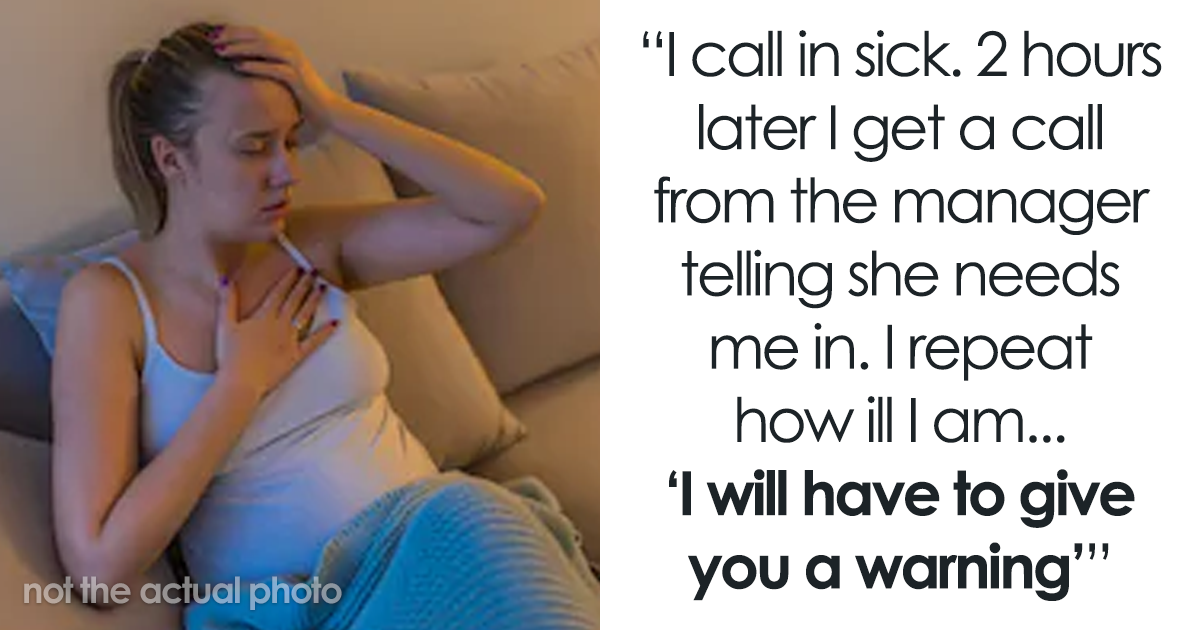
The story centers on an employee who reportedly called in sick, only to be pressured by management to show up anyway because of a strict absence policy. She came in, clearly unwell, and things got messy fast. Coworkers noticed she was sick. The situation escalated. There was vomiting. There was cleanup. There was, according to the viral retelling, disciplinary falloutbut not in the direction the manager probably expected. The internet applauded because the “revenge” was not a grand villain speech or a glitter bomb in the break room. It was the simple, gross, unavoidable consequence of ignoring someone who said, very clearly, “I am sick.”
Funny as the story sounds from a safe distance, it also points to something serious. When managers dismiss illness, they do not just create an awkward shift. They risk employee health, customer trust, team morale, workplace safety, and in some situations, legal trouble. A sick worker is not a suspicious character in a mystery novel. Usually, they are just a person with a fever, a stomach bug, a migraine, or the kind of cough that makes everyone within twelve feet reconsider their life choices.
Why This Viral Sick-Leave Story Hit Such A Nerve
People loved the story because it felt like justice with a punchline. The manager wanted proof. The workplace got proof. Unfortunately, proof arrived wearing sweatpants, carrying nausea, and leaving behind a biohazard-level memory. That is why the tale traveled so widely: it gave readers the satisfaction of watching an unreasonable demand collapse under the weight of reality.
But the bigger reason it resonated is that many workers have experienced some version of it. Maybe they were asked to “just come in for a few hours.” Maybe they were told to find their own replacement while they were too sick to sit upright. Maybe they were made to feel guilty for using sick time that existed for exactly that purpose. In some workplaces, calling in sick becomes less of a health decision and more of a moral trial, complete with side-eye, passive-aggressive texts, and the phrase “we’re really short-staffed today.”
Being short-staffed is a real operational problem. However, turning an ill employee into the solution is like fixing a leaky roof with a paper towel and confidence. It might look like management for five minutes, but the damage spreads.
The Real Lesson: Believe Employees Before The Situation Gets Disgusting
The obvious lesson is simple: when someone says they are too sick to work, managers should take it seriously. That does not mean every employer must ignore patterns of abuse or abandon attendance policies. It means the default response should not be suspicion. A healthy workplace starts with trust, and trust starts with not demanding that employees prove illness through public suffering.
Good management is not about catching people in lies. It is about building systems where employees can be honest without fear. If a manager suspects a pattern, the professional response is to involve HR, review policy, document concerns properly, and ask supportive questions. The unprofessional response is to pressure someone to come in while they are actively unwell and then act shocked when the body does what bodies do. Bodies are not known for respecting shift schedules.
Presenteeism: The Quiet Workplace Problem
Most people know absenteeism: employees missing work. But there is another problem called presenteeism, which happens when employees show up but are too sick, exhausted, distracted, or burned out to function well. Presenteeism can be especially harmful because it looks like coverage on the schedule while quietly damaging productivity, morale, and sometimes public health.
A cashier with the flu is not at full capacity. A warehouse worker dizzy from illness may be at greater risk of injury. A server with a stomach bug can make customers uncomfortable for obvious reasons. An office employee fighting a respiratory infection may spread it across the team, creating a domino effect where one “covered” shift turns into five absences next week. Congratulations, manager: you solved Tuesday by setting Friday on fire.
When leaders pressure sick employees to work, they often confuse physical presence with performance. The employee may technically be there, but “there” is not the same as effective, safe, or healthy.
What U.S. Workers Should Know About Sick Leave
Sick-leave rights in the United States can be confusing because the rules vary depending on the employer, state, city, job type, company policy, and the reason for leave. Some workers have paid sick time. Some have unpaid leave options. Some may qualify for job-protected medical leave. Others work in places where benefits are thin and the pressure to “push through” is enormous.
Federal law does not create one universal paid sick-leave benefit for every private-sector worker. However, many states and local jurisdictions have paid sick-leave laws, and many employers provide sick time voluntarily. Workers may also have protections under laws such as the Family and Medical Leave Act for qualifying serious health conditions, or under disability-related rules if an illness or condition qualifies and the employee needs reasonable accommodation.
That is why employees should know their workplace handbook, state and local rules, and company reporting procedures. It is also why managers should be trained. A supervisor who handles sick leave with nothing but vibes, guilt, and a thumbs-up emoji is not managing risk; they are creating it.
Can A Manager Ask For A Doctor’s Note?
Sometimes, yes. Employers may be allowed to request documentation under certain policies or circumstances, especially for longer absences or repeated patterns. But that does not mean every sick call should become an interrogation. A reasonable policy is consistent, clear, and applied fairly. A bad policy is “I believe employees I like and doubt employees who inconvenience me.” That is not a policy. That is a personality problem wearing a name badge.
Medical privacy matters too. Managers generally do not need the full cinematic universe of an employee’s symptoms. “I am ill and unable to work today” is often enough for a routine sick day. If more information is required, it should be handled carefully and confidentially through proper channels.
Why Forcing Sick Employees To Work Can Backfire
The viral manager in this story learned the hard way that disbelief can become operationally expensive. A sick employee forced into the workplace may need to leave anyway. Coworkers may have to cover the job plus the cleanup. Customers may complain. HR may get involved. The manager’s judgment may be questioned. And the team may remember the incident forever, because nothing says “legendary bad decision” like making someone prove nausea in real time.
There are several ways this kind of decision backfires:
1. It Damages Trust
Employees remember how they are treated when they are vulnerable. A manager who responds to illness with suspicion teaches the team that honesty is risky. Once trust is gone, employees may stop communicating early, stop volunteering information, and start looking for jobs where “human being” is included in the benefits package.
2. It Can Spread Illness
Respiratory viruses, stomach bugs, and other contagious illnesses do not care about staffing shortages. Encouraging sick workers to stay home is not laziness; it is common sense. In customer-facing industries, healthcare-adjacent roles, food service, retail, education, and crowded offices, one sick employee can affect dozens of people.
3. It Hurts Productivity
A sick person usually works slower, makes more mistakes, and needs more help. That creates hidden labor for everyone else. The manager may think they preserved coverage, but the team is now managing the sick employee, the workload, and the emotional irritation of watching leadership make a poor call.
4. It Creates Legal And HR Risk
If an employee has a qualifying serious health condition, a disability-related need, or protected leave rights, mishandling the situation can become more than rude. It can become a formal complaint. Even when no law is violated, inconsistent treatment can create documentation headaches and reputational damage.
What Good Managers Do Instead
A good manager does not need to be a doctor, therapist, detective, and courtroom judge in one polo shirt. They need a clear process, empathy, and enough humility to understand that adults usually know when their own stomach is about to betray them.
When an employee calls in sick, a better response sounds like this: “Thanks for letting me know. Please follow the sick-leave procedure and rest. Keep us updated if you expect to be out longer.” That sentence is short, humane, and does not require anyone to vomit into a trash can for credibility.
If coverage is a problem, that is management’s problem to manage. Cross-training, backup staffing, flexible scheduling, on-call systems, realistic labor planning, and supportive policies exist for a reason. Making sick employees responsible for fixing the schedule is often a sign that the system was already fragile.
Assume Positive Intent First
Assuming positive intent does not mean being naive. It means starting from the belief that most employees are not trying to sabotage the business with a suspiciously timed sinus infection. If a pattern emerges, managers can address it professionally. But suspicion should be evidence-based, not the emotional default setting.
Document Policies Clearly
Employees should know how to call in sick, when to notify the company, what documentation may be required, how paid sick time is used, and who receives medical information. Confusion breeds conflict. Clarity prevents the classic workplace disaster where one manager says “take care of yourself” and another says “be here in twenty minutes or else.”
Train Supervisors, Not Just HR
Many sick-leave problems begin with frontline supervisors. They are the ones receiving texts at 6 a.m., juggling schedules, and deciding whether to escalate. If they are not trained, they may respond emotionally. Training helps managers understand policy, privacy, safety, disability accommodation basics, and the simple art of not making everything worse.
What Employees Can Do When A Manager Does Not Believe They Are Sick
If a manager doubts your illness, stay calm and keep communication simple. You do not need to write a tragic Victorian novel about your symptoms. State that you are sick, unable to work, and following the company’s call-out process. If possible, communicate in writing so there is a record. Save messages, note times, and keep documentation if your company policy requires it.
If you are being pressured to work while contagious, unsafe, or seriously unwell, consider contacting HR or a higher-level manager. If the issue involves a serious medical condition, disability, workplace safety, retaliation, or denial of protected leave, you may need to seek guidance from the appropriate agency, a worker-rights organization, or an employment attorney. This article is not legal advice, but it is common-sense advice: do not let a bad manager’s panic become your medical plan.
A Practical Sick-Day Message Template
Here is a simple message employees can adapt:
Hi [Manager Name], I’m sick today and unable to work my shift. I’m following the sick-leave procedure and will update you if I need additional time. Thank you for understanding.
If the workplace requires more detail, provide only what is necessary. If a doctor’s note is required under policy, ask where to send it. Keep the tone professional. The goal is not to win an argument; it is to protect your health and maintain a record.
Why The Internet Applauded The “Revenge”
The applause was not really about vomit. Well, okay, some of it was about vomit, because the internet is the internet and subtlety left the building years ago. But the deeper satisfaction came from seeing consequences land where they belonged. The employee warned management. Management ignored the warning. The result was public, inconvenient, and impossible to spin.
People enjoy these stories because they reverse the power dynamic. In many workplaces, employees feel they must absorb unfairness quietly. They need the paycheck, the reference, the hours, the stability. Managers hold scheduling power, disciplinary power, and sometimes the power to make an ordinary Tuesday feel like a hostage negotiation. So when a manager’s unreasonable demand backfires naturally, readers see poetic justice.
Still, the best outcome is not revenge. The best outcome is a workplace where nobody has to prove illness through humiliation. Applause is fun, but prevention is better.
Experiences Related To Sick Leave, Bad Managers, And Workplace Boundaries
Stories like this are everywhere because sick leave is not just an HR policy; it is a daily test of workplace culture. One employee remembers calling in with a fever and being told, “Can you still come in and see how you feel?” Translation: “Please transport your germs to our building so we can all participate.” Another worker may recall being asked to find their own replacement while they were curled up in bed, negotiating with a bottle of electrolyte drink. A restaurant employee might remember showing up sick because missing a shift meant losing rent money. A retail worker may remember being told that weekends were “blackout days,” as if viruses check the calendar and politely avoid Saturdays.
These experiences have a common thread: guilt. Workers often feel guilty for being sick, even though illness is not a character flaw. The guilt becomes worse in lean workplaces where every absence creates stress for coworkers. Employees may care deeply about their team, which is exactly why they feel torn. They do not want to leave others short. They also do not want to faint near the printer or sneeze directly into the shared barcode scanner. A humane workplace acknowledges both realities. It says, “We appreciate your responsibility, and we also want you to recover.”
Good managers make a lasting impression too. Many employees can instantly remember the boss who said, “Rest. We’ll handle it.” That kind of response builds loyalty faster than any motivational poster featuring a mountain and the word “Synergy.” Supportive managers understand that one sick day is not a betrayal. They also know that employees who feel respected are more likely to communicate honestly, return ready to work, and go the extra mile when the business truly needs help.
On the other hand, managers who treat sick calls like personal insults often train employees to protect themselves. Workers may stop explaining, stop trusting, and start documenting everything. Some will come in sick out of fear, which puts everyone at risk. Others will quit quietly, then actually quit, leaving leadership confused about “retention problems” while the answer sits in the group chat history.
The most useful boundary is simple: illness should be reported, not debated. Employees should follow policy, give timely notice when possible, and avoid oversharing private medical details. Managers should acknowledge the message, apply policy consistently, and solve staffing gaps without turning the sick employee into the villain. If documentation is needed, ask for it through the proper process. If abuse is suspected, handle it later with facts, not during someone’s fever dream.
There is also a customer-facing angle. Nobody wants to buy lumber, coffee, groceries, or lunch from someone who looks like they are one cough away from seeing the ancestors. Customers notice when staff are visibly unwell, and they often judge the business for allowing it. A company that pressures sick employees to work may think it is protecting productivity, but it may actually be advertising poor management in real time.
In the end, the viral employee’s “revenge” works as a workplace fable. The moral is not “be dramatic when you are sick.” The moral is “believe people before reality becomes dramatic for you.” Illness is inconvenient. So are flat tires, power outages, and printers that jam only when the regional director visits. Managers are paid to handle inconvenience. They are not paid to bully sick people into creating a bigger mess.
So the next time an employee says, “I’m too sick to come in,” the smartest answer may also be the simplest: “Feel better.” It costs nothing, prevents chaos, and dramatically lowers the odds that your workplace becomes the next viral cautionary tale with a mop bucket in the starring role.
Conclusion
The story of the sick employee whose manager refused to believe her is funny because the outcome feels like instant karma. But beneath the humor is a serious workplace lesson: trust, health, and safety should come before rigid attendance enforcement. Employees are adults, not suspicious schoolchildren trying to escape algebra. When someone says they are sick, the professional response is to follow policy with empathy, not force a showdown between corporate scheduling and the human digestive system.
Managers who handle sick leave well protect more than one employee. They protect the team, customers, morale, and the company’s reputation. Managers who mishandle it may get coverage for an hour, but they risk losing trust for years. And as this viral story reminds us, sometimes the body will provide the evidence nobody wanted but everybody will remember.
SEO Metadata

