
Beauty Unlocked
Does This Lead Make My Car Look Fat?
May
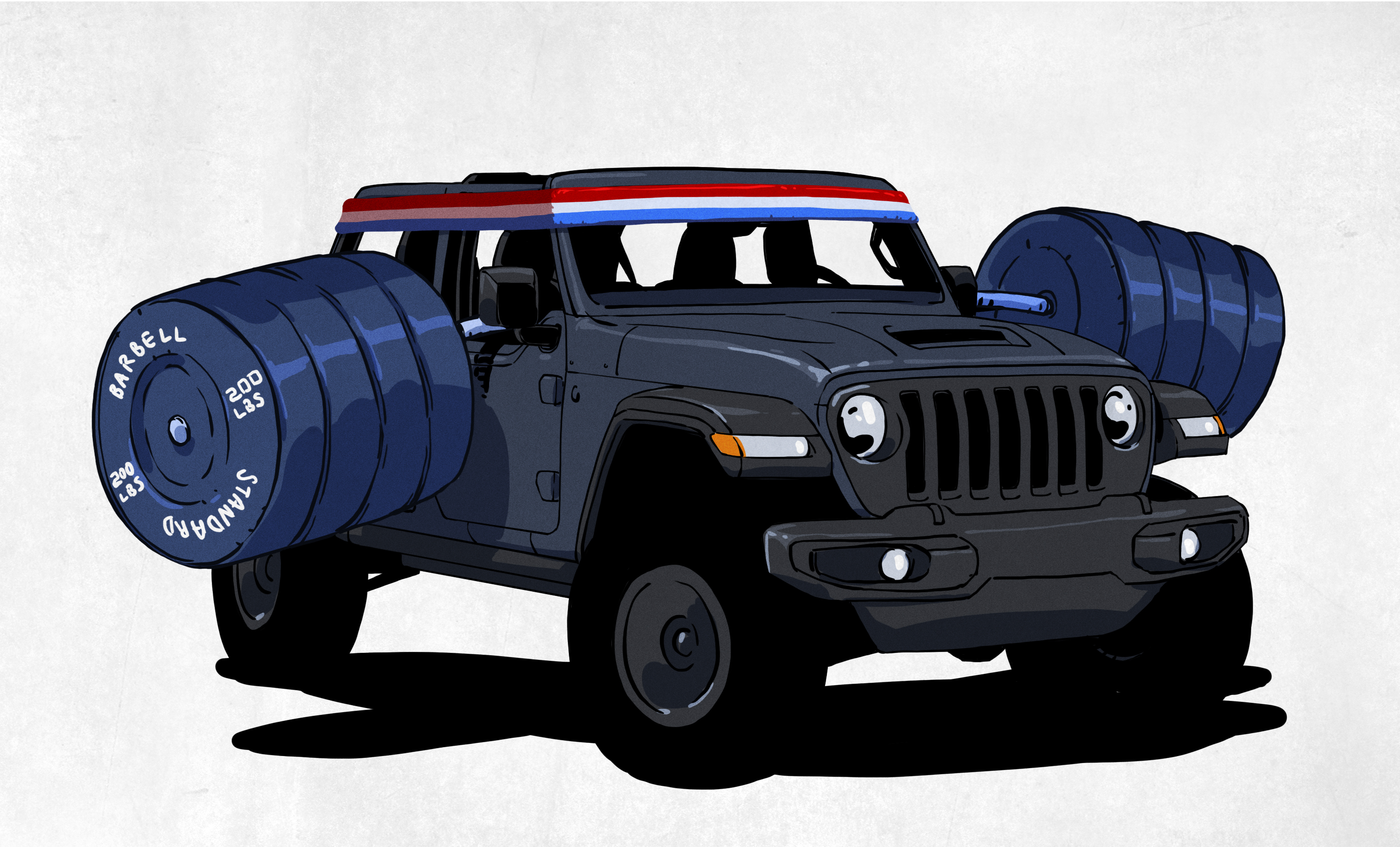
Does this lead make my car look fat? It sounds like something a nervous sedan would ask before rolling onto a scale at the DMV. But behind the joke is a surprisingly serious automotive question: why would engineers ever add weight to a car on purpose?
After all, every car nerd knows the sacred commandment: lighter is better. Less weight usually means quicker acceleration, shorter braking distances, better fuel economy, sharper handling, and fewer groans from your tires. Automakers spend fortunes shaving ounces from brackets, seat frames, body panels, suspension arms, and battery housings. Then, in the same universe, someone bolts a chunk of metal to a bumper, clips weights to a wheel, drops sandbags in a pickup bed, or hides ballast low in a race car.
Contradiction? Not exactly. Cars are not just objects that move; they are systems that vibrate, grip, rotate, stop, corner, crash, carry cargo, and occasionally embarrass their owners in snowy parking lots. Sometimes a little extra mass is not laziness. Sometimes it is medicine. The trick is knowing when added weight is smart engineering and when it is just automotive junk food.
Why Vehicle Weight Matters So Much
Vehicle weight affects almost everything a car does. A heavier vehicle takes more energy to accelerate because the engine or electric motor has to move more mass. It also takes more braking force to slow down, more tire grip to change direction, and more energy to climb hills. That is why lightweight materials are such a big deal in modern car design.
The U.S. Department of Energy has noted that reducing vehicle weight by 10 percent can improve fuel economy by roughly 6 to 8 percent. That is not magic; it is physics wearing a polo shirt. If a car has less mass to drag around, it can use a smaller engine, a smaller battery, less fuel, or less electricity to do the same job.
Weight also affects tire wear. A tire is the only part of a car that touches the road, unless your driving style is truly cursed. More weight pushes harder into the contact patch, increasing heat, flex, and wear. This is one reason electric vehicles, which often carry heavy battery packs, can be tougher on tires than comparable gasoline vehicles. Instant torque makes the situation even spicier, because quick acceleration can scrub tread faster than a teenager discovering launch mode.
So Why Add Weight at All?
Because cars live in the real world, and the real world is rude. Roads are rough. Engines vibrate. Tires lose grip. Race rules require minimum weight. Snow turns empty pickup beds into ice-skating rinks. Engineers are constantly balancing efficiency, comfort, stability, safety, cost, and performance.
Added mass can serve several useful purposes:
- It can improve traction by pressing drive wheels harder into the road.
- It can change weight distribution and make a car feel more stable.
- It can reduce unwanted vibration through a tuned mass damper.
- It can help race cars meet minimum weight rules while improving balance.
- It can balance rotating parts, such as wheels and tires.
In other words, lead, steel, cast iron, tungsten, sand, or other ballast is not always dead weight. Sometimes it is the quiet employee in the corner making sure the whole office does not shake itself apart.
Ballast: The Gym Weight Your Car May Actually Need
Ballast is deliberately added weight. In racing, ballast is a tool, not an insult. Formula 1 defines ballast as weight added to meet minimum weight, improve balance, and optimize the center of gravity. The best teams do not just throw it in like luggage before a road trip. They place it carefully, often low and central, because location matters almost as much as the number on the scale.
Imagine two cars with the same total weight. One carries extra mass high and far from the center. The other carries it low and near the middle. The second car will usually feel more controlled because its center of gravity is lower and its polar moment of inertia is easier to manage. That is a fancy way of saying it is less likely to feel like a refrigerator trying to dance salsa.
Race teams often try to build a car lighter than the rulebook allows, then add ballast exactly where it helps most. That allows engineers to tune front-to-rear balance, corner weights, and handling behavior. If the rules say the car must weigh a certain amount, the smartest strategy is not simply to be heavy. It is to be heavy in the right places.
The Porsche 911 Example: When Extra Weight Tamed a Legend
One of the most famous examples of intentional automotive weight comes from early Porsche 911 history. Early short-wheelbase 911s had a rear-engine layout that contributed to lively handling. “Lively” is a polite word that, in car culture, sometimes means “please keep both hands on the wheel and maybe say a short prayer.”
To improve stability, Porsche used cast-iron pieces behind the front bumper on some early cars. Each piece weighed a little over 24 pounds. The fix was not glamorous. It did not sound like a moonshot. Nobody wrote a superhero theme song about bumper weights. But it helped settle the car’s behavior by adding mass toward the front.
That example is important because it shows the difference between weight as a penalty and weight as a tuning tool. Porsche did not add metal because it forgot how scales work. It added metal because the car needed a more stable balance. Later engineering improvements made the crude solution unnecessary, but for its moment, the humble chunk of iron earned its keep.
Traction: Why Pickup Trucks Sometimes Like Sandbags
If you drive a rear-wheel-drive pickup in winter, you may already know the empty-bed shuffle. The rear axle does not have much weight over it, the tires struggle to bite, and suddenly your truck is doing interpretive dance at the stop sign.
Adding weight over or near the rear axle can help a rear-wheel-drive pickup gain traction in snow because it increases the normal force pressing the drive tires into the road. Tire grip is not just about tread pattern; it is also about how firmly the tire is loaded. More useful pressure over the drive wheels can help reduce wheelspin and fishtailing.
But this is not a universal invitation to fill every trunk with patio bricks. Extra weight in the rear is generally more useful for rear-wheel-drive vehicles, especially pickups. It is usually not helpful for front-wheel-drive cars, because their drive wheels are already at the front, where the engine and transaxle sit. It can also be unnecessary or even counterproductive for many all-wheel-drive vehicles.
Payload limits matter too. If your owner’s manual says the vehicle can safely carry a certain amount, believe it. A truck bed full of “traction assistance” that exceeds payload capacity is no longer a safety trick. It is a mobile bad decision wearing a tailgate.
Vibration Dampers: The Weight That Stops the Buzz
Some added weight is not about traction or handling at all. It is about comfort. Cars generate vibration from engines, drivetrains, tires, road surfaces, exhaust systems, and body structures. Automakers call this field NVH, which stands for noise, vibration, and harshness. It is the science of making sure your car does not sound like a toolbox falling down stairs.
A tuned mass damper is a small mass attached with a springy or rubber-like element. It is designed to vibrate in opposition to an unwanted frequency. When tuned correctly, it absorbs or counters vibration that would otherwise travel through the vehicle.
You may find mass dampers on exhaust systems, subframes, steering components, suspension parts, and even motorcycle handlebars. The added mass can look odd if you spot it during a repair. Many owners have stared at a mysterious lump of metal under a car and wondered whether the factory forgot to remove a shipping weight. In many cases, that strange lump is there because someone with a laptop, accelerometers, and a large coffee found an annoying vibration and killed it with physics.
Wheel Weights: Tiny Metal, Big Responsibility
Wheel weights are another common example of added mass. They correct small imbalances in the rotating wheel and tire assembly. Without them, a wheel can vibrate at speed, causing steering shake, uneven tire wear, and a general feeling that your car has developed opinions about highway driving.
Lead was historically popular for wheel weights because it is dense, soft, and easy to form. However, lead is toxic, and the auto industry has increasingly moved toward alternatives such as steel, zinc alloy, and composite materials. The EPA has stated that lead wheel weights are no longer used on new vehicles in the United States, based on information from automakers, though older vehicles and replacement-service situations may still involve legacy weights.
This is where the title’s “lead” becomes more than a joke. Lead can be useful as mass, but it brings environmental and health concerns. Improperly discarded lead-acid batteries and lost lead wheel weights can create contamination problems. Modern automotive design tries to keep the benefit of added weight where necessary while reducing unnecessary lead exposure.
Lead-Acid Batteries: Heavy, Useful, and Not Trash-Can Friendly
Even in the age of electric vehicles, the traditional 12-volt lead-acid battery remains common in many cars. It starts engines, powers accessories, and supports electrical systems. It is heavy, but it is also reliable, relatively inexpensive, and supported by a mature recycling network.
The environmental catch is obvious: lead is highly toxic, and battery acid is not exactly a spa treatment. That is why lead-acid batteries should be recycled properly and never tossed into household trash or abandoned in a garage corner until they become a crusty science experiment. The EPA has highlighted the importance of proper collection and recycling because improper disposal can harm human health and the environment.
The upside is that lead-acid batteries are among the most established battery-recycling success stories. The materials can be recovered and reused. That does not make lead harmless, but it does mean responsible handling can turn a hazardous product into a circular-material system instead of a slow-motion pollution machine.
Electric Vehicles and the New Weight Conversation
Modern electric vehicles have changed the weight debate. On one hand, EVs remove tailpipe emissions and use highly efficient electric motors. On the other hand, batteries can be heavy. The University of Tennessee’s Center for Transportation Research has noted that EVs often weigh about 30 percent more than gasoline vehicles, largely because of battery weight.
The GMC Hummer EV is the celebrity example of automotive mass. Its battery pack has been reported at nearly 2,923 pounds, with a total curb weight over 9,000 pounds. That is less “car gained a few pounds over the holidays” and more “car ate another car.”
Heavy EVs can raise questions about tire wear, crash compatibility, road infrastructure, and efficiency. Safety researchers have pointed out that heavier vehicles can create greater risks for people in smaller vehicles, pedestrians, and cyclists, especially when vehicle height and front-end shape are involved. That does not mean EVs are bad. It means “electric” is not a free pass to ignore mass, size, tire design, or responsible driving.
The best future is not simply electric cars. It is smarter electric cars: lighter battery packs, efficient designs, properly rated tires, better crash structures, and less obsession with turning every driveway into a private tank museum.
When Added Weight Helpsand When It Hurts
Added weight can help when:
- It is placed over the drive wheels of a rear-wheel-drive vehicle for winter traction.
- It is used as engineered ballast in racing to meet rules and tune balance.
- It is part of a tuned mass damper designed to reduce vibration.
- It balances a wheel and tire assembly.
- It corrects a specific handling or stability issue identified by engineers.
Added weight can hurt when:
- It exceeds payload capacity.
- It is unsecured and can move during braking, cornering, or a crash.
- It is placed high, far back, or far forward without understanding handling effects.
- It increases stopping distance and tire wear without adding useful traction.
- It is used as a substitute for proper tires, alignment, suspension repair, or safe driving.
The golden rule is simple: weight must have a job. If it does not have a job, it is just freeloading.
Practical Advice for Everyday Drivers
If you are tempted to add weight to your vehicle, start with the owner’s manual. Check payload capacity, tire pressure recommendations, and cargo guidance. Your tires should be inflated according to the placard on the driver’s doorjamb, not the maximum number printed on the tire sidewall. That placard exists because the vehicle manufacturer already calculated a safe pressure for the original tire size and load range.
For winter traction, prioritize proper tires first. A good set of winter tires will usually do more than random weight in the trunk. If you drive a rear-wheel-drive pickup and need extra traction, use sandbags or similar secured weight near the rear axle, within payload limits. Do not let weight slide around. A loose concrete block in a crash is not ballast; it is a bowling ball with legal consequences.
For vibration issues, do not remove mysterious factory weights unless you know exactly what they do. That odd-looking damper on an exhaust pipe, axle, or subframe may be solving a problem you have not noticed precisely because it is already solving it. Removing it to “save weight” on a daily driver may turn your calm commute into a buzzing dental appointment.
For performance driving, think about balance rather than just total mass. Where weight sits affects how a car corners, brakes, rotates, and recovers. A lighter car is usually better, but a badly balanced light car can be less pleasant than a slightly heavier car with predictable behavior.
Experiences From the Real World: What Added Weight Teaches Drivers
Anyone who has driven an empty pickup on snow understands the practical side of this topic. The first time it happens, you may think something is wrong with the truck. The engine runs fine, the tires look fine, the road is not even that steep, and yet the rear wheels spin like they are auditioning for a figure-skating team. Add a few properly secured sandbags near the rear axle, and the truck suddenly remembers it is supposed to move forward instead of sideways.
This experience teaches an important lesson: traction is not just about power. In fact, too much power without enough weight over the drive wheels makes the problem worse. A lightweight rear axle and an enthusiastic throttle pedal can turn a simple snowy intersection into a neighborhood performance nobody requested. The best drivers learn to be gentle with throttle inputs, keep momentum smooth, and use weight only as a helpernot as a substitute for judgment.
There is also the opposite experience: carrying too much junk. Many drivers use their trunks as rolling storage units. Old tools, sports gear, emergency supplies, mystery boxes, and that one bag of donation clothes from 2021 all add up. The car may not feel dramatically different at first, but over time the extra mass can reduce fuel economy, dull acceleration, increase braking distance, and wear tires faster. The car does not complain in English. It complains through sluggishness, longer stops, and a gas gauge that seems to be practicing parkour.
Then there is the mysterious vibration story. A driver takes a car to a shop for exhaust work, and a small metal weight gets removed because it looks unnecessary. Suddenly, at 2,100 rpm, the cabin develops a low drone that makes every commute feel like sitting inside a bored tuba. That little weight was not decorative. It was a tuned mass damper, and it had one job: absorb an annoying vibration. Once removed, the sound returns like an unpaid bill.
Wheel balancing provides another everyday example. A tiny missing wheel weight can make a steering wheel shake at highway speed. The amount of metal may be small enough to fit in your palm, yet the effect can be huge because rotating imbalance gets amplified as speed rises. That is why tire shops take balancing seriously. A few grams in the right place can make the difference between a smooth ride and a steering wheel that feels like it is trying to send Morse code.
Electric vehicles add a newer kind of experience. Many EV owners love the instant torque and quiet ride, but some are surprised by tire wear. The battery weight, quick acceleration, and low cabin noise change what drivers notice. A gasoline engine can mask road noise; an EV makes tire hum more obvious. Hard launches are fun, but tires are the ones paying the cover charge. Owners who rotate tires regularly, maintain pressure, choose EV-appropriate tires, and accelerate smoothly often get better tread life.
Road trips also reveal how weight changes behavior. Load a car with four adults, luggage, coolers, and a roof box, and it will feel different. Braking takes more planning. Corners feel softer. Tire pressures may need adjustment according to the vehicle placard or manual. The car may still be safe, but it is no longer behaving like it does during a solo commute. Smart drivers notice the change and adapt.
The best personal takeaway is this: added weight is neither hero nor villain. It is a tool. Used wisely, it can calm vibration, improve traction, balance a race car, or stabilize a tricky design. Used carelessly, it can waste energy, overload tires, damage handling, and create safety risks. So when your car asks, “Does this lead make me look fat?” the honest answer is: “Maybebut is it doing anything useful?”
Conclusion: Weight Is Not the Enemy, Useless Weight Is
Cars are full of compromises. Engineers do not worship lightness for its own sake; they chase the best combination of performance, comfort, safety, durability, efficiency, and cost. Most of the time, reducing weight is a win. But sometimes adding mass is the clever move.
Lead wheel weights, cast-iron bumper weights, sandbags in pickup beds, tuned mass dampers, racing ballast, and heavy EV battery packs all show different sides of the same truth: where weight sits and what it does matter more than the simple number on a scale.
So no, lead does not automatically make your car look fat. But if that lead, steel, sand, or battery mass is poorly placed, unnecessary, toxic, unsecured, or excessive, your car may not just look fatit may drive fat. And nobody wants a car that handles like it just finished Thanksgiving dinner and then tried to run a slalom.
Note: This article is written for general educational and editorial purposes. Always follow your vehicle owner’s manual, tire placard, payload limits, and professional repair guidance before adding, removing, or modifying vehicle weight.

