
Hair Care
Distracted Driving on the Rise Among Personal and Commercial Drivers – IA Magazine
Jun
Distracted driving used to sound like a teenager problem: one hand on the wheel, one thumb on a text, and one guardian angel filing for overtime. Not anymore. Today, distraction is everywherefrom the parent eating a breakfast burrito during school drop-off to the delivery driver juggling GPS, dispatch messages, traffic, and a coffee that clearly has no respect for potholes.
For personal and commercial drivers, distracted driving has become one of the most stubborn road safety issues in the United States. It is not simply about texting behind the wheel, although that remains a major danger. It is also about navigation systems, work calls, mobile apps, food, in-cab technology, mental fatigue, aggressive traffic, and the unrealistic idea that humans can safely multitask while moving a two-ton vehicle at highway speed.
The concern highlighted by IA Magazine is timely: both personal auto drivers and commercial drivers are reporting more distraction, and many believe the drivers around them are looking at phones, speeding, and behaving more aggressively than they did just a year ago. That combination is a road-safety smoothie nobody ordered.
What Counts as Distracted Driving?
Distracted driving is any activity that takes attention away from the task of driving. The danger is not limited to one device or one bad habit. Safety experts generally describe distraction in three main forms:
Visual distraction
This happens when drivers take their eyes off the road. Examples include reading a text, checking a map, looking at a crash scene, scanning a dashboard screen, or trying to locate the exact French fry that escaped between the seat and console.
Manual distraction
This occurs when drivers take one or both hands off the wheel. Reaching for a phone, adjusting climate controls, eating, applying makeup, or grabbing paperwork can all create manual distraction. In commercial vehicles, reaching for dispatch equipment or paperwork can be especially risky because larger vehicles require more space and time to maneuver safely.
Cognitive distraction
This is the sneaky one. A driver’s eyes may be forward and hands may be on the wheel, but the mind is somewhere elsearguing on a work call, worrying about a delivery deadline, replaying a meeting, or thinking about dinner. Cognitive distraction matters because safe driving depends on fast perception, judgment, and reaction.
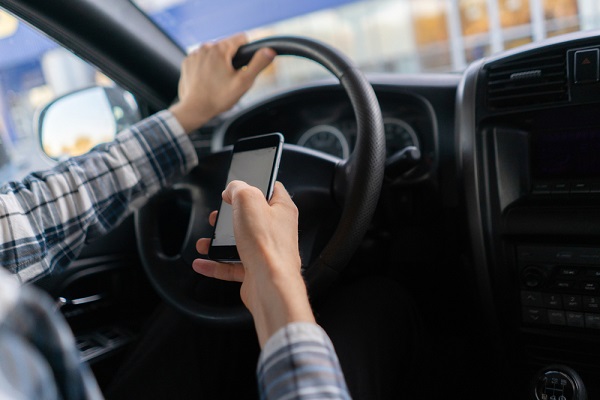
Texting is particularly dangerous because it can combine all three forms at once: eyes off the road, hands off the wheel, and mind off the driving environment. That is not multitasking; that is a tiny chaos festival inside a moving vehicle.
Why Distracted Driving Is Rising Again
Several trends are pushing distracted driving back into the spotlight. Smartphones are more central to daily life than ever. Many workers are expected to stay reachable. Delivery, rideshare, service, and logistics work often depend on mobile apps. Vehicles themselves are packed with touchscreens, alerts, infotainment systems, and driver-assistance features that can create a false sense of safety.
The result is a dangerous contradiction: drivers know distraction is risky, but many still do it. Surveys consistently show that most drivers view texting, emailing, reading messages, and scrolling social media behind the wheel as dangerous. Yet a meaningful share of drivers admit they still read messages, send texts, talk on phones, or interact with apps while driving.
This “I know it is dangerous, but I can handle it” mindset is one of the biggest problems. Most people do not think of themselves as reckless. They think they are just glancing for a second. Unfortunately, at highway speed, a few seconds can cover the length of a football field. The car does not pause while the driver checks a notification. Physics is rude like that.
Personal Drivers: Everyday Habits, Real Consequences
Personal drivers face distractions that feel ordinary because they happen during normal life. Eating during a commute, changing music, checking a child in the back seat, reading a message at a red light, or accepting a “quick” work call may not feel dramatic. But crashes are often built from ordinary moments stacked in the wrong order.
For personal auto drivers, common distractions include eating, taking calls, reading messages, checking navigation, grooming, and interacting with passengers. These activities may seem harmless, especially in familiar areas. But familiar roads can be deceptive. Drivers often relax on routes they know well, which can reduce alertness exactly when traffic conditions change.
One important detail is that distracted driving is not only a young-driver issue. Teen and young adult drivers are often associated with phone use, but adults also read messages, use navigation apps, answer work calls, and multitask in traffic. In fact, work-related pressure can make adult drivers more likely to justify risky behavior. A manager’s “Can you jump on a quick call?” may sound harmlessuntil it arrives while someone is merging across three lanes.
Commercial Drivers: Bigger Vehicles, Bigger Stakes
Commercial drivers have a different set of challenges. They often operate vehicles for long hours, travel unfamiliar routes, manage schedules, respond to dispatch instructions, and use navigation tools constantly. In some jobs, the vehicle is not just transportation; it is a mobile office, warehouse, customer-service desk, and break room with wheels.
That creates risk. A distracted commercial driver may be operating a box truck, van, bus, semi-truck, utility vehicle, or company pickup loaded with equipment. These vehicles can be heavier, wider, slower to stop, and harder to maneuver than passenger cars. Even a brief lapse can have serious consequences.
Commercial drivers also face pressure from outside the cab. Customers want arrival updates. Dispatch teams want status reports. Supervisors want efficiency. GPS systems reroute. Delivery apps ping. The driver is expected to stay safe, stay on schedule, stay reachable, and somehow remain calm when the road turns into a rolling group project.
Federal rules already restrict commercial motor vehicle drivers from texting while driving and from using handheld mobile devices while operating. These rules are not symbolic. Violations can lead to fines, driver disqualification, and employer penalties. For businesses, distracted driving is not only a safety concern; it is a compliance, liability, insurance, and reputation concern.
The Insurance Angle: Why Carriers and Agents Are Paying Attention
Insurance professionals care about distracted driving because it affects claim frequency, claim severity, litigation, fleet safety, workers compensation, auto liability, and underwriting. In plain English: distracted driving costs money, hurts people, and makes insurance more complicated.
For personal auto insurance, distraction contributes to crashes that can involve property damage, injuries, medical bills, lawsuits, and higher premiums across the market. For commercial auto, the stakes can be even higher. A crash involving an employee driving for work can trigger auto liability claims, workers compensation claims, cargo losses, business interruption, and potential allegations that the employer failed to train or supervise drivers properly.
This is why agents, risk managers, and business owners should treat distracted driving as a preventable operational risknot just a driver-behavior problem. A company with vehicles on the road needs written policies, training, enforcement, technology guidelines, and leadership buy-in. A policy nobody follows is just office wallpaper with legal anxiety.
Why “Hands-Free” Does Not Mean Risk-Free
Many drivers assume hands-free phone use is safe because the hands remain on the wheel. Hands-free technology may reduce manual distraction, but it does not eliminate cognitive distraction. A heated work call, complicated customer conversation, or emotionally charged personal discussion can still steal attention from the road.
This matters for employers. A company may technically allow hands-free calls, but if employees are expected to discuss complex issues while driving, the policy may still create risk. A safer approach is to build a culture where drivers are not expected to answer calls, texts, or emails while the vehicle is moving. Messages can wait. So can most calls. The road is already a full-time job.
Common Distracted Driving Behaviors to Watch
Distracted driving prevention starts with being honest about the behaviors that cause trouble. For personal and commercial drivers, the most common distractions often include:
- Reading, typing, or sending text messages
- Checking social media or app notifications
- Using GPS while the vehicle is moving
- Taking work calls or customer calls
- Eating or drinking behind the wheel
- Adjusting music, climate controls, or dashboard screens
- Looking at paperwork, delivery instructions, or invoices
- Reaching for dropped items
- Interacting with passengers or pets
- Driving while mentally overloaded, angry, rushed, or fatigued
The tricky part is that many of these behaviors feel normal. That is exactly why policies and habits matter. Drivers rarely plan to be distracted. They drift into it.
How Businesses Can Reduce Distracted Driving
Businesses with employees who drivewhether they operate a full fleet or simply reimburse mileageshould take distracted driving seriously. The best programs are practical, written clearly, and enforced consistently.
1. Create a clear distracted driving policy
A strong policy should prohibit texting, handheld phone use, and unnecessary device interaction while driving. It should explain when drivers are expected to pull over, how they should use navigation, and what happens if they violate the policy.
2. Ban work pressure behind the wheel
Managers should not call, text, or email employees when they know the employee is driving. If a company’s culture rewards instant replies, the safety policy will lose. Leadership must model the rule, not wink at it from the passenger seat.
3. Use technology wisely
Phone-blocking tools, telematics, dash cameras, driver scorecards, and app-based safety tools can help reduce risky behavior. However, technology should support coachingnot create a surveillance culture that drivers resent. The goal is fewer crashes, not a digital hall monitor with a grudge.
4. Train drivers regularly
Annual training is useful, but short reminders throughout the year may be more effective. Toolbox talks, safety meetings, onboarding modules, and real-world examples can keep the topic alive. Training should include personal vehicles used for work, not just company-owned vehicles.
5. Make reporting and coaching normal
Near misses should be treated as learning opportunities. If a driver almost rear-ended someone while checking navigation, that is valuable information. Companies should encourage reporting without turning every conversation into a courtroom drama.
How Personal Drivers Can Break the Habit
Individual drivers do not need a corporate safety department to reduce distraction. A few simple habits can make a major difference.
- Turn on “Do Not Disturb While Driving” before leaving.
- Set the GPS route before shifting out of park.
- Put the phone in a bag, glove compartment, or back seat.
- Finish food and drinks before driving when possible.
- Pull over safely before responding to messages.
- Ask passengers to help with navigation or music.
- Tell family, friends, and coworkers you do not reply while driving.
The biggest step is making focused driving a default, not a special occasion. Nobody brags about not juggling chainsaws. Safe driving should feel just as obvious.
Why Passengers Matter More Than They Think
Passengers can reduce distracted driving by speaking up. Many drivers will put the phone down if a passenger says, “I am not comfortable with that,” or “Let me handle the directions.” This is especially important for parents, friends, coworkers, and supervisors riding with employees.
Passengers should not shame drivers, but they should be direct. A calm sentence can prevent a crash. It may feel awkward for five seconds, which is still better than feeling regret for five years.
Examples of Distracted Driving in Real Life
Imagine a sales representative driving to meet a client. Their phone buzzes with a message from the client: “Can we move the meeting up 15 minutes?” The rep glances down, unlocks the screen, reads the message, and starts typing “On my way.” In that short window, traffic ahead slows. The rep brakes late and taps the bumper of the vehicle in front. Nobody meant for it to happen, but intention does not repair bumpers.
Now imagine a delivery driver following a route app. The app changes the stop order while the driver is approaching an intersection. The driver looks down to confirm the address. A pedestrian steps into the crosswalk. Even if the driver reacts in time, the near miss can be terrifyingand preventable.
Or picture a parent driving home after work. A child asks for a snack, a phone rings, the navigation announces a turn, and the driver reaches for a water bottle. Each distraction may be small alone, but together they create a perfect storm of divided attention.
The Bigger Pattern: Speed, Aggression, and Distraction
Distracted driving rarely travels alone. It often appears alongside speeding, tailgating, lane drifting, hard braking, and aggressive driving. A driver who is late may speed while checking navigation. A driver annoyed by traffic may look at a phone during stop-and-go congestion. A commercial driver under delivery pressure may take a call while trying to make up time.
This is why distracted driving prevention should be part of a broader road safety strategy. Speed management, fatigue prevention, realistic scheduling, route planning, driver coaching, and safe communication expectations all work together. Focusing only on “don’t text” misses the bigger picture.
What Insurance Agents Can Tell Clients
Insurance agents have an opportunity to help both personal and commercial clients understand distracted driving as a manageable risk. For personal lines customers, agents can encourage safe-driving apps, telematics programs, household driving rules, and parent-teen driving agreements.
For commercial clients, agents can ask practical questions: Do you have a written distracted driving policy? Does it apply to personal vehicles used for work? Are employees expected to answer calls while driving? How do you train drivers? Do supervisors follow the same rules? Do you review incidents and near misses?
These questions are not about scolding clients. They are about preventing claims before they happen. The best claim is the one that never appears in the file.
Experience-Based Section: Lessons From the Road
Anyone who spends enough time driving in the United States has seen the distracted driving problem up close. You are waiting at a green light because the driver in front is looking down. You pass a car drifting gently across the lane line and notice the driver’s head tilted toward a phone. You see a work van slow suddenly because the driver is trying to read a screen mounted near the dashboard. None of these moments look dramatic at first. That is what makes them dangerous.
One common experience is the “red light trap.” Drivers tell themselves it is safe to check a message while stopped. But traffic signals change quickly, cyclists and pedestrians move through intersections, emergency vehicles appear, and the driver’s attention does not snap back instantly. A message checked at a red light often turns into a message finished after the vehicle starts moving. The risk sneaks in through a tiny opening.
Another familiar experience is the overconfident GPS glance. Navigation is useful, especially for commercial drivers working unfamiliar routes, but it can become a distraction when drivers adjust routes on the move. A safer habit is to pull over before changing destinations, zooming the map, or reading detailed delivery notes. The two minutes spent stopping safely are far cheaper than a crash, citation, missed delivery, or injury.
Commercial drivers often describe a different pressure: the feeling that every delay must be explained immediately. A customer wants an update. Dispatch wants a response. A supervisor wants confirmation. The phone becomes a leash. The best companies understand this and create communication rules that protect drivers. For example, drivers can be instructed to check messages only when parked, while dispatchers can be trained not to expect instant replies from moving vehicles.
For families, distracted driving prevention works best when it becomes a shared rule rather than a lecture. Parents who tell teenagers not to text while driving must also avoid checking messages themselves. Teens are world-class hypocrisy detectors. If the adult says, “Never use your phone behind the wheel,” then reads a notification at 45 mph, the lesson evaporates faster than spilled coffee on a summer dashboard.
A practical habit is to create a “before drive” routine. Set the route, choose the playlist, silence notifications, secure loose items, and take one last look at messages before starting the engine. For commercial drivers, the same idea can be built into pre-trip checks: route confirmed, device mounted, communication expectations clear, paperwork stored, and phone placed where it will not tempt the driver.
Drivers also benefit from making distraction socially unacceptable. Twenty years ago, many people treated seat belts casually. Today, most drivers buckle up automatically. Distracted driving needs the same cultural shift. A driver should feel odd reaching for a phone while moving, just as odd as driving without headlights at night. The goal is not perfection; it is a repeatable habit that survives stress, boredom, and traffic.
There is also a humility lesson here. Good drivers can be distracted. Experienced drivers can be distracted. Professional drivers can be distracted. Confidence is useful, but overconfidence is dangerous. The road changes constantly, and safe driving requires attention that is active, not leftover. A driver cannot give the road the crumbs of their concentration and expect a full meal of safety.
Conclusion
Distracted driving is rising among both personal and commercial drivers because modern life keeps demanding attention from people who are already doing a high-risk task. Phones, apps, GPS systems, work pressure, food, fatigue, and mental overload all compete with the road. The solution is not one magic app or one slogan. It requires better habits, stronger employer policies, realistic communication expectations, smarter use of technology, and a culture that treats focused driving as non-negotiable.
For personal drivers, the message is simple: put the phone away, set the route before driving, and let the road be the only urgent notification. For commercial drivers and businesses, the message is even bigger: safety must be built into operations, not added after a crash. When drivers are protected from distraction, everyone benefitsemployees, customers, insurers, pedestrians, cyclists, families, and the strangers sharing the lane next to us.
Note: This article synthesizes real U.S. road safety, transportation, workplace safety, insurance, and fleet-risk guidance from organizations including NHTSA, CDC, NIOSH, FMCSA, OSHA, NSC, GHSA, AAA Foundation, IIHS, Travelers, Nationwide, and IA Magazine.

