
Beauty Tools & Accessories
Can You Make Your Own Windshield Wiper Fluid? Here’s How
Aug
Note: This article synthesizes practical guidance from U.S. transportation safety, poison control, consumer automotive, car-care, and environmental resources. It is written for general information and web publication, not as a substitute for your vehicle owner’s manual or professional mechanic advice.
Yes, you can make your own windshield wiper fluid. The bigger question is whether you shouldand that depends on the season, your climate, your car, and how much faith you want to place in a jug of homemade blue-ish mystery juice sloshing around under the hood.
For warm-weather driving, a simple homemade windshield washer fluid can help remove dust, pollen, light grime, and bug splatter. For freezing weather, however, the answer gets more serious. Winter windshield washer fluid is not just “water with attitude.” It is designed to resist freezing, cut through road salt, and spray properly through tiny washer nozzles when temperatures drop. If you live where the temperature falls below 32°F, a DIY formula needs extra cautionor, honestly, a store-bought winter-rated de-icer fluid may be the smarter move.
Below, we’ll walk through how to make DIY windshield wiper fluid, what ingredients work, what to avoid, how to store it safely, and when homemade fluid is a bad idea. Your windshield deserves clarity. Your washer pump deserves not to become an ice sculpture.
What Windshield Wiper Fluid Actually Does
Windshield wiper fluid has one deceptively simple job: help you see. But it performs that job in several ways. It loosens dirt, dissolves oily road film, helps wiper blades glide smoothly, removes bug residue, and, in winter formulas, lowers the freezing point so the fluid does not turn into a useless block of regret inside the washer reservoir.
Plain water may look like a cheap substitute, but it has major drawbacks. It freezes at 32°F, does not clean oily residue well, can leave mineral spots, and may encourage buildup inside the washer system if you use hard tap water. In warm climates, water alone might seem acceptable for a few days in an emergency, but it is not a reliable long-term windshield washer fluid recipe.
Commercial washer fluids often contain cleaning agents, alcohols, antifreeze components, dyes, and sometimes rain-repellent or bug-removal additives. Some winter fluids include methanol, which is effective at lowering freezing point but toxic if swallowed or mishandled. That is one reason many DIY drivers look for homemade alternatives using safer household ingredients. “Safer,” however, does not mean “risk-free.” Rubbing alcohol is flammable, vinegar is acidic, soap can foam, and a bad mix can leave streaks at exactly the wrong momentlike when a semi truck baptizes your windshield with road sludge.
Can You Make Your Own Windshield Wiper Fluid?
Yes, you can make your own windshield wiper fluid for mild conditions using distilled water, a small amount of cleaning agent, and sometimes isopropyl alcohol or white vinegar. The best homemade windshield washer fluid is simple, diluted, and made for the weather you actually drive innot the weather you wish you had.
The safest way to think about DIY windshield wiper fluid is this: it can be useful as a warm-weather or emergency solution, but it should not replace properly rated winter washer fluid in freezing climates. If your area gets snow, ice, freezing rain, or repeated subfreezing nights, use a commercial fluid rated for your expected temperature. Visibility is not a place to cosplay as a chemistry professor.
Best Ingredients for Homemade Windshield Washer Fluid
Distilled Water
Distilled water should be the base of most homemade windshield wiper fluid recipes. Unlike tap water, it contains fewer minerals, which helps reduce spotting and buildup. If you have ever seen chalky deposits around a faucet, imagine asking your washer nozzles to deal with that in miniature. They did not sign up for this.
Isopropyl Alcohol
Isopropyl alcohol, commonly called rubbing alcohol, helps cut grime and lowers the freezing point of the mixture. A higher concentration, such as 91%, offers more freeze resistance than 70%, but no homemade mixture should be assumed safe for extreme cold unless you test it and compare it with expected temperatures. Alcohol is also flammable, so mix and store it away from heat, sparks, pilot lights, cigarettes, and children who treat every bottle like a science fair audition.
White Vinegar
White vinegar can help remove light mineral residue and grime, especially in a summer windshield washer fluid recipe. It is inexpensive and easy to find. The downside is the smell, and vinegar is not ideal for freezing weather because it does not provide enough antifreeze protection on its own. It may also be harsh if used too strong or too often around paint, wax, rubber, and trim. Dilution matters.
A Tiny Amount of Dish Soap or Car Wash Soap
A few drops of mild dish soap or a small amount of car wash soap can help the fluid lift grease and bug residue. The key phrase is a few drops. More soap does not mean more clean; it means foam, streaks, and a windshield that looks like it just lost a bubble bath fight.
DIY Windshield Wiper Fluid Recipe for Warm Weather
This basic homemade windshield washer fluid recipe is best for spring, summer, and mild fall weather when freezing is not a concern.
Ingredients
- 1 gallon distilled water
- 1 tablespoon white vinegar
- 3 to 5 drops mild dish soap or car wash soap
Instructions
- Pour the distilled water into a clean, clearly labeled gallon container.
- Add the white vinegar.
- Add only a few drops of soap.
- Cap the container and shake gently. Do not create a foam volcano.
- Pour a small amount onto the windshield first and test it with your wipers.
- If it wipes clean without streaking, add it to the washer reservoir.
This warm-weather DIY windshield wiper fluid is inexpensive and easy to mix. It can handle light dirt, pollen, and everyday windshield haze. It is not a de-icer. It is not suitable for freezing weather. It is also not strong enough for heavy bug splatter after a long highway drive through what appears to be the entire insect population of the Midwest.
DIY Windshield Washer Fluid Recipe With Alcohol
If you want a stronger homemade windshield washer fluid for cool weather, you can add isopropyl alcohol. This helps with cleaning and offers some freeze resistance, but it still may not match a commercial winter-rated formula.
Ingredients
- 3 quarts distilled water
- 1 quart 70% isopropyl alcohol, or less for mild climates
- 3 to 5 drops mild dish soap or car wash soap
Instructions
- Use a clean container with a tight lid.
- Add distilled water first.
- Add isopropyl alcohol carefully in a ventilated area.
- Add only a few drops of soap.
- Label the container clearly: “Windshield washer fluidcontains alcoholdo not drink.”
- Store it away from children, pets, flames, and heat.
- Test a small amount on the windshield before filling the reservoir.
This recipe may work in chilly conditions, but do not rely on it for deep winter unless you verify its freezing point. A freezer test can help: place a small sealed sample in your freezer overnight. If it becomes slushy or solid, it is not ready for your car in cold weather. Even if it remains liquid in a home freezer, remember that some U.S. regions get much colder than a kitchen freezer. Nature does not care about your DIY confidence.
When You Should Not Use Homemade Windshield Wiper Fluid
Homemade windshield wiper fluid is not always the right choice. Skip the DIY version and use a properly rated commercial fluid in these situations:
- You live where temperatures drop below freezing.
- You are preparing for snow, ice, sleet, or freezing rain.
- Your vehicle has heated washer nozzles, headlight washers, rain sensors, or advanced driver-assistance cameras that require excellent visibility.
- You drive long highway routes where road salt and oily spray build up quickly.
- You are unsure what is already in your washer reservoir.
- Your owner’s manual recommends a specific type of washer fluid.
Modern vehicles rely on clear glass for more than human eyes. Cameras, sensors, lane-keeping systems, and automatic emergency braking features can all be affected by grime, streaks, ice, and washer fluid residue. That does not mean your car will explode if you add homemade fluid, but it does mean poor visibility can become a safety problem faster than you expect.
Ingredients You Should Avoid
Household Glass Cleaner
Do not pour household glass cleaner into your washer reservoir. Some glass cleaners contain ammonia or other ingredients that can be hard on rubber, trim, paint, and window tint. They are made for wiping glass by hand, not for being pumped through a car’s washer system at 65 mph while your wipers perform interpretive dance.
Too Much Dish Soap
A little soap can help. A lot of soap creates streaks, foam, and residue. If your windshield looks cloudy after use, you probably added too much. Emptying and rinsing the system is far less fun than using restraint the first time.
Undiluted Vinegar
Vinegar is useful in small amounts, but strong vinegar mixtures can smell unpleasant and may be too harsh for frequent use around automotive surfaces. Always dilute it heavily with distilled water.
Hot Water for De-Icing
Never pour hot or boiling water on a frozen windshield. Rapid temperature change can crack glass, especially if there is already a tiny chip waiting for its villain origin story. Use a scraper, defroster, windshield cover, or a proper de-icing product instead.
Random Internet Potions
If a recipe calls for cola, shampoo, laundry detergent, essential oils, or anything that sounds like it belongs in a dorm-room prank, do not put it in your car. Washer systems have small pumps, hoses, filters, and nozzles. Sticky, oily, or foamy ingredients can clog or damage them.
How to Add Homemade Washer Fluid to Your Car
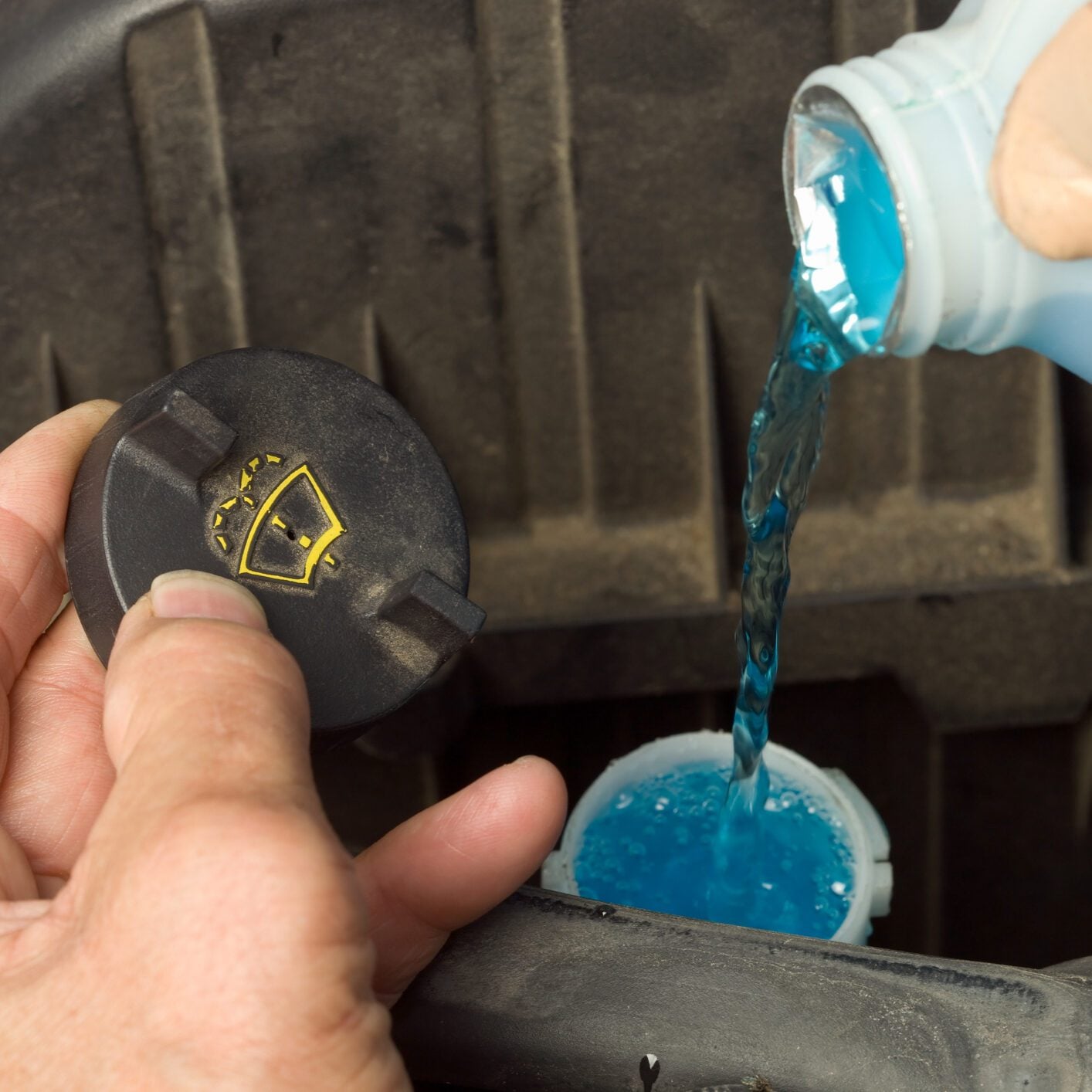
Adding windshield washer fluid is usually simple, but simple does not mean careless. Open the hood and locate the washer fluid reservoir. It usually has a cap with a windshield or spray symbol. Do not confuse it with coolant, brake fluid, power steering fluid, or oil. Cars are picky. They do not appreciate beverage mix-ups.
- Park on a level surface and turn the engine off.
- Let the engine bay cool if the car was recently driven.
- Open the washer fluid reservoir cap.
- Use a funnel to avoid spills.
- Do not overfill; leave a little space at the top.
- Close the cap securely.
- Spray the washer system briefly and check for streaks, odd smells, or weak spray.
If the washer spray is weak after adding homemade fluid, stop using it and inspect the system. The nozzle may be clogged, the fluid may be too soapy, or the reservoir may contain old fluid reacting badly with the new mix. If temperatures are near freezing, do not keep spraying and hoping. Hope is not antifreeze.
How to Store DIY Windshield Washer Fluid Safely
Storage matters because homemade windshield washer fluid can look harmless. A jug of pale liquid in the garage is not self-explanatory, especially to kids, pets, or visitors. Label every container clearly. Include the date, ingredients, and a warning such as “Do not drink.” Store alcohol-based formulas away from heat and flames. Keep all washer fluids, homemade or commercial, out of reach of children and animals.
Do not reuse drink bottles for washer fluid. A sports drink bottle filled with blue liquid is a terrible idea with excellent lawsuit energy. Use a clean utility jug with a secure cap. If the mixture smells strange, grows cloudy, develops sediment, or sits for months, discard it safely and make a fresh batch.
Homemade vs. Store-Bought Windshield Washer Fluid
DIY windshield washer fluid wins on cost, convenience, and ingredient control. You can mix a gallon for very little money, especially if you already have distilled water, vinegar, and rubbing alcohol at home. It is also handy when you run out unexpectedly and need a short-term solution.
Store-bought washer fluid wins on reliability. Commercial formulas are labeled for temperature ranges and specific uses: summer bug remover, all-season cleaner, winter de-icer, and rain-repellent washer fluid. If you drive in harsh weather, that label matters. A gallon that says it works down to -20°F or -30°F gives you more confidence than guessing whether your homemade mix will survive the next cold snap.
The best approach for many drivers is seasonal. Use a simple DIY windshield wiper fluid recipe only in warm weather or as an emergency backup. Switch to commercial winter washer fluid before the first hard freeze. If you already have homemade summer fluid in the reservoir, use it up or drain it before freezing weather arrives. A frozen washer reservoir can damage hoses, pumps, nozzles, and your patience.
Common Mistakes People Make With DIY Washer Fluid
Using Tap Water
Tap water may contain minerals that leave deposits and clog washer nozzles over time. Distilled water is cheap and cleaner for the system.
Adding Soap Like They Are Washing Dishes
Your windshield needs a cleaning boost, not a bubble party. Keep soap to a few drops per gallon unless the product label suggests otherwise.
Ignoring Temperature
This is the biggest mistake. A homemade summer formula may work beautifully in July and fail spectacularly in January. Temperature rating is the line between “thrifty” and “why is my washer pump making that noise?”
Mixing Unknown Fluids
If you do not know what is already in the reservoir, avoid creating a chemical cocktail. Use up the old fluid first or have the system flushed if needed.
Skipping the Test Wipe
Always test your homemade fluid on the windshield before filling the reservoir. Look for streaks, haze, residue, odor, and wiper chatter. A one-minute test can prevent a week of annoyance.
Quick Troubleshooting Guide
Problem: The Windshield Is Streaky
Use less soap. Clean the wiper blades with a damp cloth. If the blades are old, cracked, or smearing, replace them. Even the best fluid cannot save wiper blades that retired emotionally six months ago.
Problem: The Fluid Froze
Do not keep forcing the washer pump. Move the vehicle to a warmer location if possible and let the system thaw. Once thawed, drain the weak fluid and refill with winter-rated washer fluid.
Problem: The Washer Nozzles Are Clogged
Minerals, dirt, or soap residue may be blocking the nozzles. Try rinsing the system with distilled water in warm weather, or have a mechanic clear the nozzles. Avoid poking aggressively with sharp objects, because the nozzle angle matters.
Problem: The Fluid Smells Too Strong
You may have used too much vinegar or alcohol. Dilute the mixture if weather allows, or drain and remake it. Your car should not smell like a salad bar with a chemistry minor.
of Real-World Experience: What DIY Washer Fluid Teaches You Fast
The first thing you learn when making your own windshield wiper fluid is that “clean glass” is more complicated than it looks. On a sunny Saturday in the driveway, almost any clear liquid seems like it works. Spray, wipe, admire. But real driving adds chaos: pollen at sunrise, bug splatter at sunset, road film after rain, and that mysterious gray mist kicked up by trucks that makes your windshield look like it was seasoned with pepper.
A good DIY windshield washer fluid has to pass the boring test. It should spray evenly, wipe cleanly, leave no film, and not smell so strong that passengers ask whether you are transporting pickles. The best warm-weather homemade mix is usually the least dramatic one: distilled water, a tiny cleaning boost, and restraint. Too much soap is the classic beginner mistake. The windshield may look clean for three seconds, then the sun hits it and reveals a greasy rainbow worthy of a bad car wash.
The second lesson is that wiper blades matter as much as fluid. Many drivers blame the washer fluid when the real culprit is a tired rubber blade dragging dirt across the glass. If the blade edge is cracked, hardened, or leaving arcs, no homemade recipe will perform miracles. Clean the blades with a damp microfiber towel before judging the fluid. If the towel comes away black, congratulations: you just found part of the problem.
The third lesson is seasonal humility. A DIY formula that works beautifully in warm weather can become a frozen disaster during a cold snap. People often think, “It probably won’t freeze tonight.” That sentence has personally destroyed many small automotive components. If winter is coming, do not gamble. Switch to a commercial winter-rated washer fluid before the first freeze. It is cheaper than replacing a washer pump, and much cheaper than driving with poor visibility because your reservoir has turned into a dashboard-controlled popsicle.
The fourth lesson is labeling. If you mix your own fluid, label the container clearly. Do not store it in an old water jug, soda bottle, or anything that looks drinkable. Alcohol-based mixes and commercial washer fluids can be dangerous if swallowed. A garage is already full of things that look boring but are toxic; do not add an unlabeled mystery bottle to the cast.
Finally, DIY washer fluid is most satisfying when you treat it as a practical tool, not a personality trait. Use it when it makes sense: mild weather, light cleaning, short-term savings, and emergency top-offs. Avoid it when conditions demand a tested product: snow, ice, road salt, long highway travel, or advanced vehicle systems that depend on clean glass. Making your own windshield wiper fluid can be smart, but the smartest DIYer knows when to put down the funnel and buy the blue jug.
Final Verdict: Should You Make Your Own Windshield Wiper Fluid?
You can make your own windshield wiper fluid, and for warm-weather driving, a simple distilled-water recipe can be useful, cheap, and effective. The best homemade windshield washer fluid is mild, well diluted, and tested before it goes into the reservoir. It should clean without streaking, foaming, freezing, or attacking your car’s rubber and painted surfaces.
But DIY has limits. In freezing weather, commercial winter windshield washer fluid with a clear temperature rating is the safer choice. Visibility is a safety feature, not a cosmetic detail. When your windshield is coated in slush, road salt, or freezing rain, you want a fluid that works immediatelynot a homemade experiment asking for one more chance.
So yes, make your own windshield wiper fluid if your climate and driving conditions allow it. Use distilled water. Go easy on soap. Be careful with alcohol. Label everything. Test before filling. And when winter shows up with icy eyebrows and a bad attitude, buy the rated de-icer fluid. Your windshield, your washer pump, and your future self will all quietly applaud.

