
Hair Care
Baldness: How Close Are We to a Cure?
Aug
For decades, baldness has occupied a peculiar corner of medicine: common enough to affect millions of people, emotionally significant enough to inspire an enormous industry, yet stubbornly resistant to anything that deserves the word “cure.” We have lotions, pills, lasers, injections, transplants, fibers, powders, and enough miracle shampoos to stock a small supermarket. What we do not yet have is a treatment that reliably restores a full head of permanent hair for everyone.
That may finally be starting to change.
Scientists now understand hair follicles at a level that would have sounded like science fiction when minoxidil first arrived. Researchers are studying dormant follicle stem cells, metabolic switches, androgen receptors, immune signaling, dermal papilla cells, tissue engineering, and even ways of creating new follicles. Several experimental treatments are moving through clinical trials.
So, is a baldness cure actually close? The short answer is: closer than ever, but not close enough to throw away your baseball cap just yet.
First, What Do We Mean by “Baldness”?
Before discussing a cure, we need to clear up one important issue. Baldness is not one disease.
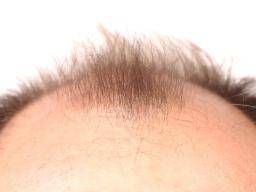
The most common form is androgenetic alopecia, better known as male-pattern or female-pattern hair loss. Genetics and sensitivity to androgen hormones gradually cause susceptible follicles to miniaturize. Thick terminal hairs become thinner, shorter and less visible until some follicles appear almost inactive.
Men commonly develop a receding hairline and thinning crown. Women are more likely to notice a widening part or diffuse thinning across the top of the scalp.
Then there is alopecia areata, an autoimmune disease in which the immune system attacks hair follicles. Other people lose hair because of thyroid disorders, nutritional deficiencies, medications, major illness, childbirth, physical stress, tight hairstyles or inflammatory scalp disorders.
Scarring alopecias are particularly important because inflammation can permanently destroy follicles. Once a follicle has been replaced by scar tissue, waking it up is considerably harder than nudging a dormant but still living follicle back into action.
In other words, asking for “the cure for baldness” is a little like asking for “the cure for stomach pain.” The correct answer depends heavily on what caused the problem.
Why Is Pattern Baldness So Difficult to Cure?
A human hair follicle is not simply a hole that hair pops out of. It is a miniature biological organ with stem cells, pigment-producing cells, connective tissue, nerves, blood vessels and signaling systems that repeatedly coordinate a growth cycle.
Hair normally cycles through several stages:
- Anagen: the active growth phase.
- Catagen: a short transition period.
- Telogen: the resting phase.
- Exogen: the shedding stage.
With androgenetic alopecia, genetically sensitive follicles respond abnormally to androgens, particularly dihydrotestosterone, or DHT. Over repeated cycles, the follicles become progressively smaller. Their growth phases shorten, and the hairs they produce become increasingly fine.
The encouraging discovery is that many balding follicles may not be completely dead. Research suggests that important populations of hair-follicle stem cells can remain present even when normal hair production has largely stopped.
That observation has changed the goal of hair-loss research. Instead of merely asking, “How do we prevent another hair from falling out?” scientists can ask, “Can we restart the follicle itself?”
What Current Baldness Treatments Can Actually Do
Minoxidil: Useful, but Definitely Not a Cure
Topical minoxidil remains one of the most familiar treatments for pattern hair loss. It can increase hair diameter, prolong the growth phase and help some miniaturized follicles become more productive.
For many users, the important result is not dramatically growing back everything that disappeared. It is slowing the slide toward greater thinning while improving density in areas where follicles are still functioning.
The downside is commitment. Results generally take months, and continued treatment is usually necessary to maintain the benefit. Stop using it and much of the minoxidil-supported hair eventually disappears.
So minoxidil is less like permanently repairing a roof and more like hiring a maintenance crew that must keep showing up.
Finasteride Targets the Hormonal Problem
Finasteride is FDA-approved for male-pattern hair loss and works by reducing the conversion of testosterone into DHT.
For appropriately selected men, it can significantly slow further hair loss and sometimes produce visible regrowth. Early treatment tends to work better because there are more salvageable follicles left to protect.
But finasteride does not manufacture brand-new follicles. Its benefit also depends on continued treatment, and potential adverse effects need to be discussed with a qualified healthcare professional.
Dutasteride, spironolactone and oral minoxidil are also used in certain patients, sometimes off-label, depending on sex, diagnosis and medical circumstances.
Hair Transplants Solve a Different Problem
Modern follicular-unit transplantation can create impressively natural results. Surgeons move genetically resistant follicles from donor areas, usually around the back and sides of the scalp, into thinning or bald regions.
Those transplanted follicles can continue producing hair for many years.
But transplantation does not create unlimited new follicles. It redistributes a finite supply.
Imagine landscaping a yard by moving grass from the backyard to the front. The front may look substantially better, but your total amount of grass has not magically doubled.
For people with strong donor areas, hair transplantation may currently offer the closest thing to permanent cosmetic restoration. However, progressive loss of nontransplanted hair can continue, which is why medical therapy is often used alongside surgery.
The Big Scientific Shift: Waking Up Dormant Hair Follicles
The most exciting baldness research now focuses on a different strategy: rather than compensating for damaged follicles, researchers want to reactivate their regenerative machinery.
PP405 and the Hair-Follicle Stem-Cell Switch
One closely watched experimental treatment is PP405, developed from research associated with UCLA scientists and Pelage Pharmaceuticals.
Hair-follicle stem cells switch between inactive and active metabolic states. PP405 is being investigated as a topical small molecule that influences this metabolism, with the goal of pushing dormant stem cells back toward activation.
This concept is fundamentally different from simply blocking DHT.
Instead of telling hormones to stop bullying the follicle, researchers are trying to convince the follicle to get out of bed and return to work.
In a company-reported Phase 2a study involving men and women with androgenetic alopecia, participants received topical PP405 or placebo and were followed after treatment. The company reported favorable safety findings and evidence suggesting new terminal hair growth in some participants.
Those findings are interesting, but early clinical results should not be confused with proof of a cure. Larger Phase 3 studies are needed to determine how consistently the drug works, which patients respond, how much hair is restored, how long results last and whether long-term treatment creates unexpected problems.
As of 2026, PP405 remains investigational rather than an FDA-approved cure for pattern baldness.
SCUBE3: Sending a Stronger “Grow Hair” Signal
Researchers at the University of California, Irvine and collaborating institutions have studied another intriguing molecule called SCUBE3.
Dermal papilla cells near the base of follicles act as signaling hubs that help control hair growth. In androgenetic alopecia, these cells can gradually lose some of their ability to send strong regenerative signals.
Research demonstrated that SCUBE3 can stimulate hair growth in experimental models, raising the possibility of developing therapies that restore signaling between dermal papilla cells and the rest of the follicle.
This work is earlier-stage than established medications, but it illustrates an important trend. Future treatments may not rely on one mechanism. Doctors might eventually combine hormone control with direct regenerative signaling.
Could We Actually Create New Hair Follicles?
Reactivating a miniaturized follicle is impressive. Creating a completely new follicle would be even more revolutionary.
Dermal Papilla Cell Engineering
Scientists have long been fascinated by dermal papilla cells because they help instruct surrounding tissue to form and maintain hair follicles.
Researchers at Columbia University demonstrated years ago that cultured human dermal papilla cells could induce new hair-follicle formation under experimental conditions.
The challenge is maintaining the cells’ hair-inducing abilities outside their natural three-dimensional environment. When cultured conventionally, they can quickly lose the molecular personality that makes them useful.
Researchers have therefore explored three-dimensional cell cultures, spheroids, biomaterials and other tissue-engineering methods that better imitate the environment inside skin.
If this field eventually produces reliable follicle multiplication, hair transplantation could be transformed. Instead of being limited by the patient’s existing donor supply, clinicians might theoretically generate additional follicles.
That would be much closer to a genuine cure for advanced baldness.
Unfortunately, “theoretically” remains the important word.
Hair Follicle Organoids
Another frontier involves organoids: tiny laboratory-grown structures that mimic characteristics of real organs.
Scientists have succeeded in coaxing stem-cell-derived tissues to develop surprisingly sophisticated skin structures containing follicle-like components. The ultimate ambition is to reliably grow transplantable human follicles with correct direction, cycling, pigmentation and integration into living skin.
That is an enormous biological engineering challenge.
A laboratory follicle that produces something resembling hair is encouraging. A therapy that can safely install thousands of cosmetically normal follicles across a human scalp is another matter entirely.
Alopecia Areata Has Already Entered a New Treatment Era
Some of the fastest recent progress in hair-loss medicine has occurred not with hereditary baldness but with alopecia areata.
Researchers discovered that Janus kinase, or JAK, signaling plays an important role in the immune attack on hair follicles. This led to targeted drugs that interrupt those signals.
FDA-approved JAK inhibitors for severe alopecia areata include treatments such as baricitinib, ritlecitinib and deuruxolitinib for appropriate patient populations.
Clinical trials have shown that substantial scalp-hair regrowth can occur in some patients with severe disease.
This is a major achievement. People who previously had extremely limited options can now experience meaningful regrowth.
Still, these medications are treatments rather than guaranteed cures. Not everyone responds, continued therapy may be necessary, and JAK inhibitors have important safety considerations involving infections and other potentially serious adverse effects.
They also do not treat ordinary androgenetic alopecia simply because both disorders involve missing hair. The biological causes are different.
What About Stem-Cell Injections and PRP?
Regenerative medicine is already heavily marketed by hair clinics, sometimes several scientific steps ahead of the evidence.
Platelet-rich plasma, or PRP, involves concentrating platelets from a patient’s blood and injecting the preparation into the scalp. Research suggests PRP may improve density in some people with androgenetic alopecia, although treatment protocols vary considerably.
Stem-cell-derived preparations are even more experimental.
Systematic reviews have reported encouraging improvements in some small studies involving stem cells or cell-derived products. However, studies differ in cell sources, preparation methods, injection techniques and outcome measurements.
That makes it difficult to say that there is one proven “stem-cell treatment for baldness.”
Anyone advertising a guaranteed stem-cell baldness cure today should therefore be treated with the same caution you would give someone selling beachfront property in Nebraska.
Will Gene Editing Cure Baldness?
Because androgenetic alopecia has a strong genetic component, gene editing naturally attracts attention.
In principle, technologies such as CRISPR could someday modify genes or regulatory pathways that make follicles unusually sensitive to androgens.
In practice, hereditary pattern baldness is genetically complicated. There is no single universal “bald gene” researchers can simply switch off.
Multiple genetic variants contribute to risk, while hormones, age and cellular signaling interact with those inherited factors.
Safely editing enough adult scalp cells to produce a permanent cosmetic effect would also present substantial technical and regulatory challenges.
Gene therapy may eventually contribute to hair restoration, but it is not currently the technology most likely to produce the next mainstream baldness treatment.
So How Close Are We to a Real Baldness Cure?
That depends on how strict we are with the word cure.
If a cure means a therapy that can permanently restore all lost hair in virtually anyone, including people who have been bald for decades, medicine is not there yet.
If we mean treatments that can regenerate substantially more hair than older drugs while addressing the underlying biology of dormant follicles, the picture is considerably more optimistic.
The next major breakthrough may arrive as a topical treatment capable of activating resting follicles without producing substantial systemic hormonal effects. PP405 and other experimental drugs make that scenario scientifically plausible, although Phase 3 evidence and regulatory review remain essential.
The greater revolution would be reliable hair-follicle multiplication or tissue-engineered follicle replacement. That could eliminate one of the biggest limitations of hair transplantation: the finite donor supply.
Such technology remains farther away.
What Should Someone Losing Hair Do Right Now?
Waiting for the ultimate baldness cure is not necessarily the best strategy.
Miniaturization can progress over time, and existing treatments generally perform better while follicles are still recoverable. Anyone experiencing unexplained or rapidly progressing hair loss should consider seeing a board-certified dermatologist rather than diagnosing the problem from a collection of alarming bathroom-mirror selfies.
A dermatologist may examine the scalp, review medical and family history and, when appropriate, investigate thyroid disease, iron deficiency, autoimmune conditions or other potential causes.
For confirmed androgenetic alopecia, currently available treatments may preserve substantially more hair than doing nothing. Appropriate options can include topical minoxidil, prescription medications, hair transplantation, low-level light devices or other dermatologist-guided approaches.
Most importantly, sudden hair loss, scalp inflammation, pain, severe itching or scarring deserves medical evaluation because not every thinning scalp is ordinary pattern baldness.
Real-World Hair-Loss Experiences: What the Journey Often Looks Like
Scientific studies measure hair counts, density and photographic assessments. People living with hair loss tend to measure something rather different: bathroom lighting.
One of the most commonly described experiences begins almost invisibly. A person notices that photographs taken under bright overhead lights suddenly seem less flattering. The hairline still looks respectable from the front, but the crown apparently has begun broadcasting the location of the scalp to passing aircraft.
The next stage is usually denial.
Perhaps the barber cut it differently. Perhaps the shampoo is responsible. Perhaps every camera manufactured since Tuesday has developed an anti-hair bias.
Eventually, comparison with older photographs makes gradual thinning difficult to ignore.
Experience 1: Starting Treatment Early
People who address pattern hair loss early often have a different goal from those seeking treatment after extensive baldness. Their first priority is frequently preservation rather than dramatic regrowth.
After beginning an evidence-based treatment under medical guidance, visible change may initially be disappointing. Hair grows slowly. A few weeks can feel like an eternity when someone is inspecting the hairline every morning from four different angles.
Some treatments can also cause temporary increased shedding when hair cycles begin changing. Without proper counseling, that can persuade a person to quit precisely when patience is needed.
After six months or a year, successful treatment may look surprisingly boring: fewer hairs disappearing, better coverage under strong light and photographs that stop getting progressively worse.
That is not the cinematic transformation advertisements tend to promise, but stabilization can be extremely valuable.
Experience 2: Discovering That Hair Transplants Are Not Magic
Another common journey begins with the belief that a transplant simply replaces whatever has been lost.
A consultation quickly introduces the concept of donor supply.
Someone with extensive baldness may want the density of an 18-year-old movie star but have enough transplantable follicles for a strategically designed hairline and moderate coverage. Good surgeons therefore plan around future loss, facial proportions, donor density and long-term appearance rather than attempting to pack every available graft into the first centimeter of the forehead.
The recovery period also teaches patience. Newly transplanted hairs commonly shed before regrowing. Meaningful growth takes months, and final maturation can take roughly a year or longer.
The experience is less like buying a new haircut and more like planting a very expensive garden.
Experience 3: Falling Into the Miracle-Cure Rabbit Hole
Hair loss can make otherwise skeptical people unusually vulnerable to marketing.
A typical internet search starts with minoxidil and somehow ends 90 minutes later with a person considering an obscure botanical serum, a vibrating helmet, twelve supplements and something involving fermented onion extract.
The useful lesson is simple: distinguish evidence from enthusiasm.
Promising laboratory research is not the same as a successful randomized clinical trial. A successful early clinical trial is not the same as FDA approval. FDA approval is not the same as guaranteed success for every patient.
Those distinctions matter particularly now because hair-loss research genuinely is exciting. Real scientific advances are happening, which unfortunately makes it easier for questionable products to borrow scientific vocabulary.
Experience 4: Realizing That Progress May Mean Keeping What You Have
Perhaps the most useful expectation is that successful hair-loss treatment does not always mean returning to teenage density.
For someone whose follicles are slowly miniaturizing, maintaining today’s hair for another decade can be an excellent result. For another person, modest regrowth may provide enough coverage to dramatically change appearance. Someone with advanced baldness may obtain the best cosmetic result from combining transplantation with medical maintenance.
Future regenerative therapies could change these expectations substantially.
If researchers learn to reliably wake deeply dormant folliclesor eventually generate new follicles in clinically useful numbersthe conversation may shift from preserving remaining hair to restoring lost follicular capacity.
That is why the current era is so interesting. Baldness has not been cured, but researchers are no longer limited to rearranging existing hairs or slowing hormonal damage. They are increasingly learning how the follicle decides whether to sleep, grow, shrink or regenerate.
Conclusion
A universal cure for baldness does not exist in 2026. Current treatments can slow androgenetic alopecia, preserve existing hair and produce meaningful regrowth in selected patients, while modern transplantation can permanently relocate resistant follicles.
At the same time, hair-loss science is undergoing a genuine shift. Experimental treatments targeting follicle stem-cell metabolism, androgen receptors and regenerative signaling are moving closer to clinical reality. Alopecia areata has already demonstrated how understanding a disease’s molecular machinery can rapidly transform treatment.
The biggest prize remains true follicle regeneration: waking follicles that have stopped producing visible hair or creating additional functional follicles when the original supply is insufficient.
We are not at the finish line, but for perhaps the first time in decades, researchers can see several scientifically credible roads leading toward it.
Until then, anyone promising a guaranteed permanent baldness cure probably has something else growing rapidly: their profit margin.

