
Beauty Tools & Accessories
Architect Visit: D. Michael Collins
May
Architect Visit: D. Michael Collins is more than a look at one beautifully composed New England home. It is a study in how residential architecture can feel old without being dusty, refined without being fussy, and comfortable without giving up the kind of details that make design lovers pause mid-step and whisper, “Okay, who did this?”
A New England Architect With an Old-Soul Approach
D. Michael Collins, through DMC Architecture in Natick, Massachusetts, represents a particular kind of residential design intelligence: patient, detail-driven, and deeply aware of place. The firm is known for custom homes, major additions, renovations, and historic restoration projects, with a practice rooted in New England but not limited to it. That matters because New England architecture is not a blank canvas. It comes with memory, rooflines, weather, stone walls, barns, shingle cottages, coastal views, village streets, and clients who often want a house that looks like it has always belonged there.
Collins’ work is especially interesting because it does not treat tradition as a costume party. The goal is not to dress a new house in old trim and call it heritage. Instead, the better reading is this: his houses often combine the soul of traditional residential architecture with the performance, comfort, and planning logic of modern living. It is the architectural equivalent of wearing a beautifully tailored tweed jacket with sneakers that actually support your arches. History gets respected; daily life still gets to sit down comfortably.
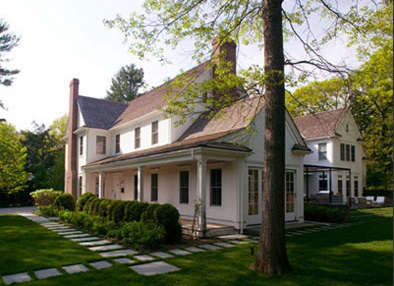
The original Architect Visit: D. Michael Collins feature on Remodelista focused on a Wellesley, Massachusetts, home described as new but designed to appear antique. That phrase can sound risky. “New but antique” can go wrong quickly, like faux beams made of foam or a kitchen pretending it churns butter while hiding three espresso machines. But in the Collins world, the idea works because the design depends on proportion, materials, flow, and restraint rather than theatrical imitation.
Why the Wellesley House Still Feels Relevant
The Wellesley project is useful because it captures a design problem many homeowners face: how do you build or remodel a house that has character without making it inconvenient? Historic homes can be beautiful, but they can also come with small rooms, awkward circulation, limited storage, dim kitchens, and staircases that seem designed by someone who disliked laundry. Modern homes solve many of those problems, but they can sometimes feel too polished, too open, or too anonymous.
D. Michael Collins’ approach sits between those extremes. In the Wellesley example, the architecture leans into the warmth of age while allowing the house to function like a contemporary family home. That balance is one reason the project fits naturally within Remodelista’s world of considered design: it rewards close looking. Instead of shouting through oversized gestures, the home speaks through alignment, trim, texture, light, and carefully composed transitions from one room to the next.
The interiors by Christine Lane also matter. Architecture and interiors are not separate planets; they are roommates, and ideally not the kind who label their oat milk with passive-aggressive sticky notes. In a successful house, the shell, the finishes, the furniture, the lighting, and the art all participate in the same conversation. The Wellesley home demonstrates that a traditionally inspired house does not need to feel frozen. It can feel relaxed, layered, and livable.
The Signature: Transitional Architecture With Backbone
Boston Magazine recognized D. Michael Collins Architects as a standout transitional architect, a label that fits well. Transitional architecture is often misunderstood as “traditional, but with fewer curtains.” In stronger hands, it means something more precise: a design language that connects classic forms with contemporary expectations.
For Collins, that can mean a Cape-style home oriented toward bay views, a farmhouse with antique or recycled materials, or a large residence carefully placed on a difficult site. The common thread is not one style. It is judgment. The work asks practical questions first: What does the site want? Where does the sun come from? How should the rooms connect? What materials will age well? Where should the house feel formal, and where should it loosen its collar?
This is where the firm’s residential specialization becomes important. A custom home is not simply a pretty object. It is a machine for mornings, holidays, muddy shoes, quiet reading, loud dinners, sleeping dogs, and the occasional mysterious drawer full of batteries no one remembers buying. Good residential architecture understands that life is repetitive, emotional, and messy. The best houses do not fight that. They organize it gracefully.
What Makes a Collins House Feel “Old” in the Best Way?
1. Proportion Before Decoration
The first lesson from the Collins approach is that proportion does most of the heavy lifting. A house can have expensive materials and still feel wrong if the windows are awkward, the roof is too heavy, or the rooms do not breathe. Traditional New England architecture depends heavily on balance: roof pitch, window rhythm, entry sequence, and massing. Collins’ projects tend to respect those fundamentals before adding decorative layers.
2. Materials That Age Instead of Expire
Natural materials play a major role in creating warmth. Wood, stone, painted millwork, traditional siding, and carefully chosen hardware all contribute to a sense of permanence. The goal is not perfection in the showroom sense. It is patina. A good material should look better after years of sunlight, hands, weather, and use. That is why antique, reclaimed, and historically sympathetic materials can feel so powerful in residential work.
3. Modern Planning Hidden Inside Traditional Form
The best “new old house” does not force a family to live like it is 1820. Modern kitchens need storage, durable surfaces, good lighting, and enough circulation so two people can cook without performing a slow-motion collision ballet. Mudrooms need to exist because shoes, coats, backpacks, sports gear, and dog leashes are not theoretical. Bedrooms need privacy. Bathrooms need comfort. Collins’ strength lies in making these modern needs feel natural inside a traditional envelope.
4. Collaboration With Builders, Designers, and Landscape Architects
DMC Architecture’s portfolio shows regular collaboration with builders, interior designers, landscape architects, timber-frame specialists, and photographers. Projects such as Weeset, Heather, Pasture, Polaris, and Highgate list teams that include names like KVC Builders, Acampora Interiors, Gregory Lombardi Design, Stephen Stimson Associates, New Energy Works, and others. That kind of collaboration is not just professional politeness. It is how complex houses become coherent.
Project Lessons From the DMC Architecture Portfolio
The DMC Architecture portfolio includes a range of named residential projects, from Seapine and Weeset to Heather, Pasture, Polaris, Highgate, Concord, Gardner, and others. While each project has its own site and personality, several lessons appear again and again.
First, the houses do not look like they were designed in isolation from their landscapes. Whether coastal, pastoral, wooded, or suburban, the setting influences the architecture. A house on a dramatic site needs humility as much as confidence. Too much ego, and the building competes with the view. Too little presence, and it disappears into expensive anonymity. Collins’ work tends to aim for a middle path: composed, grounded, and aware of its surroundings.
Second, the architecture shows a comfort with both traditional and contemporary cues. That range is important for today’s homeowners. Many people admire historic character but do not want to live inside a museum. They want broad windows, generous kitchens, layered lighting, high-performing systems, and flexible rooms. In other words, they want the charm of the past and the Wi-Fi of the present. Fair enough.
Third, details matter. Millwork, cabinetry, window placement, ceiling height, stair design, and material transitions all shape how a house feels. These are the features homeowners may not name immediately, but they sense them. A room either feels calm or it does not. A hallway either invites movement or feels like a squeeze. A kitchen either supports family life or turns breakfast into traffic control.
How Homeowners Can Learn From D. Michael Collins’ Work
You do not need a large custom home budget to learn from this architectural approach. The principles scale. Even a modest renovation can benefit from the same ideas: respect the house’s existing character, improve how rooms function, use materials that age well, and avoid trends that will look exhausted before the paint dries.
For example, if you are remodeling a kitchen in an older home, resist the urge to erase every trace of history. Instead, ask what should remain, what should be repaired, and what can be quietly modernized. A better layout, improved lighting, natural surfaces, and well-designed storage can make the room feel fresh without turning it into a spaceship that accidentally landed in a Colonial.
If you are planning an addition, pay special attention to scale. Many additions fail because they behave like guests who arrive late and dominate the conversation. A successful addition should feel inevitable. It should connect logically to the original structure, respect rooflines, and create useful interior flow. Collins’ body of work offers a helpful reminder that restraint can be more luxurious than excess.
If you are building new, the lesson is even clearer: do not begin with square footage. Begin with life. How do you enter the house? Where do groceries go? Where does morning light matter? Where do guests gather? What view deserves the best window? Which rooms should feel public, and which should retreat? Architecture becomes meaningful when it answers these daily questions with beauty and common sense.
The Beauty of a House That Does Not Try Too Hard
One of the most appealing qualities of the Collins approach is that the work rarely appears desperate for attention. In an age of scroll-stopping interiors and “look at me” design moments, that quiet confidence feels refreshing. The homes are built for people before photography, even when they photograph beautifully.
This does not mean the architecture is plain. It means the drama is controlled. A cathedral ceiling, a long view, a carefully framed landscape, a reclaimed beam, or a beautifully proportioned stair can all create impact. But the effect comes from composition rather than gimmick. The house does not need to wear a neon sign that says “custom.” It simply feels considered.
That is the secret of good residential design: when it works, it can look effortless. Of course, effortlessness is usually the result of enormous effort. Behind the calm room is a mountain of decisions about structure, dimensions, materials, codes, costs, drawings, builders, schedules, and approvals. The magic trick is making all that complexity disappear once someone walks through the door.
Experience Notes: What an Architect Visit Like This Teaches You
Visiting a house shaped by the D. Michael Collins design philosophy would not feel like touring a glossy showroom. It would feel more like meeting a very articulate old friend who somehow also has excellent insulation. The first impression would likely come from the approach: the way the driveway, garden, entry, and facade prepare you before you even touch the door. Good residential architecture begins before the threshold. It tells you how to arrive.
Inside, the experience would probably unfold gradually. Instead of one giant “wow” moment doing all the work, the house would reveal itself through smaller pleasures. A window might pull your eye toward trees or water. A passage might compress slightly before opening into a brighter room. A ceiling beam might make a new space feel rooted. A built-in cabinet might solve a storage problem so neatly that you almost miss how clever it is. That is the fun of this kind of architecture: the details are not screaming, but they are definitely talking.
In the kitchen, you would expect the strongest tension between old and new. The room might borrow from farmhouse traditionspainted cabinetry, warm wood, stone, practical work surfacesbut still support modern cooking and gathering. This is where many homes either succeed beautifully or fall into parody. A Collins-inspired kitchen would not need to pretend someone is making jam by candlelight. It would simply offer the comfort, durability, and scale that make a kitchen feel like the true center of the home.
The living spaces would likely show another key lesson: comfort depends on proportion. Oversized rooms can be impressive but strangely lonely. Tiny rooms can be charming but impractical. The best rooms sit in the sweet spot, where furniture placement feels natural, conversation is easy, and light lands where people actually want to sit. During an architect visit, this is the detail that often changes how you think about your own home. You begin noticing not just what a room contains, but how it behaves.
Walking upstairs, you might notice how private rooms shift in mood. Bedrooms in a well-designed house do not have to compete with public spaces. They can be quieter, softer, and simpler. A good architect understands that not every room needs the same volume. Some spaces should impress guests; others should help the homeowner exhale after a long day of emails, errands, and wondering why the smoke detector only needs a battery at 2 a.m.
The exterior experience would be just as important. The connection between architecture and landscape is central to New England residential design. A terrace, porch, garden path, or framed view can make a house feel larger than its walls. The best homes do not stop at the siding. They extend into the land around them, borrowing atmosphere from trees, stone, sky, and seasonal change. In that sense, an architect visit becomes a lesson in attention. You leave thinking about rooflines, yes, but also about where the sun hits at breakfast and how a mudroom can save a family’s sanity.
The most valuable experience, however, is emotional. A house designed with this level of care reminds you that luxury is not only about size or cost. It is about belonging. It is about a room that feels right at 7 a.m. and still feels right at 9 p.m. It is about materials that do not panic when life happens. It is about design that supports routines instead of demanding admiration all day. A home like this does not just photograph well; it lives well. That is the difference between architecture as image and architecture as experience.
Conclusion: Why D. Michael Collins Still Matters
Architect Visit: D. Michael Collins remains a compelling topic because it points to a timeless question in American residential design: how can a home feel rooted, personal, and enduring while still serving the way people live now? Collins’ work suggests that the answer lies in balance. Respect tradition, but do not become trapped by it. Use modern planning, but do not let efficiency flatten character. Choose materials with memory. Shape rooms around real life. Collaborate with people who care about craft.
That is why the Wellesley house and the broader DMC Architecture portfolio continue to resonate. They remind homeowners, designers, and architecture fans that a truly successful home does not need to chase every trend. It needs clarity, proportion, workmanship, and a sense of place. In simpler terms: build the house so it feels like it belongs, then make sure it can handle Monday morning.
SEO Tags
Note: This HTML article is written for web publication, based on publicly available information about D. Michael Collins, DMC Architecture, and related residential architecture coverage, with no copied source text or unnecessary citation placeholders.

