
Beauty Unlocked
Architect-Designed Bath Accesssories from Germany
Jun
Note: This article uses the requested title spelling for the H1. The body copy also uses the standard spelling “accessories” naturally for SEO and readability.
There are bathroom accessories, and then there are German bathroom accessoriesthe kind that look as if they were quietly measured with a laser, folded by a monk, and approved by an architect who owns exactly one black turtleneck. At their best, architect-designed bath accessories from Germany do not shout for attention. They simply hold the towel, support the soap, keep the toilet paper in order, and make the entire bathroom feel a little more intelligent.
That is the charm. A toothbrush holder may not sound like the hero of a renovation story, but in a small bathroom, the little objects often do the heaviest design lifting. A sleek stainless steel hook can make a rental bath feel intentional. A wall-mounted glass shelf can turn clutter into composition. A porcelain soap basket can make a shower look less like a shampoo parking lot and more like a planned space. German design understands this better than most: function is not the opposite of beauty; function is where beauty gets its job description.
The appeal of German bath accessories comes from a recognizable design language: precision, restraint, durability, and a refusal to decorate what could simply be well made. Whether the piece is a stainless steel towel rod, a matte black soap dispenser, a concealed-fix toilet roll holder, or a chrome shelf engineered to disappear into the architecture, the goal is the same. Every object should feel useful, calm, and permanent.
Why German Bath Accessories Have a Cult Following
German design has long been associated with engineering, minimalism, and disciplined craftsmanship. In the bathroom, those values matter more than they do in many other rooms. A bath is humid, compact, heavily used, and full of objects that must be touched every day. If a towel bar wiggles, a soap dish stains, or a shelf traps water, the romance is over by Tuesday.
That is why architect-designed bathroom accessories are so compelling. They are not created as afterthoughts. They are treated as part of the room’s architecture: lines, joints, materials, shadows, proportions, and touch points all matter. A hook is not “just a hook” when it determines where towels dry, how a wall reads visually, and whether the morning routine feels smooth or mildly chaotic.
Small Pieces, Big Visual Consequences
Bathroom accessories are small, but they sit at eye level and hand level. You notice them constantly. In a kitchen, a poorly chosen utensil holder can hide in a cabinet. In a bathroom, the soap dispenser stands on the vanity like a tiny judge. The toilet brush, unfortunately, has nowhere to go except right there, announcing whether your design standards survived contact with reality.
This is where German brands and architect-led designs shine. They tend to reduce each object to its essential form. The result is not coldness; it is visual quiet. A well-designed towel rail gives the towel a place to hang without making the wall look busy. A wall-mounted shelf holds grooming essentials without turning the sink into a flea market. A spare roll holder solves a practical problem without begging for applause. The best pieces are noticed once, admired briefly, and then trusted for years.
The Theo Keller and Thomas Hoof Example
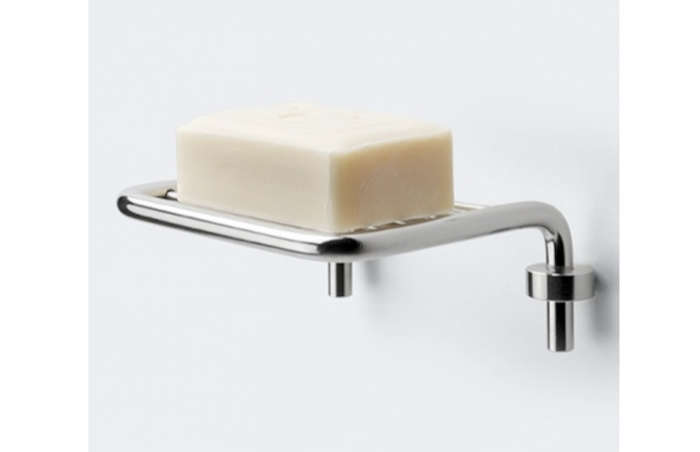
One of the most memorable examples of architect-designed bath accessories from Germany is the stainless steel bathroom series designed by architect Theo Keller for Thomas Hoof Produkt. The collection has become a favorite reference for design-minded homeowners because it does something deceptively difficult: it makes ordinary bathroom hardware feel architectural without making it precious.
The series includes practical staples such as a towel rod, wall hook, toilet roll holder, spare roll holder, soap holder, glass shelf, and toilet brush holder. The key idea is consistency. The pieces are made around a simple stainless steel rod language, with forms that are folded, bent, and turned rather than overworked. The design is strict, but not stiff. It has the tidy confidence of a good floor plan.
What makes the collection especially useful as a model is its ability to work in both modern and traditional bathrooms. In a clean white bath, the stainless steel reads as crisp and gallery-like. In an older bathroom with tile, plaster, or vintage fixtures, the same pieces look honest and utilitarian rather than trendy. That is the magic of restraint: it does not expire quickly.
Why Stainless Steel Works So Well
Stainless steel is one of the most reliable materials for bath accessories because it suits the room’s demanding environment. Bathrooms are wet, steamy, and cleaned frequently. A material that resists corrosion, wipes down easily, and keeps its finish without drama is not a luxury; it is a survival strategy.
German stainless steel bathroom accessories often have another advantage: they do not rely on decorative coatings to create impact. The material itself carries the design. That means scratches can look less catastrophic, the finish tends to age honestly, and the object feels closer to hardware than decoration. In a world full of flimsy bathroom sets that look tired after one toothpaste incident, that is refreshing.
Beyond Minimalism: German Design Is Not One Single Look
It is easy to reduce German bathroom design to “minimal chrome things,” but the category is much broader. KEUCO, hansgrohe, Duravit, Dornbracht, Jörger, Steinberg, and other German bath brands cover a wide range of styles, from spare architectural accessories to luxury fittings, classic forms, matte black finishes, warm metallics, and coordinated collections for complete bathroom interiors.
KEUCO, for example, is known for bathroom concepts that combine fittings, mirrors, furniture, and accessories into a cohesive environment. Its accessories often focus on clean lines, ergonomic placement, corrosion-resistant surfaces, and practical installation options, including drill-free mounting in some product lines. That last detail matters, especially for renters or homeowners who love tile too much to attack it with a drill.
hansgrohe offers a wide range of bathroom accessories designed to coordinate with faucets and shower systems. Categories typically include towel holders, hooks, soap dishes, soap dispensers, toothbrush tumblers, toilet paper holders, toilet brush holders, shaving mirrors, shower shelves, and wall niches. The important lesson here is coordination. A bathroom looks more expensive when the small pieces speak the same visual language.
Duravit brings another layer to the conversation through designer collaborations. Its Starck T accessory line, created with Philippe Starck, uses a recurring T-shaped design signature that moves from round base to geometric form. This is a strong example of how bath accessories can carry an idea across multiple objects. A towel ring, soap dispenser, and toilet roll holder become a family instead of a random gathering of shiny strangers.
Dornbracht leans into the luxury and wellness side of bathroom design, offering fittings, accessories, and shower solutions that support the idea of the bathroom as a personal retreat. That matters because modern bathrooms are no longer treated as purely functional rooms. They are increasingly designed as wellness spacesplaces for recovery, calm, and daily ritual. Even the accessories have to contribute to that atmosphere.
Jörger represents a more decorative and handcrafted German tradition, with designs that range from classical elegance to modern minimalism and avant-garde luxury. This is useful for homeowners who admire German quality but do not want a bathroom that looks like a very beautiful laboratory. German design can be romantic, polished, and ornate too; it simply tends to insist that the ornament be well executed.
How to Choose Architect-Designed Bath Accessories
Choosing bathroom accessories should not begin with color. It should begin with behavior. How many towels need to dry? Where do people stand after showering? Is the sink counter tiny? Do you use bar soap or liquid soap? Is the wall tiled, plastered, or painted? Do you own an electric toothbrush that requires charging? These questions are less glamorous than finish samples, but they prevent expensive mistakes.
Start with the Towel Problem
Towels are the bathroom’s most common design obstacle. They are bulky, damp, and always multiplying. A towel bar allows fabric to dry flatter and faster than a crowded hook, but hooks are easier to fit into small spaces. A double hook by the shower may work for quick access, while a longer rail near ventilation may be better for drying. In a family bathroom, mixing both can be smarter than choosing one and pretending everyone folds towels like a hotel employee.
For a minimalist German look, choose towel bars with simple geometry and concealed mounting. Avoid overly fussy brackets, unnecessary curves, or novelty shapes. If the bathroom already has strong tile or stone, let the towel rail be quiet. If the bathroom is plain, a black or brushed metal towel holder can add structure without clutter.
Give Soap a Real Home
Soap is small, slippery, and surprisingly capable of ruining a beautiful sink area. A good soap dish should drain properly, clean easily, and sit securely. A wall-mounted soap holder or shower basket is often better than a loose dish if the counter is narrow. For liquid soap, choose a dispenser with a stable base or a wall-mounted model that keeps the vanity clear.
Architect-designed soap accessories often succeed because they avoid fake luxury. They do not need crystals, shells, or a label written in mysterious French. They need proportion, balance, and a pump that does not make you wrestle for hand soap before coffee.
Do Not Ignore the Toilet Zone
Many homeowners spend serious money on tile, faucets, and mirrors, then panic-buy a toilet brush at the last minute. This is a design crime, but a common one. The toilet zone deserves the same planning as the vanity. A toilet roll holder should be reachable without yoga. A spare roll holder should be discreet but visible enough to prevent household emergencies. A toilet brush holder should be stable, easy to clean, and visually calm.
German bathroom accessories are particularly strong in this category because they treat awkward objects with dignity. A stainless steel toilet brush holder or ceramic brush container can look intentional instead of apologetic. That is no small achievement.
Materials and Finishes That Make Sense
German bath accessories commonly appear in chrome, stainless steel, matte black, brushed brass, bronze-like finishes, white, porcelain, glass, and powder-coated metals. The best finish depends on the rest of the bathroom and the level of maintenance you are willing to tolerate.
Chrome is bright, classic, and easy to coordinate with many faucets. Stainless steel feels slightly more architectural and less flashy. Matte black creates contrast and works beautifully in modern bathrooms, though water spots and fingerprints can be more visible depending on the finish quality. Brushed brass or bronze finishes add warmth, especially in bathrooms with stone, wood, beige tile, or warm white walls. Porcelain and glass are excellent for soap dishes and shelves because they feel clean and timeless, but they need secure mounting and sensible placement.
The safest strategy is to repeat finishes deliberately. If the faucet is chrome, chrome accessories will look coordinated. If the shower frame is black, black hooks and paper holders can make the choice feel intentional. If you mix metals, repeat each finish at least twice so the room looks designed rather than assembled during a sale.
Why Accessories Matter in Small Bathrooms
Small bathrooms do not forgive clutter. Every bottle, towel, razor, brush, and roll of paper becomes part of the visual field. This is why wall-mounted accessories are often the smartest investment. They free up counter space, use vertical surfaces, and give daily items assigned places.
A narrow glass shelf above the sink can hold a cup, small jar, or skincare item without blocking the room. A robe hook behind the door can serve guests without adding a freestanding rack. A compact toilet roll holder with a spare roll function can solve storage in a powder room. A shower basket mounted at the right height can eliminate the tragic shampoo lineup along the tub edge.
The German approach is especially helpful here because it rewards planning. Instead of buying a matching set simply because it exists, choose each piece according to the room’s routine. Minimalism is not owning nothing. Minimalism is making sure the necessary things are not fighting each other for space.
How to Create the German Architect-Designed Look at Home
You do not need a full luxury renovation to borrow the look. Start by editing. Remove plastic packaging, mismatched countertop clutter, and temporary storage that has somehow become permanent. Then choose a consistent accessory language: stainless steel and glass for a crisp architectural bath, matte black for contrast, chrome for a classic hotel mood, or porcelain and warm metal for a softer European feel.
Next, align your accessories with the room’s geometry. Mount towel bars level with tile lines. Center hooks where they relate to doors, vanities, or shower openings. Keep shelves narrow and purposeful. Use concealed fasteners where possible. The less visual noise around the hardware, the more expensive the bathroom feels.
Finally, buy fewer pieces but better ones. A well-made hook, soap holder, and towel rail will outperform a large bargain set of accessories that wobble, rust, or look dated quickly. German design is not about collecting objects; it is about selecting objects that can survive daily use with grace.
Common Mistakes to Avoid
The first mistake is treating accessories as decoration only. A beautiful towel ladder that blocks the door is not good design; it is furniture cosplay. The second mistake is mounting everything too late, after the renovation is finished and the walls are already tiled. Accessories should be planned with the same seriousness as lighting and outlets.
The third mistake is choosing finishes in isolation. A black toilet roll holder may look great online, but if every other metal in the bathroom is polished nickel, it may feel random. The fourth mistake is ignoring maintenance. Grooved, ornate, or cheaply coated accessories can collect water, soap, dust, and regret. Smooth surfaces are usually easier to keep clean.
The final mistake is buying a full matching set when the room does not need one. Matching can be elegant, but only if each piece earns its place. A powder room may need only a paper holder, a towel ring, and a small shelf. A family bath may need multiple hooks, a long towel rail, a shower basket, and closed storage. The best accessory plan follows the people who use the room.
Design Experience: Living With Architect-Designed Bath Accessories
The real test of architect-designed bath accessories from Germany is not the product photo. It is the seventh morning of use, when someone is late, the mirror is fogged, a towel is damp, and the soap has performed its usual escape attempt. Good accessories make that ordinary moment easier. Bad accessories make the room feel as if it is quietly arguing with you.
Imagine a compact apartment bathroom with white tile, a wall-mounted sink, and almost no counter space. Before any upgrade, the sink edge holds a toothbrush cup, razor, face wash, bar soap, and a bottle of hand soap. It looks normal, which is to say mildly defeated. Now add a slim stainless steel glass shelf above the basin, a wall-mounted soap holder, and a single hook placed exactly where the hand towel naturally belongs. Nothing dramatic has happened. No wall was moved. No marble arrived wearing sunglasses. Yet the room suddenly works.
That is the emotional value of well-designed accessories. They remove tiny frictions. The towel has air around it. The soap drains instead of melting into a sad little puddle. The spare toilet roll is present but not starring in the room. The shower basket keeps bottles upright. The toothbrush holder does not wobble. These are not glamorous improvements, but they are the details that make a bathroom feel cared for every single day.
In larger bathrooms, the experience changes slightly. The challenge is no longer only storage; it is coherence. A spacious primary bath can look unfinished if the accessories feel random. German architect-designed pieces help by giving the room a visual rhythm. The towel rail repeats the line of the vanity. The hook echoes the shower hardware. The soap dispenser relates to the faucet finish. The toilet brush holder disappears into the corner with admirable discipline. Suddenly the bathroom feels less like a showroom of separate purchases and more like a room with a point of view.
Another useful experience is how these accessories age. Trend-driven bathroom decor often looks exciting for a season and tired soon after. Highly restrained German pieces tend to age more slowly because they are not trying to be the loudest object in the room. Stainless steel, chrome, glass, and porcelain can adapt as towels, paint colors, and rugs change. This makes them especially smart for homeowners who want to invest once and avoid the exhausting cycle of replacing everything whenever social media discovers a new finish.
There is also a tactile difference. A well-made towel holder feels secure when you pull a towel from it. A quality hook does not flex. A good soap dispenser has enough weight to stay put. A shelf does not tremble under a small bottle. These physical details create trust. You may not consciously think about them, but your hand notices. And once your hand has noticed quality, it becomes annoyingly difficult to go back to flimsy hardware.
The most practical lesson is this: the best bath accessories are not the ones that look impressive alone. They are the ones that make the whole bathroom easier to use and easier to keep tidy. German architect-designed accessories excel because they understand service. They do not ask to be admired every morning. They simply do their work with quiet confidence, which, honestly, is more than can be said for many humans before breakfast.
Conclusion: German Precision, Everyday Calm
Architect-designed bath accessories from Germany prove that small design decisions can change the entire mood of a bathroom. A towel rod, soap holder, shelf, hook, or toilet roll holder may not be the most expensive part of a renovation, but these objects shape how the room functions every day. When they are well proportioned, durable, easy to clean, and visually calm, the bathroom becomes more than a practical space. It becomes a room that supports routine, wellness, and order.
The German design lesson is simple: do not underestimate the details. Choose materials that can handle moisture. Select finishes that coordinate with the architecture. Mount each piece where it solves a real problem. Buy fewer accessories, but choose better ones. A bathroom does not need to be enormous or lavish to feel refined. Sometimes it only needs a perfectly placed hook, a shelf that does not wobble, and a toilet brush holder that finally stops embarrassing everyone.

