
Hair Care
Condé Nast Marketing Leader Shares Her Framework for Destroying Your Imposter Syndrome
Jun
Note: This article is written for publication and synthesizes real marketing, workplace, psychology, and leadership insights without embedding source links in the body copy.
Introduction: That Little Voice Is a Terrible Career Coach
Imposter syndrome has a flair for drama. It shows up right before the big presentation, whispers during a performance review, and somehow finds a folding chair in your brain during every meeting where smart people use acronyms. For marketers, creators, managers, and ambitious professionals, the feeling can be especially loud: Who am I to lead this campaign? Why would anyone listen to me? What if everyone discovers I am simply three anxious raccoons in a blazer?
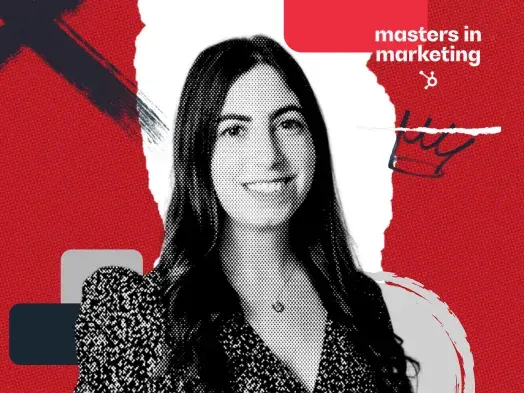
That is why Sheena Hakimian’s approach feels so useful. Hakimian, a senior director of digital consumer marketing at Condé Nast and a certified life coach, brings together two worlds that do not always sit at the same table: performance-driven digital marketing and inner confidence work. At Condé Nast, where brands like Vogue, Vanity Fair, The New Yorker, GQ, Wired, Bon Appétit, and Condé Nast Traveler live under one very stylish roof, marketing is not about shouting louder. It is about understanding audiences, testing carefully, and building trust. Hakimian applies that same logic to confidence.
Her framework, called the Three See’s, asks three deceptively simple questions: How do you see yourself? How do others see you? How do you see your future? Together, they create a practical way to fight imposter syndrome, build a personal brand, and stop treating self-doubt like a weather system you have to live under forever.
What Is Imposter Syndrome, Really?
Imposter syndrome, also called the impostor phenomenon, describes the feeling that your achievements are accidental, undeserved, or about to be exposed as fake. It is common among high achievers, especially people working in competitive environments where success is measured publicly and feedback arrives in odd little bursts: a Slack emoji here, a quarterly review there, a “Can we talk?” message that immediately ruins lunch.
It is important to be clear: imposter syndrome is not an official medical diagnosis. It is a pattern of thinking and behavior. People experiencing it may over-prepare, procrastinate, avoid visibility, discount praise, fear failure, or believe they need to know everything before they speak up. The cruel trick is that success often does not cure it. Sometimes success makes it louder because the stakes feel higher.
In marketing, that pattern can become expensive. A talented strategist may stay quiet in planning meetings. A creator may avoid publishing bold ideas. A manager may micromanage because they fear one mistake will reveal they were never “real leadership material.” Imposter syndrome does not just make people feel bad; it can shrink their contribution.
Why Hakimian’s Marketing Background Makes the Framework Stronger
Hakimian’s framework works because it borrows from a marketer’s favorite habit: look at the evidence. Great marketing is not built on vibes alone, even if the deck has beautiful gradients. It is built through audience segmentation, testing, messaging, feedback loops, and understanding what people actually donot what we wish they did.
At Condé Nast, Hakimian has spoken about focusing on what marketers can control: customer needs, data, email lists, funnel behavior, audience segments, and smart experimentation. In one example from her work, her team tested gating strategy in the politics section of Vanity Fair and found that allowing one free article before requiring a subscription increased subscriptions in test panels. That lesson translates neatly to confidence: when uncertainty is everywhere, collect better data about yourself.
Imposter syndrome thrives on vague fear. The Three See’s framework pushes back with clarity. Instead of asking, “Am I good enough?”a question so broad it deserves to be thrown into the seait asks more useful questions: What do I believe about myself? What signals am I sending? What future am I practicing for?
The Three See’s Framework: A Practical Confidence System
1. How You See Yourself
The first “See” is self-perception. This is the private story you tell about your competence, value, and place in the room. For many professionals, the story is outdated. You may still be using the self-image you built during your first internship, your first failed pitch, your awkward first management attempt, or that one meeting where you said “circle back” four times and briefly left your body.
To destroy imposter syndrome, start by auditing your inner narrative like a landing page with a suspiciously low conversion rate. What claims are you making about yourself? Are they backed by evidence? Are they current? Are they useful?
Try this exercise: create a “proof file.” Add successful projects, kind feedback, difficult problems you solved, skills you learned, metrics you moved, and moments when you acted with courage. This is not vanity. It is data hygiene. Marketers do not run campaigns without dashboards; professionals should not run careers without evidence of progress.
The goal is not to become arrogant. The goal is to become accurate. A healthy self-view sounds like: “I do not know everything, but I learn quickly, ask strong questions, and have evidence that I can create results.” That sentence is less sparkly than a motivational poster, but it is much more useful.
2. How Others See You
The second “See” is reputation. Personal brand is not just your LinkedIn headline, your profile photo, or whether your coffee mug appears tastefully in Zoom calls. It is the pattern people associate with you when you are not in the room.
Hakimian emphasizes the importance of building a strong in-person brand. In a digital-first world, that point matters. Your online presence may introduce you, but your daily behavior confirmsor contradictsthe story. Do you listen carefully? Do you communicate clearly? Do you make your manager’s life easier? Do you spot problems and bring solutions? Do people trust you with ambiguity?
One of Hakimian’s strongest career lessons is simple: make your boss’s life easier. That does not mean becoming a corporate houseplant, silently absorbing fluorescent light. It means understanding what problems matter beyond the KPI sheet. What is leadership worried about? What customer issue keeps returning? What friction is slowing the team down? When you listen for those signals, you become useful in a way that is visible and memorable.
To improve how others see you, ask three people you trust: “What do you come to me for?” “What do you think I do better than I realize?” and “What should I communicate more clearly?” Look for patterns. Your reputation may already contain strengths your inner critic refuses to acknowledge.
3. How You See Your Future
The third “See” is future identity. Imposter syndrome often traps people in the present tense: “I am not ready.” But careers are built by people becoming ready through action. A future-oriented identity asks: Who am I practicing becoming?
This is where confidence becomes behavioral. If you see your future self as a strategic marketing leader, what would that person do this quarter? Volunteer for a cross-functional project? Present an insight without apologizing first? Build a stronger relationship with sales, product, editorial, or analytics? Ask for clearer feedback? Document wins before promotion season instead of performing an archaeological dig through old emails at midnight?
Seeing your future does not mean creating a rigid five-year plan with laminated tabs. It means aligning today’s habits with tomorrow’s credibility. If your future requires visibility, practice being visible. If it requires executive presence, practice concise communication. If it requires creative leadership, practice sharing ideas before they are polished into museum artifacts.
Turning the Framework Into Weekly Action
The Three See’s become powerful when they move from inspirational concept to calendar reality. Here is a simple weekly routine:
Monday: Choose One Controllable
Pick one thing you can control this week: a sharper customer insight, a cleaner report, a better meeting agenda, a follow-up email, a test proposal, or a conversation you have been avoiding. Imposter syndrome wants you to stare at the entire mountain. Confidence asks you to take the next useful step.
Wednesday: Collect Evidence
Write down one win, one lesson, and one question. The win builds self-trust. The lesson keeps you humble. The question keeps you growing. This is the professional equivalent of drinking water: boring, effective, and somehow still ignored by many of us.
Friday: Improve Visibility
Share a concise update with your manager or team. Mention what you learned, what changed, and what you recommend next. Visibility is not bragging when it helps others understand progress. In fact, under-communicating good work can create confusion. People are busy. They are not secretly running a documentary crew on your career.
Why Personal Brand Is Not Fake Confidence
Some professionals resist personal branding because it sounds artificial. They imagine turning into a human billboard who says “thought leadership” before breakfast. But personal brand, done well, is not performance. It is alignment.
A strong personal brand connects who you are, what you do well, how others experience you, and where you want to go. It does not require pretending to be fearless. It requires becoming easier to understand. When people can clearly see your value, they can advocate for you, invite you into bigger rooms, and trust you with larger problems.
For marketers, this should feel familiar. A brand without positioning becomes noise. A professional without positioning can become overlooked. You may be excellent, but if nobody understands your edge, you are relying on luck. Luck is not a strategy; it is a squirrel with a briefcase.
Do Not Confuse Imposter Syndrome With a Broken Workplace
There is one important caution: not every feeling of not belonging is “just imposter syndrome.” Sometimes people feel excluded because they are being excluded. Systemic bias, unclear expectations, weak feedback, poor management, and cultures that reward only one leadership style can all intensify self-doubt.
That distinction matters. The answer is not to tell every employee to meditate harder or keep a confidence journal while the workplace remains confusing, biased, or psychologically unsafe. Leaders have responsibilities too. Teams perform better when people can ask questions, admit mistakes, challenge assumptions, and contribute ideas without fear of embarrassment or punishment.
So the best approach is two-sided: individuals can build self-awareness and visibility, while organizations build clarity, feedback, recognition, inclusion, and psychological safety. Confidence grows faster in soil that is not actively on fire.
Specific Examples: How the Three See’s Work in Real Life
The Quiet Analyst
A marketing analyst believes she is “not strategic enough” because she does not speak often in meetings. Her proof file shows she has repeatedly found insights that improved campaign performance. She asks teammates what they value about her and hears the same phrase: “You make messy data understandable.” Her future identity becomes “insight translator.” She begins sending a short pre-read before meetings with one chart, one takeaway, and one recommendation. Within weeks, she is not louder; she is clearer. That is brand-building.
The New Manager
A first-time manager fears he was promoted too soon. He sees himself as inexperienced. Others see him as dependable but sometimes vague. His future goal is to become a calm, trusted team leader. He starts asking his team two questions every Friday: “What is unclear?” and “What is blocking you?” His confidence grows because he stops trying to look like a manager and starts doing the work of one.
The Creative Strategist
A strategist has strong campaign ideas but waits until they are perfect before sharing them. Translation: the ideas often arrive late, wearing formalwear, after the party is over. She reframes her self-view from “I must present complete answers” to “I can contribute useful drafts.” She tells collaborators, “This is an early thought, but I think there is something here.” Her reputation shifts from cautious to generative.
The 500-Word Experience Section: What Destroying Imposter Syndrome Feels Like in Practice
In real professional life, overcoming imposter syndrome rarely feels like a cinematic breakthrough. There is no orchestra. Nobody bursts into the conference room holding a certificate that says, “Congratulations, you are officially legitimate.” More often, it feels like doing one slightly uncomfortable thing and realizing the ceiling did not collapse.
One common experience is learning to speak before you feel fully ready. Many capable people wait for certainty, but certainty is a slow intern. It arrives after the meeting, holding the wrong coffee. The practical move is to contribute with honesty: “Here is what I am seeing,” “Here is my recommendation based on the data,” or “Here is the risk I think we should discuss.” You do not need to sound like a TED Talk in human form. You need to be useful.
Another experience is accepting praise without cross-examining it. When someone says, “Great job on that launch,” the imposter reflex replies, “Oh, it was nothing. The team did everything. Also Mercury was in retrograde.” A better response is simple: “Thank you. I really appreciate that.” If appropriate, add one sentence about what you learned. Receiving recognition gracefully helps your brain store success instead of immediately tossing it into the junk drawer.
People also discover that confidence grows through repetition, not revelation. The first time you present a strategy to senior leaders, your nervous system may behave as if you are being chased by a bear with a spreadsheet. The fifth time, you still feel nerves, but you recognize the pattern. The tenth time, you know how to prepare. Confidence is often just familiarity wearing better shoes.
Mentorship helps too, especially when mentors share the messy middle of their careers. Hearing a respected leader say, “I was nervous too,” can be strangely liberating. It reminds you that competence and doubt can coexist. The goal is not to eliminate every insecure thought. The goal is to stop letting insecure thoughts make executive decisions.
Finally, destroying imposter syndrome often means building a healthier relationship with ambition. You can want more responsibility without believing you must become flawless first. You can promote your work without becoming insufferable. You can be proud and still be learning. In fact, the strongest professionals usually are both: confident enough to contribute and humble enough to improve.
Hakimian’s Three See’s framework is powerful because it gives that growth a structure. See yourself accurately. Understand how others experience you. Practice the future you want. Do those three things consistently, and imposter syndrome loses its favorite hiding places. It may still knock. But you no longer have to invite it in, make it tea, and let it run the meeting.
Conclusion: Confidence Is a Strategy, Not a Mood
Condé Nast marketing leader Sheena Hakimian’s framework for destroying imposter syndrome is not about pretending self-doubt does not exist. It is about refusing to let self-doubt be the only voice in the room. The Three See’show you see yourself, how others see you, and how you see your futureturn confidence into something practical, observable, and buildable.
For marketers and ambitious professionals, the lesson is clear: treat your career with the same intelligence you would bring to a campaign. Study the audience. Clarify the message. Test your assumptions. Track the evidence. Improve the experience. And please, stop letting your inner critic run brand strategy. Its deck is terrible.
SEO Metadata

