
Beauty Tools & Accessories
35 Tourists Who Wore Their Stupidity On Their Sleeve By Making Really Ignorant Remarks
Jun
Travel has a magical way of expanding the mind. Unfortunately, it also has a talent for revealing when someone packed four swimsuits, seven chargers, and exactly zero cultural awareness. Every destination has stories about tourists who arrive full of confidence and empty of research, then say things so boldly wrong that nearby locals can practically hear the geography teacher sighing from another continent.
The funniest ignorant tourist remarks are not always cruel. Sometimes they are confused, jet-lagged, or fueled by hotel buffet coffee. But they all share the same problem: the traveler assumes the world should work like home. That is how people end up shocked that Spain has Spanish speakers, asking why ancient ruins look “old,” or complaining that a mountain has too much uphill. Congratulations, traveler: you have discovered elevation.
This article takes a humorous but useful look at ignorant tourist remarks, bad tourist behavior, travel etiquette mistakes, and the cultural misunderstandings that make locals exchange the universal look of “please send help.” Laugh, learn, and maybe save yourself from becoming someone else’s dinner-party story.
Why Ignorant Tourist Remarks Go Viral
Ignorant travel comments spread quickly because they are tiny windows into a bigger issue: entitlement. A tourist may think they are simply making an observation, but the remark often reveals a belief that local culture, language, food, weather, history, and customs should rearrange themselves for visitor comfort. That is not travel. That is trying to install your living room on top of another country.
Responsible travel starts before the suitcase closes. Smart visitors check local laws, learn basic phrases, respect nature, follow museum and heritage-site rules, understand airport security, and avoid treating public places like personal movie sets. It sounds simple because it is. Yet somehow, every year, someone still asks if they can touch the priceless artifact “just for a second.” The artifact, for the record, has survived centuries and does not need your fingerprint as a souvenir.
35 Ignorant Tourist Remarks That Deserve a Passport Timeout
1. “Why doesn’t everyone here speak English?”
This classic remark is the travel equivalent of walking into someone else’s house and asking why they decorated it wrong. English is useful in many tourist areas, but it is not a universal operating system. Learning “hello,” “please,” and “thank you” in the local language is not only polite; it also prevents you from sounding like a confused airport announcement.
2. “This food is weird.”
Translation: “This food is not what I usually eat, therefore it has committed a crime.” Local cuisine reflects climate, agriculture, history, religion, trade, poverty, celebration, and family tradition. Calling it weird because it does not resemble your usual order is less culinary criticism and more evidence that your comfort zone has a children’s menu.
3. “Why are the buildings so old?”
Because history happened before your arrival, Brenda. Ancient cities, temples, castles, and neighborhoods are not theme-park decorations. Their age is the point. Complaining that historical places look old is like going to the beach and filing a complaint about sand.
4. “Can we make them move for our photo?”
Locals are not background extras hired by your vacation album. Public squares, markets, temples, neighborhoods, and beaches are real places where people live, work, pray, commute, and buy vegetables. A respectful traveler waits, adjusts the angle, or takes the picture without treating human beings like misplaced furniture.
5. “This country would be better if it were more like home.”
This is the grand champion of tourist arrogance. If every destination were exactly like home, travel would be an extremely expensive way to do laundry somewhere else. The point of visiting another place is to encounter difference, not demand a global copy-and-paste of your neighborhood.
6. “Why is everyone driving on the wrong side?”
They are not driving on the wrong side. They are driving on their side. Traffic laws are not decided by whichever tourist rented a compact car at 9 a.m. and immediately began sweating through the steering wheel.
7. “Do they take real money here?”
Currency from another country is not “fake” because it lacks the face, color, or size you expected. Money is a national system, not a souvenir coupon. The real mistake is arriving without understanding exchange rates, card acceptance, tipping customs, or whether small vendors prefer cash.
8. “Why is it so hot here?”
Because you booked a tropical destination in summer, packed black denim, and challenged the sun to a duel. Weather is not a hotel amenity. Before traveling, check the climate, rainy season, humidity, altitude, and local dress norms. Your future non-melted self will thank you.
9. “Why is it so cold here?”
Mountains, northern cities, deserts at night, and coastal winds have been trying to explain this for centuries. A destination’s postcard may show sunshine, but postcards are terrible meteorologists. Layers exist for a reason.
10. “The animals look hungry. Let’s feed them.”
Please do not. Feeding wildlife can make animals sick, change their behavior, attract them to roads or crowds, and create danger for both animals and people. A raccoon accepting your chips is not a magical Disney moment. It is a future garbage-bin crime scene wearing fur.
11. “The sign says don’t touch, but I’ll be careful.”
No, you will not. Skin oils, pressure, moisture, and repeated contact can damage artifacts, paintings, rock formations, plants, and sacred objects. “Just one touch” multiplied by thousands of visitors becomes permanent harm. Your hand is not a museum-approved preservation tool.
12. “Can I climb on it for a better picture?”
Historic monuments are not jungle gyms with better lighting. Climbing ruins, statues, railings, or protected structures can damage them and may also get you fined, removed, or publicly roasted online. The photo is not worth becoming the villain in a local news headline.
13. “Why are there so many tourists here?”
Spoken by a tourist, while touring, in a tourist destination. This one deserves a small trophy shaped like irony. Popular places are crowded because many people had the same excellent idea you did. The graceful response is patience, not acting like everyone else is traffic and you are the only traveler with a soul.
14. “Can you make the locals dress more traditional?”
Culture is not a costume department. People do not owe visitors a performance of what outsiders imagine “authentic” should look like. Sometimes authenticity is a teenager in sneakers texting their friend beside a centuries-old wall. That is real life, not a failed brochure.
15. “Is this safe to drink? It looks local.”
Food and water safety varies by destination, and guessing is a bold hobby for people who enjoy spending vacation near a bathroom. Research water quality, use bottled or treated water when advised, and be careful with raw foods in places where your stomach is not trained for the local microbial Olympics.
16. “Why don’t they have normal bathrooms?”
Bathroom design varies widely around the world. Squat toilets, bidets, water sprayers, paid public restrooms, and different plumbing rules are normal in many places. Travel becomes easier when you replace “normal” with “different” and carry tissues like a seasoned professional.
17. “I paid to be here, so I can do what I want.”
A ticket buys entry, not ownership. Parks, museums, sacred sites, hotels, restaurants, airplanes, trains, and neighborhoods all have rules. Paying admission does not turn a visitor into a tiny monarch with a camera strap.
18. “Why are they praying here?”
Because you are at a religious site, Captain Observation. Churches, mosques, temples, shrines, cemeteries, and memorials deserve quiet behavior, modest dress where required, and awareness that some visitors are there for devotion, not sightseeing.
19. “Let’s take a funny picture at the memorial.”
No. Some places are connected to grief, war, tragedy, sacrifice, or sacred memory. Silly poses, loud jokes, and attention-hungry selfies at memorials are not edgy. They are emotionally illiterate with a front-facing camera.
20. “I don’t need travel insurance. Nothing ever happens.”
This is usually said by the same person who later discovers that flights get canceled, luggage disappears, phones swim in toilets, and ankles have opinions about cobblestones. Travel insurance is not glamorous, but neither is arguing with a receipt in a foreign clinic.
21. “The airline should let me bring it. It’s just a small prohibited item.”
Airport security rules are not a debate club. Liquids, tools, batteries, sharp objects, sporting gear, and other restricted items have specific rules for a reason. “But I forgot” is not a magical phrase that opens the carry-on kingdom.
22. “I found this plant/fruit/shell/antique. I’ll bring it home.”
Customs rules exist to protect agriculture, wildlife, cultural heritage, and public safety. Some foods, plants, seeds, animal products, artifacts, and antiques may be restricted or illegal to bring home. The best souvenir is not the one that earns you a long conversation with border officers.
23. “The locals are rude because they don’t smile at strangers.”
Social norms differ. In some cultures, smiling at strangers is friendly. In others, it may feel odd, flirtatious, forced, or unnecessary. Judging an entire place by your preferred customer-service facial expression is not cultural insight. It is emotional carry-on baggage.
24. “Why is service so slow?”
In many countries, dining is not designed around sprinting through a meal like your chair is on fire. Slower service may reflect local dining culture, staffing realities, or a belief that meals are meant to be enjoyed. Ask politely if you are in a rush. Do not glare at the waiter as if they personally invented time.
25. “Everyone is trying to scam me.”
Travel scams exist, and visitors should be careful with deals that sound too good, vague rental listings, pressure tactics, and unusual payment requests. But suspicion can become insulting when aimed at every vendor, taxi driver, or guide. Be alert without treating an entire city like a crime documentary.
26. “Why can’t I wear this into the temple?”
Dress codes at sacred or formal sites are not personal attacks on your vacation outfit. Covering shoulders, knees, hair, or removing shoes may be required in certain places. The respectful move is to prepare, not argue that your tank top has constitutional rights.
27. “This market is dirty.”
Open-air markets can be crowded, noisy, wet, fragrant, chaotic, and alive in ways that supermarkets are not. That does not automatically make them dirty. It may mean food is being chopped, fish is being sold, herbs are being bundled, and real commerce is happening without fluorescent lighting.
28. “Can we skip the guide? I read one blog.”
Blogs are helpful, but a good local guide adds context, safety, language support, cultural nuance, and stories you will not get from a listicle titled “Ten Hidden Gems Everyone Already Knows About.” Sometimes the smartest tourist is the one who admits they are not the expert.
29. “Why are there no American portions?”
Portion sizes vary by country, restaurant type, and dining tradition. A smaller plate is not an international insult. It might be normal, healthier, more carefully prepared, or simply not designed for someone who considers a bucket of fries an emotional support item.
30. “This place is poor, but at least it’s cheap.”
That remark turns people’s economic reality into a discount code. Travelers should be mindful when discussing prices, wages, poverty, and bargaining. A destination is not “cheap”; it may be affordable to you because of currency differences, labor conditions, or inequality. Respect costs nothing, which is convenient because everyone can afford it.
31. “I want an authentic experience, but with air-conditioning and no inconvenience.”
Authenticity does not always come with climate control, perfect Wi-Fi, and a smoothie bar. Wanting comfort is fine. Pretending you want raw local life while rejecting every real-world detail is where the comedy begins.
32. “Can I take a picture of that person?”
Sometimes yes, often no, and always ask first when the person is identifiable, working, praying, grieving, selling, or caring for children. Photography ethics matter. A camera should not turn strangers into collectibles.
33. “This neighborhood is so cute. I could buy everything here.”
Admiration is nice, but neighborhoods are not aesthetic props. Popular travel areas can face rising rents, crowding, noise, and displacement. Visitors should support local businesses, follow quiet hours, use legal accommodations, and remember that “charming” places are also somebody’s home.
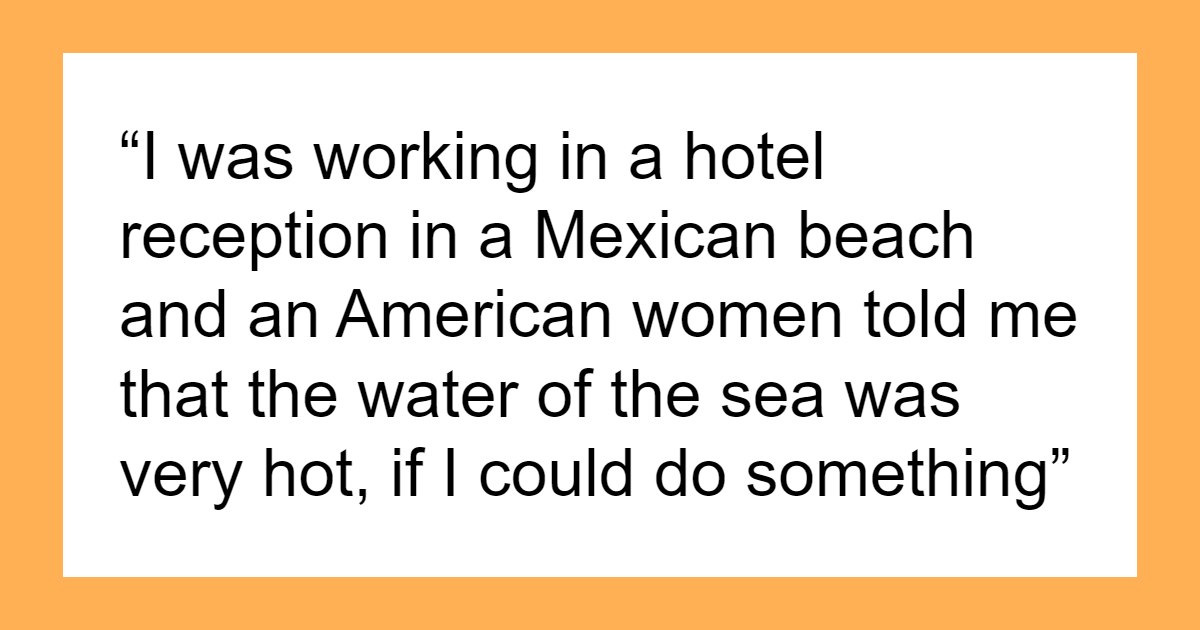
34. “Why is the ocean so salty?”
At this point, science has left the chat. The ocean is salty because of natural minerals and geological processes. It is not a resort defect. Please do not ask the front desk to “fix” the Pacific.
35. “I didn’t know I needed to research anything.”
This is the mother ship of ignorant tourist remarks. Travel is easier, safer, and kinder when you research local customs, transportation, health guidance, entry requirements, tipping, weather, dress codes, basic phrases, and prohibited items. Spontaneity is wonderful. Total preparation-free chaos is just expensive confusion with luggage.
What These Tourist Comments Reveal About Travel Etiquette
Behind every ridiculous remark is a teachable moment wearing cargo shorts. The problem is rarely that tourists ask questions. Questions are good. Curious travelers learn faster, connect better, and avoid preventable mistakes. The problem is when a question arrives wrapped in judgment, superiority, or the assumption that home is the default setting for planet Earth.
Good travel etiquette begins with humility. A respectful tourist understands that local people are not responsible for translating, explaining, accommodating, entertaining, and forgiving every visitor at all times. A city is not rude because it moves quickly. A village is not backward because it moves slowly. A restaurant is not wrong because it serves breakfast differently. A sacred site is not unreasonable because it has rules.
Ignorant remarks also reveal how much tourism depends on invisible labor. Hotel staff, flight attendants, guides, drivers, cleaners, park rangers, museum guards, servers, and shop owners often absorb tourist confusion with patience that deserves its own national holiday. The least visitors can do is meet that labor with basic courtesy.
How to Avoid Becoming “That Tourist”
Do five minutes of cultural homework
Before you arrive, learn basic greetings, local etiquette, dress expectations, tipping customs, common scams, transportation rules, and any sensitive topics. You do not need a PhD in the destination. You just need enough awareness to avoid entering a temple dressed like you are headed to a pool party.
Read the signs, then believe them
If a sign says do not touch, climb, feed, enter, photograph, swim, litter, shout, or cross, assume the sign has a reason. That reason may involve safety, conservation, privacy, religion, or the fact that thousands of people before you also thought they were the exception.
Use curiosity instead of criticism
Replace “Why do they do it wrong?” with “How does this work here?” The first sentence closes doors. The second opens them. Locals are often happy to explain customs when visitors ask respectfully and do not act as if the answer is being graded against their hometown.
Remember that photos are not the whole trip
Some tourists experience entire destinations through a phone screen, then complain that the place felt crowded or fake. Put the camera down sometimes. Eat slowly. Listen. Notice smells, sounds, textures, and small daily rhythms. Travel becomes richer when it is not treated like a content-harvesting mission.
Be careful with humor
Jokes do not always translate, especially when they touch religion, politics, poverty, accents, race, food, history, or national identity. If you are not sure whether a joke will land, let it stay in the overhead bin of your brain.
Experiences and Reflections: The Day Travel Humility Finally Clicks
The best travel lesson often arrives disguised as embarrassment. Nearly every frequent traveler has a moment they would like to delete from the universe: mispronouncing a simple word with Olympic confidence, standing on the wrong side of an escalator, blocking a sidewalk while consulting a map, or assuming a restaurant works like the ones back home. The difference between a bad tourist and a growing traveler is what happens next.
Imagine arriving in a city where dinner starts later than you expected. You are hungry at 6 p.m., restaurants are quiet, and you start thinking, “Why does nobody eat at a normal time?” Then you pause. Normal for whom? By 9 p.m., the streets glow, families fill tables, servers move with practiced calm, and the whole rhythm makes sense. The city was not late. You were early.
Or picture a crowded train station where people move with silent efficiency. You stop at the top of the stairs to check directions, and suddenly you are a human traffic cone. Someone sighs. Someone swerves. You feel offended for half a second, then realize the problem is not local impatience. The problem is that you parked your suitcase in the bloodstream of a city. You move aside, learn the rhythm, and become slightly less annoying. Growth, sometimes, is just stepping out of the way.
Food brings another common lesson. A traveler orders something unfamiliar, takes one cautious bite, and announces, “That’s strange.” But after watching locals enjoy it, asking what ingredients are used, and learning when the dish is traditionally eaten, the flavor changes. Not physically, of course. The soup does not attend a personal development seminar. The traveler changes. Context turns “strange” into interesting, and interesting is where the trip truly begins.
Respectful travel does not require perfection. It requires repair. If you make a mistake, apologize simply. Do not make the apology about your feelings, your intentions, or your tragic lack of Wi-Fi. Say sorry, correct the behavior, and keep learning. Most locals can forgive confusion. What wears people down is arrogance: the tourist who refuses to adapt, argues with rules, mocks customs, and treats every inconvenience as a personal betrayal.
One of the most useful travel habits is to assume that you are missing context. If a rule seems odd, there may be a safety reason. If a custom seems formal, there may be deep cultural meaning. If a process seems slow, it may prioritize relationship over speed. If a place seems crowded, remember that you are part of the crowd. This mindset turns irritation into observation and observation into understanding.
The tourists who make ignorant remarks are funny because their comments are so dramatically confident. But they are also warnings. A passport can move your body across borders, but only humility moves your perspective. The world is not a customer-service desk. It is a collection of living cultures, fragile ecosystems, complicated histories, sacred spaces, ordinary neighborhoods, and people who do not exist to validate a visitor’s expectations.
So yes, laugh at the tourist who complains that the ancient ruins are too ruined. Chuckle at the person upset that the ocean tastes like ocean. But then check your own assumptions. Pack curiosity next to your socks. Bring patience in your carry-on. Leave room for being wrong. That is how travel stops being a checklist and becomes an education.
Conclusion
Ignorant tourist remarks are easy to laugh at because they sound absurd from a distance. Yet they also remind us that travel magnifies attitude. A thoughtful visitor can turn confusion into connection, while an entitled one can turn a dream vacation into a cringe compilation before lunch.
The smartest tourists are not the ones who know everything. They are the ones who know they do not know everything. They research, ask politely, follow rules, respect local people, protect nature, and understand that “different” does not mean “wrong.” If more travelers carried that mindset, the internet would have fewer stories about foolish touristsbut the world would have far better guests.
Note: This article is original, rewritten in a natural editorial style, and based on real travel etiquette, visitor safety, responsible tourism, cultural-awareness, airport security, public health, and consumer-protection guidance. It does not reproduce copied social media posts or source-code citation artifacts.

