
Hair Care
VR Let Me Meet My Daughter Before She Was Born
Jun
Note: This article is for informational and storytelling purposes only. Prenatal imaging should always be guided by qualified medical professionals, not by curiosity, panic, or a dad with a brand-new headset and absolutely no chill.
The Day Pregnancy Became More Than a Grainy Screen
For decades, expectant parents have met their babies for the first time through ultrasound: a glowing black-and-white screen, a heartbeat that sounds like a tiny galloping horse, and a technician gently pointing out body parts that look, to the untrained eye, like weather patterns. “There’s the foot,” they say. You nod with confidence. You see a mashed potato with ambition.
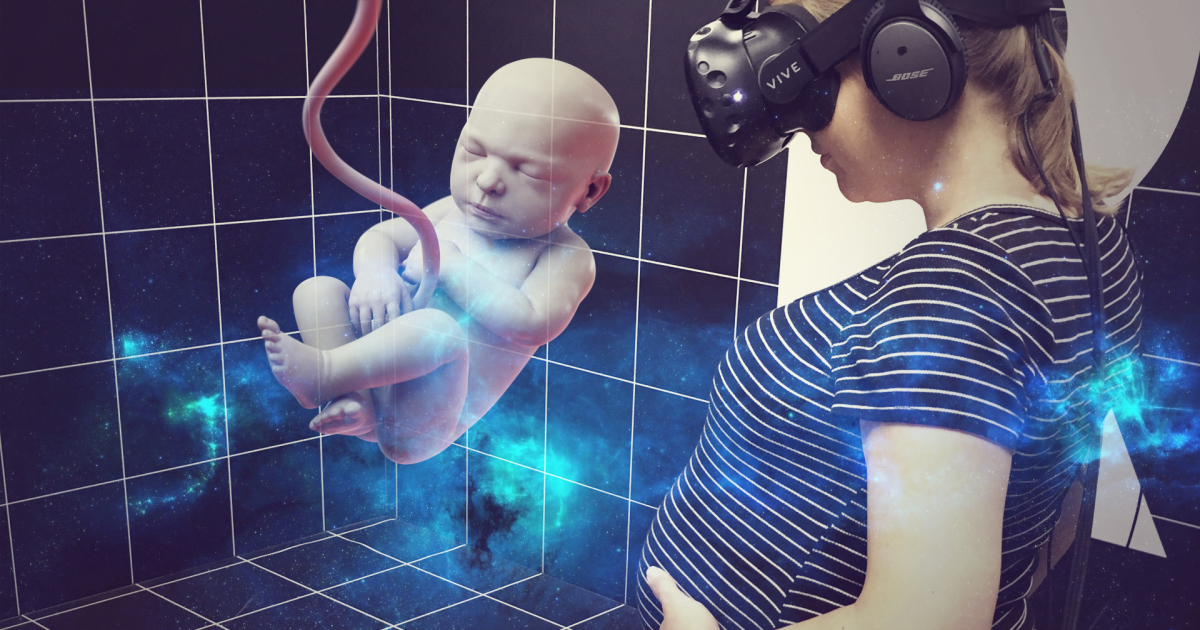
Then came 3D and 4D ultrasound, giving parents a clearer look at a baby’s face, tiny hands, and dramatic in-womb poses. And now, virtual reality is pushing that emotional moment even further. Instead of staring at a flat image, VR can transform medical imaging data into a more immersive experience, allowing parents to feel as if they are standing closer to their unborn child than ever before.
That is the emotional heart of the story behind the title: “VR Let Me Meet My Daughter Before She Was Born.” It sounds like science fiction, but it is increasingly rooted in real medical imaging, software visualization, and the human desire to bond with a child long before the first diaper performs its opening act.
How VR Prenatal Imaging Works
Virtual reality prenatal imaging generally begins with familiar medical tools: ultrasound, 3D ultrasound, 4D ultrasound, and in certain advanced medical cases, fetal MRI. These technologies collect visual data about the fetus. Then, specialized software processes the data and builds a three-dimensional model that can be viewed through a VR headset.
In a standard 2D ultrasound, parents see flat, cross-sectional images. They are medically useful, but they often require expert interpretation. A 3D ultrasound combines multiple 2D images to create a still image with depth. A 4D ultrasound adds motion, showing the baby moving in real time. VR takes the next leap by placing that 3D model into an immersive environment where the viewer can look around, change perspective, and feel a stronger sense of presence.
In research settings, fetal VR models have been created from MRI and ultrasound data to help doctors study fetal anatomy more clearly. Some systems even allow users to experience the baby’s heartbeat while viewing the model. For parents, the effect can be surprisingly powerful. For clinicians, the same technology may help with education, surgical planning, and more detailed review of complex pregnancies.
Why Seeing a Baby in VR Feels So Emotional
Pregnancy is full of invisible work. The baby grows, moves, stretches, hiccups, and apparently practices martial arts directly on the bladder. Yet for the parent outside the pregnant body, the experience can feel abstract. You know the baby is real, but much of the relationship is built through imagination, secondhand updates, and the occasional kick felt through a belly at exactly the moment you stopped expecting it.
VR changes that by creating a sense of presence. Instead of looking at a picture of a baby, parents may feel as if they are entering a quiet digital room where their child is already waiting. The experience can turn medical data into something personal: a nose that resembles a grandparent’s, a hand near the face, a sleepy little turn of the head.
This emotional connection matters. Studies on prenatal imaging and maternal-fetal attachment suggest that seeing fetal images can support bonding for some parents. VR may strengthen that effect because it makes the image feel less distant. It is not simply “there is the baby.” It becomes “there she is.” That small shift can be enormous.
From Medical Scan to Memory: The Role of 3D and 4D Ultrasound
To understand VR pregnancy experiences, it helps to understand 3D and 4D ultrasound. Traditional 2D ultrasound remains the backbone of prenatal imaging because it gives doctors important information about fetal growth, anatomy, heartbeat, placenta location, amniotic fluid, and other medical details. It is practical, proven, and incredibly useful, even if the images sometimes look like they were faxed from the moon.
3D ultrasound adds surface detail, creating a more lifelike image of the fetus. This can be helpful in certain medical evaluations, especially when doctors need to assess facial features, neural tube defects, or other structural concerns. 4D ultrasound shows movement, which can make the experience feel even more real for parents.
VR builds on this visual foundation. It does not replace prenatal care, and it should not be treated as a party trick. But when used appropriately, it can transform a scan into an immersive memory. The difference is similar to looking at a postcard versus standing in the room. Both show you something; only one makes your knees go slightly wobbly.
The Safety Conversation Parents Should Not Skip
As exciting as VR prenatal imaging sounds, the safety conversation matters. Ultrasound does not use ionizing radiation, and medical ultrasound has a long history of use in pregnancy. Major medical organizations generally consider medically indicated ultrasound safe when performed by trained professionals. However, experts also advise against casual or non-medical ultrasound sessions done only for keepsake images.
The reason is not that every keepsake scan is automatically dangerous. The concern is that unnecessary imaging may expose the fetus to energy for longer than needed, may be performed by people without proper medical training, or may create false reassurance. A pretty image is not the same as a medical evaluation. A baby can look adorable on screen and still need proper clinical assessment.
That is why the smartest approach is simple: use prenatal imaging for medical reasons, under medical supervision, and follow the “as low as reasonably achievable” principle. In plain English: get the information needed, use appropriate settings, and do not turn the womb into a livestream channel.
What VR Can Add for Doctors
Although parents may focus on the emotional magic of seeing their unborn baby in VR, the technology has serious clinical possibilities. Immersive fetal models can help doctors examine anatomy from different angles. That may be useful when a pregnancy involves suspected abnormalities, complex fetal positioning, or conditions that require careful planning before birth.
Medical teams can use advanced visualization to better understand structures such as the face, spine, limbs, or internal organs. In some cases, 3D data can also support education for families, helping doctors explain what they are seeing in a way that is easier to understand than a flat scan. Anyone who has ever stared at an ultrasound and pretended to understand everything knows how valuable that could be.
VR may also help train medical students, sonographers, and specialists by giving them a more interactive way to study fetal anatomy. Instead of looking only at still images, trainees can explore spatial relationships. In medicine, depth matters. A lot.
What VR Can Add for Parents
For parents, VR’s greatest gift may be emotional clarity. Pregnancy can feel joyful, stressful, surreal, and occasionally like a nine-month customer service hold with cravings. Seeing a baby in a more lifelike way can make the future feel closer and more concrete.
A parent who has struggled to feel connected may suddenly see a tiny face and think, “That is my child.” A partner who has felt like a supportive side character may feel more included. Grandparents may stop arguing over names for three whole minutes. Miracles happen.
Still, VR should not create unrealistic expectations. A fetal VR model is not a perfect preview of the newborn. Imaging quality depends on gestational age, fetal position, amniotic fluid, equipment, software, and whether the baby decides to cover her face like a celebrity dodging paparazzi. Parents should treat the experience as meaningful, not absolute.
The Best Time to See a Baby in 3D, 4D, or VR
Many parents wonder when imaging produces the clearest baby-like features. While medical needs always come first, 3D and 4D facial images are often more recognizable later in the second trimester and into the third trimester, when the baby has developed more facial fat and features. Too early, and the baby may look less like a newborn and more like a tiny philosophical shrimp. Completely normal, but not exactly refrigerator-photo material.
However, waiting too long can also make imaging harder because the baby has less room to move and may press against the uterus or placenta. The ideal timing varies, and medical providers can explain what is appropriate based on the pregnancy.
For VR experiences, the same principle applies: better source imaging usually produces better visualization. But the purpose should guide the process. If the goal is medical, timing depends on the clinical question. If the goal is bonding, parents should still discuss whether the imaging is recommended, safe, and performed by qualified professionals.
Could VR Become Part of Future Prenatal Care?
VR is unlikely to replace standard ultrasound anytime soon. The regular 2D scan is fast, effective, widely available, and deeply embedded in prenatal care. But VR could become a companion tool in specific situations. For example, it may help high-risk pregnancy teams review anatomy, prepare for procedures, or explain findings to families.
It may also become part of prenatal education. Imagine a doctor showing parents a VR model to explain fetal position, placenta location, or a condition that needs monitoring. Instead of nodding politely while secretly thinking, “I left my medical degree in my other pants,” parents could actually see what the doctor means.
The challenge will be balancing emotional value with medical responsibility. Technology that makes pregnancy feel more vivid can be beautiful. Technology that encourages unnecessary procedures, anxiety, or commercialization needs guardrails. The future should not be “more imaging because we can.” It should be “better understanding when it helps.”
A Personal Reflection: Meeting My Daughter Before Birth
The first time I imagined meeting my daughter in VR, I expected novelty. A cool headset. A futuristic moment. Maybe a few emotional seconds followed by me pretending I had dust in both eyes. What I did not expect was how quiet the experience would feel.
There she was, not as an idea, not as a due date circled on a calendar, not as a list of baby items waiting in boxes, but as a presence. Her hand rested near her face. Her head turned slightly. The image was not perfect, and that somehow made it more touching. She was not a polished animation. She was my daughter, still becoming herself.
In that moment, technology did what the best technology does: it disappeared. I was not thinking about rendering, data, software, or headsets. I was thinking about bedtime stories I had not yet read, tiny socks I would definitely lose in the laundry, and the strange privilege of loving someone before hearing her laugh.
VR did not make me a parent. Pregnancy, care, responsibility, and love were already doing that. But VR gave my imagination something to hold. It turned “someday” into “soon.” It made the nursery feel less like a decorated room and more like a place waiting for a specific person.
Extra Experience: What VR Taught Me About Waiting, Wonder, and Parenthood
One of the strangest parts of waiting for a baby is that time behaves badly. Some weeks move quickly; others drag like they are carrying furniture upstairs. You read about stroller safety, compare crib mattresses, learn that babies require approximately 4,000 tiny cloth items, and still the person at the center of it all remains mostly mysterious. VR did not remove the mystery, but it changed its shape.
Before the VR experience, I thought bonding before birth was mostly about preparation. Build the crib. Choose the name. Talk to the belly. Try not to faint when looking at hospital bills. But seeing my daughter in an immersive space made bonding feel less like preparation and more like recognition. I was not only preparing for “a baby.” I was preparing for her.
That distinction matters. A baby can be loved in the abstract, of course. Parents have done that forever. But VR gave the abstract a face, even if that face was partly hidden and softened by the limits of imaging. It made me notice details. The curve of a cheek. The tiny hand floating near her mouth. The quiet choreography of a life already in motion.
It also made me more respectful of prenatal care. The emotional side of imaging is powerful, but the medical side is the reason the technology exists. A scan is not just a sentimental souvenir. It is a tool used by trained professionals to check growth, anatomy, movement, and possible concerns. The best VR experience is not one that replaces medical care with wonder. It is one that lets wonder stand beside care without getting in the way.
I also learned that technology cannot answer every emotional question. VR could show me a model of my daughter, but it could not tell me what kind of music she would like, whether she would inherit my stubbornness, or whether she would one day reject perfectly good sandwiches because the bread was “too square.” Parenthood is not previewable in full resolution. Some of the best parts arrive unscheduled.
Still, the experience stayed with me. Later, when I folded baby clothes or installed the car seat with the confidence of a raccoon assembling a piano, I remembered that quiet VR moment. It made the work feel connected to a person I had almost met. Almost is the key word. VR gave me a glimpse, not a replacement for birth, touch, smell, sound, and the astonishing moment when a newborn becomes real in every sense.
That is why the phrase “VR let me meet my daughter before she was born” feels both true and not quite complete. I met an image, a model, a beautiful digital echo of her. But I also met a new part of myself: the parent who was ready to love someone he had only seen through waves, pixels, and hope. And honestly, for a piece of technology, that is not a bad day at the office.
Conclusion: A Beautiful Glimpse, Not a Medical Shortcut
Virtual reality prenatal imaging sits at the intersection of medicine, emotion, and imagination. It can help parents feel closer to their unborn baby and may help clinicians study fetal anatomy in more intuitive ways. Used responsibly, it offers something rare: a chance to make pregnancy feel more visible without reducing it to entertainment.
But VR should be approached with balance. Prenatal imaging belongs in the hands of trained professionals, and ultrasound should be used for appropriate medical reasons. A magical view of a baby is wonderful. A safe, well-guided pregnancy is better.
In the end, VR did not replace the first real meeting. Nothing could. But it gave the waiting a face, the future a heartbeat, and one nervous parent a memory that felt like stepping into tomorrow for just a few minutes.
SEO Tags

