
Hair Care
50 Times Dresses Looked So Bad, They Deserved To Be Shamed On This Facebook Group
Aug
Fashion is supposed to make a statement. Unfortunately, some dresses deliver less of a statement and more of an emergency broadcast. One wrong fold of fabric becomes a misplaced ruffle, a daring cutout turns into an architectural mystery, and suddenly an evening gown looks as though it escaped from a craft store during a thunderstorm.
That wonderfully chaotic territory inspired the Facebook group “You Can’t Just Slap Some Fabric Together And Call It A Dress.” The community collects bizarre, confusing, and spectacularly unsuccessful dresses for members to critique. Its central rule is important: shame the dress, not the body or the person wearing it. Faces and identifying details are generally covered, keeping the spotlight where it belongson the garment committing the fashion offense.
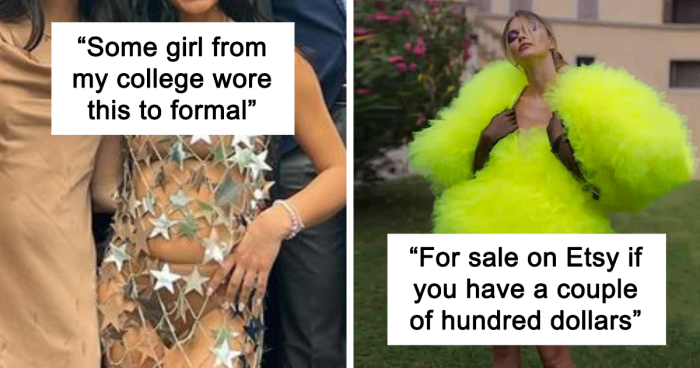
A viral collection of 50 examples featured everything from balloon-like silhouettes to outfits resembling pizza, plastic packaging, household furnishings, and unidentified objects discovered at the bottom of the ocean. Some were inexpensive online-shopping disappointments. Others were expensive runway experiments created by professionals who apparently asked, “What if the dress had elbows?” and received no adult supervision.
Why Bad Dresses Are So Entertaining
A truly bad dress is rarely boring. Ordinary mistakes disappear into the background, but an ambitious fashion failure demands attention. It may feature sleeves large enough to obtain their own ZIP codes, sequins arranged like a confused road map, or a train that appears determined to collect every napkin on the ballroom floor.
These images are funny because viewers can usually recognize the designer’s intention. The dress was supposed to look glamorous, futuristic, romantic, daring, or luxurious. Instead, the result resembles a collapsed lampshade. The distance between the dream and the finished product creates the comedy.
There is also something strangely comforting about seeing an expensive garment fail. Most people have experienced a disappointing fitting-room moment or received an online order that looked magnificent on the model and deeply suspicious on arrival. A disastrous designer dress reminds us that money, fame, and professional photography cannot always prevent a neckline from looking like a salad bowl.
What Makes a Dress Look Bad?
Taste is personal, and unusual does not automatically mean ugly. Many historic fashions initially appeared shocking. Dramatic sleeves, exaggerated shoulders, enormous skirts, and unusual materials can all become memorable when they support a clear visual idea.
Fashion design, however, still depends on recognizable elements such as color, line, silhouette, texture, balance, proportion, emphasis, and rhythm. According to educational material from the Museum at the Fashion Institute of Technology, these elements guide how viewers perceive a garment and how its separate parts work together. A dress can break traditional rules successfully, but it must appear intentional rather than accidentally assembled during a power outage.
1. A Silhouette With No Clear Mission
The silhouette is the overall outline visible from a distance. Successful silhouettes may be fitted, flowing, boxy, sculptural, or oversized. Problems begin when the shape seems to argue with itself.
Imagine a tight mermaid skirt attached to a stiff rectangular bodice, with two enormous fabric bubbles hovering near the hips. Each section may have belonged to an interesting sketch, but together they resemble three dresses involved in a minor traffic accident.
Several outfits in the viral collection created this kind of confusion. Bulges appeared in unexpected locations, stiff panels projected away from the body, and inflated sections made elegant movement nearly impossible. Instead of framing the wearer, the garment seemed to be hiding emergency camping equipment.
2. Cutouts That Lost Their Sense of Direction
A strategic cutout can add contrast and visual interest. A badly placed one makes viewers wonder whether the dress was attacked by scissors after production.
The worst examples expose random patches of skin without creating a coherent line. Openings may sit awkwardly near the ribs, chest, hips, or lower back, producing an outfit that looks unfinished rather than daring. Some cutouts are so complicated that getting dressed probably requires instructions, diagrams, and a supportive neighbor.
Good cutouts consider movement as well as appearance. A design that looks stable during a carefully posed photograph may shift dramatically when the wearer sits, walks, reaches for something, or attempts the advanced maneuver known as breathing.
3. Fabric Fighting Against the Design
Fabric determines how a dress hangs, stretches, folds, reflects light, and moves. A lightweight material may create soft draping, while a dense textile can support a structured shape. Trouble arrives when the designer asks the fabric to perform a job it clearly did not apply for.
Thin fabric used for a large sculptural form may collapse. Heavy material gathered into delicate ruffles can become bulky. Cheap shiny fabric may photograph like plastic wrap, while stiff mesh can turn romantic volume into wearable patio furniture.
A skilled designer tests how the chosen material behaves before committing to the final garment. Prototypes and fittings help reveal whether an experimental silhouette looks dramatic, droopy, or suspiciously similar to an inflatable pool toy.
4. Ruffles Reproducing Without Permission
One ruffle can be charming. Several can create movement. Fifty-seven ruffles may indicate that the dress has developed its own weather system.
Overdecorated dresses often lack a focal point. The viewer’s eye bounces between lace, flowers, feathers, bows, fringe, crystals, and fabric rosettes without knowing where to rest. Instead of looking luxurious, the garment resembles the clearance aisle of a craft store after everything was attached with one heroic glue gun.
Decoration works best when it reinforces the silhouette. A concentrated embellishment can draw attention to the neckline, waist, or hem. Covering every available inch may simply make the wearer sound like a bag of ornaments while walking.
5. Prints With Terrible Placement
Pattern placement can turn an ordinary dress into an accidental comedy routine. Large flowers, animal faces, geometric circles, and abstract shapes may land on areas where they create unfortunate optical illusions.
A floral center can appear to explode from the wearer’s stomach. Two symmetrical circles can become cartoon eyes. A pale vertical stripe may look like a spill, while a dark patch may suggest that the wearer sat in something mysterious.
This problem is especially common when patterned fabric is cut without considering how the pieces will align. A print that looks harmless on a roll can become alarmingly expressive after the front seam is sewn together.
6. The “Is That Household Equipment?” Effect
Many unforgettable fashion fails resemble objects that were never intended to attend a formal event. Commenters compare strange dresses to curtains, shower loofahs, mattresses, bath mats, lamps, traffic cones, sleeping bags, and upholstered chairs.
One viral example resembled a full pizza, complete with crust-like trim. Another looked close enough to a plastic bag that viewers could practically hear it rustling. These comparisons are amusing because the human brain constantly searches for familiar shapes. When a gown looks more like dinner than clothing, dinner usually wins.
Object-inspired fashion can be clever when the resemblance is deliberate. A playful food-themed costume, for example, may succeed because it embraces the joke. The awkwardness begins when a supposedly elegant dress accidentally resembles a fitted bedsheet with ambitions.
7. Garments Designed Only for One Camera Angle
Some dresses survive because the wearer stands perfectly still while a photographer captures the single angle from which the outfit makes sense. Turn slightly, however, and the illusion collapses.
A train may bunch up, a side panel may reveal an unfinished seam, or a sculptural detail may block the wearer’s arm. The front can look polished while the back resembles a tent being packed by someone in a hurry.
A functional dress should be considered in three dimensions. People do not remain frozen like mannequins. They walk, sit, dance, enter cars, climb stairs, and occasionally attempt to use a restroom without assembling a support crew.
8. Online Dresses That Arrive From Another Universe
Some of the funniest bad dresses begin with a beautiful product photograph. The listing promises elegant draping, intricate embroidery, and a flattering fit. The delivered item contains three confused stitches, translucent fabric, and a zipper apparently installed by a raccoon.
Buying clothing online removes the ability to touch the fabric, inspect the seams, or try the garment on. The Federal Trade Commission advises consumers to compare reviews across different sources, examine the reviewer’s history, and avoid relying entirely on star ratings, which can be incomplete or misleading.
The importance of honest reviews became especially clear when the FTC took action against Fashion Nova over allegations that lower-rated product reviews had been suppressed. The resulting order prohibited the retailer from misrepresenting customer feedback and required it to publish eligible reviews regardless of whether they were flattering.
Before ordering a special-occasion dress, shoppers should check the garment’s measurements rather than trusting a familiar size label. Customer photographs, fabric composition, return costs, shipping estimates, and close-up images of seams can reveal much more than a heavily edited studio picture.
Bad Design or Experimental Art?
The most interesting question raised by the Facebook group is whether every strange dress deserves criticism. Fashion has always used exaggeration to challenge expectations. Runway garments may communicate an idea rather than function as everyday clothing. A giant sculptural skirt can explore space and movement even when it would be hopeless at a crowded restaurant.
One of the group’s administrators acknowledged this distinction, observing that designers may understand perfectly well that their creations look strange because fashion can operate as art. She also emphasized that personal enjoyment matters: when someone genuinely loves an outfit, strangers do not need to organize an intervention.
Context therefore matters. An experimental costume at a theatrical gala should not be judged by the same standards as a bridesmaid dress sold as comfortable, reusable eveningwear. One aims to create a visual spectacle. The other must survive dinner, dancing, photographs, and at least one relative asking when the wearer plans to get married.
Critique the Dress, Never the Body
Humor becomes cruel when criticism shifts from the garment to the wearer’s age, weight, gender, face, or body shape. A dress can have poor construction. A hem can be uneven. A print can be unfortunate. A human body is not a manufacturing defect.
The Museum at FIT notes that fashionable body ideals have changed repeatedly throughout history. Different eras have celebrated narrow waists, loose tubular shapes, padded shoulders, full skirts, and body-skimming lines. What society calls the “ideal” body is therefore cultural and temporary, not an objective measurement of human worth.
Constructive fashion commentary should describe the actual problem. Say the bodice is pulling, the fabric lacks structure, the waist seam sits too low, or the decorative elements overwhelm the silhouette. Those observations identify choices a tailor, designer, or shopper can change. Insulting the wearer identifies nothing except the commenter’s shortage of manners.
What These 50 Fashion Fails Can Teach Designers
Start With a Clear Idea
A memorable dress usually has one dominant concept. The silhouette, fabric, color, and details support that idea. Problems multiply when a designer combines romantic lace, futuristic vinyl, western fringe, Victorian sleeves, and a tropical fruit print because nobody had the courage to remove anything.
Make a Prototype
A sketch does not reveal how gravity will treat the garment. Testing the design in inexpensive fabric can expose pulling, collapsing, awkward volume, and misplaced openings before costly material is cut.
Fit the Garment on a Moving Person
A successful fitting includes walking, sitting, turning, lifting the arms, and checking the dress from every angle. The wearer should not need to choose between maintaining the neckline and retrieving a dropped phone.
Edit Before Adding More
When a design feels unfinished, the answer is not always another bow. Removing one unnecessary feature may improve the garment more than adding six decorative ones. Elegance often depends on knowing when the dress is completeand when to take the glue gun away.
Respect Construction Quality
Even an excellent concept can fail through puckered seams, weak closures, crooked hems, visible adhesive, or unsupported fabric. Quality construction also helps clothing last longer, reducing the likelihood that a disappointing garment will be worn once and discarded.
That matters beyond aesthetics. EPA data show that the United States generated approximately 17 million tons of textile material in municipal solid waste in 2018, while only 14.7 percent was recycled. More than 11 million tons went to landfills. Buying fewer, better-made garmentsand repairing or altering wearable piecescan keep clothing useful for longer.
A 500-Word Personal Experience With Spectacularly Bad Dresses
Anyone who has spent enough time shopping for formalwear eventually encounters a dress that produces silence in the fitting room. Not approving silence. Not thoughtful silence. The kind of silence normally heard when someone opens the refrigerator and discovers a container that has become self-aware.
My most memorable fictional fitting-room disaster began with an online photograph of a deep green evening gown. On the model, it had soft draping, an elegant waist, and sleeves that floated delicately around the arms. It looked sophisticated without trying too hardthe clothing equivalent of someone who owns matching luggage and understands investment accounts.
The delivered dress told a different story. The “deep green” fabric was closer to the color of a glow stick. The elegant draping consisted of two folds sewn at unrelated angles. One sleeve reached the wrist; the other appeared to have urgent business near the elbow. The waistline wandered diagonally across the torso like it was searching for better employment.
Trying it on did not resolve the mystery. The neckline stood several inches away from the body, creating a convenient storage compartment. The skirt clung tightly at the front but billowed at the back, producing the silhouette of a startled seahorse. Every movement generated the sound of someone opening a family-size bag of chips.
The experience taught me that product photographs deserve respectful suspicion. A skilled pose, perfect lighting, strategic clips, and digital editing can convince fabric to behave for one fraction of a second. Real life contains chairs, wind, movement, and unforgiving overhead lighting.
Another memorable encounter involved a thrift-store dress covered in enormous fabric flowers. Individually, the flowers were cheerful. Collectively, they appeared to be consuming the garment. One sat directly beneath the chin, another occupied the waist, and two others formed shoulder pads powerful enough to negotiate international treaties.
Unlike the online disaster, however, the floral dress had potential. Removing most of the decorations revealed a well-cut base garment with strong seams and attractive fabric. A tailor shortened the hem, adjusted the waist, and redistributed three remaining flowers near one shoulder. The result looked intentional, modern, and dramatically less likely to attract bees.
That alteration illustrated the difference between a hopeless dress and an overwhelmed one. Some fashion fails need only editing. A strange neckline can be reshaped. Sleeves can be simplified. A poor hem can be corrected. Unnecessary bows can return peacefully to the craft drawer from which they came.
The best lesson is not that everyone should dress conservatively. Fashion would be painfully dull if nobody experimented. Wear bright colors, strange sleeves, enormous skirts, metallic fabric, or a dress inspired by pizza when the occasion permits. Personal style should contain joy.
Just remember that bold design still benefits from proportion, movement, reliable stitching, and the occasional honest friend. When that friend studies the outfit for ten seconds and asks whether the fire alarm is part of the look, another fitting may be advisable.
Final Thoughts
The 50 bad dresses celebrated by this Facebook group are funny because they demonstrate how spectacularly a confident idea can lose its way. They include confused silhouettes, rebellious fabric, runaway embellishments, bizarre cutouts, unfortunate prints, and garments that appear better suited to furnishing a guest room.
Yet even the strangest dress can teach something. Designers learn to test proportions and materials. Shoppers learn to investigate measurements and reviews. Commenters learn that criticism can be sharp without attacking the wearer. And everyone learns that attaching more fabric does not automatically create more fashion.
The next time a dress looks like a chandelier arguing with a sleeping bag, enjoy the jokebut aim it at the design. The person wearing it may be having the time of their life, and confidence remains the one accessory that no fashion group can successfully shame.
Note: This article critiques garments, construction, styling, and design choices only. It does not endorse body-shaming or personal attacks against the people wearing them.

