
Body Care
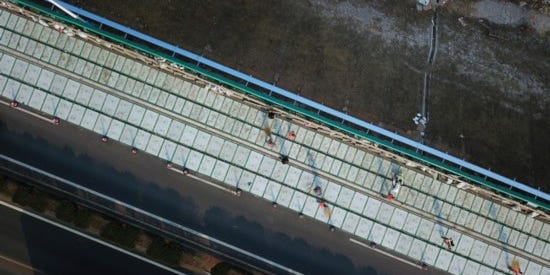
China Is Building a Solar Power Highway
Aug
Imagine a highway that doesn’t just consume energyit helps make it. That’s the big idea behind the phrase “solar power highway,” and China has been experimenting with it in more than one way. Sometimes it’s literal: photovoltaic panels integrated into roadway surfaces (yes, under where cars drive). Other times it’s practical-but-still-cool: miles of solar installations built along transportation corridors, paired with gigantic transmission lines that move electricity across the country like electrons on an interstate.
Either way, the concept lands in the same place: a future where infrastructure pulls double duty. Roads move people and goods; solar generates power; a modern grid ships that power to where it’s needed. China is attempting to braid those strands together at enormous scalewhile other countries watch, take notes, and occasionally mutter, “Okay, that’s… ambitious.”
What Does “Solar Power Highway” Actually Mean?
“Solar power highway” can sound like a sci-fi tagline (coming soon: toll booths that accept sunshine). In practice, it usually points to three related approaches:
1) Solar panels built into the road surface
China’s most famous “solar road” experiment put photovoltaic modules beneath a tough, light-transmitting top layeroften described as a transparent, load-bearing materialso the sun reaches the solar cells while vehicles drive above. The goal isn’t just power generation. Designers have also talked about embedding sensors for smart-road features and, longer term, enabling wireless charging for electric vehicles (EVs) as they drive.
A high-profile pilot in Shandong province drew attention because it tried to solve a hard problem: can a road behave like a roadhandling trucks, rain, heat, and daily wearwhile also behaving like a power plant? Early reporting described a layered design: a protective top layer, a photovoltaic middle layer, and a base layer to insulate and protect from moisture. The “wow” factor is obvious, but so are the challenges (we’ll get to those). Still, as a demonstration of what’s possible, it’s hard to beat: you could literally drive on electricity being made beneath your tires.
2) Solar built along highways and right-of-ways (the “low-drama” version)
If solar panels under traffic feel like juggling chainsaws, this approach is more like using the whole circus tent. Many “solar highway” projects place solar arrays along the edges of roads, on sound barriers, on slopes, above drainage channels, and at service areasspots that are already developed and don’t require reinventing pavement physics.
It’s a quieter strategy, but it scales well. Service areas can host solar canopies over parking, battery storage, and fast EV chargers. Roadside arrays can power lighting, signage, sensors, and nearby buildings, while feeding surplus into the grid. It’s not as headline-friendly as “solar panels you can drive on,” but it tends to pencil out more easily.
3) A national “electricity highway” that moves solar from where it’s made to where it’s used
Here’s the twist: the “highway” may not be the road at allit may be the transmission network. China’s renewable resources are often strongest in the north and west, while major demand centers cluster in the east and south. That mismatch makes long-distance transmission essential. Think of it like growing oranges in Florida and trying to serve orange juice in Seattle: you need logistics.
China has invested heavily in ultra-high-voltage (UHV) transmission, designed to move massive amounts of electricity over long distances with lower losses than traditional lines. Analysts often describe this grid buildout as a backbone that can carry clean power from remote “energy bases” to industrial hubsan electricity expressway running parallel to physical highways.
Why China Is Betting So Big on This
China’s motivation is not a single “save the planet” poster (though climate goals matter). It’s a stack of overlapping priorities:
Energy security and cost control
Electricity demand keeps rising, and reliability is politically and economically crucial. After power shortages in recent years, China has treated dependable supply as a top priority. That helps explain why China can expand solar and wind rapidly while still leaning on coal as a stabilizing backup. The policy logic is simple: renewables are great, but the lights must stay on even when the weather doesn’t cooperate.
Scale and industrial advantage
China’s solar deployment is enormous. U.S. Energy Information Administration reporting notes China’s utility-scale solar power capacity reached more than 880 gigawatts in 2024, with about 277 gigawatts installed in that year alonean addition that is larger than the entire U.S. utility-scale total at the end of 2024. That scale supports domestic manufacturing, drives down costs, and accelerates learning-by-doing.
Land and infrastructure efficiency
Solar needs space. Using deserts, degraded land, and existing infrastructure corridors reduces land-use conflict compared with building on prime farmland. Some desert projects also tie into sand-control and ecological restoration efforts, pairing solar installations with vegetation strategies to stabilize soil and reduce dust migration.
EV growth and “electrify everything” momentum
More EVs mean more electricity demandand more public interest in visible, convenient charging. A “solar highway” vision fits neatly into an EV-forward story: clean power generated near where vehicles travel, supported by storage and smart grid controls.
How a Solar Road Works (When It Works)
A typical photovoltaic roadway concept relies on a sandwich-like structure:
- Top layer: A transparent or translucent, load-bearing surface engineered for traction, impact resistance, and weather durability.
- Middle layer: Photovoltaic modules wired together into strings and connected to inverters and grid or local loads.
- Bottom layer: Insulation and moisture protection, plus structural support and cable routing.
On paper, it’s clever: the road becomes a distributed solar generator. In practice, every advantage comes with an engineering invoice:
Traction and safety
The surface must provide reliable grip in rain, dust, and heat, while staying transparent enough for sunlight. Add in oil drips, tire wear, and grime, and you’ve basically asked a material to be both a windshield and a freeway at the same time.
Durability under load
Roads flex. They crack. Heavy vehicles deliver repeated, uneven forces. Solar modules don’t love being stepped on, let alone driven on. Even if a test segment survives, scaling up means proving performance over years of fatigue, not weeks of ribbon-cutting.
Maintenance headaches
A pothole in asphalt is annoying. A pothole in a solar road is a multi-disciplinary group project involving electrical safety, waterproofing, structural repair, and likely a long email thread with the subject line “URGENT: lane closure.”
These tradeoffs are why many experts see solar roads as a niche demonstration rather than the main way to expand solar capacity. They’re fascinating, but they compete with conventional solar panels that can be mounted at optimal angles, cleaned easily, and repaired without shutting down traffic.
The Desert “Solar Highway” That’s Already Scaling
If you zoom out from “solar road panels,” you find a version of the solar highway that is already very real: massive solar bases built across northern and western regions, sometimes described as a long “wall” of solar development. Satellite imagery and reporting have highlighted a sweeping solar buildout in Inner Mongolia’s desert regions, part of a plan sometimes nicknamed a “solar great wall” project, with long-term capacity targets around 100 gigawatts and a planned completion timeframe around 2030.
This approach answers a crucial question: where can you build huge amounts of solar without running out of room? Deserts and semi-arid regions offer land availability, strong solar resources, and opportunities to pair solar with ecological interventions. It’s also easier to standardize construction when you’re installing row after row of panels rather than custom-building electrical pavement.
The Grid Is the Other Half of the Highway
A solar boom without transmission is like building a brand-new airport and forgetting the roads. You might have planes, but good luck getting passengers. China’s renewable growth makes grid expansion and modernization unavoidable.
That’s why the “electricity highway” framing matters. Think of UHV transmission as the long-distance trucking of the power sector: it moves bulk electricity from remote generating regions to major demand centers. Research organizations and policy analysts note that China has treated this as a strategic infrastructure projectan attempt to reduce the geographic mismatch between renewable supply and industrial demand.
U.S. researchers have also pointed to China’s long-distance UHVDC experience when discussing potential HVDC transmission in the United Statesessentially acknowledging that China has already built parts of the kind of long-haul power network other countries are still debating.
What a Solar Power Highway Could Deliver
Done well, the “solar highway” conceptacross its different formscan deliver some real benefits:
Cleaner power where people actually use it
Solar roads and solar service areas can support local loads: lighting, charging, sensors, and nearby businesses. Desert-scale solar paired with long-distance transmission can feed big cities and manufacturing zones. Different tools, same goal: decarbonize electricity supply at scale.
Infrastructure that multitasks
Roads already claim large corridors of space. Using those corridors for solar, storage, and charging can reduce pressure on other land types. In dense areas, solar canopies at rest stops also provide shademeaning your car is less likely to feel like a skillet when you get back from the bathroom break.
A pathway to smarter transportation
Sensors, connectivity, and data infrastructure often ride along the same corridors as highways. Solar-powered roadside systems can support traffic monitoring, dynamic signage, and emergency communicationsespecially in remote stretches where grid connections can be costly.
The Big Challenges (Because the Sun Does Not Pay Your Construction Bills)
Economics: cool idea, expensive implementation
Solar panels are cheaper than a decade ago, but integrating them into a road surface is not “cheap solar.” It adds specialty materials, complex wiring, and higher maintenance risk. Meanwhile, conventional solar farms keep getting cheaper and easier to operate.
Grid bottlenecks and curtailment
When renewables grow faster than the grid’s ability to absorb and move power, some energy gets curtailedmeaning it’s available to generate, but deliberately reduced because the system can’t use it at that moment. U.S. policy analysis has noted curtailment as a persistent challenge for China’s renewables integration, alongside market and operational constraints.
Reliability and backup power
China’s rapid renewables expansion has occurred alongside continued coal investment, partly because officials view coal plants as a backstop for variable wind and solar. That creates a tension: renewables can grow fast, but emissions reductions depend on how often fossil plants are actually used.
Security and resilience
Any infrastructure that is both physical and electrical becomes a higher-stakes asset. Solar roads need protection against damage and tampering. Long-distance transmission lines require resilience planning against storms, extreme heat, and cascading failures.
How This Compares With Solar Road Experiments Elsewhere
China is not alone in exploring solar roads. Europe has tested solar roadway segments and bike paths, and U.S. startups have demonstrated small installations. The consistent global pattern is that solar roads are technically possible, but they struggle to beat conventional solar on cost, efficiency, and maintenance simplicity.
That doesn’t make them useless. It just reframes their role: solar roads may end up as specialized infrastructure for certain environments (low-speed areas, controlled access zones, pilot smart-road corridors) rather than a universal replacement for asphalt. Meanwhile, solar along rights-of-way and at service areas looks far more scalable.
What Comes Next: The “Solar Highway” Gets More Practical
The future likely isn’t one single technology, but a layered system:
- Desert megabases that generate huge amounts of solar power where land is abundant.
- Long-distance transmission that moves that power to cities and industry.
- Solarized highway infrastructure at service areas and along corridors to support local loads and EV charging.
- Targeted smart-road pilots where embedded tech makes sense, even if it’s not the cheapest solar panel per watt.
In other words: China’s “solar power highway” is less like a single road and more like a transportation network. It’s generation, transmission, and end-use built to reinforce each otheran attempt to make clean energy feel as normal and available as getting on the freeway.
Experiences From the Solar Highway Era (What People Notice on the Ground)
To understand why the “solar power highway” idea sticks, it helps to imagine what it’s like to encounter it in real lifenot as a chart, but as a place. Reporters and photographers covering China’s solar buildout often describe a strange shift in scale: you can stand in a landscape that used to feel empty and watch it behave like a working industrial system. In desert regions, the horizon can look “tiled” with blue-black panels, arranged in rows so precise they seem computer-generated. The first impression is often visual: the panels shimmer slightly, and the air above them can dance with heat in summer. Then the second impression arrivesquiet. A solar farm doesn’t rumble the way heavy industry does. The loudest things are usually wind, distant traffic, and the occasional maintenance vehicle.
Along transportation corridors, the experience changes. Instead of one giant solar sea, you see solar as a companion to the road: panels on slopes, canopies at rest areas, small arrays feeding lighting and buildings. For drivers, the most noticeable feature can be the shadesolar canopies over parking or charging bays that make stops feel cooler and more comfortable. For EV owners, the subtle thrill is psychological: plugging in beside visible solar hardware makes “clean charging” feel tangible. Even when the charging station is grid-connected (and the electrons could be coming from multiple sources), the infrastructure signals intent: this corridor is being designed for an electrified future.
The most futuristic experiences happen where “smart road” features are being tested. People tend to notice the little things first: unusual surface textures, embedded markings, instrumented signage, and maintenance access points that look more like telecom equipment than road hardware. Engineers who talk about these pilots often focus less on the novelty and more on the learning: how does the surface perform after storms? How quickly does dust reduce solar yield? How do you route cables safely? What does it cost to repair a damaged section? These are not glamorous questions, but they’re the questions that decide whether a pilot becomes a standard.
A common theme in on-the-ground accounts is contrast. In cities, energy infrastructure is largely invisibleelectricity shows up like magic, and most people don’t spend their commute thinking about substations. In solar corridors, electricity becomes visible again. You can watch the system: generation in the west and north, transmission across vast distances, and consumption in dense urban centers. That visibility can change how people talk about energy. “Where does it come from?” stops being an abstract question and becomes a geographic one. And in places where solar projects are paired with vegetation work, you may even see small signs of ecological changepatches of green beginning to appear in areas once dominated by sand and scrub.
Of course, there’s another side to the experience: construction. Locals near major projects may see heavy equipment, new access roads, and a steady rhythm of buildout that can last for years. The scale that looks inspiring in aerial photos can feel disruptive on a human timeline. That’s why the most realistic “solar highway” experience is mixed: awe at the ambition, curiosity about the technology, and practical questions about reliability, cost, jobs, and what the landscape will look like when the novelty wears off. In a way, that mix is exactly what a transition looks likemessy, visible, and full of tradeoffs.
Conclusion
“China is building a solar power highway” is truebut it’s also incomplete. China is building a portfolio of “solar highway” ideas: solar roads that test the limits of materials science, solarized transport corridors that deliver practical generation and EV infrastructure, and an electricity superhighway of long-distance transmission designed to move clean power across a continental-scale grid. The headline is catchy, but the underlying story is more interesting: a country trying to make clean energy not just a technology choice, but an infrastructure default.

