
Beauty Unlocked
10 Global Versions Of The Lady In White Legend
Aug
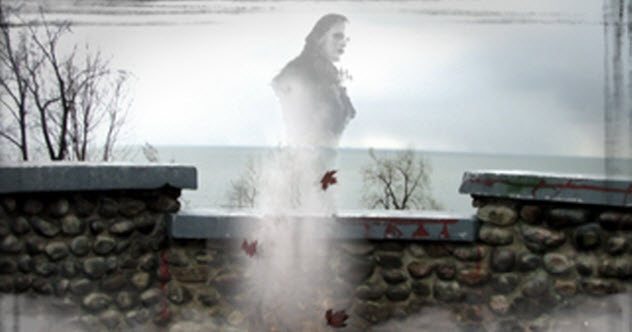
The Lady in White rarely needs an introduction. She stands beside a moonlit road, drifts through a castle corridor, cries beside a river, or appears in the back seat just after a driver checks the mirror. She is elegant, tragic, terrifyingand apparently immune to changing fashion trends.
Versions of the Lady in White legend appear across Europe, Asia, and the Americas. Some are ghosts of betrayed lovers. Others are mourning mothers, supernatural death messengers, or vengeful spirits created by violence and injustice. Although their names and motives differ, they share a striking visual language: pale clothing, long hair, lonely places, unresolved grief, and the unsettling habit of appearing when sensible people should already be indoors.
These stories are folklore rather than verified history. Their details change as communities retell them, which is precisely why they remain so fascinating. Here are 10 of the most memorable global Lady in White legendsand what each reveals about the culture that keeps her walking.
Why Does the Lady in White Appear Everywhere?
Folklorists have documented white-clad female apparitions in many regions, especially in stories involving castles, roads, wells, rivers, family estates, and places associated with violent death. White can suggest funeral clothing, purity, bridal dress, nobility, religious ritual, or simply a figure that becomes dramatically visible against the darkness. In other words, it is excellent ghost branding.
The legend also gives communities a way to discuss grief, dangerous roads, forbidden relationships, childbirth, family secrets, and violence against women. Her appearance is often less important than the question she brings with her: What happened here that people cannot forget?
1. La Llorona: The Weeping Woman of Mexico and Latin America
A mother condemned to wander
La Llorona, or “the Weeping Woman,” is one of the best-known supernatural figures in Mexican and Latin American folklore. In a widely told version, a woman kills or loses her children and is condemned to search for them along rivers, canals, and other lonely waterways. Her cryoften rendered as “Where are my children?”warns listeners that she is nearby.
There is no single official La Llorona narrative. In some versions, she is a grieving mother. In others, she is a dangerous spirit who attacks travelers, seduces solitary men, kidnaps children, or displays a horrifying face when someone approaches. Her story has Indigenous, colonial, literary, and oral influences, and its meaning changes across regions and families.
La Llorona is frequently used as a cautionary figure. Children are warned not to wander near water after dark, while adults hear a broader story about abandonment, jealousy, social inequality, and the consequences of uncontrolled rage. She is a Lady in White with a soundtrackand unfortunately, it is not relaxing spa music.
2. Perchta of Rožmberk: The Czech White Lady
A noblewoman who became a castle guardian
One of Central Europe’s most famous White Ladies is traditionally identified as Perchta of Rožmberk, a 15th-century Bohemian noblewoman. Historical accounts describe an unhappy arranged marriage to Jan of Liechtenstein, while later legend transformed Perchta into a spectral figure wandering the properties of the powerful Rožmberk family.
She is said to appear in a simple white dress, sometimes carrying keys at her waist. Unlike spirits that exist only to terrify unsuspecting night watchmen, the Czech White Lady may behave as a guardian. Depending on the version, she predicts births, fires, deaths, or other major events affecting the household.
Her legend combines genuine aristocratic history with centuries of family storytelling. Perchta’s difficult life made her an ideal candidate for transformation into a sympathetic ghost: a woman denied control while alive who gained supernatural authority after death. That is one way to win a very delayed argument.
3. The White Lady of Haapsalu Castle, Estonia
The forbidden lover in the chapel window
At Haapsalu Castle, Estonia’s most famous ghost reportedly appears in the chapel window during the full moon in August. According to the legend, a cleric secretly brought a woman into the castle even though women were forbidden within the religious complex. Disguised as a choirboy, she lived there until her identity was discovered.
The punishment varies slightly between retellings, but the best-known version says she was sealed inside a wall and left to die. Her pale figure now appears in the chapel window as an eternal symbol of love, separation, and institutional cruelty.
The legend was recorded in the 19th century, although the tale likely circulated earlier. Today, Haapsalu embraces its ghost through the annual White Lady Festival, featuring performances and cultural events around the August full moon. Few ghosts manage to become both a tragic warning and the headliner of a summer festival, but the White Lady has always been an overachiever.
4. The White Lady of Berry Pomeroy Castle, England
A prisoner in one of England’s most haunted ruins
Berry Pomeroy Castle in Devon is associated with two famous female apparitions: the Blue Lady and the White Lady. The White Lady is often identified in local tradition as Margaret Pomeroy, who was supposedly imprisoned by a jealous sister and left to die in the castle’s dungeons.
The historical evidence behind the dramatic family tale is uncertain, but that has not prevented the legend from flourishing. Visitors and storytellers describe a pale woman moving through the ruins, particularly near areas associated with confinement and suffering.
This is the classic British castle-ghost formula: one romantic ruin, one cruel relative, one locked room, and absolutely no effective conflict-resolution policy. The White Lady turns the castle into more than an archaeological site. She gives its broken walls an emotional history, whether or not the details can be verified.
5. The Banshee: Ireland’s Wailing Death Messenger
The woman whose cry announces loss
The Irish banshee is not always described as a Lady in White, but many traditions portray her as a pale woman dressed in white or gray, with long loose hair. Her defining feature is not her clothing, however. It is her voice.
Derived from the Irish bean sí, commonly translated as “woman of the fairy mound,” the banshee is traditionally associated with a mournful cry or keen that foretells a death within a family. She does not necessarily cause the death. Instead, she announces it, serving as a supernatural mourner who arrives before the funeral invitations have been printed.
Descriptions vary dramatically. She may be young and beautiful, old and frightening, or almost invisible except for her sound. The tradition is closely connected to Irish storytelling, family identity, death customs, and the practice of keening. Among Irish emigrant communities, banshee stories also traveled abroad, allowing the spirit to remain attached to a family even after that family left Ireland.
6. Yūrei: Japan’s White-Robed Restless Dead
The image that helped shape modern horror
Japan’s yūrei are spirits of the dead who remain tied to the living world. They may be held back by betrayal, improper funeral rites, powerful sorrow, jealousy, love, or a desire for revenge. Female yūrei became especially influential through theater, woodblock prints, literature, and later Japanese horror films.
The familiar visual image includes a pale face, long black hair, hanging hands, and white clothing associated with death or theatrical representations of ghosts. Some appear without visible feet, creating the impression that they float rather than walk. The vengeful onryō is among the most frightening forms, returning to punish those responsible for an injustice.
Unlike a ghost tied only to one road or castle, the yūrei is a broad supernatural category. Nevertheless, its female form closely resembles the global Lady in White archetype. Modern horror audiences know the look immediately: long hair, white garment, slow movement, terrible grievance. At that point, dropping the television remote is understandable but strategically unhelpful.
7. The Pontianak or Kuntilanak of Southeast Asia
A beautiful apparition with a monstrous secret
Across Malaysia, Indonesia, Singapore, and parts of the wider Malay world, stories describe a frightening female spirit known as the Pontianak or Kuntilanak. She is commonly connected to a woman who died during pregnancy or childbirth, although regional versions differ.
The spirit may appear as a beautiful woman with long dark hair and a flowing white garment. That pleasant first impression has a very short warranty. In many accounts, she reveals a predatory or corpse-like form and attacks those who approach her. Fragrances, crying infants, laughter, trees, and isolated nighttime locations may signal her presence.
The Indonesian city of Pontianak shares its name with the supernatural figure. Local founding traditions say cannons were fired to drive troublesome spirits from the area before a settlement was established. The legend therefore works on several levels: monster story, explanation of place, symbol of wilderness, and reminder of the dangers historically surrounding pregnancy and childbirth.
8. The Churel of South Asia
The ghost whose feet reveal the truth
The Churel, also spelled Chudail or Churail, appears in traditions across India, Pakistan, Bangladesh, Nepal, and neighboring regions. She is often described as the spirit of a woman who died during pregnancy, childbirth, abuse, neglect, or another traumatic circumstance.
A Churel may disguise herself as a beautiful young woman, sometimes wearing white and waiting beside a road, tree, field, or lonely path. Her most famous identifying feature is a pair of backward-facing feet. Travelers who notice them generally do not stay for a polite introduction.
Many stories say the Churel lures men away, drains their strength, or returns to punish relatives who mistreated her. Beneath the supernatural horror lies a social message about maternal mortality, domestic cruelty, abandoned women, and the fear that injustice will not remain buried. In modern retellings, the Churel is sometimes reinterpreted as an avenger rather than a simple monster.
9. The White Lady of Balete Drive, Philippines
A passenger who never reaches her destination
Balete Drive in Quezon City is associated with one of the Philippines’ most enduring urban legends. Motorists and taxi drivers are said to encounter a woman in white with long dark hair. She may stand beside the road, appear suddenly in front of a vehicle, request a ride, or materialize in the back seat.
Her supposed identity changes depending on the storyteller. She may have died in a traffic accident, been murdered by a driver, or suffered violence near the road. Some accounts claim that she vanishes when the vehicle reaches a particular location. Others say the driver looks into the mirror and sees her injured face staring back.
The setting strengthens the tale. Balete trees have long been associated in Philippine folklore with spirits and supernatural beings, while a dark urban road provides ideal territory for a modern vanishing-passenger story. The legend has also been shaped by newspapers, films, television, and decades of late-night retelling. Every generation adds somethingusually just as the driver is approaching the darkest section of the road.
10. Resurrection Mary: Chicago’s Vanishing Hitchhiker
The dancer in the white party dress
Resurrection Mary is the Chicago area’s most famous version of the vanishing hitchhiker. Since the early 20th century, stories have described motorists encountering a young woman along Archer Avenue near Resurrection Cemetery in Justice, Illinois.
Mary is typically dressed for an evening out, often in a white party dress with dancing shoes. A driver offers her a ride, but as the vehicle approaches the cemetery, she disappears. In the fullest version of the legend, Mary attended a dance, argued with her companion, left on foot, and was killed by a hit-and-run driver. Her family then buried her in the clothes she had worn that night.
Attempts have been made to connect the ghost to real women who died in local automobile accidents, but no proposed identity has been conclusively established. Resurrection Mary remains powerful because she modernizes the Lady in White without changing the core tragedy. The horse-drawn lane becomes a highway, the castle becomes a cemetery, and the ghost learns to hitchhike.
What the Global Lady in White Legends Have in Common
These spirits are not identical characters copied from one original story. They emerged from different languages, beliefs, historical conditions, and storytelling traditions. Still, several patterns connect them.
Unresolved injustice
Many of the women were betrayed, murdered, imprisoned, abandoned, or denied control over their lives. Their return gives supernatural force to suffering that society failed to address.
Dangerous boundaries
They appear beside rivers, roads, forests, cemetery gates, castle windows, and crossroadsplaces between one destination and another. Folklore loves a boundary because boundaries make ordinary rules feel temporarily negotiable.
Warnings disguised as entertainment
The stories discourage nighttime wandering, reckless driving, approaching strangers, entering forbidden places, or ignoring family obligations. A terrifying ghost is often more memorable than a municipal safety brochure.
Grief that refuses to disappear
Whether she cries, screams, waits, or simply appears, the Lady in White embodies memory. Communities may change, roads may be paved, and castles may fall into ruin, but a compelling tragedy can continue walking for centuries.
Experiencing Lady in White Legends Around the World
Reading these stories is entertaining, but experiencing the places and traditions connected to them can reveal why the legends survived. A castle window, wooded road, or riverbank feels very different after sunset, especially when someone has just explained that a grieving apparition occasionally appears there.
Visit the setting during a cultural event
Festivals and historical programs offer the most respectful way to explore a legend. Haapsalu’s White Lady celebrations, for example, transform a local ghost story into theater, music, community memory, and tourism. Castle tours in England and the Czech Republic similarly place supernatural tales beside architectural and historical information. The result is richer than simply walking around at midnight whispering, “Is anybody here?” into a phone.
Listen for regional differences
Ask local guides or residents how they first heard the story. One family may describe a protective spirit, while another remembers a monster used to keep children away from a river. These differences are not mistakes. Variation is how folklore lives. The most revealing experience is often discovering which details a community emphasizes and which details it quietly edits out.
Take a folklore road tripsafely
Roadside legends such as Resurrection Mary and the White Lady of Balete Drive are tempting subjects for nighttime exploration. However, drivers should treat the road as a road, not an interactive horror attraction. Do not stop in unsafe locations, trespass, distract motorists, or attempt to create fake sightings. A reflective jacket is more useful than a paranormal detector when traffic is involved.
Compare the legend with documented history
Researching the historical record adds another layer to the experience. Some ghosts are associated with real individuals, while others gained names decades after the stories began. The gap between documentation and legend can be as interesting as the haunting itself. It shows how communities turn incomplete histories into narratives with motives, villains, warnings, and memorable costumes.
Create a respectful storytelling night
A Lady in White storytelling evening can bring the global traditions together without pretending they are interchangeable. Assign each participant a region, ask them to research its cultural context, and compare themes such as mourning, maternal death, forbidden love, family loyalty, and revenge. Dim lighting is optional. Snacks are recommended. Suddenly screaming behind someone is discouraged unless you enjoy losing friends.
Document stories without exploiting them
When recording local accounts, distinguish between folklore, personal belief, documented history, and tourism marketing. Avoid presenting tragic deaths as confirmed facts when evidence is missing. These stories often involve women who suffered violence, abuse, or social exclusion, so respectful language matters. The best experience does not require proving that a ghost exists. It requires understanding why people continue to tell her story.
Conclusion
The Lady in White is one of the world’s most adaptable supernatural figures. In Mexico, she mourns beside the water. In Estonia and the Czech Republic, she occupies castle corridors and chapel windows. In Ireland, her voice warns of death. In Japan and Southeast Asia, white-robed female spirits return with powerful grievances. In Chicago and Manila, she has adapted to modern transportation and learned that the rearview mirror is an excellent dramatic prop.
What makes these global Lady in White legends endure is not merely their ability to frighten. Each one preserves a community’s anxieties, losses, moral warnings, and unresolved history. Behind the pale dress is usually a story about someone who was ignored while alive but became impossible to ignore after death.

