
Skincare
10 Extraordinary Creatures Of Antarctica
Aug
Antarctica looks, at first glance, like Earth forgot to finish coloring it in: white ice, blue shadows, black rock, and wind with the personality of a tax auditor. But beneath that minimalist surface lives one of the planet’s strangest, toughest, and most beautifully specialized communities of animals. The extraordinary creatures of Antarctica do not merely survive cold weather; they have turned it into a lifestyle brand.
From emperor penguins that incubate eggs through brutal winter darkness to transparent-blooded fish that carry natural antifreeze, Antarctic wildlife is a masterclass in adaptation. The Southern Ocean surrounding the continent works like a giant cold-water engine, feeding everything from tiny krill to whales, seals, seabirds, squid, and creatures so odd they look like they were designed during a very creative lunch break.
This guide explores ten extraordinary Antarctic animals, focusing on what makes each one remarkable, how it fits into the Antarctic ecosystem, and why these species matter far beyond the frozen continent. Bring a warm coat. The wildlife is amazing, but the thermostat is not negotiating.
Why Antarctic Wildlife Is So Extraordinary
Antarctica is the coldest, driest, windiest continent on Earth, and much of its life depends on the surrounding Southern Ocean rather than the inland ice sheet. The sea is where sunlight, seasonal ice, plankton blooms, and ocean currents create a food web powerful enough to support penguins, seals, whales, fish, and deep-sea invertebrates.
The secret ingredient is adaptation. Antarctic animals manage freezing temperatures, months of darkness, crushing ocean pressure, and seasonal food shortages with body designs that seem almost fictional. Some conserve heat with dense feathers or thick blubber. Others dive to astonishing depths, migrate across entire ocean basins, or produce proteins that stop their body fluids from freezing. In Antarctica, evolution did not phone it in.
1. Emperor Penguin: The Winter Royalty Of The Ice
Why it is extraordinary
The emperor penguin is the tallest and heaviest penguin species, and it earns its royal title by breeding during the Antarctic winter, which is not exactly picnic season. While many animals avoid the worst months, emperor penguins gather on sea ice, where males balance eggs on their feet under a warm brood pouch and endure weeks of fasting, darkness, and temperatures that make freezer burn sound cozy.
Emperor penguins survive by huddling together in massive groups, constantly shifting positions so no bird is stuck at the freezing edge forever. It is basically the world’s most disciplined group hug. Their sleek bodies, dense feathers, and fat reserves help them dive through icy water in search of fish, squid, and krill.
They are also powerful symbols of climate pressure in Antarctica. Because emperor penguins depend on stable sea ice for breeding and molting, changes in ice timing can threaten chick survival. Their story is not just cute; it is a living weather report from the bottom of the world.
2. Adélie Penguin: The Pebble-Collecting Comedian
Small bird, huge personality
Adélie penguins may be smaller than emperors, but they make up for it with energy, attitude, and an intense interest in pebbles. These classic black-and-white Antarctic birds build nests from stones, and during breeding season, a good pebble can become a surprisingly hot commodity. If Antarctica had a real estate market, Adélie penguins would be arguing over landscaping materials.
Adélies are excellent swimmers and feed mainly on Antarctic krill, fish, and small marine creatures. Their colonies can be noisy, crowded, muddy, and extremely entertaining to observe from a respectful distance. On land they waddle with comic determination; underwater they become fast, agile hunters.
Because they rely heavily on krill and sea ice conditions, Adélie penguins are closely tied to the health of the Southern Ocean ecosystem. Their population changes can reveal shifts in food availability, sea ice cover, and environmental stress. In other words, these little birds are wearing tuxedos, but they are also doing ecosystem science.
3. Antarctic Krill: The Tiny Creature That Runs The Place
The small boss of the Southern Ocean
Antarctic krill are shrimp-like crustaceans, usually only a few centimeters long, yet they are among the most important animals in the Antarctic ecosystem. Penguins eat them. Seals eat them. Whales eat them by the mouthful. Fish, squid, and seabirds join the buffet too. Krill are so central to the food web that calling them “small” feels unfair. They are tiny, yes, but ecologically they have executive authority.
Krill feed on phytoplankton, including algae that grow around and under sea ice. By converting microscopic plant life into animal protein, they move energy upward through the food chain. They also play a role in cycling carbon through the ocean, making them important not only for wildlife but also for broader climate processes.
Despite their abundance, Antarctic krill are vulnerable to warming waters, sea ice changes, and concentrated fishing pressure. Protecting krill means protecting the animals that depend on them, from chinstrap penguins to humpback whales. In Antarctica, the food chain may look dramatic at the top, but the engine is krill-sized.
4. Leopard Seal: The Spotted Predator With A Smile You Should Respect
A top hunter of Antarctic waters
The leopard seal is sleek, powerful, and built like a torpedo with teeth. Named for its spotted coat, this Antarctic predator has a long head, strong jaws, and a flexible diet that can include krill, fish, squid, penguins, and even other seals. It is one of the most recognizable hunters in the Southern Ocean, partly because it looks like it knows something you do not.
Leopard seals are often associated with dramatic penguin hunts near ice edges, but they are more versatile than their reputation suggests. Some individuals feed heavily on krill, using specialized teeth to strain small prey from the water. Others focus more on larger animals. That flexibility helps them survive in a changing environment.
They are solitary for much of the year and can be curious around boats or divers. “Curious,” however, does not mean “cuddly.” A leopard seal is a wild apex predator, not a floating Labrador. Respectful distance is the correct setting.
5. Weddell Seal: The Deep-Diving Ice Specialist
The calm champion under the sea ice
Weddell seals are among the southernmost breeding mammals on Earth and are superbly adapted to life around Antarctic sea ice. They have a gentle-looking face, large dark eyes, and the relaxed expression of an animal that has already solved winter. Do not be fooled by the sleepy appearance; Weddell seals are elite divers.
They can dive hundreds of meters below the ice in search of fish, squid, and other prey, using oxygen stored in their blood and muscles. They also maintain breathing holes in sea ice by scraping them with their teeth, a necessary but tooth-wearing habit. Imagine shoveling your driveway with your face and you will appreciate the commitment.
Scientists have studied Weddell seals for decades because they are accessible near research stations and reveal a great deal about diving physiology, oxygen management, and Antarctic marine food webs. These seals show how mammals can thrive in places that look, to humans, like the final level of a survival game.
6. Antarctic Icefish: The Fish With Clear Blood
Nature’s cold-water science experiment
Few Antarctic creatures sound more fictional than the icefish. Some Antarctic icefish lack hemoglobin, the red oxygen-carrying pigment that gives most vertebrate blood its color. Their blood can appear pale or nearly transparent, which makes them one of the strangest fish groups on Earth.
How do they get away with it? Cold water holds more dissolved oxygen than warm water, and icefish have developed large hearts, wide blood vessels, and other adaptations that help circulate oxygen through their bodies. Many Antarctic fish also produce antifreeze proteins that prevent ice crystals from growing inside their tissues. That is not a metaphor. Their survival kit includes actual biological antifreeze.
Icefish are part of a broader group of Antarctic notothenioid fishes that dominate many Southern Ocean fish communities. Their evolution tells a remarkable story of life adapting after cold conditions eliminated many competitors. They are living proof that weird can be wonderfully effective.
7. Colossal Squid: The Deep-Sea Mystery With Hooks
The heavyweight nobody sees at parties
The colossal squid is one of the most mysterious creatures associated with Antarctic waters. It is considered the heaviest known squid species and spends much of its life in the cold, dark depths of the Southern Ocean. Adults are rarely seen alive, which only adds to their legend. For a creature named “colossal,” it is impressively good at avoiding publicity.
Unlike the better-known giant squid, the colossal squid has rotating hooks on parts of its arms and tentacles, giving it a particularly dramatic design. Its huge eyes help detect faint light in deep water, including the movement of predators such as sperm whales. Much of what scientists know has come from specimens found in predator stomachs or caught accidentally by fishing vessels.
The colossal squid is important because it represents the hidden side of Antarctic biodiversity. Above the ice, penguins steal the spotlight. Far below, animals like the colossal squid remind us that the Southern Ocean still holds secrets large enough to rewrite field guides.
8. Giant Antarctic Sea Spider: The Leggy Wonder Of Polar Gigantism
Not really a spider, still extremely weird
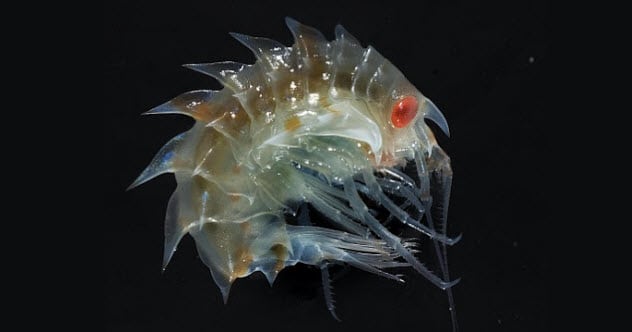
Antarctic sea spiders, or pycnogonids, are marine arthropods that crawl across the seafloor on long, thin legs. They are not true spiders, but the name is understandable because “ocean walking noodle with opinions” never caught on scientifically.
In Antarctic waters, some sea spiders grow much larger than relatives in warmer regions, an example of polar gigantism. Cold, oxygen-rich water and slow metabolisms may help some polar marine invertebrates reach impressive sizes. Their bodies are so narrow that some organs extend into their legs, which is both efficient and deeply unsettling if you think about it too long.
Recent research has shed light on their reproduction and development, but much remains unknown. Sea spiders are extraordinary because they show that Antarctica’s weirdness is not limited to charismatic penguins and seals. The seafloor has its own cast of strange, delicate, slow-motion marvels.
9. Wandering Albatross: The Ocean Glider With Legendary Wings
A master of wind and distance
The wandering albatross is one of the great long-distance travelers of the Southern Ocean. With one of the largest wingspans of any living bird, it can glide for enormous distances using wind currents over rough seas. While it breeds on subantarctic islands rather than the Antarctic mainland itself, it is deeply connected to the broader Antarctic and Southern Ocean environment.
Its flight style is a masterpiece of energy efficiency. Instead of constantly flapping, the bird uses dynamic soaring, curving across wind gradients above the waves. It can travel thousands of miles while barely seeming to try. If frequent-flyer miles were awarded by effortlessness, the wandering albatross would own the airport.
These birds feed on squid, fish, and carrion, and they often follow ships. They are also vulnerable to threats such as longline fishing, plastic pollution, and changes in ocean conditions. Their extraordinary range makes them ambassadors of the open sea, linking Antarctic waters with distant parts of the globe.
10. Tardigrades: Microscopic Survivors In A Frozen World
The tiny water bears that refuse to quit
Not every extraordinary Antarctic creature is large enough to photograph from a boat. Tardigrades, often called water bears, are microscopic animals found in mosses, lichens, freshwater films, and other damp habitats. In Antarctica, where terrestrial life is limited, tiny invertebrates like tardigrades become especially fascinating.
Tardigrades are famous for surviving extreme conditions by entering a dormant state known as cryptobiosis. In that state, they can tolerate severe dehydration, intense cold, radiation, and other environmental stress. They are not invincible in the superhero sense, but they are tough enough to make most survivalists look underprepared.
Antarctic tardigrades matter because they show how life can persist in microhabitats where larger animals cannot. While penguins command the shoreline and whales patrol the sea, tardigrades quietly endure in the hidden wet spaces of the frozen continent. Antarctica’s biodiversity is not only grand and dramatic; it is also microscopic and stubborn.
How These Creatures Work Together In The Antarctic Ecosystem
Antarctica’s animals are connected by food, ice, water, and timing. Krill feed on phytoplankton and ice algae. Penguins, seals, fish, squid, and whales feed on krill or on animals that eat krill. Seabirds patrol the skies and ocean surface. Deep-sea creatures recycle nutrients far below the sunlight. Even microscopic animals in moss beds contribute to the continent’s limited land-based ecosystems.
The Southern Ocean is productive because seasonal sunlight triggers plankton blooms, and currents move nutrients through the water. Sea ice acts as habitat, nursery, hunting platform, and seasonal clock. When the ice changes, everything from algae to emperor penguin chicks can be affected.
That is why Antarctic wildlife conservation often focuses on ecosystem thinking. Protecting a single species is important, but protecting the relationships among species is even more powerful. A penguin is not just a penguin; it is a krill customer, a leopard seal concern, a satellite tracking dot, a climate indicator, and a very well-dressed participant in a massive ocean system.
Threats Facing Antarctic Animals
Antarctica may seem remote, but distance does not make it immune. Climate change is altering sea ice patterns, ocean temperatures, and food availability. Krill fisheries, if concentrated in important feeding areas, can create competition with penguins, seals, and whales. Pollution, invasive species, disease, and human disturbance also pose risks in some areas.
Tourism and research are carefully managed under Antarctic environmental rules, but every visitor still has responsibility. Staying away from wildlife, cleaning boots and gear, avoiding litter, and respecting protected areas are not optional manners; they are part of keeping Antarctica wild.
The good news is that Antarctica has a strong international framework for protection, and scientific monitoring continues to improve. The challenge is scale. The lives of Antarctic animals are shaped not only by what happens on the continent, but also by global emissions, ocean management, and human choices made thousands of miles away.
Experiences Inspired By The Extraordinary Creatures Of Antarctica
To imagine Antarctica properly, do not start with a map. Start with sound. Picture the crunch of boots on compacted snow, the hiss of wind sliding over ice, and the distant racket of penguins arguing like tiny officials at a very cold town meeting. The first experience many people dream of is seeing a penguin colony, and for good reason. A colony is funny, smelly, loud, and oddly moving. Adélie penguins waddle with urgent confidence, as if late for appointments they absolutely invented. Emperor penguins, when seen in documentaries or rare expedition settings, feel almost mythical: tall figures standing against blowing snow, holding the next generation above the ice on their feet.
A second unforgettable experience is watching Antarctic wildlife from the water. From a small expedition boat, the continent looks impossibly clean and severe, but the sea is full of clues. A leopard seal may rest on an ice floe, lifting its head with the calm authority of an animal that is not worried about your opinion. Crabeater or Weddell seals may appear like silver-gray commas on the ice. A whale blow can rise in the distance, reminding everyone on deck to suddenly become very quiet and very bad at taking steady photos.
The most powerful part of Antarctic wildlife watching is realizing how much is hidden. You may see penguins and seals, but beneath the surface are krill swarms, antifreeze-bearing fish, squid, sea spiders, and deep ecosystems few people will ever witness directly. That hidden world changes the way you look at the visible one. A penguin diving beside the boat is not just a bird going for lunch; it is entering a cold, layered universe where light fades, predators patrol, and every calorie matters.
For travelers, the best Antarctic experiences are guided by patience and humility. Wildlife does not perform on schedule. A quiet hour near an iceberg may suddenly become unforgettable when penguins porpoise through the water or a seal slips under the surface. The lesson is simple: Antarctica rewards attention. Look at the ice edge. Watch the birds. Notice the color of the water. Listen when naturalists explain how krill connect nearly everything. The continent is not empty; it is subtle, and then suddenly spectacular.
People who cannot visit Antarctica can still have meaningful experiences with its creatures through museums, aquariums, documentaries, scientific livestreams, books, and citizen-science projects. Following penguin research, learning how satellites track colonies, or reading about deep-sea discoveries can make the far south feel closer. Even choosing sustainable seafood and supporting ocean conservation connects everyday decisions to Antarctic ecosystems.
The emotional experience of learning about Antarctic animals is a mix of wonder and responsibility. It is hard not to laugh at a penguin stealing a pebble, but it is equally hard to ignore what changing sea ice means for its future. It is thrilling to read about colossal squid, but humbling to admit how little we know about the deep ocean. Antarctica teaches that extraordinary creatures do not need fantasy to be magical. They need cold water, stable habitats, enough food, and enough human restraint to let the wild remain wild.
Conclusion: Antarctica’s Wildlife Is Weird, Brilliant, And Worth Protecting
The extraordinary creatures of Antarctica prove that life can adapt to conditions that seem impossible. Emperor penguins turn winter into a nursery. Weddell seals dive beneath locked ice. Icefish rewrite the rules of vertebrate blood. Krill power an entire marine food web. Tardigrades endure in miniature worlds that most of us would never notice.
Together, these animals reveal Antarctica as more than a frozen backdrop. It is a living system: delicate, connected, and full of surprises. Protecting Antarctic wildlife means protecting the Southern Ocean, respecting sea ice habitats, managing fisheries wisely, and understanding that even remote ecosystems are tied to global choices.
In the end, Antarctica’s greatest trick is not that it looks empty. It is that, once you learn where to look, it seems astonishingly alive.
SEO Tags
Note: This article is written for web publication and is based on synthesized, real-world scientific and educational information about Antarctic wildlife, with source links intentionally omitted according to the publishing brief.

