
Hair Care
What Is a Payoff Letter?
Aug
A payoff letter is one of those financial documents that sounds boring right up until the moment you desperately need one. Maybe you are selling your home, refinancing your mortgage, trading in your car, paying off a personal loan, or finally kicking a stubborn debt out of your life like it has overstayed its welcome at a holiday dinner. In all of those situations, a payoff letter can become the star of the paperwork parade.
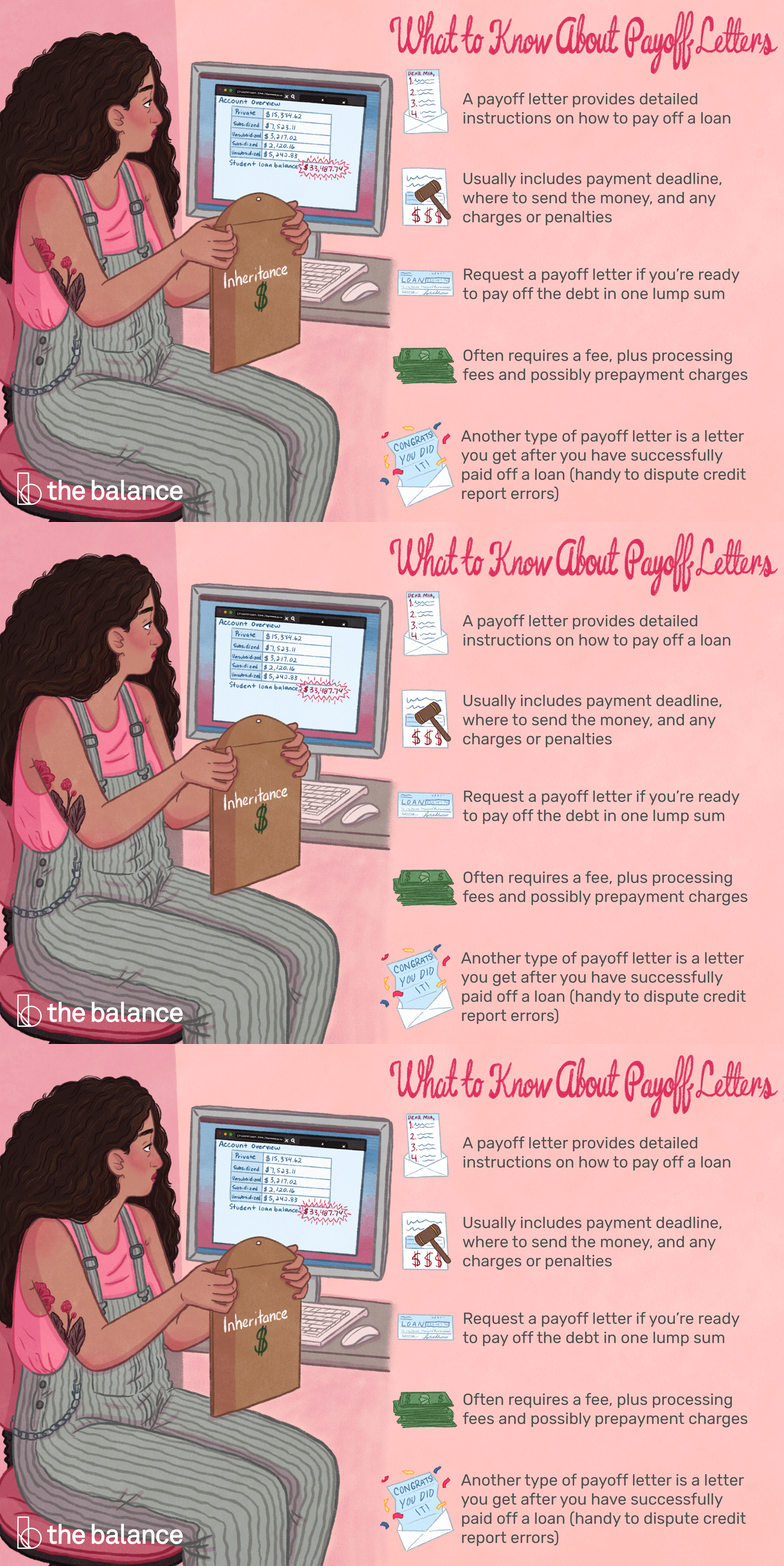
In simple terms, a payoff letter is a written statement from a lender that shows the exact amount needed to pay off a loan in full by a specific date. It may also be called a payoff statement, payoff quote, mortgage payoff statement, loan payoff letter, or reduction certificate. The name changes depending on the lender, loan type, and industry, but the purpose is the same: it tells you what it takes to bring the balance to zero.
That number is not always the same as the balance you see on your monthly statement or mobile banking app. Your regular balance may show principal owed, but a payoff amount can include daily interest, unpaid fees, escrow adjustments, late charges, recording costs, or prepayment penalties if your loan agreement allows them. In other words, your statement balance is the “close enough” number; the payoff letter is the “bring a cashier’s check and don’t guess” number.
What Does a Payoff Letter Mean?
A payoff letter is an official lender document that confirms how much must be paid to completely satisfy a debt. It is usually tied to a specific payoff date, sometimes called a “good-through date.” If payment arrives after that date, the lender may need to recalculate the amount because interest may continue to accrue daily.
For example, imagine your auto loan app says you owe $12,000. You call the lender and request a 10-day payoff letter. The letter says the payoff amount is $12,084.37 good through June 15. Why the extra $84.37? It may include interest that accrues between today and the expected payment date, plus a small administrative fee. That does not mean the lender is playing financial hide-and-seek. It means loans often keep accumulating interest until the debt is fully paid.
Why Is a Payoff Letter Important?
A payoff letter matters because paying “almost enough” does not close a loan. If you underpay by even a small amount, the account may remain open, interest may keep building, and the lien on your property may not be released. That is not the kind of surprise anyone wants after wiring thousands of dollars.
Payoff letters are especially important when a third party is involved. A title company, closing attorney, dealership, refinance lender, debt consolidation company, or buyer may need a verified payoff amount before a transaction can move forward. The letter gives everyone a clear number, a payment deadline, and instructions for sending funds correctly.
Common Reasons You May Need a Payoff Letter
You may need a payoff letter when you are paying off a mortgage, refinancing a home loan, selling real estate, trading in a vehicle, selling a car with a loan attached, consolidating debts, settling a personal loan, removing a lien, closing a business loan, or proving that a debt has been satisfied. If an asset has collateral attached to it, such as a house or car, the payoff letter often becomes part of the path to releasing that lien.
Payoff Letter vs. Current Balance: What Is the Difference?
This is where many borrowers get tripped up. Your current balance is usually the amount of principal still owed at a certain point in time. Your payoff amount is the total amount required to pay the loan off completely as of a specific date.
Think of your current balance as the scoreboard at halftime. Helpful? Yes. Final? Not necessarily. A payoff letter is the final whistle. It includes the details needed to end the game properly.
A payoff amount may be higher than the current balance because it can include accrued interest through the payoff date, unpaid fees, late charges, escrow shortages, recording or release fees, wire fees, and in rare cases, a prepayment penalty. It can also sometimes be slightly lower if the lender applies rebates, credits, or escrow refunds separately. The key is not to assume. Request the official payoff quote.
What Information Is Included in a Payoff Letter?
A well-prepared payoff letter usually includes the borrower’s name, account number, property or vehicle information if applicable, the lender or servicer’s name, the payoff amount, the good-through date, payment instructions, acceptable payment methods, daily interest after the good-through date, and contact information for questions.
For mortgage payoff letters, the document may also include escrow information, unpaid advances, late fees, recording fees, satisfaction or release charges, and instructions for title or settlement agents. For auto loans, it may include lienholder details and guidance on title release. For business or commercial loans, the letter may include conditions for releasing security interests, collateral, or UCC filings.
The “Good-Through Date” Is a Big Deal
The good-through date tells you how long the quoted payoff amount remains valid. If the letter says the payoff is good through July 10, the lender expects to receive the full amount by that date. If the payment arrives on July 11, the amount may be short because another day of interest has been added. Yes, one day can matter. Debt is punctual like that.
Daily Interest or Per Diem Interest
Some payoff letters list a daily interest amount, often called per diem interest. This tells you how much to add for each day after the good-through date. If the payoff amount is $25,000 good through May 1 and the daily interest is $8.50, a payoff made two days later may require an additional $17. This helps borrowers and closing agents avoid delays when timing changes.
How to Request a Payoff Letter
The process depends on the lender, but it is usually straightforward. Start by contacting your loan servicer, lender, credit union, bank, mortgage company, auto finance company, or online account portal. Many lenders let borrowers request payoff statements online. Others require a written request, phone verification, or authorization form if a third party is requesting the letter on your behalf.
For a mortgage, a written request is often best because federal rules generally require mortgage servicers to provide an accurate payoff balance within a specific timeframe after receiving a written request. For a car loan or personal loan, the lender may provide a payoff quote through your online account, over the phone, or by secure message.
Details to Have Ready
Before requesting a payoff letter, gather your loan account number, full name, property address or vehicle identification number, desired payoff date, preferred delivery method, and the name of any authorized third party such as a title company, closing attorney, dealership, or refinance lender. The more accurate your request, the less likely the payoff letter will come back wearing a tiny paperwork mustache of confusion.
How Long Does It Take to Get a Payoff Letter?
Timing depends on the loan type and lender. Mortgage payoff statements are often subject to stricter servicing rules than other consumer debts. Auto loan payoff quotes may be generated quickly through online portals, but lien release and title processing can take longer after payment is made. Personal loans and student loans may vary by servicer.
If you are closing on a home sale or refinance, request the payoff letter early. Title companies and closing agents usually need time to verify the payoff amount, schedule funds, and confirm wiring instructions. Waiting until the last minute can turn a calm closing into a caffeine-powered paperwork sprint.
Payoff Letter for a Mortgage
A mortgage payoff letter tells you the amount needed to fully pay off your home loan. This is commonly needed when you sell your house, refinance, make a lump-sum payoff, or remove a mortgage lien from your property records.
A mortgage payoff amount often includes principal, interest through the payoff date, unpaid fees, escrow-related amounts, and any costs connected to recording the satisfaction or release of mortgage. After the loan is paid in full, the lender or servicer should take steps to release the lien according to state and local procedures. The timing and recording process may vary by jurisdiction.
Why Mortgage Payoffs Must Be Precise
Mortgage payoffs need precision because the loan is secured by real estate. If the payoff is short, the lien may remain. If the lien remains, selling, refinancing, or transferring clear title can become difficult. This is why title companies rely on written payoff statements instead of verbal estimates.
Payoff Letter for an Auto Loan
An auto loan payoff letter shows the amount needed to pay off your vehicle loan. It is commonly requested when you sell a car privately, trade it in at a dealership, refinance the loan, or pay off the loan early.
Auto payoff letters are often called 10-day payoff quotes because the amount is commonly calculated to remain valid for about 10 days. Once the lender receives full payment, the lien release process begins. Depending on the state, the lender may notify the DMV electronically, send you a lien release, mail the title, or provide documents you must submit yourself.
Do Not Forget the Title
Paying off the car loan is step one. Getting the lien removed from the title is step two. Until the lien is released, the lender may still appear on the vehicle title. If you plan to sell the car, do not assume the title will magically appear in your mailbox overnight wearing a cape. Follow your lender’s instructions and check your state DMV rules.
Payoff Letter for Debt Consolidation
If you are consolidating debt, a payoff letter helps the new lender know exactly how much to send to each existing creditor. This is common with personal loans, credit card consolidation, home equity loans, and refinance transactions. The payoff letter reduces the risk that a creditor receives too little and leaves a balance behind.
When consolidating multiple debts, keep copies of every payoff letter and confirmation number. After the new lender sends funds, check each old account to make sure it shows a zero balance. Debt consolidation is helpful, but it is not a magic wand. It still requires follow-up.
What Happens After You Pay the Payoff Amount?
After the lender receives the full payoff amount, it should apply the payment, close the loan account, and begin any required lien release process. For a mortgage, this may involve recording a satisfaction, release, or reconveyance document. For an auto loan, it may involve releasing the lien through the DMV or sending title documents. For other secured loans, it may involve terminating a UCC filing or releasing collateral.
You should receive confirmation that the loan is paid in full. Keep this confirmation forever, or at least for a very long time. Financial paperwork has a funny habit of becoming useful three years after you almost threw it away during a closet-cleaning mood.
Can a Payoff Letter Include Fees?
Yes. A payoff letter can include fees allowed by your loan agreement and applicable law. These may include recording fees, administrative fees, statement fees, late fees, wire fees, property inspection charges, unpaid advances, or other amounts due. Some loans may include prepayment penalties, though these are less common in many consumer loan situations than they used to be.
If a fee looks strange, ask for an explanation in writing. Do not ignore unfamiliar charges, especially if you are close to a closing deadline. A small unresolved fee can delay a lien release or leave the account open.
Can You Negotiate a Payoff Letter?
For a standard mortgage, auto loan, or personal loan in good standing, the payoff amount is usually not negotiable. It is calculated according to the loan terms. However, if the debt is delinquent, charged off, in collections, or part of a settlement negotiation, a creditor may agree to accept less than the full balance. In that situation, the document may be called a settlement letter rather than a regular payoff letter.
Be careful: a settlement for less than the full balance can affect your credit and may have tax consequences. Get the agreement in writing before sending money. The letter should clearly state the amount accepted, the deadline, whether the account will be considered satisfied, and how the creditor will report it.
Common Mistakes to Avoid
Using the Current Balance Instead of the Payoff Amount
This is the classic mistake. The current balance may not include interest through the payoff date or required fees. Always use the official payoff amount.
Missing the Good-Through Date
If your payment arrives late, the payoff amount may no longer be valid. Build in time for bank transfers, mail delays, holidays, and weekends.
Sending Funds to the Wrong Place
Payoff letters often include special instructions for wires, certified checks, overnight mail, or electronic payments. Follow them exactly. Regular payment addresses may not be the same as payoff addresses.
Forgetting to Confirm the Lien Release
After payoff, verify that the lien has been released. This matters for homes, vehicles, business equipment, and other secured assets.
Throwing Away the Paper Trail
Keep the payoff letter, proof of payment, confirmation of loan closure, and lien release documents. Future you may want to high-five present you.
Example of a Payoff Letter Scenario
Let’s say Maria is selling her home. Her mortgage statement says she owes $218,400. The closing date is August 20. Her title company requests a mortgage payoff letter from her servicer. The payoff letter states that the total amount due by August 20 is $219,126.72. This includes principal, interest through the payoff date, a recording fee, and a small unpaid escrow shortage.
At closing, the title company wires the payoff amount directly to the mortgage servicer. A few weeks later, the lien release is recorded with the county. Maria keeps a copy of the settlement statement and payoff confirmation. The loan is closed, the buyer receives clear title, and everyone gets to stop refreshing their email every 11 seconds.
Personal Experiences and Practical Lessons About Payoff Letters
One of the most common real-world experiences with payoff letters is discovering that financial “final payments” are not always as final as they sound. Many borrowers make their last regular payment and assume the account is finished. Then they check back and see a small remaining balance caused by daily interest. It feels annoying, but it is usually preventable. The better approach is to request a payoff letter before making the final lump-sum payment. That way, the final payment is calculated to close the loan completely.
Another practical lesson comes from car sales. When someone sells a vehicle that still has a loan, the buyer usually wants assurance that the lien will be cleared. A payoff letter can help both parties understand exactly how much must go to the lender before the seller receives any remaining equity. For example, if the buyer pays $18,000 and the payoff letter says $13,250 is owed to the lender, the transaction can be structured so the lender is paid first and the seller receives the difference. Without a payoff letter, everyone is guessing, and guessing is not a great strategy when car titles are involved.
Homeowners often learn the value of payoff letters during refinancing. A refinance lender needs to know the exact amount required to pay off the old mortgage. The old loan does not disappear just because the new loan is approved. The payoff statement connects the two transactions. If the payoff is wrong or expires before closing, the refinance may be delayed. That is why experienced borrowers request updated payoff figures when closing dates move.
Business owners also run into payoff letters when selling equipment, vehicles, or property used as collateral. In those cases, the payoff letter may include release conditions. The lender might require certified funds, wire payment, or confirmation that all related obligations are satisfied before releasing its security interest. This is especially important when several loans are cross-collateralized, meaning one piece of collateral may secure more than one debt. The lesson is simple: read the whole letter, not just the big number.
A useful habit is to create a payoff folder for each loan you close. Save the payoff letter, proof of funds sent, confirmation of receipt, account closure notice, lien release, title update, and any emails from the lender. Digital copies are fine, but use clear file names. “Car payoff letter 2026” is much better than “scan_0047_final_FINAL_reallyfinal.pdf.” Your future self deserves better file names.
Finally, treat payment instructions with serious attention. Payoff fraud and wire mistakes can be expensive. If wiring funds, verify instructions directly with the lender or closing agent using a trusted phone number, not just a number pasted into an email. A payoff letter is helpful, but it is not a substitute for common sense and secure communication. Money moves fast; fixing mistakes moves at the speed of bureaucracy wearing ankle weights.
Final Thoughts: A Payoff Letter Is Small, But Powerful
A payoff letter is more than a formality. It is the official roadmap for closing a loan correctly. Whether you are paying off a mortgage, clearing an auto loan, refinancing, consolidating debt, or removing a lien, the payoff letter tells you the exact amount, deadline, and payment instructions needed to finish the job.
The smartest move is to request the payoff letter early, read every line, follow the instructions exactly, and keep proof after payment. Financial freedom feels much better when the paperwork agrees with you.
Note: This article is for general educational purposes and should not be considered legal, tax, or financial advice. For specific payoff, lien release, title, or settlement questions, contact your lender, loan servicer, title company, DMV, attorney, or qualified financial professional.

