
Hair Care
Windows 98 For Spaceships? Not Quite!
Jul
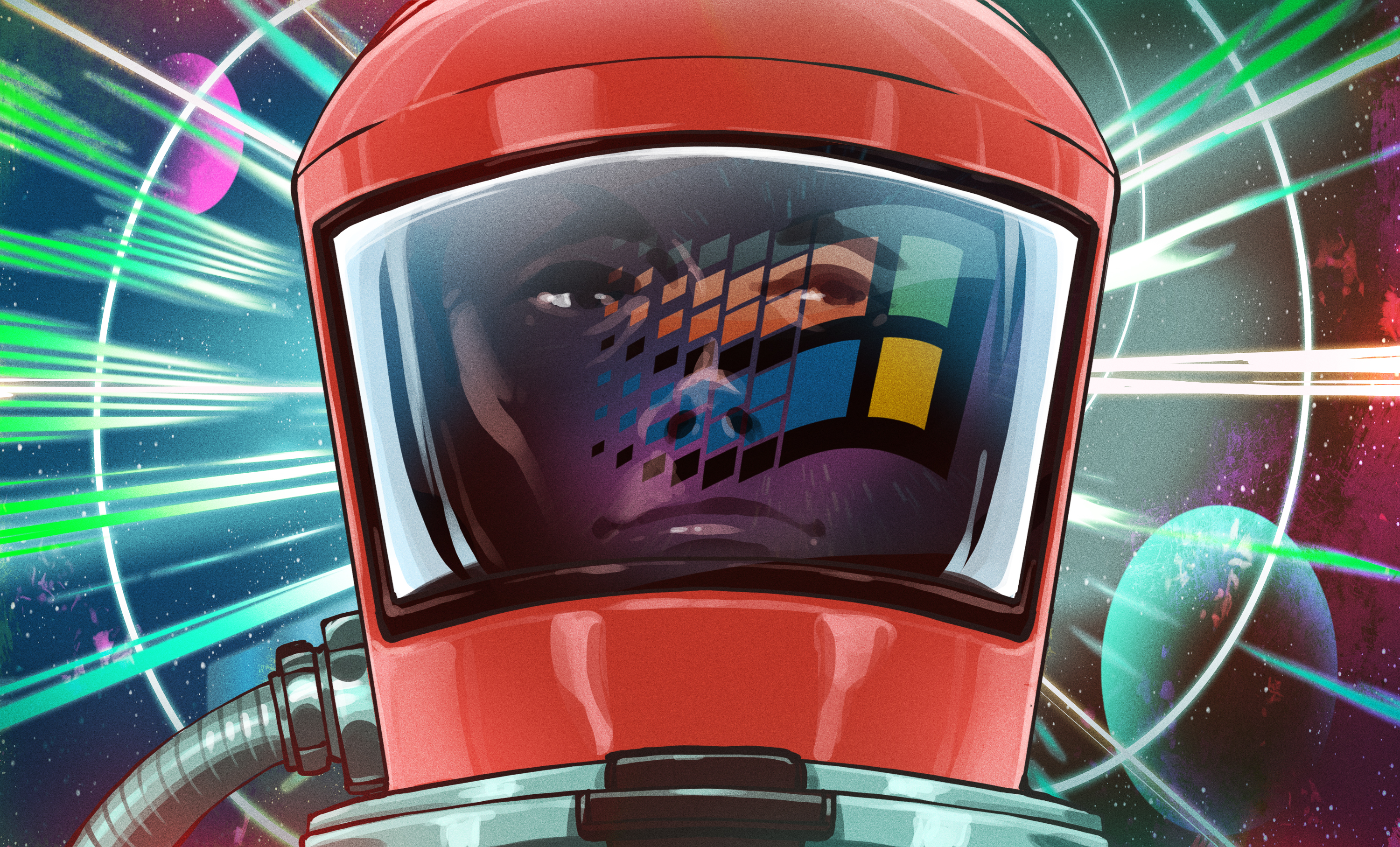
Few tech headlines are more delicious than the idea of a spacecraft cruising around Mars with Windows 98 wheezing behind the dashboard like an old beige office computer. It sounds perfect: a billion-dollar orbiter, a red planet, a mysterious radar instrument, and somewhere in the cosmic wiring, a Start menu waiting to freeze. The image is funny. It is also, technically speaking, not quite true.
The phrase “Windows 98 for spaceships” became popular because of the European Space Agency’s Mars Express mission and its MARSIS radar instrument, whose original software was created more than two decades ago using a development environment based on Microsoft Windows 98. That does not mean the spacecraft itself was booting into Windows 98, playing startup sounds, and asking whether anyone wanted to install Internet Explorer. Spacecraft flight systems are far more specialized, conservative, and carefully engineered than a home computer from the late 1990s.
Still, the headline points to a real and fascinating truth: space technology often relies on older, proven, highly reliable software and hardware. In space, “old” is not an insult. It is sometimes a survival strategy. When your computer is millions of miles from Earth, exposed to radiation, extreme temperatures, and slow communications, the latest shiny update can be less attractive than a boring system that has already survived every nightmare engineers can imagine.
Why People Thought Windows 98 Was Running in Space
The confusion started with Mars Express, an ESA spacecraft launched in 2003 to study Mars from orbit. One of its most important instruments is MARSIS, short for Mars Advanced Radar for Subsurface and Ionospheric Sounding. MARSIS sends low-frequency radio waves toward Mars and reads the returning signals to investigate what lies beneath the surface. It has been used to study underground structures, ice, and possible liquid water signatures near the Martian south pole.
In 2022, engineers announced a major software upgrade for MARSIS. The eye-catching detail was that the original software had been designed using a development environment based on Windows 98. That is a very different claim from “the spacecraft runs Windows 98.” A development environment is the toolchain engineers use to write, build, test, and maintain software. It can include compilers, editors, simulators, build scripts, test systems, and old hardware interfaces. The final code running on the instrument may be entirely separate from the desktop operating system used to create it.
Think of it like baking bread with your grandmother’s ancient mixer. The bread is not “running on” the mixer. The mixer helped produce it. In the same way, Windows 98-era tools helped shape the original MARSIS software, but that does not turn Mars Express into a flying Dell tower from 1999.
What Spacecraft Actually Need From Software
Spacecraft software is not designed around convenience, flashy icons, or whether the taskbar looks modern. It is designed around predictability. A spacecraft computer must respond to events at exact times, manage power, handle communications, monitor health, protect instruments, execute commands, and recover from faults without a human walking over to press the power button.
This is why many spacecraft use real-time operating systems, often called RTOS platforms. A real-time operating system is built to respond within known timing limits. That matters when software must fire thrusters, manage a landing sequence, rotate antennas, control a rover arm, or protect a spacecraft from overheating. On Earth, a laggy laptop is annoying. In space, bad timing can become a mission-ending problem.
NASA Mars rovers and landers have famously used VxWorks, a commercial real-time operating system, in several missions. Curiosity and Perseverance, for example, are associated with radiation-hardened processors and flight software written for reliable real-time operation. The point is not raw speed. The point is confidence. Space engineers would rather have a slow computer that behaves exactly as expected than a fast one that occasionally gets dramatic.
Old Hardware Is Not a Bug; It Is a Feature
Modern consumers are trained to believe that newer is always better. A phone from three years ago feels ancient. A laptop from 2015 gets treated like a museum piece. Space engineering does not follow that rhythm. Spacecraft hardware must be tested, qualified, radiation-hardened, documented, and trusted before it earns a ride beyond Earth.
Radiation is one of the biggest reasons space computers often look underpowered compared with everyday electronics. High-energy particles can flip bits, damage circuits, and cause unpredictable behavior. To survive, spacecraft use radiation-hardened processors, redundant systems, error correction, watchdog timers, safe modes, and careful fault-management logic. These protections take time to design and validate.
That is why a spacecraft processor may seem laughably slow next to a gaming PC. But the gaming PC was not built to survive deep space. It was built to render dragons at high frame rates while complaining about driver updates. A radiation-hardened spacecraft computer is built to keep working when no repair shop exists within 100 million miles.
Mars Express and the MARSIS Upgrade
Mars Express is one of the great examples of long-lived space engineering. Launched in 2003, it continued delivering valuable science many years beyond its original mission plan. MARSIS became especially important because radar sounding can reveal hidden features below the Martian surface. For planetary scientists, that is like giving Mars a medical scan, except the patient is a dusty planet with a habit of hiding its secrets under ice and rock.
The 2022 software upgrade was not a cosmetic refresh. It improved how MARSIS handled data. Earlier methods required storing large amounts of high-resolution data, filling onboard memory quickly. The updated software allowed the instrument to discard unnecessary data and operate for longer periods during each pass. In practical terms, that meant MARSIS could examine larger areas and focus more efficiently on regions of scientific interest, including areas near the Martian south pole and the moon Phobos.
This is one of the most exciting lessons from the story: software can rejuvenate old spacecraft. A hardware instrument launched decades ago can become more capable because engineers find smarter ways to use it. That is not nostalgia. That is engineering magic, performed carefully and with an enormous checklist.
Why Space Updates Are So Difficult
Updating a phone is easy enough that most people do it while half-awake. Updating a spacecraft is different. First, engineers must understand the existing system in extreme detail. That can be hard when the original developers have retired, documentation is old, test equipment is rare, and the software toolchain belongs to another technological era.
Next comes testing. Space agencies do not casually upload new code and hope for the best. They simulate, review, verify, validate, and rehearse. A spacecraft may have a ground-based engineering model or software testbed that lets teams practice before sending commands across space. Every command must be carefully sequenced because communication delays and limited bandwidth make trial-and-error a terrible plan.
Finally, the update must be transmitted, stored, checked, activated, and monitored. If something goes wrong, the spacecraft must be able to protect itself. Many missions include safe modes designed to reduce activity, preserve power, and wait for instructions from Earth. Safe mode is the spacecraft version of taking a deep breath and refusing to do anything reckless.
Windows XP, Linux, and the International Space Station
The confusion around “old operating systems in space” is not limited to Mars Express. The International Space Station has used many ordinary laptops for crew operations, procedures, inventory, email, and support tasks. These laptops are not the same as the station’s critical control systems. They are more like rugged office tools in orbit.
In 2013, reports noted that laptops in the ISS Operations Local Area Network were moving from Windows XP to Debian Linux. The reason was reliability, stability, and maintainability. Again, this does not mean the entire station suddenly “ran Linux” in the simplistic way a personal computer does. The ISS is a complex environment with many systems, networks, payloads, and control layers. But it does show that space operations use practical technology choices rather than trendy ones.
The bigger lesson is that not every computer in a space mission has the same job. A crew laptop, a ground-control workstation, a scientific instrument controller, and a spacecraft flight computer are different categories. Mixing them up creates funny headlines, but it also hides the careful architecture behind real missions.
What Mars Rovers Teach Us About Reliable Software
NASA’s Mars rovers offer some of the best examples of why reliable software matters. Spirit, Opportunity, Curiosity, and Perseverance all operated in an environment where dust, cold, radiation, communication delays, and limited power shaped every decision. They could not depend on constant human control. They needed autonomy, fault protection, and software that could recover from unexpected states.
Spirit’s early mission problem in 2004 is a classic case. The rover experienced repeated resets related to flash memory and file-management issues. Engineers diagnosed the problem from Earth, guided the rover into a more stable condition, and restored operations. The incident showed that even carefully engineered systems can encounter surprises, but it also showed the value of deep knowledge, telemetry, diagnostic modes, and flexible recovery procedures.
Curiosity and Perseverance continued the tradition of robust flight software. These missions use onboard computing resources that may look modest compared with consumer devices, yet they support extraordinary achievements: landing with a sky crane, driving across Mars, drilling rocks, selecting targets, storing samples, and coordinating with orbiters. That is a better résumé than most laptops, even the ones with stickers.
Why “Just Use the Latest Computer” Is a Terrible Space Plan
It is tempting to ask why space agencies do not simply use the newest processors and modern operating systems. The answer is risk. New hardware can be powerful, but power alone is not enough. Engineers need to know how a system behaves under radiation, vibration, launch stress, vacuum, heat, cold, and years of operation without hands-on maintenance.
Modern chips are densely packed, which can make them more vulnerable to certain radiation effects. New software stacks can be huge, complex, and full of features that are unnecessary for flight. Every extra feature is another place for bugs to hide. In spacecraft design, simplicity is often a virtue. If a system does not need animated widgets, app stores, Bluetooth pairing, or a cheerful assistant asking about your day, it is better off without them.
Space software also has long development cycles. A mission may be designed, built, tested, launched, and operated over decades. By the time a spacecraft reaches its destination, its technology may already seem old. That does not mean the mission is outdated. It means the system was frozen at a point where engineers could trust it.
The Role of NASA’s Core Flight System
Modern space software is not stuck in the past. NASA’s core Flight System, often known as cFS, is a reusable, platform-independent flight software framework designed to help missions build reliable onboard software more efficiently. It supports a modular approach, allowing common services and applications to be reused across different spacecraft and projects.
This matters because space agencies do not want to reinvent everything for every mission. Reusable frameworks can reduce risk, improve testing, and make teams more efficient. A platform-independent design also helps engineers separate mission logic from hardware-specific details. In plain English: it helps spacecraft software become less like a one-off basement invention and more like a disciplined, reusable toolkit.
Still, even modern frameworks must meet the same demanding reality. Flight software must be predictable, testable, and understandable. Space does not reward cleverness for its own sake. It rewards software that keeps working after launch, after cruise, after orbital insertion, after dust storms, and after everyone involved has had far too much coffee.
How Media Headlines Turn Technical Details Into Space Folklore
The “Windows 98 spaceship” story is a perfect example of how technical details become internet folklore. A real fact gets compressed into a catchier version. The catchy version spreads faster because it is funnier, simpler, and more meme-friendly. Soon, people imagine an orbiter around Mars clicking through Control Panel.
The truth is more interesting. It reveals how long space missions last, how carefully software is maintained, and how engineers preserve knowledge across generations. It also reminds us that old tools may remain essential long after the rest of the world moves on. A forgotten development environment can become part of a mission’s history, not because anyone loves outdated software, but because changing it safely is hard.
In engineering, context is everything. Windows 98 as a consumer desktop operating system is ancient. A Windows 98-based development environment preserved for a specialized space instrument is a practical artifact of mission continuity. One is a punchline. The other is a maintenance challenge with interplanetary consequences.
Specific Examples of “Old Tech” Doing Serious Space Work
Mars Express
Mars Express shows how a mission can continue producing science for decades. Its MARSIS software upgrade demonstrated that even old instrument software can be improved when engineers understand the system well enough to make careful changes.
Mars Rovers
NASA’s Mars rovers show why real-time systems and radiation-hardened computers matter. These machines do not need consumer-style speed. They need dependable control, safe recovery, and the ability to operate with delayed communication from Earth.
The International Space Station
The ISS laptop migration from Windows XP to Debian Linux shows that everyday computing tools in space evolve too. However, laptops used by astronauts are not the same as critical spacecraft control computers. Space systems are layered, specialized, and purpose-built.
Reusable Flight Software
NASA’s cFS represents a more modern philosophy: build reusable, modular flight software that can support many missions. It is not about chasing trends. It is about improving reliability while reducing duplication and long-term maintenance headaches.
What This Means for Everyday Tech Users
The spacecraft software story has lessons for anyone who uses technology. First, the newest tool is not always the best tool. Reliability, maintainability, and clarity matter. A stable system that performs one important job well can be more valuable than a bloated system that does everything except behave.
Second, updates should be thoughtful. On Earth, people sometimes install updates without reading anything, then act surprised when a printer enters a midlife crisis. Space engineers do the opposite. They test, document, rehearse, and prepare rollback plans. That level of caution is not paranoia. It is professionalism.
Third, technical debt is real. Old systems can keep working for a long time, but maintaining them requires knowledge, tools, and discipline. If the only person who understands a critical process retired in 2009 and now grows tomatoes in Arizona, your organization may have a problem. Space missions make this obvious, but the same issue appears in banks, hospitals, factories, airports, and government systems.
Experiences Related to “Windows 98 For Spaceships? Not Quite!”
The most relatable part of this topic is not Mars, radiation, or radar sounding. It is the strange emotional experience of discovering that an old system still matters. Many people have met a computer, database, industrial controller, or office program that looks laughably outdated but quietly holds the whole operation together. It may have a gray interface, a cryptic login screen, and a keyboard shortcut nobody dares to forget. Yet when it works, the business works.
That is the human side of spacecraft software. Engineers inherit systems from earlier teams. They read old documentation. They decode assumptions made years ago. They preserve test environments because rebuilding them from scratch would be risky. They learn that “legacy” does not mean useless. Sometimes legacy means proven, trusted, and too important to touch without gloves.
Imagine being the engineer assigned to improve a 19-year-old Mars instrument. The glamorous version sounds like science fiction: you are upgrading a machine orbiting another planet. The daily reality is probably more humble and more intense. You compare old code with old notes. You ask why a memory limit exists. You wonder whether changing one line could affect another behavior during a future pass over Mars. You test again. Then you test the test. Then someone asks whether the documentation from 2002 is still accurate, and the room becomes very quiet.
Anyone who has maintained an old website, repaired a family computer, migrated a business spreadsheet, or recovered files from a forgotten hard drive can understand a tiny piece of that pressure. Old systems carry history. They contain clever fixes, awkward compromises, and decisions made under deadlines. They may look simple from the outside, but inside they are full of context.
The fun of the “Windows 98 for spaceships” phrase is that it makes space feel familiar. Mars Express suddenly sounds less like an untouchable scientific machine and more like a stubborn old PC in the corner that still does one job better than anything else. But the deeper lesson is respect. That old tool survived because people built it carefully, maintained it seriously, and understood its purpose.
So the next time an old computer asks for patience, consider giving it a little grace. It may not be orbiting Mars, but it might be doing something important. And if it is orbiting Mars, please do not click “Remind me tomorrow.”
Conclusion
“Windows 98 For Spaceships? Not Quite!” is more than a funny headline. It is a doorway into the serious world of spacecraft software, where reliability beats fashion and old technology can remain valuable for decades. Mars Express did not become a Windows 98 desktop in orbit, but its MARSIS instrument did carry the legacy of a Windows 98-based development environment. That detail reveals how long missions last, how difficult safe updates can be, and why engineers respect proven systems.
Spaceflight is not powered by nostalgia. It is powered by careful choices. Real-time operating systems, radiation-hardened computers, reusable flight software, conservative updates, and disciplined testing all work together to keep missions alive. The next time someone jokes about ancient software in space, smilebut remember that the old code may be helping humanity study Mars.
Note: This article is based on publicly documented information from reputable space, engineering, and technology sources, including space agency materials, NASA/JPL technical resources, spacecraft software documentation, and established technology reporting. It clarifies that the Mars Express story concerns a Windows 98-based development environment, not a consumer Windows 98 operating system flying the spacecraft.

