
Beauty Unlocked
What Is Considered Cheating? 7 Common Types of Infidelity
Aug
Cheating used to sound fairly simple: someone had sex with a person who was not their partner. Then smartphones arrived, social media moved into our pockets, dating apps created an endless catalog of possible connections, and suddenly couples found themselves debating questions such as, “Is sexting cheating?” “Does flirting count?” and the modern classic, “Why did you delete the messages if they were innocent?”
The truth is that what is considered cheating cannot be reduced to one universal list. Relationship researchers and therapists generally describe infidelity as sexual, romantic, or emotionally intimate behavior that violates the expectations or agreements of a committed relationship. The important words are violates the expectations or agreements. Two couples can encounter exactly the same behavior and reasonably judge it differently.
That does not mean cheating is merely a matter of opinion. Secrecy, deception, sexual or romantic intent, broken agreements, and the diversion of intimacy away from a partner are recurring themes in research and clinical discussions of infidelity. Understanding those elements makes it much easier to separate an ordinary friendship from an emotional affairor harmless scrolling from a digital double life.
Research synthesis informed by U.S.-based clinical, academic and relationship sources.
What Does Cheating Really Mean?
In a monogamous relationship, cheating usually involves crossing an agreed boundary with another person without the partner’s knowledge or consent. Physical contact can be involved, but it is not required. An emotional affair conducted entirely through messages, for example, can cause a profound sense of betrayal even if the two people never meet.
A useful way to think about fidelity is as a relationship agreement rather than a particular collection of prohibited body parts. The agreement might include sexual exclusivity, romantic exclusivity, limits on flirting, rules about communication with former partners, or boundaries around online sexual behavior.
This distinction is especially important because consensual non-monogamy is not automatically cheating. Partners in an open, polyamorous, or otherwise non-monogamous relationship can have relationships with other people without being unfaithful. But they can still cheat by secretly breaking the rules they agreed upon.
When you are unsure whether something crosses the line, ask four questions: Was it hidden? Was there romantic or sexual intent? Would it violate an agreement we made? Would the behavior probably change if the partner were standing beside us? One “yes” does not prove an affair, but several deserve a serious conversation.
Sources supporting boundary-based definitions and consensual non-monogamy distinction.
7 Common Types of Infidelity
1. Physical or Sexual Infidelity
Physical infidelity is the version most people recognize immediately. It can include sexual intercourse, oral sex, intimate touching, kissing, or other sexual activity with someone outside the relationship when that behavior violates the couple’s agreement.
Consider a married person who tells a coworker during a business trip, “It was only one kiss.” Whether the kiss lasted five seconds or involved a three-city tour is not really the central issue. If the relationship was supposed to be romantically and physically exclusive, an intentional romantic kiss can constitute cheating.
Physical affairs range from one-time encounters to ongoing sexual relationships. They can also create practical health concerns. When outside sexual contact has occurred, STI testing and an honest discussion about sexual health may be appropriate before partners resume unprotected sex.
2. Emotional Infidelity
Emotional cheating happens when an outside relationship develops a level of emotional intimacy, secrecy, romantic attachment, or priority that undermines the committed relationship.
Friendship itself is not cheating. Adults are allowed to have close friends without filing emotional paperwork with the Relationship Department. The difference is often found in the combination of intimacy and secrecy.
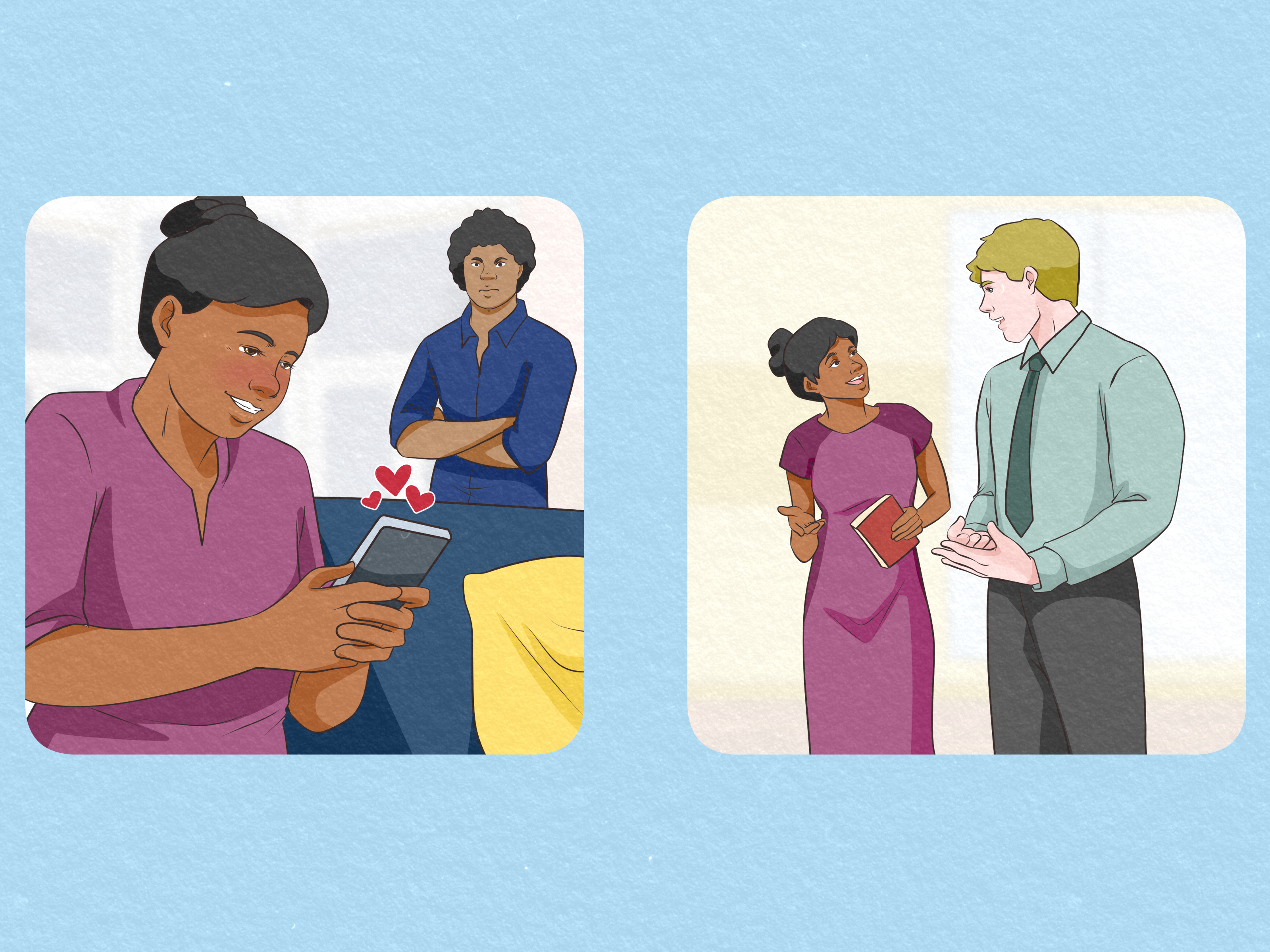
Imagine someone who tells a coworker every detail of their fears, marriage problems, hopes, and private life while gradually withdrawing from those conversations with their spouse. They hide the friendship, delete messages, think constantly about the coworker, and become defensive whenever their partner asks questions. No sex has occurred, yet an important part of the person’s intimate life has been relocated outside the relationship.
Clinical sources emphasize that emotional affairs can damage trust and attachment even without physical contact. They may also develop into romantic or sexual relationships over time.
3. Online or Cyber Infidelity
An affair does not need a hotel room anymore. Sometimes all it requires is Wi-Fi.
Online cheating can involve secret romantic conversations, cybersex, private video interactions, sexual exchanges, dating-app activity, or emotionally intimate relationships conducted through social media, messaging platforms, forums, games, or other online spaces.
One important lesson from research into online infidelity is that the screen does not magically erase relationship boundaries. Researchers have identified behaviors such as secret conversations, flirting with alternatives, communicating intimately with former partners, hiding messages, and maintaining misleading relationship information online as potential infidelity-related behaviors.
A person might insist, “But we’ve never met.” That distinction matters when evaluating what actually happened, but it does not automatically make the relationship faithful. If someone has secretly maintained a romantic partnership online for six months, the absence of an airplane ticket does not restore the missing honesty.
4. Sexting and Secret Sexual Messaging
Sexting deserves separate attention because not every online friendship is sexual. Secretly exchanging explicit messages, nude photographs, sexual videos, fantasies, or sexually charged voice messages with another person may clearly violate a sexually exclusive relationship.
Context matters. Sexting between committed partners is obviously not infidelity. Nor does every suggestive joke equal an affair. The problem arises when sexual interaction is directed toward someone outside the relationship without the partner’s consent.
For example, repeatedly exchanging explicit photos with a former partner and then deleting the conversation is very different from occasionally receiving an unwanted flirtatious message and ignoring it. Intent, participation, secrecy, and the couple’s rules all matter.
Digital communication sometimes tempts people into minimizing behavior because “nothing happened in real life.” But the messages themselves are real behavior. A phone is a device, not diplomatic immunity.
5. Micro-Cheating and Secret Flirting
Micro-cheating is an informal term for smaller behaviors that suggest romantic or sexual interest outside a relationship or begin pressing against established boundaries.
Examples might include secretly flirting with the same person, hiding a relationship status, repeatedly messaging an attractive alternative, saving someone’s contact under a false name, removing a wedding ring specifically to appear available, or maintaining a “just in case” romantic connection.
Not every friendly interaction is micro-cheating. Complimenting someone, having lunch with a colleague, or liking a photograph online is not automatically evidence of betrayal. Otherwise half the internet would require couples counseling before breakfast.
Look instead for patterns involving intention and concealment. An innocent interaction usually does not need an elaborate cover story. Micro-cheating becomes more concerning when someone deliberately creates romantic possibilities while keeping their committed partner unaware.
6. Secret Relationships With an Ex or “Backup” Partner
Remaining friends with an ex is not automatically cheating. Plenty of people maintain ordinary, transparent friendships with former partners, particularly when they share children, friends, work, or a long social history.
The situation changes when contact becomes secret, flirtatious, sexual, emotionally intense, or intentionally positioned as a backup relationship.
Imagine telling your current partner, “I haven’t spoken to my ex in years,” while messaging that ex every evening about how much you miss your old relationship. The problem is not the fact that an ex exists. The problem is the hidden romantic connection.
Research on social-media infidelity has specifically examined communication with previous romantic partners and potential alternatives. The broader principle is simple: keeping someone romantically “on deck” while pretending to be fully committed can undermine exclusivity even before physical contact occurs.
7. Breaking the Rules of an Open or Non-Monogamous Relationship
One of the biggest misconceptions about cheating is that it cannot occur in an open relationship. It absolutely can.
Suppose two partners agree that dating other people is acceptable, but overnight stays are not. Or they permit casual sex but require disclosure. Or they agree not to date close friends. If one partner secretly violates those conditions, the issue is not non-monogamy; it is broken consent and deception.
Conversely, having another sexual partner under a mutually agreed open relationship should not automatically be described as infidelity simply because traditional monogamous rules would prohibit it.
This illustrates the central rule running through nearly every category of cheating: fidelity means honoring the relationship structure you actually agreed to.
What About Porn, Flirting, and Other Gray Areas?
Some behaviors do not belong automatically in either the “cheating” or “completely harmless” category.
Pornography: Watching sexually explicit material is not universally defined as infidelity. Couples have widely different expectations. If partners have explicitly agreed that pornography is off-limits and one person secretly violates that agreement, however, the deception becomes a relationship issue. Research also suggests that pornography use and relationship quality can interact in complex ways, so simplistic claims rarely tell the whole story.
Flirting: Light social flirting may be acceptable in one relationship and unacceptable in another. Secretive, repeated flirting intended to build romantic or sexual possibilities is more likely to cross a fidelity boundary.
Private messages: Privacy and secrecy are different. Healthy partners do not necessarily need unrestricted access to each other’s phones. Having personal conversations is not proof of cheating. Deliberately hiding a romantic relationship, however, is another matter.
Financial infidelity: Secret debts, hidden accounts, and concealed spending are commonly described as financial infidelity. They represent significant breaches of trust but are different from romantic or sexual infidelity. The shared ingredient is deception.
How Can Couples Decide What Counts as Cheating?
The worst time to discover that two people have completely different definitions of cheating is after somebody has already crossed one of them.
Couples can prevent considerable confusion by discussing boundaries explicitly. Talk about physical affection with other people, flirting, pornography, communication with exes, dating apps, sexually explicit messages, close friendships, private social-media conversations, and whatever else is realistically relevant to your lives.
A healthy boundary discussion should sound more like negotiation than prosecution. Instead of saying, “Anyone should know that’s cheating,” try, “This behavior would feel like a violation of our relationship to me. How do you see it?”
Boundaries also need to be mutual. One partner should not enjoy a private exemption from rules they demand the other person follow.
What Should You Do After Cheating Is Discovered?
Discovering infidelity can trigger anger, grief, anxiety, confusion, humiliation, and an urgent desire to make a permanent decision immediately. Relationship and clinical resources commonly recommend allowing some time for the initial emotional intensity to settle before making major decisions when circumstances permit.
If sexual infidelity occurred, address sexual health and consider STI testing. If reconciliation is the goal, the partner who cheated generally needs to take responsibility rather than minimizing the behavior or blaming the betrayed partner. Ending the outside affair and establishing clear boundaries around future contact can also be essential.
Rebuilding trust is usually a process rather than one impressive apology followed by business as usual. Honest communication, consistency, transparency, accountability, and couples therapy can help partners determine whether the relationship can be repaired.
Staying together is not the only successful outcome. Sometimes healing means rebuilding the relationship; sometimes it means ending it respectfully and eventually rebuilding one’s own sense of stability.
Experience-Based Examples: What Cheating Boundaries Look Like in Everyday Life
The following composite scenarios reflect patterns commonly discussed in relationship research and counseling. They are illustrative examples rather than accounts of specific individuals.
The “We’re Just Friends” Situation
Consider a couple who have been together for eight years. One partner begins talking frequently with a new coworker. At first, the conversations concern work. Gradually, they begin exchanging messages late at night. The coworker hears about arguments in the relationship before the actual partner does. Personal jokes develop. Messages get deleted.
Nothing physical happens.
The person involved may genuinely believe, at least initially, that this cannot be cheating because there has been no kiss or sexual contact. But the partner who eventually discovers the conversations is less interested in the technical definition of kissing and more interested in a simpler question: “Why was an intimate relationship being hidden from me?”
This example shows why emotional infidelity can be so confusing. Friendships are normal and valuable. What changes the situation is the combination of emotional displacement, secrecy, romantic energy, and deception.
The Dating-App “I Was Only Looking” Situation
Another common gray area begins with curiosity. Someone in an exclusive relationship downloads a dating app while traveling. They create a profile but insist they never intended to meet anyone.
Then they swipe.
Then they match.
Then they start chatting.
At which exact swipe did the cheating begin? There may not be a universally correct answer. What matters is why the app was downloaded, what the couple had agreed to, whether the person intentionally presented themselves as available, and whether the behavior was concealed.
The practical lesson is that waiting until behavior reaches the most extreme possible form before discussing it is rarely useful. Boundary violations often develop gradually.
The Ex Who Never Quite Became an Ex
Suppose someone maintains occasional contact with a former partner. Their current partner knows about it and is comfortable with it. There is no problem.
Months later, however, the conversations change. The ex starts asking whether the current relationship is happy. Old memories become romantic. One message says, “Sometimes I wonder what would have happened if we’d stayed together.” The conversation is immediately deleted.
The contact itself was not necessarily cheating. Its function changed. A transparent friendship evolved into a hidden romantic alternative.
This is why making blanket rules such as “Nobody can ever talk to an ex” is less useful than identifying the behaviors that actually threaten trust.
The Couple Who Never Discussed Online Boundaries
Imagine another couple who agree enthusiastically that neither would ever physically cheat. Unfortunately, that is the only conversation they have about fidelity.
One partner assumes exchanging explicit photos is obviously cheating. The other considers anything short of physical contact harmless entertainment. Months later, a discovery produces an enormous argument in which both people say exactly the same sentence: “I thought you knew.”
This experience illustrates a surprisingly important relationship skill: make implicit expectations explicit. Couples routinely discuss rent, vacations, pets, dinner plans, and whether the thermostat should be set to “comfortable” or “indoor Antarctica.” Sexual and emotional boundaries deserve at least the same clarity.
The Open Relationship With a Broken Rule
Finally, consider partners who mutually agree to an open relationship. Outside dates are allowed, and both people are comfortable with the arrangement. Their only major rule is that neither will become involved with members of their shared close-friend group.
One partner secretly begins dating a close friend.
From a traditional monogamous perspective, the outside relationship might appear to be the issue. But that analysis misses the point. Outside relationships were permitted. The cheating occurred because a specific agreement was knowingly broken and concealed.
Across all these examples, the repeated pattern is not simply sexual contact. It is the erosion of informed consent within the relationship. Fidelity becomes much easier to understand when couples stop asking only, “Did you have sex?” and start asking, “Did we honor the agreement we made with each other?”
Conclusion
So, what is considered cheating? Physical affairs remain the clearest example, but infidelity can also be emotional, digital, sexual without physical contact, or expressed through smaller secret romantic behaviors. Even people in consensually non-monogamous relationships can experience cheating when agreed boundaries are broken.
The healthiest approach is not to memorize somebody else’s universal rulebook. Define your own relationship boundaries together, revisit them when circumstances change, and pay particular attention to secrecy, deception, romantic or sexual intent, and broken agreements.
And when somebody says, “Technically, I didn’t cheat,” it may be worth remembering that healthy relationships are rarely improved by the word technically.
Note: This article provides general relationship education and is not a substitute for individualized mental health, couples-therapy, legal, or medical advice.
Research synthesis included information from Mayo Clinic, Cleveland Clinic, American Psychological Association, American Association for Marriage and Family Therapy, NIH/PMC, The Gottman Institute, WebMD, Healthline, Verywell Mind, Psychology Today, Utah State University Extension, Psych Central, Planned Parenthood, and Bankrate.

