
Body Care
Tralalero Tralala Meaning: The TikTok Trend Explained
Jul
Imagine opening TikTok and meeting a three-legged shark wearing blue sneakers. A dramatic Italian-sounding voice chants “Tralalero Tralala,” the shark appears ready to sprint across a beach, and thousands of commenters behave as though they have just witnessed an important historical event.
Welcome to Italian brainrot, where logic has taken a lunch break and artificial intelligence has been left alone with the internet.
Tralalero Tralala became one of the most recognizable characters in a wave of surreal, AI-generated memes that exploded across TikTok, Instagram Reels, YouTube Shorts, and gaming communities during 2025. The phrase is catchy, the imagery is bizarre, and the surrounding mythology changes every time someone uploads a new video.
So, what does Tralalero Tralala mean? The simplest answer is that the phrase itself is playful, sing-song nonsense. However, the original viral audio included additional Italian profanity and religiously offensive language that many viewersespecially children repeating the clean-sounding openingdid not understand.
This guide explains the phrase, the sneaker-wearing shark, the rise of Italian brainrot, and why such an apparently meaningless meme became impossible to escape.
What Does Tralalero Tralala Mean?
“Tralalero Tralala” does not have a precise dictionary translation. It functions more like “tra-la-la,” “la-di-da,” or another musical collection of syllables used to imitate singing. In ordinary usage, sounds like these can suggest humming, childish teasing, carefree behavior, or deliberate silliness.
In other words, “tralalero” is not the Italian word for shark, sneakers, TikTok, or a fish preparing to challenge Usain Bolt.
The words became meaningful online because they were attached to a specific viral character. Once millions of viewers associated the chant with an AI-generated shark, “Tralalero Tralala” stopped being merely a sound. It became the shark’s name, catchphrase, brand identity, theme music, and unofficial passport into meme history.
Is the Phrase Itself Offensive?
The opening words “Tralalero Tralala” are not inherently insulting or obscene. The concern comes from what followed them in an early version of the viral audio.
That longer narration contained strong Italian profanity, blasphemous references involving God and Allah, crude jokes, and a strange story involving Fortnite and family members. Many later videos trimmed, remixed, covered, or replaced the questionable lines, leaving only the catchy opening that children were most likely to repeat.
This distinction matters. Someone chanting only “Tralalero Tralala” may simply be quoting a meme without knowing anything about the original narration. Still, parents, teachers, and content creators should understand the audio’s background before using an unedited version publicly.
Who Is Tralalero Tralala?
Tralalero Tralala is usually depicted as a shark with three legs or leg-like fins, each wearing a blue athletic shoe. The shoes are frequently described online as Nikes, although countless fan-made versions now give the character different footwear, colors, powers, facial expressions, and levels of emotional stability.
The original appeal was immediate. Sharks are recognizable. Sneakers are recognizable. A shark wearing sneakers is ridiculous. Giving that shark three legs pushes the image past ordinary comedy and into the dreamlike territory where AI memes thrive.
The visual appears polished enough to resemble a character from an animated movie, yet wrong enough to make viewers stare. That tension is essential to the joke. The shark looks as though someone carefully designed it, even though every creative decision suggests the designer was spinning a wheel labeled “animal,” “fashion item,” and “number of unnecessary limbs.”
Does the Shark Have an Official Story?
Not really. Italian brainrot has no single official writer, studio, or continuity manager guarding the sacred shark timeline.
Fans create their own backstories. In some videos, Tralalero Tralala is a superfast fighter. In others, he is a hero, villain, athlete, father, student, celebrity, or tragic warrior. He may battle another brainrot character in one clip and attend a family dinner with the same character in the next.
This inconsistency is not a flaw. It is part of the format. Each creator can borrow the recognizable character and immediately invent a new situation without explaining the previous 900 episodes of shark lore.
Where Did the Tralalero Tralala Trend Come From?
The exact origin is difficult to document because early TikTok posts and accounts were deleted, banned, reuploaded, or copied without attribution. Meme-history trackers generally place the character’s viral emergence in early January 2025.
Early clips paired an AI-generated Italian voice with surreal shark imagery. One widely circulated version showed the now-famous shark standing on a beach in blue shoes. Reposts accumulated millions of views and inspired users to produce animations, songs, edits, battles, character rankings, and increasingly elaborate stories.
Some internet-culture researchers also connect the phrase and vocal style to earlier Italian-language parody videos involving AI or manipulated celebrity voices. Those clips used rhymes, exaggerated narration, profanity, and absurd stories. Tralalero Tralala transformed that style into a character-centered meme that could be endlessly duplicated.
What Is Italian Brainrot?
Italian brainrot is a broad meme genre built around AI-generated creatures, mock-Italian or Italian-sounding names, dramatic synthetic narration, and intentionally nonsensical stories.
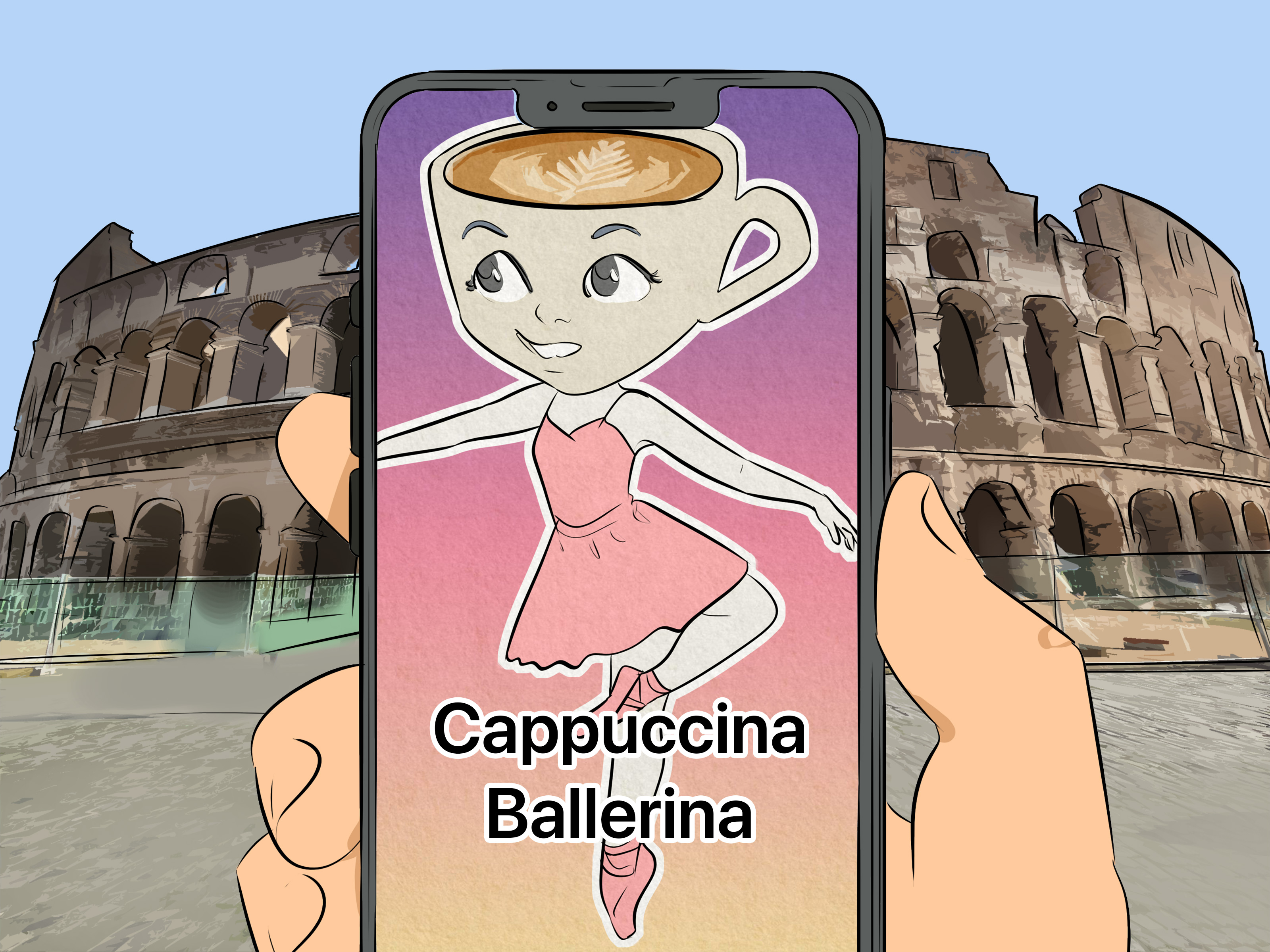
The characters often combine animals with foods, machines, plants, household objects, or clothing. The resulting creatures include a ballerina with a cappuccino cup for a head, a crocodile fused with an aircraft, a banana-chimp hybrid, and an elephant-cactus creature wearing oversized footwear.
Italian brainrot is not a faithful representation of Italian language or culture. It uses Italian sounds, vocal rhythms, food references, and exaggerated stereotypes as ingredients in an international internet joke. Many creators and fans are not Italian, and many character names are invented words rather than meaningful Italian phrases.
Associated characters commonly include:
- Ballerina Cappuccina: A ballerina whose head is a cup of cappuccino.
- Bombardiro Crocodilo: A crocodile combined with a military aircraft.
- Chimpanzini Bananini: A chimpanzee-banana hybrid.
- Lirili Larila: An elephant-cactus creature frequently shown in a desert.
- Brr Brr Patapim: A forest-like creature with oversized feet and a memorable chant.
- Cappuccino Assassino: A coffee-themed assassin character.
The term “brain rot” had already become popular slang for shallow, repetitive, or highly addictive online content. Oxford University Press named “brain rot” its 2024 Word of the Year, reflecting growing discussion about the mental effects of consuming endless low-value media. Italian brainrot cheerfully adopted the label rather than trying to defend itself. It knows it is ridiculous. That self-awareness is part of its charm.
Why Did Tralalero Tralala Become So Popular?
It Is Instantly Recognizable
A strong meme needs to survive the half-second attention test. Tralalero Tralala passes easily. Even without captions or context, a three-legged shark wearing sneakers is difficult to confuse with tax advice or a weather report.
The Name Is Easy to Repeat
“Tralalero Tralala” has rhythm, repetition, and open vowel sounds. People can imitate it even when they do not speak Italian. It behaves like a commercial jingle that escaped from the marketing department and joined a shark cult.
The Format Is Easy to Remix
Creators do not need an expensive camera crew or a complicated plot. They can generate or edit an image, add synthetic narration, introduce dramatic music, and invent a thirty-second story. The character can then be placed in a classroom, boxing ring, hospital, supermarket, video game, or family drama.
It Creates an Inside Joke
Memes often become social passwords. Knowing the characters shows that a person belongs to the group that understandsor at least recognizesthe joke. Saying “Tralalero Tralala” at school may make friends laugh while leaving nearby adults wondering whether their language-learning app has suffered a breakdown.
It Fits Short-Form Algorithms
The clips are brief, visually strange, loud, and easy to replay. Those qualities make them well suited to recommendation feeds that reward immediate attention, repeat viewing, comments, imitations, and remixes.
Reporting on the trend has highlighted its particularly strong appeal among Generation Alpha and younger members of Generation Z. The memes have spread beyond social media into classrooms, music platforms, toys, costumes, fan art, and Roblox experiences.
Is Tralalero Tralala an Example of AI Slop?
Many critics describe Italian brainrot as “AI slop,” a dismissive term for large quantities of cheaply produced AI content made to attract clicks rather than demonstrate careful craftsmanship.
That description is partly fair. The genre relies heavily on synthetic images, automated voices, formulaic editing, and rapid copying. Some accounts appear to produce enormous numbers of nearly identical clips because the format is inexpensive and performs well with young audiences.
However, the audience does more than passively consume the material. Fans create drawings, songs, costumes, games, relationships, family trees, rankings, and detailed lore. A low-effort AI image may become the raw material for surprisingly active human play.
The result sits somewhere between automated content production and collaborative digital folklore. The first image may be generated in seconds, but the shared universe grows because thousands of people keep modifying it.
Why Are Parents and Teachers Concerned?
The shark itself is not the main concern. A sneaker-wearing sea creature is unlikely to overthrow civilization before lunch.
The bigger issues involve context, repetition, and content quality.
First, some original narrations contain profanity, sexual language, religious insults, violence, or references to real-world conflicts. Because the delivery is musical and the audience may not understand Italian, offensive material can sound harmless.
Second, endless short clips can encourage passive scrolling. “Brain rot” is slang rather than a medical diagnosis, but consuming repetitive content for long periods may crowd out sleep, exercise, homework, creative play, and longer forms of attention.
Third, children may encounter copycat videos that are more disturbing than the popular versions their friends showed them. Anyone can reuse a familiar character while adding frightening, graphic, or manipulative material.
A Practical Response for Adults
Adults do not need to declare war on the shark. A calmer response is usually more productive:
- Ask children what they find funny about the videos.
- Check the complete audio instead of judging only the opening phrase.
- Discuss how AI-generated images and voices are made.
- Explain that catchy content may still contain offensive language.
- Set reasonable screen-time boundaries without treating every meme as a crisis.
- Encourage children to turn passive viewing into drawing, storytelling, animation, or parody.
Understanding the reference gives adults a better chance of guiding young viewers. It also prevents the awkward experience of confidently repeating a foreign-language audio at a school event before discovering what the complete version says.
How People Use Tralalero Tralala Online
Today, the phrase can be used in several ways. It may identify the shark character, reference Italian brainrot generally, imitate the original audio, or signal that a situation has become absurd.
Creators commonly use Tralalero Tralala in:
- Character-versus-character battle videos
- AI animations and transformation clips
- Phonk, dance, rap, and electronic music remixes
- “Choose your fighter” rankings
- Roblox games and gaming videos
- Classroom jokes and reaction memes
- Fan-made romances, rivalries, and family stories
- Costumes, toys, stickers, and printable artwork
The meme is flexible enough to work without a setup. Posting the shark beneath a confusing news headline can simply communicate, “Everything is strange now, so here is the appropriate representative.”
Experiencing the Tralalero Tralala Trend in Real Life
The typical first encounter with Tralalero Tralala is not a careful cultural introduction. Nobody sits you down with a presentation titled “The Three-Legged Shark and His Contribution to Twenty-First-Century Folklore.” The meme usually arrives unexpectedly.
You may hear a child chanting the phrase in a grocery store. A friend might send you a clip at midnight without explanation. You may open a social feed looking for a recipe and discover a shark in sneakers fighting a cappuccino ballerina beneath dramatic orchestral music.
The initial reaction is often confusion. The second is curiosity. By the third video, you somehow recognize six characters and have developed an opinion about which one would win a fictional battle.
The Experience of Being Outside the Joke
For adults and less-online viewers, Italian brainrot can feel like arriving late to a party where everyone speaks in passwords. Asking what the meme means may produce the unhelpful answer, “It doesn’t mean anything.” That answer is both correct and incomplete.
The literal story may be nonsense, but the social experience has meaning. Recognizing the chant creates connection. Repeating it at the correct moment earns laughter. Knowing that Tralalero Tralala is the sharknot the ballerina, crocodile, or suspicious piece of wooddemonstrates membership in the group.
This is not dramatically different from older playground rhymes, cartoon catchphrases, or movie quotes. The delivery system has changed. Instead of spreading only through television and schoolyards, the joke travels globally through recommendation algorithms, AI tools, remix accounts, and games.
The Experience of Finally Understanding It
Researching the trend can make it seem simultaneously smarter and sillier.
On one hand, it is exactly what it appears to be: a deliberately ridiculous shark with too many shoes. On the other hand, its success demonstrates how modern memes are built. A memorable sound attracts attention. A surreal visual creates instant recognition. Repetition establishes familiarity. Fan participation adds stories. Algorithms distribute the most engaging variations. Merchants and game developers then convert attention into products.
What appears to be random nonsense is supported by a highly efficient system of cultural production.
The Experience of Sharing It With Children
Watching the trend with children can be more revealing than simply banning it. Young viewers may describe character relationships, repeat elaborate backstories, or explain rules that never appeared in the original clips. Their version of the universe is often partly borrowed and partly invented.
That conversation creates an opportunity to discuss media literacy. Which pictures were generated by AI? Who owns a character created through thousands of remixes? Why does one video receive millions of views while another disappears? How can a pleasant-sounding foreign phrase hide inappropriate language?
These questions turn a bizarre meme into a practical lesson about online culture.
The Experience of Meme Fatigue
Of course, even the funniest shark can wear out his welcome.
Repeated exposure may turn the chant into an unwanted mental soundtrack. The endless variations can begin to feel interchangeable, especially when accounts use the characters only to chase views. At that point, stepping away from the feed is not a rejection of youth culture. It is simply an acknowledgment that your brain deserves content with more nutritional value than a sneaker fish screaming over phonk music.
The healthiest response lies between panic and unlimited consumption. Enjoy the joke, understand the context, recognize when the content becomes repetitive, and remember that closing the app remains one of technology’s most underrated features.
Final Takeaway
Tralalero Tralala is a nonsense, sing-song phrase that became the name of a three-legged, sneaker-wearing AI shark and one of the leading figures in the Italian brainrot trend.
The words themselves are generally harmless. However, the full original audio included profanity and religiously offensive language, so viewers should distinguish the clean catchphrase from the longer recording.
The meme became popular because it is visually unforgettable, easy to imitate, simple to remix, and perfectly designed for short-form platforms. Its chaotic universe also gives fans room to invent characters, rivalries, songs, games, and stories.
Does it contain a deep philosophical message? Probably not. Does it reveal a great deal about AI-generated entertainment, algorithmic culture, generational humor, and the speed at which online communities create shared folklore? Absolutely.
Sometimes a shark in three sneakers is just a shark in three sneakers. On TikTok, however, it can also become an international celebrity.

