
Skincare
Total Solar Eclipse in Tennessee – The Cosmic Weirdness of Solar Eclipse Totality
May
A total solar eclipse is not simply “the Sun goes away for a minute.” That description is technically true in the same way a roller coaster is “a chair with commitment issues.” When Tennessee slipped under the Moon’s shadow during the Great American Eclipse on August 21, 2017, the state became a front-row seat to one of nature’s strangest live performances: daylight dimmed, shadows sharpened, temperatures dropped, birds got confused, people gasped, and the Sun briefly revealed its ghostly crown.
For many viewers, the total solar eclipse in Tennessee was more than an astronomical event. It was a full-body experience. Nashville, parts of Middle Tennessee, and the Great Smoky Mountains were inside the path of totality, giving residents and visitors a rare chance to witness the Sun’s corona with their own eyes. Not through a screen. Not in a science documentary narrated by someone with a suspiciously calming voice. Real sky. Real darkness. Real goosebumps.
This guide explores what made solar eclipse totality in Tennessee so unforgettable, why the experience feels so weird, how the science works, and what travelers, families, photographers, and casual sky-watchers can learn from it.
What Made the Total Solar Eclipse in Tennessee So Special?
The 2017 total solar eclipse crossed the United States from Oregon to South Carolina, and Tennessee was one of the lucky states in the direct path of totality. That means certain Tennessee locations did not just see a partial eclipse; they saw the Moon completely cover the bright face of the Sun.
That distinction matters. A 99% partial eclipse may sound close enough, but in eclipse terms, “almost total” is like “almost winning the lottery” or “almost not dropping your phone in the toilet.” The last 1% changes everything. Only during totality does the sky become dramatically dim, the Sun’s corona appear, and the horizon glow in a strange 360-degree sunset.
In Tennessee, the path of totality stretched across a broad corridor, with places such as Nashville, Gallatin, Lebanon, Cookeville, Crossville, and parts of the Great Smoky Mountains offering memorable viewing opportunities. The duration varied by location, but many viewers had roughly two minutes of totalityshort enough to feel unfair, long enough to rearrange your understanding of the universe.
The Science Behind Solar Eclipse Totality
A total solar eclipse happens when the Moon passes directly between Earth and the Sun and appears large enough in the sky to cover the Sun’s bright disk. The alignment must be precise. The Moon’s shadow has two main parts: the penumbra, where a partial eclipse is visible, and the umbra, where totality occurs.
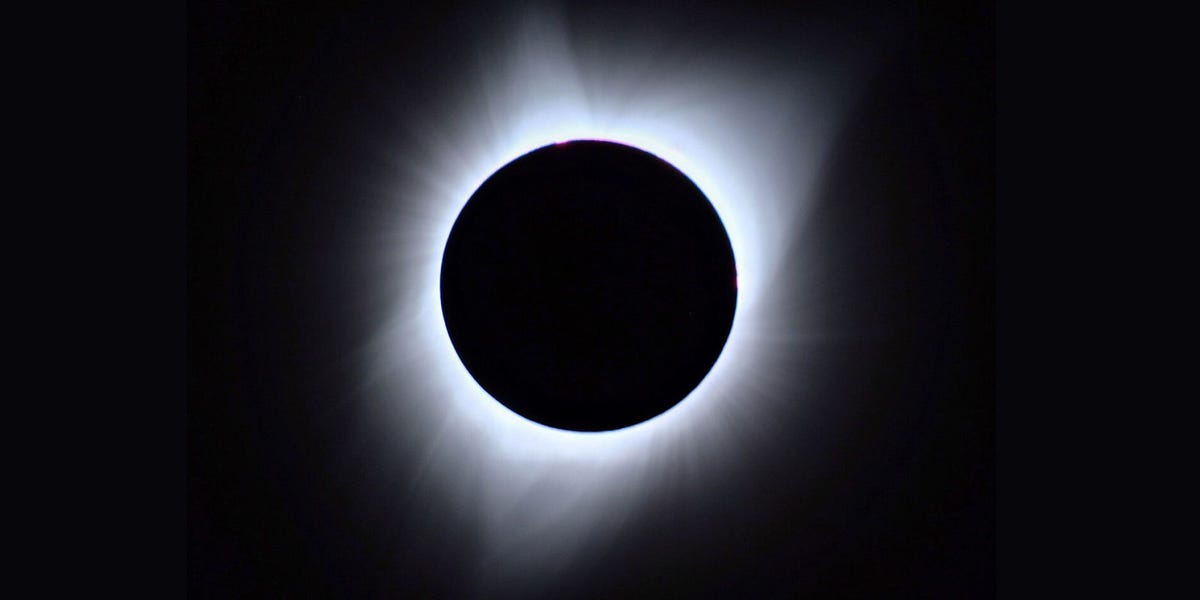
If you are standing inside the umbra, congratulations: you are in the cosmic VIP section. The Sun’s photosphere disappears behind the Moon, and the much fainter outer atmosphere of the Sunthe coronabecomes visible. This is the silver-white halo people describe as delicate, feathery, electric, or “like the universe opened a secret tab.”
Why the Corona Is Such a Big Deal
The corona is always there, but the Sun’s normal brightness overwhelms it. During totality, the Moon acts like a perfectly placed natural shield. Suddenly, the Sun’s outer atmosphere appears as streamers and wisps extending into space. For scientists, eclipses provide opportunities to study the solar atmosphere, solar wind, and magnetic activity. For everyone else, the corona is proof that the sky has been hiding its best jewelry.
Baily’s Beads and the Diamond Ring Effect
Just before totality, sunlight slips through valleys and irregular edges along the Moon’s surface. These points of light are called Baily’s beads. When only one bright point remains, it creates the famous diamond ring effect. It looks like the Moon has suddenly become engaged to the Sun, which is dramatic, expensive-looking, and over in seconds.
These effects are beautiful, but they are also reminders that eye safety matters. During the partial phases before and after totality, viewers must use certified eclipse glasses or safe solar viewers. Regular sunglasses are not enough, no matter how mysterious they make you look.
The Cosmic Weirdness of Totality
The phrase “cosmic weirdness” is not scientific terminology, but it should be. Totality feels strange because several familiar cues collapse at the same time. Daylight fades, but not like sunset. The temperature drops, but not like evening. Shadows sharpen, but the world also looks softer. People cheer, then fall silent, then cheer again because nobody knows the proper etiquette for watching a star disappear.
The Light Turns Strange
One of the first odd sensations is the quality of the light. In Tennessee, many eclipse watchers noticed that the landscape did not simply become darker. It became metallic and surreal. Colors flattened. The blue sky deepened. Trees, lawns, buildings, and faces looked as if someone had adjusted the planet’s contrast setting.
Near totality, shadows can become unusually crisp because the Sun’s visible surface shrinks to a narrow crescent. Leaves on trees may act like thousands of tiny pinhole projectors, scattering crescent-shaped suns across sidewalks, cars, picnic blankets, and bewildered dogs.
The Temperature Drops
As the Moon blocks solar radiation, the air can cool noticeably. NOAA has described eclipse-related temperature drops, especially in the path of totality, where incoming sunlight is dramatically reduced. In Tennessee’s late-August heat, even a modest cooling could feel like the sky briefly turned on the air conditioning and then immediately regretted the utility bill.
Animals Start Acting Like the Day Got Canceled
Birds may quiet down. Insects may begin evening behavior. Farm animals can seem puzzled. Pets may look around as if humans have finally broken daylight. These reactions are not magic; animals respond to changes in light and temperature. Still, hearing birds hush in the middle of the afternoon adds a deep, almost ancient feeling to the event.
Where Tennessee Watched the Eclipse
Tennessee offered a mix of urban, rural, and mountain viewing experiences. That variety made the 2017 eclipse especially memorable. You could watch from a stadium, a small town square, a farm field, a state park, or a high ridge in the Smokies.
Nashville: Music City Meets Moon Shadow
Nashville became one of the most talked-about eclipse cities in the country because it was a major metropolitan area inside the path of totality. Visitors arrived for concerts, science events, rooftop gatherings, and viewing parties. The city’s eclipse moment blended astronomy with festival energy: part science lesson, part outdoor concert, part collective “wait, is this really happening?”
For SEO travelers researching a future eclipse trip, Nashville’s 2017 experience offers a useful lesson: big cities provide hotels, restaurants, transportation, and entertainment, but they also bring crowds and traffic. When the universe schedules a once-in-a-generation event, apparently everyone wants parking.
Great Smoky Mountains National Park
The Great Smoky Mountains offered a very different kind of total solar eclipse experience. Park viewing locations included high-elevation and valley settings, with special planning around sites such as Clingmans Dome and Cades Cove. For many visitors, seeing totality over mountain ridges added an extra layer of drama. The Smokies already look like they were designed by a poet with excellent fog-machine skills. Add totality, and the scene becomes unforgettable.
Mountain eclipse viewing also comes with practical challenges. Clouds can form quickly, roads can become congested, and cell service may be unreliable. The best eclipse plan in the mountains includes patience, water, snacks, backup viewing locations, and the emotional maturity to accept that clouds do not care about your itinerary.
How to View a Total Solar Eclipse Safely
The most important eclipse rule is simple: never look directly at the Sun during the partial phases without proper eye protection. Eclipse glasses should meet the ISO 12312-2 safety standard and come from reliable suppliers. Ordinary sunglasses, smoked glass, exposed film, or “I’ll just squint really hard” are not safe viewing methods.
During the brief period of totality only, when the Sun is completely covered, viewers in the path of totality may look without eclipse glasses. The moment bright sunlight begins to reappear, glasses go back on. If you are unsure whether totality has started or ended, keep the glasses on. Your retinas are charming little things; they deserve caution.
Safe Viewing Tips
- Use certified eclipse glasses or a handheld solar viewer during all partial phases.
- Inspect glasses for scratches, tears, or damage before using them.
- Do not look through cameras, telescopes, or binoculars at the Sun unless they have proper solar filters.
- Supervise children closely, especially during the exciting moments before totality.
- Use pinhole projection if you do not have safe eclipse glasses.
Photography Tips for Capturing Eclipse Totality
Photographing a total solar eclipse is thrilling, but it can also become a trap. Many people spend the entire event fighting camera settings and miss the actual sky. The best advice is to practice before eclipse day and automate as much as possible.
During partial phases, cameras need proper solar filters. During totality, the filter can be removed briefly to capture the corona, but timing matters. A tripod, remote shutter, and bracketed exposures can help. Wide-angle shots that include people, landscape, and horizon glow often tell a better story than a tiny white dot in a black sky.
Still, every eclipse photographer should make one sacred promise: look up with your own eyes during totality. The camera can have a turn. The soul gets one too.
Planning a Future Eclipse Trip Inspired by Tennessee
Tennessee’s 2017 eclipse taught travelers several lessons that apply to any future total solar eclipse. First, get into the path of totality. Not near it. Not “close enough.” Inside it. Second, choose a location with mobility if weather is uncertain. Third, arrive early and expect traffic after the event. A two-minute eclipse can create a four-hour parking lot opera.
It is also wise to book lodging early, pack food and water, download maps offline, and bring extra eclipse glasses. Small towns and parks can become temporary astronomy capitals, and local resources may be stretched. A good eclipse plan balances excitement with practicality.
Why Totality Feels Emotional
People often underestimate how emotional a total solar eclipse can be. Even skeptical viewerspeople who arrive saying, “It’s just a shadow”may find themselves cheering, crying, laughing, or standing quietly with their mouth open like a very philosophical trout.
Part of the emotion comes from rarity. Part comes from scale. A total solar eclipse makes the solar system feel suddenly mechanical and intimate. You can see celestial motion happening in real time. The Moon, Sun, and Earth line up with such precision that daylight vanishes from your specific patch of ground. It is both enormous and personal.
In Tennessee, that emotional effect was amplified by place. Watching totality above downtown Nashville, over open farmland, or from the Smoky Mountains connected the cosmic event to familiar landscapes. The ordinary world became extraordinary for a few minutes, then returned as if nothing had happened. Except something had happened. Everyone who saw it knew.
Common Myths About Solar Eclipse Totality
Myth 1: A Partial Eclipse Is Basically the Same as Totality
Nope. A partial eclipse can be interesting, but totality is a different experience. The corona, dramatic darkness, and full sensory weirdness only happen inside the path of totality.
Myth 2: Eclipses Are Dangerous to Be Outside In
Being outside during an eclipse is not dangerous. Looking directly at the uneclipsed or partially eclipsed Sun without proper protection is dangerous. With safe viewing practices, an eclipse is a spectacular outdoor event.
Myth 3: You Can Use Regular Sunglasses
Regular sunglasses do not provide enough protection for direct solar viewing. Certified eclipse glasses are designed to block intense visible, ultraviolet, and infrared radiation.
Myth 4: Totality Lasts a Long Time
Totality is brief. In Tennessee, many locations had only about two minutes. That is why planning mattersand why people immediately start chasing the next eclipse.
Experiences Related to the Total Solar Eclipse in Tennessee
Ask someone who watched the total solar eclipse in Tennessee what it was like, and you may notice a pause before they answer. That pause is doing a lot of work. Totality is difficult to describe because it feels less like watching something and more like being included in something. The sky does not perform at a distance. It surrounds you.
Imagine standing in a Tennessee field on a warm August afternoon. At first, the scene is normal: cicadas buzzing, people chatting, someone adjusting a camera tripod with the seriousness of a surgeon, children asking every 45 seconds whether it has started yet. Through eclipse glasses, the Sun looks like a cookie with a bite taken out of it. The bite grows. The air begins to cool. The light becomes thin and silvery. People who were joking a few minutes earlier start speaking more softly.
Then the final sliver of sunlight breaks into beads. A diamond flashes at the Moon’s edge. Suddenly, the glasses come off, and there it is: a black circle where the Sun should be, surrounded by the pale, streaming corona. The horizon glows in every direction, as if sunset got confused and decided to show up everywhere at once. For a moment, the world feels paused. Nashville, the Smokies, the farms, the highways, the rivers, the porchesall of Tennessee under a cosmic dimmer switch.
In the Great Smoky Mountains, the experience carried a wilderness flavor. The ridgelines darkened. The valleys seemed to inhale. Viewers at open sites could see the landscape change in layers, with the shadow altering not just the sky but the mood of the mountains themselves. The Smokies are already famous for atmospheric beauty, but totality added a rare sense of scale. The mountains felt old; the eclipse felt older.
In Nashville, the mood was more communal. People gathered in parks, on rooftops, outside offices, and at viewing parties. For two minutes, traffic, deadlines, inboxes, and ordinary city noise lost their authority. Strangers reacted together. Some cheered. Some cried. Some forgot every intelligent sentence they had prepared and simply said, “Whoa,” which, under the circumstances, was Pulitzer-level commentary.
One of the most memorable parts of totality is what happens immediately afterward. The Sun returns with a brilliant flash, and daylight pours back into the world. Birds resume. People clap, laugh, hug, or check their photos with trembling hands. The event is over, but it does not feel finished. It lingers in the body like music after a concert.
That is why Tennessee’s total solar eclipse became more than a date on an astronomy calendar. It became a story people tell. It reminded viewers that the universe is not just something “out there.” Sometimes it steps directly over your town, turns off the lights, shows you the Sun’s hidden crown, and leaves before you can fully believe it happened.
Conclusion: Tennessee and the Strange Gift of Totality
The total solar eclipse in Tennessee was a rare combination of science, spectacle, travel, weather, emotion, and beautifully organized cosmic weirdness. It showed why totality has such a powerful reputation among astronomers and everyday sky-watchers alike. The Moon’s shadow did not simply pass over Tennessee; it transformed familiar places into unforgettable viewing stages.
Whether you watched from Nashville, the Great Smoky Mountains, a small-town parking lot, or a quiet backyard, the lesson was the same: totality is worth planning for. It is worth traveling for. It is worth pausing your normal day and looking up safely. Because every so often, the solar system reminds us that wonder is not extinct. It is just waiting for the right alignment.

