
Body Care
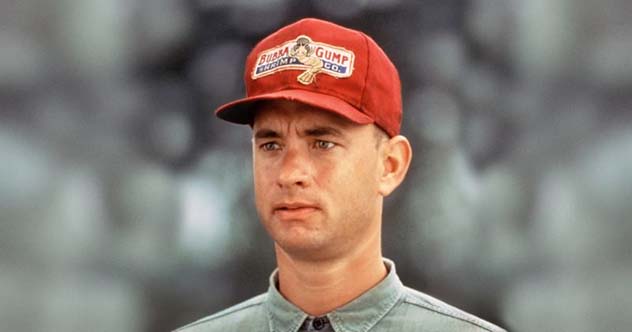
Top 10 Real Life Forrest Gumps
Aug
Some people seem to collect unbelievable life chapters the way other people collect grocery-store loyalty points. They run across countries, survive the impossible, serve strangers, hike until their boots surrender, or simply decide that retirement is an excellent time to start doing Ironman triathlons.
These real-life Forrest Gumps are not being compared to a fictional character because of intelligence, disability, or trauma. That would be lazy writing wearing a cheap mustache. The comparison is about something better: openhearted persistence, accidental-looking courage, and the ability to keep moving when life gets weird, steep, loud, rainy, or all four at once.
Here are 10 remarkable people whose true stories prove that history is often stranger, kinder, and far more determined than fiction.
What Makes Someone a Real-Life Forrest Gump?
A real-life Forrest Gump is not necessarily the fastest athlete, the smartest strategist, or the person with the most followers. Usually, they are someone who starts with a simple purpose and refuses to quit when the plan becomes inconvenient. Sometimes that purpose is helping others. Sometimes it is honoring the past. Sometimes it is just putting one foot in front of the other until the whole country is behind them.
These inspirational true stories share a few traits: resilience, humility, endurance, service, curiosity, and a willingness to begin before everything feels perfectly organized. In other words, they do not wait for a motivational quote to appear on a ceramic mug. They get moving.
10 Real-Life Forrest Gumps Who Kept Going
1. Louis Zamperini: The Olympic Runner Who Would Not Break
Louis Zamperini’s life had enough plot twists to make a Hollywood screenwriter nervously reach for a highlighter. He competed for the United States in the 5,000 meters at the 1936 Berlin Olympics, where he became known for a stunning final lap. Then World War II arrived, and the runner became an Army Air Forces bombardier.
After his plane crashed in the Pacific in 1943, Zamperini survived for more than a month on a life raft before being captured by Japanese forces. He endured brutal imprisonment during the war, returned home, and eventually became known for speaking publicly about forgiveness and perseverance. His story was not merely about surviving extraordinary events. It was about refusing to let suffering become the final author of his life.
Forrest Gump ran because he felt like it. Zamperini ran, survived, and rebuilt because surrender simply was not his favorite hobby.
2. Desmond Doss: The Medic Who Saved Lives Without Carrying a Weapon
Desmond Doss entered World War II as a conscientious objector who refused to carry a rifle because of his religious convictions. That decision made him a target of ridicule during training. Some fellow soldiers assumed he did not belong in combat. They were spectacularly wrong.
During the Battle of Okinawa, Doss remained under intense fire to treat wounded soldiers on Hacksaw Ridge. He lowered injured men down a cliff one at a time using a rope-supported litter, ultimately helping save approximately 75 soldiers. He received the Medal of Honor, becoming the only conscientious objector to earn the award during World War II.
Doss was not trying to look heroic. He was trying to help the next person in front of him. That kind of calm courage is the real-life Forrest Gump energy: no grand speech, no dramatic pose, just “one more person” until the impossible becomes history.
3. Terry Fox: The Young Runner Who Turned Pain Into Hope
Terry Fox lost part of his right leg to cancer as a teenager, but he refused to let that diagnosis shrink his world. In 1980, he began the Marathon of Hope, planning to run across Canada and raise money for cancer research.
Using a prosthetic leg, Fox ran for 143 days and covered 3,339 miles before cancer forced him to stop near Thunder Bay, Ontario. He died the following year at age 22, but his mission did not stop with him. Annual Terry Fox Runs have continued for decades, raising more than a billion dollars for cancer research worldwide.
Fox’s achievement was not about pretending pain did not exist. It was about carrying purpose alongside pain. His story remains one of the clearest examples of how a single determined person can turn a private struggle into public hope.
4. Ernie Andrus: The 93-Year-Old Who Ran Across America
Most people celebrate their 93rd birthday with cake, family, and perhaps a chair that reclines. Ernie Andrus celebrated by reaching the Atlantic Ocean after running across the United States.
A World War II veteran, Andrus began his coast-to-coast journey in California in 2013 and completed it in Georgia nearly three years later. His goal was to raise money to help restore a World War II-era landing ship and return it to Normandy for the anniversary of D-Day.
Andrus did not move at the speed of a professional marathoner, and that was never the point. He moved steadily. His story reminds us that endurance is not always loud or fast. Sometimes it looks like a senior citizen jogging down a roadside with a mission, proving that the phrase “too late” is often just fear wearing a calendar.
5. Emma “Grandma” Gatewood: The Hiker Who Made History in Sneakers
In 1955, Emma Gatewood became the first woman known to complete a solo thru-hike of the Appalachian Trail. She was 67 years old, had raised 11 children, survived an abusive marriage, and packed far lighter than most modern hikers would dare.
Grandma Gatewood carried basic supplies, an Army blanket, simple clothing, and enough stubbornness to power a small town. She hiked roughly 2,050 miles from Georgia to Maine, helping introduce the public to long-distance hiking and inspiring generations of women to take the outdoors seriously.
Her story has all the elements of a perfect real-life Forrest Gump adventure: a simple plan, a long road, strangers along the way, and a person who kept walking while everyone else wondered whether she had lost her mind. She had not. She had found a trail.
6. Dick and Rick Hoyt: The Father-Son Team That Redefined Finish Lines
Dick Hoyt began racing because his son Rick, who had cerebral palsy and used a wheelchair, wanted to participate in a charity run. What began as one five-mile event grew into one of the most moving endurance partnerships in sports.
Over the years, Team Hoyt completed more than 1,000 races, including dozens of Boston Marathons and hundreds of triathlons. Dick pushed Rick in a wheelchair during runs, pulled him in a boat during swims, and carried him on a specially adapted bicycle during cycling events.
Their story was not about pity. It was about partnership, inclusion, and the radical idea that someone should not be excluded from adventure because the world has not designed enough ramps. Team Hoyt showed that sometimes the strongest person in a race is not the one crossing the finish line alone.
7. Bessie Stringfield: The Motorcycle Queen Who Followed the Road
Bessie Stringfield was a Black woman riding alone across America in the 1930s and 1940s, which was about as easy as trying to order oat milk at a roadside diner in 1932. She taught herself to ride as a teenager and went on to complete eight solo cross-country motorcycle journeys.
Known as the Motorcycle Queen of Miami, Stringfield traveled through a country shaped by segregation, sexism, and real physical danger. She also served as a civilian motorcycle dispatch rider for the U.S. Army during World War II.
One story says she would drop a penny onto a map and ride wherever it landed. Whether traveling for freedom, work, or pure joy, she made the road her own. Bessie Stringfield did not wait for society to hand her permission. She climbed on a motorcycle and made permission eat her dust.
8. Earl Shaffer: The Veteran Who Walked Off the War
In 1948, Earl Shaffer became the first person widely credited with hiking the entire Appalachian Trail in one continuous journey. He completed the roughly 2,050-mile route from Georgia to Maine after returning from World War II.
Shaffer reportedly wanted to “walk off the army,” a phrase that captures how many veterans sought peace after the chaos of war. He traveled with limited equipment, improvised maps, and a deep need to reconnect with the natural world.
His journey helped create the modern idea of the Appalachian Trail thru-hiker: someone willing to leave ordinary routines behind, live simply, and discover that a long path can teach lessons no classroom ever could. It is hard to imagine a more Forrest Gump-like solution to grief than walking until the country finally starts to feel quiet again.
9. Fauja Singh: The Centenarian Marathoner Who Started Late
Fauja Singh did not become famous for running until later in life. He began long-distance running at age 89 after personal loss and eventually became internationally known as the “Turbaned Torpedo.”
He completed marathons in London, Toronto, and New York, including a full Toronto marathon at age 100. Guinness World Records did not formally certify the age-based claim because birth documentation was unavailable, but the accomplishment itself still inspired runners worldwide. Singh retired from competitive running after his final marathon at age 101 and died in 2025 at age 114.
His real lesson was not that everyone should immediately sign up for 26.2 miles. Your knees may file a complaint. It was that a new beginning does not need to arrive before a certain birthday. It can show up when you are ready to lace up your shoes.
10. Sister Madonna Buder: The Iron Nun Who Refused to Act Her Age
Sister Madonna Buder, better known as the Iron Nun, began running in her late 40s and entered her first triathlon in her early 50s. Then she kept going, because apparently one endurance sport was not enough paperwork for her schedule.
By her mid-80s, Buder had completed hundreds of triathlons, including more than 45 Ironman-distance events. An Ironman is not a casual morning stroll: it combines a 2.4-mile swim, a 112-mile bike ride, and a full marathon run.
Her story challenges the idea that aging is a slow retreat from ambition. Buder treated movement as gratitude, discipline, and a way to stay fully engaged with life. She did not race to prove she was younger than everyone else. She raced to prove that life still had more road ahead.
The Shared Lesson: Keep Moving, But Know Why
The best real-life Forrest Gump stories are not really about running, hiking, cycling, or motorcycles. They are about purpose. Terry Fox ran for cancer research. Ernie Andrus ran to honor wartime history. Desmond Doss stayed behind to save wounded men. Dick Hoyt raced so his son could feel the wind, the crowd, and the finish line.
Movement becomes meaningful when it points beyond the self. A person does not need to cross a continent to live this lesson. They may start a community project, care for a neighbor, train for a local 5K, learn a new skill after retirement, or keep showing up for someone they love. Great journeys are usually built from ordinary steps repeated with uncommon heart.
Experiences Inspired by Top 10 Real Life Forrest Gumps
Reading about extraordinary endurance can make everyday life feel a little too comfortable. Suddenly, folding laundry seems less dramatic when a 93-year-old veteran has jogged across the country, and your excuse for skipping a walk becomes “the couch looked emotionally available.” That does not mean everyone needs to launch a marathon, buy a motorcycle, or hike into the wilderness with an Army blanket. It means we can borrow the mindset behind these remarkable journeys.
Start with a small personal expedition. Walk a new neighborhood without headphones. Take a bike ride somewhere you usually drive. Visit a local historical site and learn one story that never made it into your school textbooks. The goal is not to become a legendary adventurer by Tuesday. The goal is to notice that your world is bigger than your usual routine.
Try doing one difficult thing for a reason beyond yourself. Sign up for a charity walk, help clean a park, volunteer at an event, or raise money for a cause that matters to someone you know. The real-life Forrest Gumps in this article did not move only to collect medals or headlines. Their effort often became more powerful because it served a larger purpose.
Another useful experience is practicing beginner courage. Learn something you are bad at. Take a swimming lesson, join a walking group, try a beginner yoga class, or learn basic bike repair. Sister Madonna Buder did not begin life as the Iron Nun. Fauja Singh did not wake up at 89 already prepared for marathon fame. Everyone starts awkwardly. That is the entry fee.
Consider creating a “keep going” ritual. It could be a morning walk, a weekly call to a family member, a journal entry after a hard day, or a calendar reminder that says, “Progress counts even when it is boring.” Real endurance is rarely glamorous. It is a collection of ordinary choices made repeatedly when nobody is applauding.
You can also build your own version of Team Hoyt thinking. Invite someone into an experience they might otherwise miss. Bring a friend to an event, help a relative use technology, offer a ride, or plan an outing with accessibility in mind. Adventure becomes richer when it is shared, especially when sharing requires a little effort.
Finally, give yourself permission to take the scenic route once in a while. Bessie Stringfield followed roads because she loved the freedom of movement. Grandma Gatewood walked because the trail called to her. Earl Shaffer found peace one mile at a time. You may not need a continent, a mountain, or a triathlon. Sometimes a new path home is enough to remind you that life is still happening outside the usual lane.
Conclusion: Ordinary Steps Can Create Extraordinary Stories
The top 10 real-life Forrest Gumps prove that remarkable lives are not always planned with color-coded spreadsheets and inspirational background music. Sometimes a person simply chooses to help, heal, walk, ride, run, or continue when stopping would be easier.
Louis Zamperini, Terry Fox, Desmond Doss, Grandma Gatewood, Team Hoyt, and the others did not share identical lives. What they shared was a refusal to let fear, age, hardship, or public opinion dictate the size of their journey. Their stories remind us that persistence is not glamorous every day, but it can become unforgettable over time.
So take the next step. It does not have to be dramatic. It just has to be yours.

