
Beauty Tools & Accessories
This Woman’s Flight Was Canceled For 4 Hours, So She Decided To Entertain Herself By Dancing In An Airport With A Cat
May
Note: This article is written in original, publish-ready American English and contains no source links in the body, as requested.
Airports have a special talent for turning fully functional adults into tired philosophers. One minute, you are a confident traveler with a boarding pass, a coffee, and a playlist. The next, you are staring at the departure board like it personally betrayed your bloodline. A delayed or canceled flight can make even the calmest passenger consider buying a neck pillow, a $17 sandwich, and a new identity.
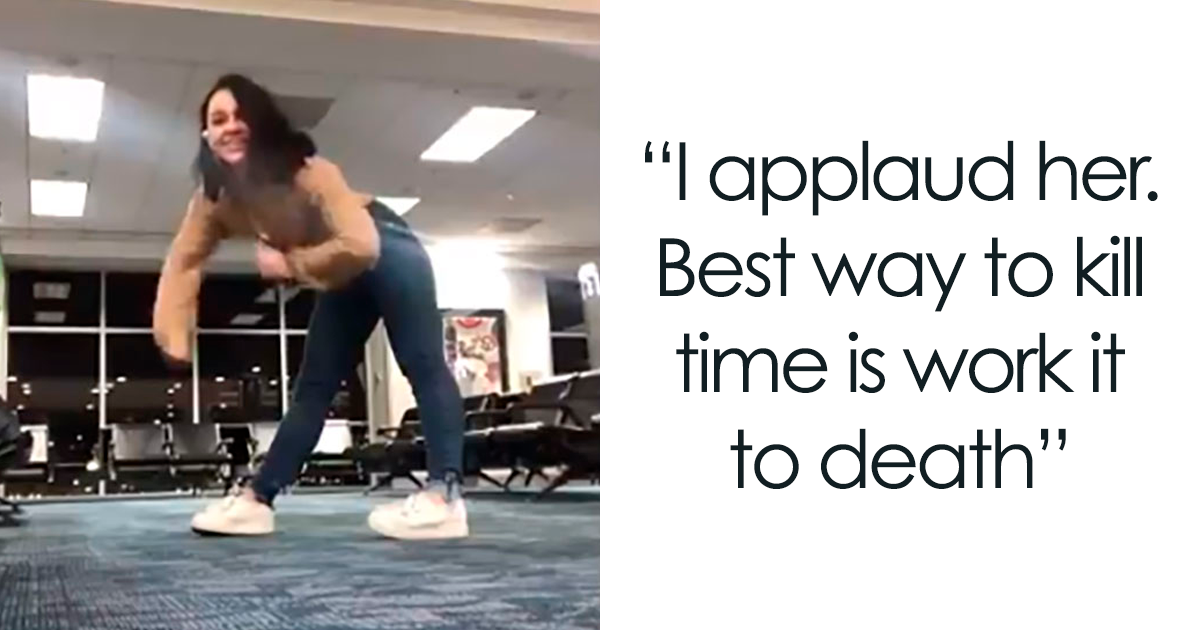
But one woman decided not to surrender to the fluorescent-light misery of airport waiting. When Katie Gould, a law student from Atlanta, faced a four-hour airport wait, she did what most stranded travelers only dream of doing after their third lap around the terminal: she turned the airport into her own dance floor. Even better, her cat made an appearance, instantly raising the entertainment value from “cute travel video” to “internet treasure with whiskers.”
The result was a cheerful, music-video-style airport dance set to “You Make My Dreams” by Hall & Oates. It had movement, confidence, empty terminal space, a little public participation, and one impressively patient feline. In a world where travel disruptions often lead to groaning, doom-scrolling, and dramatic sighs aimed at gate agents who did not personally control the weather, Katie’s response felt refreshing. She did not beat the delay. She out-danced it.
When a Four-Hour Flight Delay Becomes a Stage
The viral moment worked because it flipped the usual airport-delay script. Most passengers treat a long wait as a punishment. Katie treated it like an opening scene. Instead of sitting under a departure screen and watching time crawl by like a sleepy turtle, she made a dance video throughout the airport. The terminal became a backdrop. The moving walkways, seating areas, open corridors, and airport staff became part of the atmosphere.
There is something especially funny about dancing in an airport because airports are designed for movement, but not joy. People hurry, shuffle, sprint, drag suitcases, chase toddlers, and silently negotiate armrest territory. Dancing interrupts that seriousness. It says, “Yes, my flight is a mess, but my mood does not have to check itself into baggage claim.”
Katie’s video also succeeded because it was not overly polished. That is part of its charm. It felt spontaneous, slightly ridiculous, and completely human. The best viral airport stories usually have that same ingredient: a person in an inconvenient situation choosing humor over helplessness. It is the travel version of making lemonade, except the lemons cost $9.50 and came from an airport kiosk.
Who Is Katie Gould, and Why Did Her Airport Dance Go Viral?
Katie Gould was described as a law student from Atlanta who had to wait several hours for her flight. Rather than disappear into the usual airport survival routine of snacks, chargers, and mild existential panic, she recorded herself dancing around the terminal. The song choice, “You Make My Dreams,” helped set the tone: upbeat, playful, and impossible to hear without at least tapping one foot under a chair.
Her video spread because it offered a tiny antidote to one of the most universal travel frustrations: being stuck. Almost everyone who flies has had some version of the same experience. The delay announcement comes over the speaker. The departure time changes. Then it changes again. People begin forming unofficial tribes around available outlets. Someone opens a bag of chips loudly enough to be heard in another time zone. Spirits drop.
Katie did the opposite. She turned the waiting period into a performance. That made the video feel less like a travel complaint and more like a mini celebration of creativity under pressure. It was not just “woman dances in airport.” It was “woman refuses to let a bad travel day win.” That is a much better headline for the human spirit, and frankly, it comes with better choreography.
The Cat Cameo That Stole the Show
Of course, the internet loves dancing. It loves airports. It loves chaotic travel stories. But add a cat, and suddenly you have a four-legged executive producer with built-in viral marketing skills. In Katie’s video, the cat became the moment many viewers remembered most. Not because the cat performed an elaborate routinealthough the world remains emotionally ready for thatbut because it looked calm, patient, and mildly unimpressed, as cats often do when humans are being deeply human.
The cat’s presence also sparked conversation. Some viewers wondered how a cat could remain so relaxed in an airport. Others admired the trust between traveler and pet. Anyone who has tried to put a cat into a carrier knows this is not a small detail. Many cats treat carriers like portals to betrayal. A calm airport cat is practically a tiny Zen master in fur.
Still, the moment is a reminder that traveling with pets requires planning. Cats and dogs may be allowed in airplane cabins by many airlines, but the rules are strict. Pet carriers usually must fit under the seat, animals must remain secured according to airline policies, and travelers need to understand both airport screening procedures and airline requirements before arriving at the terminal.
The Serious Side of a Funny Flight Cancellation Story
It is easy to laugh at a travel delay once someone turns it into a dance video. But behind the humor is a very real issue: flight disruptions are stressful, expensive, and confusing. A canceled flight can create missed connections, hotel problems, lost work time, ruined vacations, and the special kind of emotional fatigue that comes from hearing, “We appreciate your patience,” while your patience is already boarding another airline.
In the United States, passenger rights depend on the situation. If a flight is canceled or significantly changed and the passenger does not accept the alternative transportation offered, a refund may be available. However, airlines are not automatically required to compensate domestic travelers simply because a flight is delayed or canceled. Meals, hotel rooms, travel credits, and other amenities often depend on the airline’s own commitments, especially when the disruption is within the airline’s control.
That is why travelers should know what to do before frustration takes over. First, check the airline app and email notifications. Second, speak with airline staff politely but directly. Third, ask what options are available: rebooking, refund, meal voucher, hotel accommodation, or travel credit. Fourth, document everything. Screenshots, confirmation numbers, receipts, and written explanations can help if you need to file a claim later.
What To Do When Your Flight Is Delayed or Canceled
If your flight is disrupted, the best move is to act quickly without turning into the main character of a terminal meltdown. Open the airline app and look for rebooking options immediately. Sometimes the app moves faster than the customer service line. If you are traveling with others, have one person stand in line while another calls customer service or checks online alternatives.
Next, find out why the flight was delayed or canceled. Weather, air traffic control, mechanical issues, crew scheduling, and airline operations can affect what the carrier may offer. If the disruption is controllable, some airlines may provide meals, hotel stays, or ground transportation. If it is uncontrollable, such as severe weather, options may be more limited.
Also consider nearby airports. If you are in a major hub like Atlanta, Dallas, Chicago, New York, or Los Angeles, alternate routing may exist. Flexibility can matter. A later nonstop might be better than a rushed connection. A next-morning flight might beat a red-eye with three layovers and a spiritual crisis in Terminal B.
Finally, protect your mood. A delay is annoying, but anger rarely speeds up aircraft maintenance. Use the extra time strategically. Eat a real meal, refill your water bottle, charge your devices, stretch, review your travel documents, or call someone who needs an update. And if you feel inspired to dance, choose a low-traffic area and avoid blocking walkways. The goal is joy, not becoming a safety announcement.
Traveling With a Cat: Cute, Complicated, and Worth Planning
Katie’s video made flying with a cat look adorable, but pet travel is not something to improvise. Airlines often limit the number of pets allowed in the cabin, require advance booking, charge a fee, and enforce size and carrier rules. Many policies require the pet to remain inside the carrier while in the airport and onboard the aircraft, except during security screening or in designated pet relief areas.
Security screening is another important step. Travelers should not send pets through X-ray machines. The carrier is screened separately, while the traveler maintains control of the animal. For cats, that can be tricky. A nervous cat in a noisy airport may decide the best place to be is anywhere except your arms. A harness, leash, familiar carrier, and calm handling can make the process safer.
For anxious animals, travelers should speak with a veterinarian before the trip. Some pets are not ideal candidates for air travel, especially if they are elderly, ill, extremely stressed, or have breathing risks. Sedation should never be guessed at or handled casually. Pet owners need professional advice, not a last-minute internet search performed at 2 a.m. while the cat glares from inside the suitcase.
How To Make an Airport Wait Easier With a Pet
If you are stuck in an airport with a cat or dog, your priority should be comfort and control. Keep your pet secure. Find a quieter area away from heavy foot traffic. Check whether the airport has a pet relief area. Keep water available according to your pet’s needs and airline rules. Avoid letting strangers crowd your animal, even if your pet looks adorable enough to have its own fan club.
A delay can be harder on animals than humans because pets do not understand boarding announcements, gate changes, or why everyone suddenly forms a line and then sits back down. Familiar smells can help. A soft blanket, a known carrier pad, or a small item from home may reduce stress. Keep your own energy calm too. Pets often read their owner’s tension, and airports already provide enough drama without you adding interpretive panic.
Most importantly, do not copy every viral moment literally. Katie’s cat appeared calm, but not every cat wants to become an airport celebrity. Some cats would rather file a formal complaint with the airline, the airport, and possibly the moon. Know your pet’s temperament and choose safety over content.
Why Dancing Helps When Travel Goes Wrong
There is a reason Katie’s reaction felt so satisfying. Movement can change the emotional temperature of a bad situation. Dance is playful. It uses the body when the brain is stuck in a loop of “What now?” It gives the traveler something to control when the airline schedule is beyond reach.
You do not need to film a full music video to get the benefit. A walk through the terminal, a few stretches near an empty gate, or a quiet playlist can help reset your nervous system. Airports encourage stillness in uncomfortable chairs, but bodies are not designed to sit hunched over luggage for hours. Even light movement can make a long delay feel less like a trap.
There is also a social element. Katie’s video reportedly included moments where others appeared to join in or react positively. That matters because delays can make airports feel lonely, even when surrounded by hundreds of people. A little shared humor turns strangers back into humans. Suddenly, the airport is not just a holding pen with pretzels. It is a temporary community of people trying to get somewhere.
What Travelers Can Learn From Katie Gould’s Viral Airport Dance
The lesson is not that every delayed passenger should start dancing with a cat. Airport security probably does not need 300 people reenacting a musical near Gate C12. The real lesson is that attitude can change the story. Katie did not control the delay, but she controlled her response. That is the part people connected with.
Travel has a way of exposing our default settings. Some people complain. Some people sleep. Some people buy suspiciously expensive trail mix. Some people make art. The best travelers are not the ones who never face problems; they are the ones who adapt without losing their sense of humor.
Her video also shows why small, authentic moments travel so far online. It did not need a studio, a production crew, or a celebrity cameo. It needed a real inconvenience, a fun idea, a good song, and a cat with the emotional range of a seasoned airport lounge member. That combination made the story memorable.
How To Entertain Yourself During a Long Airport Delay
If you find yourself stuck for hours, take inspiration from Katie without necessarily turning the terminal into Broadway. Start with a practical reset. Check your flight status, confirm your gate, and make sure you understand your rebooking options. Once the essentials are handled, give yourself permission to stop staring at the screen every six seconds. It will not change faster because you glare with commitment.
Walk the terminal. Explore public art displays. Make a photo challenge. Create a playlist for your destination. Journal the weirdest things you overhear, while keeping it kind. Call someone you have been meaning to catch up with. Read the book you packed specifically so it could feel ignored. Stretch your legs. People-watch. Airports are basically museums of human behavior, except everyone is carrying a backpack and pretending not to be tired.
If you are traveling with children, turn the delay into small missions: find three airplane logos, count rolling suitcases, draw the airport, or choose the best snack. If you are traveling with a pet, keep the activity calmer. Your cat does not need a scavenger hunt. Your cat needs security, quiet, and the reassurance that no one is about to put it through an X-ray machine.
The Bigger Meaning Behind a Woman Dancing in an Airport With a Cat
At first glance, this story is simply funny. A woman had a long airport wait, danced through the terminal, and held a cat. End of story. But the reason it keeps attracting attention is deeper than that. It captures a modern travel truth: delays are common, control is limited, and mood matters.
Air travel asks passengers to trust complicated systems. Aircraft, crew schedules, weather patterns, security procedures, maintenance checks, airport traffic, and federal rules all intersect before a plane ever leaves the gate. When one piece slips, passengers feel the impact. That helplessness is frustrating. Katie’s dance was a small rebellion against helplessness.
It also felt generous. Instead of adding more anger to an already tense environment, she added levity. That does not erase the inconvenience, but it changes the atmosphere. In a crowded airport, one person’s mood can ripple outward. A smile, a joke, a dance, or even a calm response at the counter can make the shared space a little easier for everyone.
Experience Section: What a Four-Hour Airport Wait Can Teach You
Anyone who has lived through a long airport delay knows that time behaves differently inside a terminal. The first hour feels manageable. You tell yourself, “No problem, I am flexible.” You buy coffee. You check messages. You pretend this is a bonus productivity window. By the second hour, your optimism begins to wobble. By the third, you have memorized the gate carpet pattern and developed strong opinions about strangers’ speakerphone habits. By the fourth, you are either emotionally defeated or ready to become the most interesting person in the concourse.
That is what makes Katie Gould’s dancing-with-a-cat response so relatable. Most travelers have felt trapped by circumstances they cannot control. A delay is not just lost time; it is suspended time. You are not at home, not at your destination, and not fully relaxed. You are in travel limbo, guarding your bags like a dragon guarding treasure and listening for announcements that may or may not apply to you.
One useful lesson from this story is to bring your own entertainment plan. Do not depend on the airport to amuse you. Download music, podcasts, movies, or books before you leave. Pack headphones, a charger, a backup battery, and snacks that do not require a mortgage. If you are traveling with a pet, pack pet essentials with the same seriousness: documents, wipes, a familiar blanket, collapsible water supplies if appropriate, and any veterinarian-approved comfort items.
Another lesson is to choose your delay personality before the delay chooses one for you. Some passengers become detectives, trying to solve the delay through rumors. Some become philosophers, wondering why humanity ever left the ground. Some become snack goblins. But the best option is to become adaptable. Take care of the practical details, then find a way to make the time less miserable.
Dancing may not be your thing. Maybe your version is walking every concourse, writing postcards, editing vacation photos, stretching quietly, or making a silly travel diary. The point is not performance. The point is agency. A long airport wait can make you feel powerless, but small choices return a sense of control. Katie’s airport dance was funny because it was unexpected, but it was also smart. She transformed dead time into a story worth telling.
And then there is the cat. Traveling with a calm cat may sound like carrying a tiny miracle in a carrier, but the deeper takeaway is preparation. A relaxed pet usually reflects planning, familiarity, and an owner who knows the animal’s limits. If your cat would rather summon thunder than dance in public, respect that. Not every pet is built for viral fame. Some are built for quiet corners, soft carriers, and judging humanity from a safe distance.
Conclusion
Katie Gould’s four-hour airport wait could have become just another frustrating travel story. Instead, she turned it into a joyful little reminder that delays do not have to drain every ounce of personality from the day. By dancing through the airport and sharing a charming cat cameo, she gave the internet something better than another complaint: a playful example of resilience.
The story works because it blends humor with a universal experience. Flights get delayed. Plans change. Airports test patience. But travelers still get to decide how they respond. Sometimes the best answer is to know your rights, check your rebooking options, care properly for your pet, and protect your peace. And sometimes, when the terminal is quiet and the playlist is right, the best answer is to dance like the departure board is not the boss of you.

