
Beauty Tools & Accessories
The Wild World of Yield Chasing
Jul
Yield chasing sounds innocent at first. Who would not want more income from their money? A higher dividend, a juicier bond coupon, a shiny money market yield, or a “special opportunity” promising cash flow can feel like finding an extra fry at the bottom of the bag. Delightful. Unexpected. Possibly covered in risk.
In investing, yield is the income an asset produces compared with its price. It may come from bond interest, stock dividends, savings accounts, certificates of deposit, real estate investment trusts, preferred shares, closed-end funds, or structured products. Yield itself is not the villain. Reliable income can be a smart part of a long-term financial plan. The wild part begins when investors stop asking, “Is this return worth the risk?” and start asking only, “How high is the number?”
That is the heart of yield chasing: moving money toward the biggest advertised payout without fully understanding the trade-offs. Sometimes the trade-off is credit risk. Sometimes it is interest rate risk. Sometimes it is liquidity risk, tax complexity, leverage, dividend cuts, or a product so complicated it needs a flowchart, three attorneys, and a very patient spreadsheet.
This article explores the wild world of yield chasing, why it becomes so tempting, where the traps hide, and how investors can pursue income without turning their portfolios into a financial carnival ride with loose bolts.
What Is Yield Chasing?
Yield chasing is the habit of choosing investments mainly because they offer a higher yield than safer or more traditional options. It often happens when investors are frustrated with low returns, worried about inflation, nearing retirement, or trying to make a portfolio produce more cash than it realistically can.
For example, imagine one investor sees a bank certificate of deposit paying a moderate rate and then notices a corporate bond fund yielding much more. The higher yield looks like a free upgrade. But that bond fund may hold lower-rated debt, fluctuate in price, and lose value if credit conditions worsen. The extra yield is not a gift basket. It is compensation for taking extra risk.
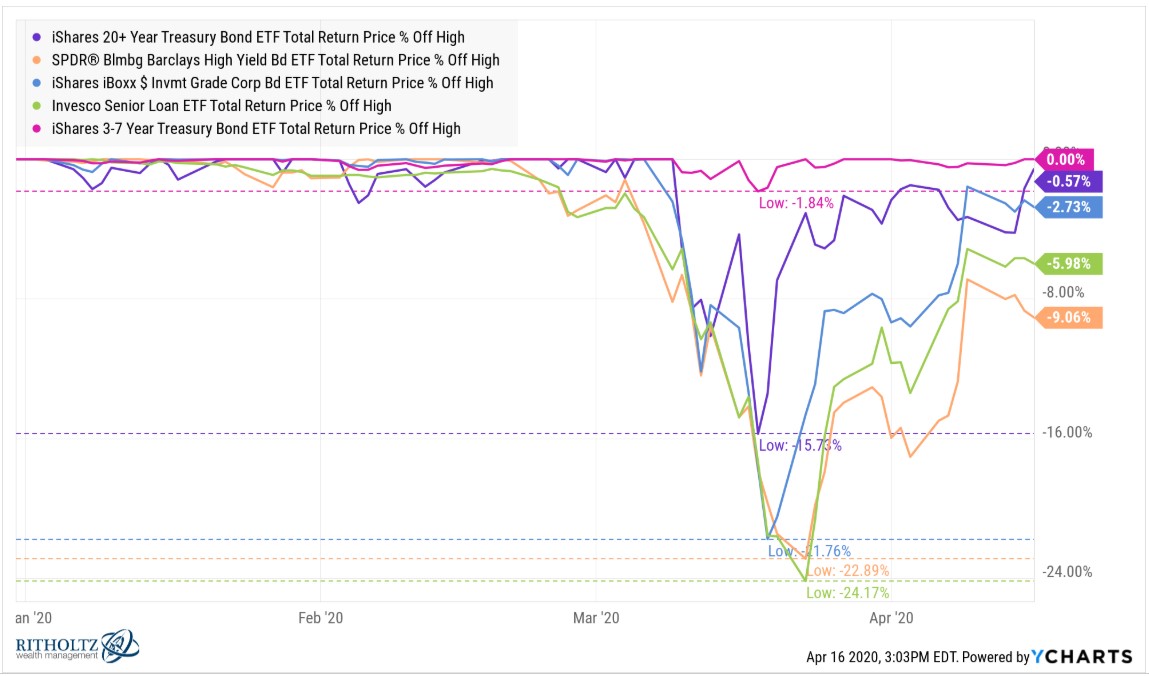
Yield chasing becomes dangerous when the investor treats income as guaranteed while ignoring what can happen to principal. A 9% yield is not very exciting if the investment falls 25%, suspends payments, or becomes hard to sell when cash is needed.
Why Investors Chase Yield
Income feels safer than price growth
Many investors feel more comfortable receiving regular income than waiting for capital appreciation. A dividend deposit or bond coupon feels real. It lands in the account like a tiny paycheck wearing a suit. Price gains, by contrast, can feel abstract until an asset is sold.
This emotional preference is understandable, especially for retirees or anyone trying to cover monthly expenses. The problem is that income does not automatically mean safety. Some high-yielding investments return cash while quietly eroding capital. Others pay attractive income until business conditions deteriorate and the payout gets cut.
Inflation makes ordinary yields look boring
When everyday costs rise, investors naturally look for ways to make their money work harder. If groceries, insurance, rent, and medical bills are all marching uphill, a modest savings yield may feel like bringing a spoon to a snowstorm. The desire for higher income is rational. The danger is overcorrecting into assets that carry risks far beyond the investor’s needs or tolerance.
Marketing makes high yield look polished
Financial products are often presented with professional language, elegant charts, and phrases such as “enhanced income,” “premium yield,” or “income strategy.” These terms are not automatically bad, but they can make risk look more refined than it is. A product can wear a necktie and still bite.
Before buying anything for its yield, investors should ask what creates that income. Is it interest from high-quality bonds? Dividends from profitable companies? Option premiums? Leverage? Lower-rated debt? Return of capital? A yield is only as good as the engine producing it.
The Main Types of Yield Investors Chase
High-yield corporate bonds
High-yield bonds, often called junk bonds, are issued by companies with lower credit ratings. They pay more interest because investors demand compensation for a higher chance of default. In good economic times, they can perform well. When the economy weakens, their prices can fall sharply as investors become more worried about repayment.
The key question is not, “How big is the coupon?” The better question is, “Can the borrower keep paying?” Investors should look at credit quality, maturity, diversification, fund expenses, and how the investment behaved in prior market stress.
Dividend stocks with unusually high yields
A stock’s dividend yield rises when its dividend increases, but it also rises when its share price falls. That second part is where many investors step on the rake. A company yielding 8% may be a bargain, or it may be a business in trouble whose stock price has dropped because the market expects a dividend cut.
This is known as a dividend trap. The yield looks generous today, but the payout may not be sustainable. Investors should review earnings, free cash flow, debt, payout ratio, competitive position, and management’s history of capital allocation. In plain English: does the company actually have the money to keep sending those checks, or is it just smiling for the brochure?
Preferred stocks
Preferred stocks sit between bonds and common stocks. They often pay higher income than common shares and may appeal to income investors. But preferreds can be sensitive to interest rates, may have call features, and can fall in price during financial stress. Some are issued by banks or financial firms, which can concentrate risk in one sector.
Preferreds are not automatically bad. They simply require more homework than glancing at the yield and whispering, “Well, hello there.”
REITs and mortgage REITs
Real estate investment trusts can offer attractive income because they are required to distribute much of their taxable income. Equity REITs own properties, while mortgage REITs invest in real estate debt. The distinction matters. Mortgage REITs can use leverage and may be highly sensitive to interest rate changes, funding costs, and spreads.
For investors, the question is whether the REIT’s income is supported by durable rents, strong occupancy, manageable debt, and sensible financing. A sky-high yield in real estate can sometimes signal stress rather than opportunity.
Closed-end funds and leveraged income funds
Closed-end funds can produce high distributions through bonds, preferreds, options, or leverage. Some are well managed and useful for certain investors. Others may trade at premiums, use leverage aggressively, or distribute capital in ways investors misunderstand.
One common mistake is assuming a distribution rate equals an investment return. It does not. A fund can distribute cash while its net asset value declines. That is like celebrating because your wallet is giving you money, then realizing the wallet is emptying itself.
Structured notes and complex products
Structured notes often link returns to a stock, index, commodity, interest rate, or basket of assets. They may advertise enhanced income or downside buffers, but the details can be complicated. Investors need to understand issuer credit risk, liquidity, caps, barriers, call features, fees, tax treatment, and what happens in ugly market scenarios.
If the payoff diagram looks like a theme park map, pause. Complexity is not proof of sophistication. Sometimes it is just risk wearing a puzzle costume.
The Hidden Risks Behind High Yield
Credit risk
Credit risk is the chance that a borrower fails to make payments. The weaker the borrower, the more yield investors usually demand. High yield can be a warning label, not a prize ribbon. This is especially important with lower-rated bonds, private credit, certain preferreds, and highly leveraged companies.
Interest rate risk
Bond prices and interest rates generally move in opposite directions. Longer-term bonds usually have more duration risk, meaning they can lose more value when rates rise. Investors chasing a slightly higher yield by extending maturity may discover that a small income boost came with a much larger price swing.
Liquidity risk
Liquidity risk appears when an investment cannot be sold quickly at a fair price. Some high-yield bonds, private funds, nontraded REITs, and structured products may be difficult to exit. The yield may look attractive because investors are being paid to give up flexibility.
Call risk
Some bonds, preferred stocks, and structured notes can be called by the issuer. This means the issuer can redeem the investment early, often when rates fall or when refinancing becomes favorable. Investors may receive their money back sooner than expected and have to reinvest at lower yields.
Leverage risk
Leverage can increase income, but it also magnifies losses. A leveraged fund may look brilliant in calm markets and suddenly develop the personality of a raccoon in a kitchen when volatility rises. Investors should know whether borrowed money, derivatives, or option strategies are being used to support the distribution.
Tax risk
Not all yield is taxed the same way. Qualified dividends, ordinary income, municipal bond interest, capital gains, and return of capital can have different tax treatment. A high pre-tax yield may become less impressive after taxes. For taxable accounts, investors should consider after-tax income, not just headline yield.
How to Tell the Difference Between Smart Income and Yield Chasing
The line between income investing and yield chasing is not the yield itself. It is the process. Smart income investing starts with goals, risk tolerance, time horizon, taxes, liquidity needs, and diversification. Yield chasing starts with a number and works backward until caution gets tired and leaves the room.
Ask why the yield is high
Every high yield has a reason. The reason may be perfectly acceptable, such as a temporary market dislocation or a diversified fund holding higher-yielding bonds. It may also be a warning sign, such as deteriorating credit quality, falling earnings, excessive leverage, or an unsustainable payout.
Look at total return
Income is only one part of return. Total return includes income plus price change. An investment yielding 7% but losing 10% in price has not performed magic. It has performed subtraction with confetti.
Check the payout source
For dividend stocks, review cash flow and payout ratios. For funds, read whether distributions come from income, capital gains, or return of capital. For bonds, review credit ratings and default risk. For structured products, understand the payoff formula before investing.
Diversify the income stream
A healthy income portfolio may include cash reserves, Treasury bills, investment-grade bonds, dividend growth stocks, high-quality short-term bond funds, and selective higher-yield assets. Diversification does not eliminate risk, but it helps prevent one bad idea from turning the entire portfolio into a cautionary tale.
Match assets to timelines
Money needed soon should not be placed in volatile, illiquid investments simply because the yield looks appealing. Short-term goals need stability. Long-term goals can usually tolerate more fluctuation. Matching assets to timelines is not glamorous, but neither is explaining to your future self why vacation money is trapped in a product with quarterly liquidity windows.
Examples of Yield Chasing in Real Life
The “too good to ignore” dividend stock
An investor sees a stock yielding 10% and buys it for income. The company has declining revenue, heavy debt, and a payout ratio above what its cash flow can support. A few months later, the dividend is cut. The share price falls again. The investor did not buy income; they bought a melting ice cube with a quarterly announcement schedule.
The long bond surprise
Another investor buys a long-term bond fund because it yields more than a short-term fund. Then interest rates rise. The fund’s price drops more than expected because its duration is high. The investor learns that extra yield from maturity extension can come with real volatility.
The complex note with fine-print fireworks
A structured note advertises an attractive coupon as long as a stock index does not fall below a certain level. The investor focuses on the coupon and ignores the barrier. When the index drops, the note’s value falls sharply and the income feature no longer feels so friendly. The lesson: if a product has conditions, those conditions are the product.
How to Build a Healthier Income Strategy
A strong income strategy begins with a simple question: what job does this money need to do? Emergency savings, retirement income, college savings, and long-term wealth building all require different tools.
For short-term needs, insured bank deposits, Treasury bills, money market funds, and short-duration high-quality fixed income may be appropriate depending on the account, risk tolerance, and liquidity requirements. For medium-term needs, investors may consider bond ladders, diversified bond funds, or balanced portfolios. For long-term needs, dividend growth stocks and broad equity exposure may help provide income and growth potential, though with market volatility.
Higher-yielding assets can still play a role, but they should be sized carefully. A small allocation to high-yield bonds or preferreds may make sense for some investors. Going all-in because the yield looks delicious is how portfolios end up needing adult supervision.
of Experience: Lessons From the Yield-Chasing Jungle
Anyone who spends enough time around income investing eventually notices a pattern: yield chasing rarely begins with recklessness. It begins with a reasonable desire. Someone wants retirement income. Someone wants their cash to keep pace with inflation. Someone wants to stop feeling like their savings account is doing yoga in slow motion. The motivation is normal. The mistakes usually happen when the search for income becomes a search for shortcuts.
One practical experience stands out: the highest-yielding option on a list is often high for a reason. In screening dividend stocks, the eye naturally jumps to the biggest number. A 12% yield looks exciting next to 3%. But after reading the financial statements, the story often changes. Maybe earnings are falling. Maybe debt costs are rising. Maybe the company has already hinted that capital spending must be reduced. Maybe the market is not “missing” the opportunity at all; it is pricing in trouble before the dividend investor has finished celebrating.
The same lesson appears in bond funds. Investors sometimes compare funds by yield alone, as if selecting the biggest scoop at an ice cream shop. But the ingredients matter. One fund may own short-term investment-grade bonds, while another owns lower-rated corporate debt with more credit risk. A third may use leverage. The yield number is the front door, not the full house tour. Before buying, it helps to check duration, credit quality, expense ratio, turnover, liquidity, and how the fund performed during market stress.
Another experience: cash flow can create overconfidence. Receiving monthly income feels reassuring, even when the account value is declining. This can trick investors into thinking an investment is working because money keeps arriving. But if the principal is shrinking faster than the income is coming in, the strategy may be quietly failing. Total return is the scoreboard. Yield is only one player on the field.
There is also a behavioral trap. Once investors tell themselves they are “income investors,” they may resist selling a weak asset because the payout feels like proof of quality. But a distribution is not a personality reference. Weak companies can pay dividends until they cannot. Leveraged funds can maintain distributions until market conditions change. Complex products can perform well until one clause in the fine print wakes up like a dragon.
The best experience-based rule is boring but powerful: build the income plan before shopping for yield. Decide how much cash is needed, when it is needed, how much volatility is acceptable, and what role each asset plays. Then select investments that fit the plan. This approach is less thrilling than chasing the biggest payout, but so is wearing a seat belt. The goal is not to avoid yield. The goal is to avoid being hypnotized by it.
In the wild world of yield chasing, the smartest investors are not the ones who reject income. They are the ones who ask better questions. What risk am I taking? Is the payout sustainable? Can I exit if conditions change? What happens in a recession? What happens if rates move? What happens after taxes and fees? Those questions turn yield from bait into information. And in investing, information beats excitement almost every time.
Conclusion: Respect the Yield, Fear the Trap
Yield chasing is tempting because it offers a simple answer to a complicated problem: “Need more income? Buy the thing with the biggest yield.” Unfortunately, investing is not that generous. Higher yield often comes with higher risk, less liquidity, more complexity, or a payout that may not last.
The better path is not to fear yield. It is to understand it. A thoughtful income strategy can support retirement, stabilize cash flow, and improve portfolio discipline. But the yield should fit the plan, not become the plan. Investors who focus on total return, sustainability, diversification, taxes, and liquidity are far less likely to get lured into the shiny traps that make the yield-chasing world so wild.
In the end, yield is like hot sauce. A little can improve the meal. Too much can create regret, sweating, and a sudden need to call someone responsible.

