
Skincare
The Same Artist Who Made People Cry With Her ‘Good Boy’ And ‘Black Cat’ Comics Just Released A New One With Albatross
May
Some comics make you laugh. Some comics make you think. And then there are Jenny-Jinya comics, which sneak up on your heart wearing tiny emotional sneakers, tap you politely on the shoulder, and then absolutely ruin your afternoon in the most meaningful way possible.
The German illustrator Jenny Hefczyc, better known online as Jenny-Jinya, has become widely recognized for her heartbreaking animal-centered comics, especially her “Good Boy” and “Black Cat” stories. Her work often features a gentle Grim Reaper who meets animals at the end of their lives, not as a monster, but as a compassionate guide. It is a simple idea, yet it hits with the force of a full-grown emotional piano falling from the sky.
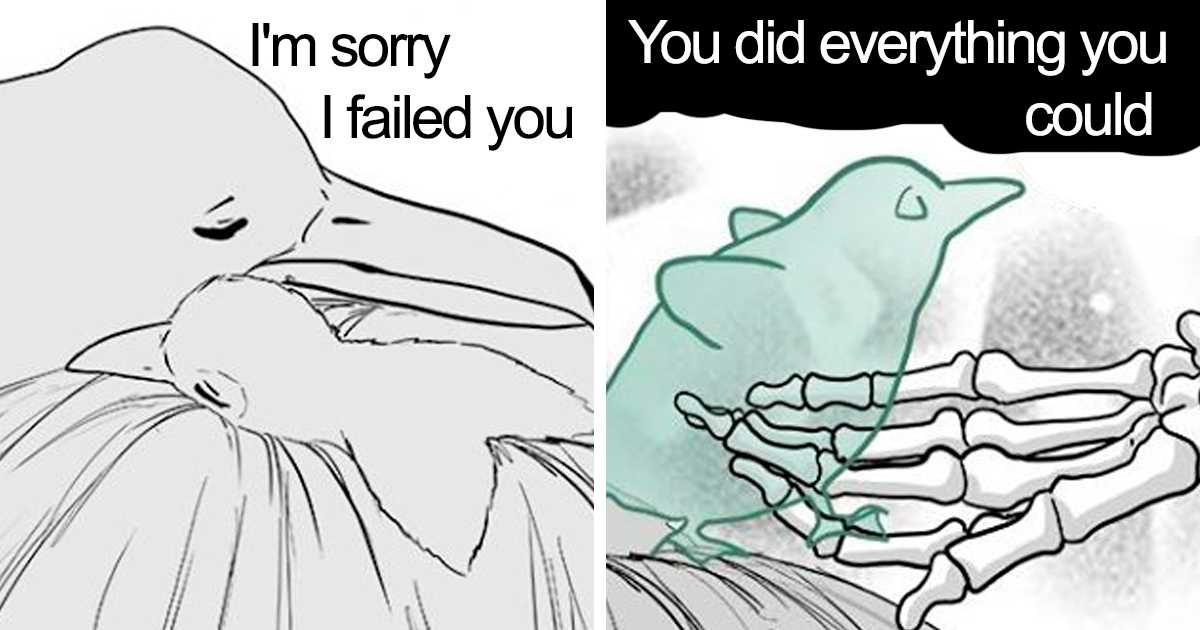
Her albatross comic continues that tradition. Instead of focusing on a pet left behind or a black cat harmed by superstition, the story turns toward the ocean and the silent damage caused by plastic pollution. The result is not just another sad animal comic. It is a small, devastating environmental message wrapped in soft lines, quiet dialogue, and the kind of ending that makes readers stare at their water bottle like it has personally betrayed them.
Who Is Jenny-Jinya?
Jenny-Jinya is the pen name of Jenny Hefczyc, a freelance illustrator from Germany. Her official artist biography describes her background in illustration, communication design, animation, game studies, and published comic work. But online, many readers know her for one thing above all: making people cry about animals they met only three panels ago.
Her best-known series, Loving Reaper, follows a tender version of Death who helps animals cross over. The series has reached a large audience on WEBTOON and social media because it does something rare: it makes grief feel gentle without making cruelty feel acceptable. The Reaper is not the villain. Human neglect, pollution, superstition, entertainment, carelessness, and greed often are.
This is why Jenny-Jinya’s comics stand out in the crowded world of online art. They are not just sad for the sake of being sad. They are built around awareness. Each comic gives a voice to animals that cannot explain what happened to them. In a few panels, readers are invited to feel what a statistic cannot always communicate.
Why “Good Boy” and “Black Cat” Hit So Hard
Before the albatross comic, Jenny-Jinya had already reached thousands of readers with “Good Boy,” a story about a neglected dog, and “Black Cat,” a comic that confronted cruelty and superstition toward black cats. Both comics became widely shared because they tapped into familiar human guilt: the knowledge that animals often suffer because people ignore them, misunderstand them, or treat them as disposable.
The Power of “Good Boy”
“Good Boy” works because dogs are emotionally direct. They love loudly, forgive quickly, and somehow make humans feel like Nobel Peace Prize winners just for opening a bag of kibble. In Jenny-Jinya’s hands, that loyalty becomes heartbreaking. The comic reminds readers that neglect is not always dramatic. Sometimes it is a chain, a cold night, a forgotten bowl, or a person who stops noticing the living creature waiting for them.
The story made readers cry because it challenged the comforting idea that love alone is enough. Animals need care, shelter, attention, food, medical treatment, and responsibility. A dog may be “good” forever, but a good owner has to show up every day.
The Message Behind “Black Cat”
“Black Cat” struck a different nerve. Black cats have long been burdened by superstition, bad-luck myths, and Halloween stereotypes. Animal welfare organizations continue to point out that black cats may be overlooked in shelters because of old cultural biases and misconceptions. Jenny-Jinya turned that bias into a personal story, making readers see the animal behind the myth.
The genius of the comic is that it does not lecture. It does not wag a finger and say, “Please update your medieval operating system.” Instead, it shows how dangerous an irrational belief can become when it is attached to a real animal. A black cat is not a curse. It is a cat. It wants warmth, food, safety, play, and maybe the legal right to knock your favorite mug off the table at 3 a.m.
The Albatross Comic: A New Kind of Heartbreak
The albatross comic moves Jenny-Jinya’s emotional storytelling from homes and shelters to the open ocean. The subject is plastic pollution, especially the way seabirds can mistake floating plastic for food or accidentally collect it while feeding.
Albatrosses are extraordinary birds. They travel vast distances, spend much of their lives over the ocean, and return to nesting sites to raise chicks. Laysan albatrosses, for example, nest in places such as Midway Atoll and other Pacific islands. They skim the ocean surface for squid, fish eggs, and other prey. Unfortunately, the ocean surface is also where plastic debris floats.
That is where the tragedy begins. Adult albatrosses may pick up plastic pieces while feeding, then unknowingly bring that plastic back to their chicks. The chick does not understand the difference between food and a bottle cap. It only knows that a parent has returned with something to swallow.
Jenny-Jinya’s comic transforms this environmental issue into an emotional encounter. The albatross is not a chart, not a headline, not a distant conservation problem. It becomes a character. And once the bird has a face, readers can no longer treat plastic pollution as an abstract mess floating somewhere far away.
Why Albatrosses Are Powerful Symbols of Ocean Pollution
Albatrosses have become one of the most haunting symbols of marine plastic pollution because their suffering reveals a bitter truth: even the most remote places on Earth are connected to human waste. A plastic item tossed away in one country can travel through waterways, rivers, storm drains, and ocean currents. Eventually, it can reach wildlife that never came anywhere near a shopping bag, a takeout cup, or a party balloon.
Smithsonian Ocean has highlighted the problem of Laysan albatross chicks ingesting plastic at Midway Atoll. Conservation organizations and researchers have also documented how seabirds can swallow plastic fragments, fishing line, bottle caps, lighters, and other debris. The danger is not only choking. Plastic can block digestion, take up stomach space, reduce nutrition, cause internal injury, and expose animals to pollutants.
In other words, plastic does not have to look dramatic to be deadly. A tiny piece can become a big problem when it enters the body of a bird that needed actual food. It is junk food in the most literal and horrifying sense: no nutrients, all consequences.
How Jenny-Jinya Turns Awareness Into Emotion
One reason Jenny-Jinya’s work travels so far online is her ability to compress a complex issue into a short emotional story. Plastic pollution, animal neglect, shelter overcrowding, and superstition can all feel overwhelming. Readers may know these problems exist, but knowledge often sits quietly in the brain like an unopened email marked “important.”
A comic can open that email.
Jenny-Jinya uses clean visual storytelling, expressive animals, and minimal dialogue. She often avoids long explanations because the emotional architecture is already clear. An animal suffers. Death arrives gently. The reader realizes the true horror is not Death itself, but the avoidable human action that brought the animal there too soon.
This approach is effective because it does not require readers to already be conservation experts. You do not need a degree in marine biology to understand a baby bird should not have plastic in its stomach. You do not need to know shelter intake statistics to understand a black cat deserves kindness. You do not need to be a veterinarian to know a dog left alone in harsh conditions is being failed.
The Real-World Issues Behind the Comic
Plastic Waste Is Still a Massive Problem
According to U.S. Environmental Protection Agency data, plastics make up a major portion of municipal solid waste, and the recycling rate for plastics remains relatively low compared with the amount generated. Plastic packaging, containers, wraps, lids, and single-use items are part of daily life, which means the solution is not as simple as saying, “Just recycle everything.” Recycling helps, but reduction matters too.
For ocean wildlife, the most dangerous plastic is often the piece that escapes waste systems entirely. It may be dropped on a sidewalk, blown from a trash can, left on a beach, or carried by rainwater into a storm drain. Once it reaches waterways, it can break into smaller pieces and become easier for animals to mistake for food.
Shelter Animals Still Need Human Help
The connection between “Good Boy,” “Black Cat,” and the albatross comic is responsibility. In one case, responsibility belongs to pet owners. In another, it belongs to communities that let myths shape adoption choices. In the albatross story, responsibility belongs to all of us as consumers, voters, neighbors, and people who occasionally buy a drink with enough packaging to survive a moon landing.
The ASPCA has reported that many dogs and cats entering shelters are strays or surrendered pets, and shelters continue to face capacity challenges. That context matters because Jenny-Jinya’s pet-focused comics are not just emotional fiction. They echo real pressures faced by animals and rescue workers every day.
Seabirds Face Multiple Threats
Plastic is not the only danger facing seabirds. Groups such as American Bird Conservancy note that seabirds are among the world’s most endangered bird groups, with many albatross species threatened. Fisheries bycatch, habitat disruption, invasive predators, climate change, and pollution all play a role. The albatross comic focuses on plastic, but it points toward a wider conservation crisis.
Why Sad Comics Can Inspire Action
There is a reason people share Jenny-Jinya’s comics even when they come with an unofficial warning label: “Do not read this in public unless you enjoy explaining your tears to strangers.” Sadness, when handled carefully, can become motivation. It slows people down. It creates memory. It turns a general issue into a personal reaction.
That matters in environmental communication. Facts are essential, but facts alone do not always change behavior. A number may impress us for a moment, then vanish under grocery lists, passwords, and whatever drama is happening in the group chat. A story stays longer. A character stays longer. A tiny albatross harmed by plastic may do more to change someone’s habits than a paragraph full of percentages.
This does not mean every reader will become a full-time conservationist after one comic. But small shifts matter. A person may start carrying a reusable bottle. Another may stop releasing balloons. Someone else may pick up litter during a beach walk, share shelter adoption posts, or finally foster the black cat they have been “thinking about” for six months while the cat silently judges their hesitation.
What Readers Can Take From the Albatross Comic
The albatross comic is not asking readers to fix the entire ocean before lunch. That would be ambitious, and frankly, lunch is important. Instead, it asks for awareness and better habits.
Readers can reduce single-use plastic where possible, dispose of trash properly, avoid balloon releases, support cleanup efforts, choose reusable bags and bottles, and back policies that reduce unnecessary plastic waste. They can also support wildlife organizations, shelters, and artists who use storytelling to raise awareness.
The comic also reminds us that “away” is not a real place. When we throw something away, it goes somewhere. Sometimes that somewhere is a landfill. Sometimes it is a river. Sometimes it is the stomach of a seabird chick on a remote island. That is the part Jenny-Jinya captures so well: the invisible journey from human convenience to animal suffering.
A Reader’s Experience: Why This Comic Stays With You
Reading Jenny-Jinya’s albatross comic feels different from reading a standard environmental article. A typical article may begin with data, then explain the science, then offer solutions. That structure is useful, but it keeps the reader at a safe distance. The comic removes that distance. It does not begin by asking, “How much plastic enters marine ecosystems?” It begins with a living creature, a parent-child bond, and a mistake that no animal in the story understands.
That is what makes the experience so uncomfortable in the best possible way. The albatross is not making a bad choice. The chick is not being careless. The parent is not being cruel. Everyone in the animal world is doing what nature taught them to do. The broken part of the story comes from the human world. That realization lands heavily because it shifts the emotional focus from tragedy to accountability.
Many readers who respond strongly to the comic are not reacting only to the bird. They are reacting to the memory of their own convenience. A plastic fork used for eight minutes. A bottle bought during a rushed commute. A shopping bag accepted without thinking. None of these actions feels monstrous in the moment. Most people are not villains twirling mustaches over a trash can. But the comic shows how ordinary habits can become extraordinary harm when multiplied by millions of people.
The experience also highlights why art is such a powerful tool for animal welfare and conservation. A photograph of plastic inside a bird carcass can shock people. A scientific report can inform people. A comic can make people imagine the final moments, the confusion, the tenderness, and the unfairness. That emotional imagination is not a replacement for science; it is a bridge to it.
There is also something strangely comforting about Jenny-Jinya’s Reaper character. In most stories, Death is frightening. Here, Death is the only figure who consistently shows up with patience and kindness. That choice changes the emotional tone. The comic is sad, but it is not hopeless. The animal is not alone. The reader is not left with gore or despair, but with grief softened by compassion and sharpened by responsibility.
After reading the albatross comic, small daily choices can feel more visible. A reusable bag is no longer just a reusable bag; it is one less object with a chance of escaping into the world. Picking up a piece of litter is no longer a tiny, slightly annoying task; it is a quiet interruption in a chain of harm. Supporting artists like Jenny-Jinya is not just fandom; it is support for storytelling that helps people care before the damage becomes irreversible.
That is the lasting experience of the comic. It hurts, but it does not hurt pointlessly. It leaves readers with a simple, stubborn message: compassion should not stop at the edge of our homes, our cities, or even our shorelines. Somewhere far away, a bird we will never meet may still be affected by what we decide to use, toss, ignore, or change today.
Conclusion
Jenny-Jinya’s albatross comic proves once again why her work resonates so deeply. Like “Good Boy” and “Black Cat,” it turns a painful issue into a personal story without losing sight of the bigger problem. The comic is emotional, but it is also practical. It asks readers to care, then quietly points toward what caring should look like: less waste, more responsibility, better treatment of animals, and a willingness to notice suffering before it becomes another statistic.
In a digital world full of fast jokes and disposable content, Jenny-Jinya creates comics that refuse to be scrolled past and forgotten. Her albatross story is not easy to read, but that is exactly why it matters. Sometimes the most powerful art is the kind that makes us cry first and change something afterward.

