
Beauty Tools & Accessories
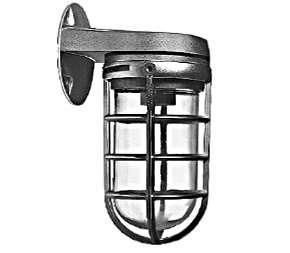
Stonco Roughlyte Wall Mount Light Fixture
Jun
The Stonco Roughlyte Wall Mount Light Fixture is not trying to look delicate. It does not sparkle, swoop, or pretend to be a tiny sculpture wearing a lampshade. Instead, this compact industrial wall light arrives with a cast-metal body, a protected globe, and the visual confidence of something designed to illuminate a loading dock during unpleasant weather.
That rugged personality is precisely why the fixture remains interesting. Originally created as a practical vapor-tight utility light, the Roughlyte has also found an audience among homeowners, architects, and designers who appreciate authentic industrial hardware. It can look perfectly at home beside a garage door, on a brick workshop, along a covered walkway, or inside a loft where ordinary decorative sconces would appear a little too polite.
The manufacturer commonly styles the product name as RoughLyte, although shoppers frequently search for “Roughlyte.” Both names generally refer to the same recognizable family of Stonco utility luminaires. This guide examines its construction, model differences, lighting performance, installation requirements, maintenance needs, and real-world appeal.
What Is the Stonco Roughlyte Wall Mount Fixture?
The Stonco Roughlyte is a wall-mounted, enclosed utility luminaire developed for exterior walls, columns, canopies, and similar locations. The wall version is generally identified by the VWXL series designation, while related VCXL models are intended for ceiling mounting.
Its form belongs to the broad category sometimes called a vapor-tight fixture, vaporproof light, bulkhead light, or jelly jar light. Those descriptions refer to an enclosed globe and durable housing designed to help protect the light source from moisture and debris. The metal cage surrounding the globe adds physical protection while giving the fixture its unmistakable industrial appearance.
However, “rugged” does not mean “approved for every difficult environment.” Stonco documentation specifically states that traditional Roughlyte fixtures are not recommended for hazardous locations. The LED wall model is also not intended for high-pressure wash-down areas or range hoods. It is a capable utility light, not an underwater submarine window with wires attached.
Construction and Industrial Design
Die-Cast Aluminum Housing
The classic wall-mounted Roughlyte uses a die-cast aluminum mounting box and arm. Aluminum provides a useful balance of strength, weather resistance, and manageable weight. Depending on the model, the box may include several threaded openings for conduit entry, allowing electricians to route wiring from different directions.
The unfinished or shot-blasted aluminum appearance gives the fixture its honest, workshop-ready character. Unlike a decorative sconce that relies on ornamental trim, the Roughlyte makes its construction visible. The junction box, curved arm, globe, screws, and cage are all part of the design rather than components hidden behind cosmetic panels.
Protective Globe and Guard
Legacy models were offered with heat- and shock-resistant glass or polycarbonate globes. Some catalogs also list clear, prismatic, amber, blue, and ruby accessories for specific traditional housings. Colored globes can create a memorable decorative effect, but their wattage restrictions and compatibility must be checked carefully.
A cast aluminum guard surrounds the globe. On older units, the guard may use a twist-on bayonet connection and an Allen-head security screw. This arrangement helps prevent casual removal and protects the globe from accidental impacts. It also creates the visual feature most people remember: a rounded glass capsule wrapped in a no-nonsense metal cage.
Weather-Resistant Assembly
Gaskets between the mounting box, wall arm, heat sink, and globe help limit the entry of water and debris. Proper assembly matters. A weather-rated fixture can lose much of its protection when a gasket is pinched, a plug is loose, or the mounting surface leaves a gap wide enough for rainwater to begin apartment hunting.
Traditional Incandescent and Modern LED Versions
The Roughlyte family has existed in both lamp-based and integrated LED configurations. Buyers should identify the exact catalog number because the electrical system, output, dimensions, and service procedures can differ significantly.
| Feature | Traditional Roughlyte | RoughLyte LED |
|---|---|---|
| Light source | Replaceable medium-base incandescent lamp | Integrated chip-on-board LED |
| Typical wattage | Approximately 60 to 200 watts, depending on model | 14 watts |
| Rated output | Varies with installed lamp | Up to approximately 1,390 lumens |
| Color temperature | Depends on selected bulb | 4000K neutral white |
| Voltage | Model-dependent | 120–277V universal input |
| Maintenance | Bulb can be replaced | Long-life integrated light engine |
Legacy Lamp-Based Models
Traditional VWXL wall fixtures were available in configurations associated with 60-, 75-, 100-, or 200-watt incandescent lamps. The fixture was generally supplied without a bulb and required a compatible medium-base A-style lamp. Globe material and size varied by wattage, so replacing a missing globe is not always as simple as ordering the first jelly jar lens found online.
An older lamp-based Roughlyte offers flexibility because the light bulb can be replaced. A carefully selected LED bulb may reduce energy use, but it must be approved for enclosed fixtures and must fit within the globe without contacting the lens or guard. The fixture label, socket rating, temperature limitations, and lamp manufacturer’s instructions all take priority over improvised retrofit enthusiasm.
Integrated LED Model
The current RoughLyte LED wall-mount configuration uses approximately 14 watts while producing up to 1,390 lumens. Manufacturer data identifies a 4000K neutral-white color temperature, a minimum color rendering index of 70, and system efficacy of roughly 102 lumens per watt.
The 4000K output is crisp and practical. It works well for service entrances, utility paths, garages, storage areas, workshops, and building perimeters where visibility is more important than creating the warm glow of a candlelit restaurant. Homeowners seeking a softer residential atmosphere may prefer a traditional housing fitted with a compatible warmer lamp, provided the installation remains electrically and thermally appropriate.
The LED version operates across 120–277 volts, making it useful in residential, commercial, and light-industrial electrical systems when correctly specified. Its predicted L70 life exceeds 54,000 hours under stated test conditions. L70 does not mean the fixture suddenly goes dark at that hour; it represents the point at which output is predicted to decline to 70 percent of its initial level.
Where the Roughlyte Works Best
Garages and Workshops
A Roughlyte looks natural beside garage doors, workshop entrances, and outdoor equipment rooms. Its guarded globe feels visually appropriate around tools and machinery, while the broad light distribution can illuminate door hardware, steps, and nearby work surfaces.
Porches and Covered Walkways
Mounted in a row, these fixtures can add rhythm to a long porch, breezeway, or covered passage. They pair especially well with brick, concrete, corrugated steel, unfinished wood, and painted siding. The effect is functional rather than fancy, which is sometimes exactly what an exterior needs.
Commercial and Agricultural Buildings
The fixture’s compact body and conduit-friendly mounting box make it suitable for many service areas, barns, utility structures, storage buildings, and back-of-house entrances. Exact environmental suitability should still be confirmed from the product label. A wet-location listing is not interchangeable with a hazardous-location approval.
Industrial-Style Interiors
Designers sometimes use legacy Roughlyte fixtures indoors as industrial wall sconces. They can bring authentic utility character to mudrooms, stair landings, lofts, restaurants, and converted warehouses. Indoors, the cage and exposed hardware create texture without requiring decorative flourishes. The fixture essentially says, “I came here to illuminate the wall,” and then gets on with the job.
Why Designers Still Appreciate It
Many modern products imitate industrial design by adding decorative cages to otherwise conventional lights. The Stonco Roughlyte works differently because its industrial features began as practical components. The guard protects the globe. The cast box supports conduit entry. The security screw discourages tampering. The shape follows the job.
That authenticity gives the fixture visual staying power. It can support several styles:
- Industrial: Pair it with exposed brick, steel shelving, and concrete.
- Farmhouse utility: Install it on a barn, shed, mudroom, or covered porch.
- Coastal practical: Use the caged profile as a restrained nautical reference, subject to environmental suitability.
- Modern contrast: Place it against a clean white wall where the mechanical shape becomes a focal point.
The fixture is also compact enough to provide character without dominating the architecture. A large wall pack can feel excessively commercial on a small building. A Roughlyte occupies less visual territory while still looking tougher than an ordinary porch lantern.
Important Installation Considerations
Hardwired outdoor lighting should be installed by a qualified electrician in accordance with the National Electrical Code, local regulations, the fixture label, and the manufacturer’s instructions. The mounting surface must support the fixture, and the electrical supply must match the model’s voltage requirements.
For the LED wall version, the globe must face downward. The ceiling-mounted VCXL configuration should not be substituted for the VWXL wall model. Manufacturer instructions also emphasize correct grounding, properly seated gaskets, tightened fasteners, waterproof conduit fittings, and sealing around the mounting box where necessary.
Uneven masonry deserves special attention. Brick and stone can leave channels behind a junction box, allowing water to reach the wiring area. Suitable exterior sealant may be needed around the mounting perimeter and unused conduit openings, without blocking intended drainage or violating the installation instructions.
Do not assume that more sealant automatically means more weather resistance. Excess material can interfere with gaskets, trap moisture, or make future maintenance unnecessarily theatrical. The best installation is neat, correctly assembled, and consistent with the manufacturer’s drawings.
Buying a New, Vintage, or New-Old-Stock Fixture
Roughlyte fixtures appear through electrical distributors, surplus sellers, architectural salvage dealers, and secondhand marketplaces. Before purchasing, request a clear photograph of the catalog label. Similar-looking fixtures may use different globe diameters, wattage limits, mounting boxes, or electrical systems.
Inspect the following components:
- The complete catalog or model number
- The voltage and maximum wattage markings
- The condition of the globe and protective guard
- The presence and flexibility of all gaskets
- The socket, driver, wiring leads, and grounding connection
- The threaded conduit openings and unused-hole plugs
- The safety listing and permitted installation orientation
New-old-stock units may never have been installed, but age still affects rubber gaskets, wire insulation, finishes, and packaging. A fixture that spent 25 years in a dry warehouse may be excellent. One that spent the same period under a leaking roof may contain a small archaeological record of corrosion.
Maintenance and Cleaning
Disconnect power before cleaning or servicing the fixture. Once the globe is cool, remove loose dirt with a soft brush or cloth. Glass can usually be wiped with mild soap and water, while polycarbonate lenses require gentler care because aggressive solvents and abrasive pads may cloud or damage the material.
During maintenance, inspect the globe for cracks, the guard for looseness, and the gaskets for flattening or deterioration. Check that conduit plugs remain secure and that water is not collecting around the mounting box. Coastal, industrial, and high-humidity environments may require more frequent inspection.
For integrated LED models, gradual output reduction is normal over a long service life. Flickering, repeated cycling, discoloration, water intrusion, or an unusual burning smell is not routine aging and should be examined promptly by a qualified professional.
Advantages and Limitations
Advantages
The Stonco Roughlyte Wall Mount Light Fixture offers durable cast construction, a protected globe, a compact industrial profile, and wet-location configurations. The integrated LED version combines useful output with low energy consumption and long projected service life. Traditional versions provide bulb-replacement flexibility and strong vintage appeal.
Limitations
The utilitarian appearance is not ideal for every home. The standard LED model’s 4000K light can feel cooler than the warm illumination many people prefer near patios and front doors. The enclosed construction also limits which replacement bulbs can be safely used in older lamp-based fixtures.
Most importantly, the fixture is not intended for hazardous locations, and the LED model is not designed for pressure wash-down applications. Buyers must choose the correct wall or ceiling version and follow the required globe-down orientation.
Is the Stonco Roughlyte Worth Choosing?
The Roughlyte is an excellent candidate when the project calls for authentic industrial styling, robust construction, and useful exterior illumination. It is especially convincing on garages, workshops, barns, utility buildings, covered walkways, and industrial-inspired interiors.
The integrated LED version is the logical option for lower energy use and reduced routine maintenance. A legacy incandescent housing may appeal more to restoration projects and designers who want control over bulb color temperature, brightness, and appearance. In either case, buying by exact model number is essential.
This is not a fixture that attempts to disappear. Its cage, globe, cast arm, and visible fasteners make a clear architectural statement. Fortunately, the statement is refreshingly simple: durable lighting does not need to wear a tuxedo.
Practical Experiences With the Stonco Roughlyte Wall Mount Light Fixture
Real-world satisfaction with a Roughlyte often begins with scale. Product photographs can make the fixture appear larger than it is, particularly when the image is shown without a door, brick, or hand for reference. Once installed, the wall model generally feels compact and purposeful rather than bulky. On a small garage or narrow column, that restrained size can be a major advantage.
Another commonly noticed characteristic is the quality of the light distribution. Because the globe is exposed around much of its circumference, the fixture spreads light outward and downward instead of producing the sharply controlled beam associated with a modern full-cutoff wall pack. This makes it useful near doors and short walkways, but it also means placement deserves thought. Mounted too close to eye level, a clear lamp or bright globe may create glare.
Users seeking a comfortable residential effect often get better results by considering brightness before chasing the highest possible lumen number. A fixture beside a back door does not necessarily need to illuminate the neighboring county. With a traditional housing, an enclosed-fixture-rated LED bulb in an appropriate warm color temperature can create a friendlier atmosphere, provided all wattage, size, and temperature requirements are met. The integrated 4000K LED model produces a more commercial, visibility-focused result.
Installation experiences also reveal how important the mounting surface can be. On smooth siding or a properly prepared electrical block, the fixture can sit neatly with minimal adjustment. Brick, rough stone, and uneven stucco are less forgiving. Gaps behind the cast box must be handled correctly so that wind-driven rain cannot reach the wiring compartment. This is one of those jobs where careful preparation saves far more time than heroic amounts of sealant applied at the end.
The globe and cage influence maintenance in opposite ways. The cage helps protect the lens, particularly in workshops and service areas where ladders, hoses, lumber, or equipment may bump the wall. At the same time, the guard adds a few steps when the globe needs cleaning or a legacy bulb must be replaced. Keeping the correct Allen key in a labeled maintenance drawer can prevent an otherwise simple task from becoming a 30-minute scavenger hunt.
Older fixtures can deliver plenty of character, but replacement components deserve investigation before purchase. A bargain housing becomes less economical when its uncommon globe is missing, its guard is bent, and the original gasket has achieved the flexibility of a cracker. Buyers usually have the best experience when the fixture arrives complete or when compatible replacement parts have already been identified.
The aluminum finish also changes with exposure. New fixtures look crisp and mechanical, while older examples may develop oxidation, stains, or a softened surface appearance. Some owners value that patina because it makes the light feel established. Others clean or refinish the housing for a more uniform appearance. Any refinishing should preserve labels, mating surfaces, threaded connections, heat-dissipation areas, and grounding points.
In day-to-day use, the strongest benefit is that the Roughlyte rarely feels visually temporary. Trendy exterior lights may begin to look dated when decorative fashions change. A genuine utility fixture follows a more stable design language because its appearance comes from function. Mounted in an appropriate setting, it can look equally believable on an old workshop, a modern utility building, or a renovated loft.
The best experiences therefore come from matching the fixture to the job rather than choosing it solely for its cage. Confirm the model, decide whether warm ambiance or neutral-white task lighting matters more, install it with proper weather sealing, and keep the globe facing in the required direction. Do those things well, and the Roughlyte can provide years of practical illumination while looking pleasantly ready for trouble.
Conclusion
The Stonco Roughlyte Wall Mount Light Fixture combines practical engineering with enduring industrial style. Its cast aluminum housing, enclosed globe, protective guard, and conduit-friendly design make it suitable for a wide range of exterior and utility applications. Buyers can choose between traditional lamp-based models and a modern 14-watt LED version offering approximately 1,390 lumens.
Success depends on selecting the correct model and respecting its limitations. Verify the wet-location rating, voltage, mounting orientation, globe compatibility, and environmental restrictions before installation. When properly specified and professionally installed, the Roughlyte is more than an attractive vintage-style sconce. It is a serious utility fixture that happens to look good while doing its job.
Note: Specifications vary among legacy, current, and new-old-stock models. Confirm the catalog number, product label, current manufacturer documentation, and local electrical requirements before purchasing, modifying, or installing a fixture.

