
Hair Care
Scientists Finally Decipher Mysterious 3,000-Year-Old Text That Reveals The Ancient Roles Of Women
Jul
A long-lost Babylonian hymn has returned from history’s junk drawer, and it has plenty to say. Reconstructed from scattered cuneiform tablets with the help of advanced digital tools, the approximately 3,000-year-old composition praises Babylon’s temples, fertile fields, divine protector, generous citizens, and surprisingly specific classes of female religious workers.
The discovery is more than an archaeological curiosity. It offers a rare view of how educated Babylonians imagined their city and the people who made it function. Women appear not merely as somebody’s wife, daughter, or mother, but as priestesses associated with religious devotion, childbirth, and infant care. That does not make ancient Babylon a modern equality paradiselet us not hand out the progressive-city trophy just yetbut it does make its social structure more complicated than the usual stereotype.
What Was Actually Deciphered?
The newly reconstructed work is a hymn praising Marduk, his temple complex known as Esagil, the city of Babylon, and the Babylonians themselves. Scholars Anmar A. Fadhil of the University of Baghdad and Enrique Jiménez of Ludwig Maximilian University of Munich published the detailed academic study of the composition.
The poem may originally have contained about 250 lines. Roughly two-thirds have been recovered completely or partially, while approximately 100 lines near the end remain missing or badly damaged. In other words, history has released the extended trailer but is still refusing to provide the final act.
The peer-reviewed edition examines 20 surviving manuscripts dating from approximately the seventh century BCE to the second or first century BCE. Digital searches also helped researchers identify numerous related fragments and copies held in different collections. By comparing overlapping passages, variant spellings, duplicated lines, and broken sections, the team could reconstruct a text that no single tablet preserved in full.
Why the “3,000-Year-Old” Description Is an Approximation
News reports commonly describe the hymn as 3,000 years old, placing its creation around 1000 BCE. The academic dating is more cautious. Its earliest surviving manuscript comes from around the seventh century BCE, but the poem must have circulated before entering the school curriculum. Its language and religious ideas may point to an earlier composition in the second half of the second millennium BCE.
Therefore, “3,000 years old” is a reasonable shorthand, not a timestamp stamped by an ancient Babylonian copyright office. The exact year of composition remains uncertain.
How Digital Technology Reassembled a Lost Babylonian Classic
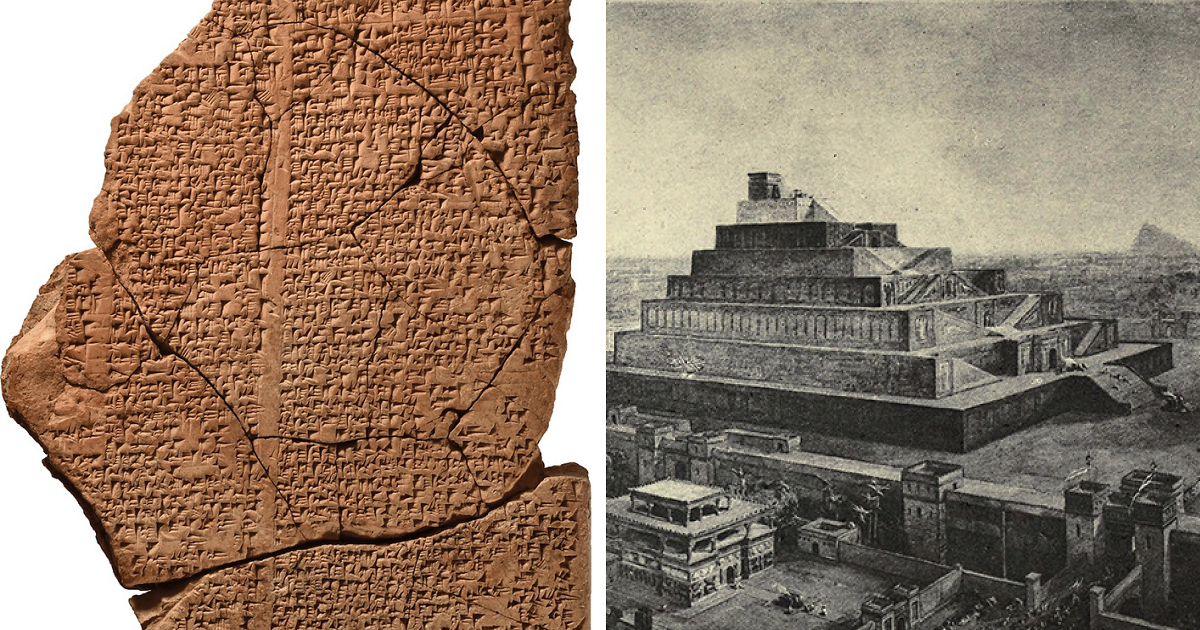
Cuneiform texts present a particularly unfriendly puzzle. Ancient scribes pressed wedge-shaped signs into wet clay, creating durable records that could survive for millennia. Unfortunately, tablets were often broken, scattered, excavated at different times, and distributed among museums worldwide. One fragment might be in Baghdad, another in London, and a third sitting in a storage drawer wondering why nobody has called.
The Electronic Babylonian Library brings photographs, transliterations, catalog records, and scholarly editions into a searchable digital environment. Its computational tools compare sequences of signs and words across enormous collections, flagging fragments that may belong to the same composition.
That dramatically reduces the time needed to find parallel manuscripts. A specialist working manually would need to remember thousands of lines, inspect catalogs, travel between collections, and recognize matches among damaged passages. An algorithm can scan vast quantities of material quickly and suggest promising connections.
AI Assisted the Scholars; It Did Not Replace Them
It is tempting to imagine an artificial intelligence system staring at mysterious wedges and announcing, “Good news, everyoneI speak Babylonian now.” That is not what happened.
The technology helped identify textual matches and related fragments. Human Assyriologists still had to inspect the clay tablets, verify the signs, compare grammar, evaluate variant readings, reconstruct missing language, determine historical context, and produce a responsible translation. AI accelerated pattern recognition; scholars supplied linguistic knowledge and judgment.
This distinction matters because ancient writing is full of damaged signs, rare words, scribal errors, poetic ambiguity, and terms that appear only once in the surviving record. A computer can suggest that two fragments resemble each other. It cannot independently settle every debate about what a Babylonian poet intended three millennia ago.
A Love Letter to Babylon
The hymn presents Babylon as a magnificent, divinely ordered city. It celebrates Marduk, Babylon’s patron deity, and Esagil, his central temple. It also names city features, mythical rulers, gates, defensive walls, priests, citizens, foreigners, and the Euphrates River.
One of the most striking sections describes the arrival of spring. The Euphrates saturates reed beds, fills lagoons, encourages barley to grow, covers fields with vegetation, and provides green pasture for herds. Such extended observations of nature are unusual in surviving Mesopotamian literature, which often spends more time describing gods, kings, battles, rituals, and disasters than admiring a particularly successful patch of barley.
The river was not merely attractive scenery. Its water supported agriculture, livestock, transportation, and urban prosperity. Praising the Euphrates was therefore equivalent to praising Babylon’s food supply, economic foundation, and divine good fortune.
The Poem Was Probably Used in Schools
The large number of copies indicates that the hymn was widely known. Some manuscripts are school tablets, suggesting that students copied and memorized the composition as part of scribal education.
Babylonian schools trained future scribes through repeated copying. Students practiced signs, vocabulary lists, proverbs, religious works, and established literary compositions. The newly recovered hymn may have functioned as literature lesson, handwriting exercise, religious instruction, and civic education all at once.
Imagine having to copy 250 lines of cuneiform before lunch. Suddenly, modern homework seems slightly less villainous.
What the Hymn Reveals About the Roles of Women
The discovery attracted worldwide attention because the poet turns from Babylonian men to Babylonian women and identifies several classes of priestesses. The academic study discusses the ugbabātu, nadītu, and qašdātu.
These were not interchangeable labels for “woman who works at a temple.” Mesopotamian religious institutions included different ranks, obligations, social identities, and ritual functions. The precise meanings could also change across locations and historical periods, which is why scholars approach the terms carefully.
The Ugbabātu and Religious Celibacy
The ugbabātu were associated with celibacy and devotion to a deity. In Mesopotamian religious thought, such a woman could be understood as having a divine or spiritual spouse rather than an ordinary human partner. Her status was defined by sacred service, discipline, and separation from conventional expectations surrounding marriage and childbirth.
The hymn praises these priestesses for virtue, devotion, and discretion. That language reveals the qualities the poet believed ideal religious women should display. It tells us about social expectations, although it does not necessarily describe every priestess’s personality or daily experience.
The Nadītu and Possible Midwifery Duties
The passage appears to connect a nadītu woman with assisting childbirth, leading the researchers to suggest a possible midwifery role. This interpretation is significant because direct literary descriptions of such duties are rare.
Other Babylonian records show that nadītu women could occupy distinctive social and economic positions. In places such as Sippar, some lived in a designated religious community and participated in property transactions, lending, inheritance arrangements, and business activities. They could possess substantial wealth and act through written contracts.
The category varied over time, so it would be inaccurate to assign every nadītu the same responsibilities. Still, the new hymn strengthens the picture of female religious specialists whose lives extended beyond passive ceremonial appearances.
The Qašdātu and Infant Care
The qašdātu were commonly associated with wet-nursing. The hymn’s language appears to refer to washing or caring for an infant, complementing evidence that these women assisted mothers and newborn children.
Childbirth was dangerous in the ancient world, and infant survival could never be taken for granted. Women who helped during labor, fed babies, cleaned newborns, and supported mothers performed essential work. Their duties joined religious service with practical care at the most vulnerable stage of human life.
The poem’s recognition of these women is therefore not a decorative footnote. It acknowledges specialized knowledge involving reproduction, health, ritual purity, family continuity, and community survival.
What the Text Does Not Prove About Babylonian Women
Exciting discoveries often attract oversized conclusions. The hymn does not prove that all Babylonian women enjoyed high status, equal rights, formal education, or religious authority. It focuses on idealized priestesses, not the entire female population.
Ancient Mesopotamian societies were hierarchical and patriarchal. A woman’s opportunities depended heavily on her class, family, wealth, legal status, city, and historical period. Many women performed household labor, raised children, produced textiles, prepared food, managed domestic resources, or worked within large institutions. Enslaved women and economically dependent women faced especially severe limits.
The poem itself also assigns different virtues to men and women. Men are praised for actively protecting orphans and vulnerable people, while women are celebrated mainly for devotion and discretion. That contrast reflects gendered expectations rather than modern equality.
A Hymn Describes Ideals, Not a Census
A civic hymn is designed to praise. It is closer to a city’s ceremonial anthem than an investigative report into working conditions. Its Babylonians are generous, just, respectful, pious, and welcoming to foreigners. Real urban life was undoubtedly messier. Ancient residents had disputes, debts, lawsuits, family conflicts, crime, political struggles, and neighbors who probably borrowed grain and mysteriously forgot to return it.
Researchers must therefore compare the hymn with contracts, letters, administrative records, laws, inscriptions, and archaeological evidence. The poem shows how its author wanted Babylonian society to be remembered. Other documents help reveal how people actually lived.
Women in Mesopotamia Held More Varied Positions Than the Stereotype Suggests
The newly deciphered text fits a broader body of evidence showing that women participated in Mesopotamian religion, literature, business, production, medicine, and household management.
Enheduanna, daughter of Sargon of Akkad, served as high priestess of the moon god at Ur during the third millennium BCE. Works attributed to her make her the earliest known author identified by name. Her religious office also carried political importance, helping connect royal authority with powerful southern temples.
Legal and economic tablets document women buying, selling, inheriting, leasing, lending, witnessing agreements, and managing property. Elite women could oversee estates and institutional resources. Female workers were deeply involved in textile production, one of the region’s major industries. Other women served as musicians, brewers, tavern keepers, attendants, healers, caregivers, or temple personnel.
None of this erases the restrictions women faced. Instead, it replaces a flat picture with a layered one. Ancient women were not a single social category marching through history in matching sandals. A wealthy priestess, an enslaved textile worker, a merchant’s widow, and a rural mother lived under very different conditions.
What the Hymn Says About Babylonian Urban Values
The composition also praises Babylonians for protecting the humble, caring for orphans, following divine rules, maintaining justice, and respecting foreign residents. The foreigners in question appear to include priests from other regions who lived in Babylon.
These claims portray Babylon as an inclusive religious capital in which different communities could coexist under Marduk’s protection. Again, the description represents an ideal. Nevertheless, ideals matter because they reveal which virtues an author believed an audience would admire.
The city is presented as more than walls and monuments. It is an ethical community supported by fertile land, religious institutions, education, social obligations, and cooperation among inhabitants. Women’s priestly service belongs inside that civic vision rather than outside it.
Experiencing the Discovery: Lessons for Modern Readers
Begin With the Physical Object
The most rewarding way to approach this discovery is to remember that the hymn did not survive as a neat book. It survived as damaged pieces of clay. Looking closely at a tablet image changes the experience immediately. The signs are small, crowded, and frequently interrupted by cracks. A polished English translation may look effortless, but the original object shows how much uncertainty lies behind every reconstructed line.
Students and history enthusiasts can compare a tablet photograph with its transliteration and translation. Even without learning Akkadian, they will notice repeated sign patterns, missing sections, editorial brackets, and alternative readings. This exercise builds appreciation for the patient work hidden beneath a dramatic headline.
Visit a Museum With Better Questions
A museum visit becomes more meaningful when visitors stop treating cuneiform tablets as identical brown rectangles. One may be a tax receipt, another a school exercise, another a medical text, and another a hymn copied across centuries.
When viewing a tablet, ask who made it, who could read it, why it was preserved, whether it was an official record or literary composition, and whose experiences it leaves out. A tiny object can contain evidence about language, education, labor, religion, law, gender, and international trade. Clay was the ancient world’s hard drive, although it performed poorly when dropped.
Read Gender History Without Forcing Modern Categories
The priestesses in the Babylonian hymn should neither be dismissed as powerless nor transformed into modern professionals wearing ancient costumes. Their authority operated inside religious and patriarchal institutions that had their own rules.
A productive reading experience holds two ideas together. These women occupied recognized and sometimes influential roles, yet the poem praises them through gendered ideals of devotion and discretion. Historical interpretation becomes stronger when it accommodates contradiction instead of demanding that the past deliver a simple verdict.
Notice the Difference Between Evidence and Interpretation
The hymn names priestly groups and describes actions, but scholars still debate the exact meaning of several lines. A possible midwifery reference is not the same as an employee handbook listing official duties. An association with wet-nursing does not tell us how every qašdātu spent every day.
Readers can develop better historical judgment by watching for careful phrases such as “may indicate,” “appears to describe,” and “is associated with.” Those words are not signs of weak research. They are signs that researchers respect the limits of the evidence.
Use AI as a Research Assistant, Not an Oracle
This project provides a practical model for responsible technology. Algorithms can search huge archives, detect similarities, and bring overlooked fragments to scholarly attention. Specialists then evaluate the suggestions and explain their meaning.
The same principle applies to family history, archival research, language study, and digital humanities. Technology can help locate patterns that a person might miss, but verification remains essential. A fast answer is useful; a fast, confidently wrong answer is merely an efficient nuisance.
Allow Ancient Literature to Feel Human
The hymn’s greatest experience may be emotional rather than technical. Its anonymous poet admired flowing water, green fields, crowded religious institutions, generous neighbors, and a city believed to stand at the center of a divinely ordered world.
Modern readers may not share the poet’s theology, but they understand civic pride, seasonal relief, concern for vulnerable people, and admiration for those who care for mothers and children. After 3,000 years, the details remain foreign while the desire to praise one’s home feels remarkably familiar.
Conclusion: A Lost Voice Returns to Babylon
The reconstructed Hymn to Babylon demonstrates what can happen when archaeology, philology, museum collections, international collaboration, and computational technology work together. A composition once copied by generations of students disappeared from cultural memory, only to re-emerge through fragments scattered across time and geography.
Its references to female priestesses add valuable evidence to the history of women in ancient Mesopotamia. The ugbabātu, nadītu, and qašdātu appear as religious specialists associated with celibate devotion, possible midwifery, wet-nursing, and infant care. These roles do not establish universal female equality, but they do show women participating in essential religious and social institutions.
The discovery also carries a warning for modern readers: history rarely arrives as a complete story. It comes in fragments, written by particular people for particular purposes. Every recovered tablet expands our view while reminding us how much remains missing.
Somewhere in a museum drawer, another piece of the hymn may still be waiting. It has already waited a few thousand years, so apparently patience is one of Babylonian literature’s strongest qualities.

