
Beauty Unlocked
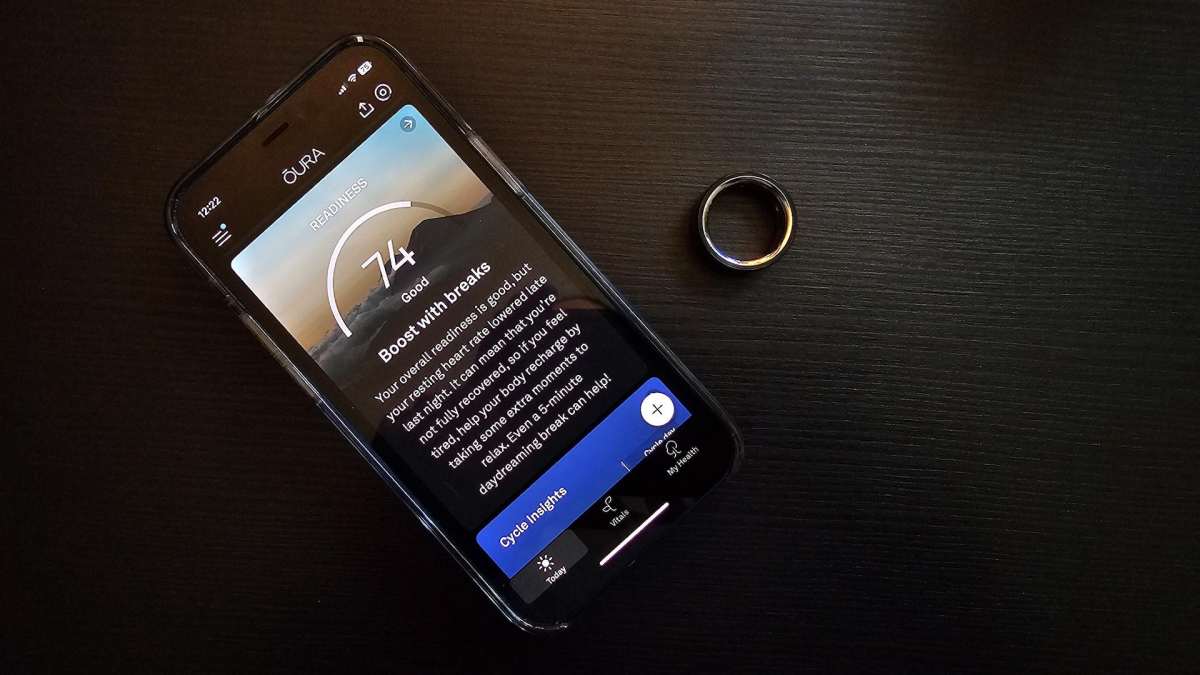
Oura’s Readiness Score Finally Takes Menstrual Cycles Into Account
Jul
For years, many wearable users have woken up to a familiar little drama: the app says, “You are not ready,” while the pe I am just in the luteal phase, thank you very much.” Oura’s Readiness Score has long been one of the most recognizable recovery metrics in consumer health tech, combining signals like sleep, resting heart rate, heart rate variability, body temperature, and recent activity into one neat number. But for people who menstruate, that neat number sometimes came with a messy blind spot.
Oura’s update to make Readiness more cycle-aware is a meaningful shift. Instead of treating normal menstrual-cycle changes as suspicious stress signals, the algorithm now better accounts for predictable biometric fluctuations across the cycle. In plain English: a higher body temperature or lower HRV during the luteal phase does not automatically mean your body is falling apart like a cheap lawn chair. It may simply mean your hormones are doing what hormones do bestrunning the monthly operating system update whether you requested it or not.
This matters because wearable technology has often been designed around “average” bodies that do not reflect the full range of human physiology. Menstrual cycles influence temperature, sleep, resting heart rate, mood, energy, and recovery. When a recovery score ignores those patterns, it can accidentally make normal biology look like a warning sign. Oura’s cycle-aware Readiness Score does not solve every problem in women’s health tracking, but it is a practical step toward smarter, more personalized wearable data.
What Is Oura’s Readiness Score?
Oura’s Readiness Score is a daily recovery rating that helps users understand how prepared their body may be for stress, movement, work, training, or rest. It is not a medical diagnosis, a coach with a whistle, or a tiny robot doctor hiding under your ring finger. It is a wellness metric that uses overnight and recent trend data to estimate how recovered your body appears compared with your own baseline.
The score typically reflects several contributors, including heart rate variability, resting heart rate, body temperature deviation, respiratory rate, sleep balance, previous-day activity, and recovery trends. A high Readiness Score can suggest that your body is handling stress well. A lower score can suggest that sleep, illness, alcohol, travel, heavy exercise, emotional stress, or general life chaos may be taking a toll.
The best part of Oura’s approach is that it compares you mostly to you. Your healthy HRV may not look like your marathon-running neighbor’s HRV. Your normal resting heart rate may not match a wellness influencer who drinks chlorophyll water and calls it “a journey.” Personal baselines are what make wearable insights useful. But menstrual cycles add another layer because “normal for you” can change depending on where you are in your cycle.
Why Menstrual Cycles Can Confuse Recovery Scores
The menstrual cycle is not just a calendar event involving pads, tampons, cups, cramps, and occasional emergency chocolate diplomacy. It is a whole-body rhythm influenced by changing levels of estrogen and progesterone. These hormones affect more than reproductive organs. They can influence cardiovascular signals, temperature, sleep quality, appetite, energy, and perceived effort during exercise.
The cycle is commonly divided into two broad phases: the follicular phase and the luteal phase. The follicular phase begins with menstruation and leads toward ovulation. The luteal phase begins after ovulation and continues until the next period starts. During the luteal phase, progesterone rises, and many people experience a slight increase in body temperature. Resting heart rate may increase, HRV may decrease, and sleep may feel less refreshing, especially late in the phase.
To a generic recovery algorithm, those signals can look like stress. Higher temperature? Possible strain. Lower HRV? Maybe poor recovery. Higher resting heart rate? Something must be up. But for a cycling user, these patterns may be expected. Without cycle context, a wearable can accidentally scold someone for having a normal menstrual cycle. That is like your smoke alarm going off every time you make toast. Technically, it detected heat. Practically, it needs to calm down.
What Changed With Oura’s Cycle-Aware Readiness Update?
Oura’s update adjusts the Readiness algorithm so that it better recognizes normal biometric changes linked to the menstrual cycle. The company said previous versions could misinterpret luteal-phase signals as signs of strain, which led some users to receive disproportionately low Readiness Scores. With cycle consideration, Oura aims to give a more accurate picture of recovery during different cycle phases.
One of the most important improvements is the way the system handles luteal-phase data. Instead of treating expected rises in body temperature, resting heart rate, or respiratory rate as automatically negative, the updated model can interpret those patterns with menstrual-cycle context. For users who previously saw unusually low Readiness Scores during the luteal phase, Oura reported average score increases of several points and a major decrease in days flagged as disproportionately low.
This is not just a software tweak. It represents a bigger idea: wearable health scores should understand the body they are measuring. If the body has a menstrual cycle, recovery scoring should not pretend it does not. For many users, the change may make Oura feel less like a judgmental morning scoreboard and more like a health companion that has finally read the room.
How Oura Tracks Cycle-Related Signals
Oura’s Cycle Insights feature uses biometric patterns and period logging to help estimate cycle phases, predict periods, and provide context about reproductive health trends. The ring collects signals while the user sleeps, including temperature trends, heart rate, HRV, and other physiological markers. Over time, the app builds a personalized pattern that can help identify where the user may be in their cycle.
Temperature is especially important. Basal body temperature tends to be lower during the first half of the cycle and higher after ovulation because of progesterone. Since Oura is worn overnight, it can collect repeated temperature trend data without requiring users to wake up, grab a thermometer, and perform the half-asleep ritual of “Where did I put that thing?”
Oura also integrates with Natural Cycles, an FDA-cleared birth control app, for users who choose that separate service. In that setup, Oura provides overnight temperature trend data, while Natural Cycles applies its own algorithm to calculate fertility status. It is important to separate the two: Oura’s built-in Cycle Insights are wellness features, while Natural Cycles is the regulated contraception product. Your ring may be smart, but it still does not get promoted to doctor, pharmacist, and life coach all at once.
Why This Update Matters for Women’s Health Tech
Women’s health has historically been underrepresented in research, product design, and consumer technology. Many fitness and recovery tools were built around data patterns that did not fully account for menstrual cycles, pregnancy, perimenopause, menopause, hormonal contraception, or other reproductive-health realities. That gap can create confusing, incomplete, or even discouraging feedback.
A cycle-aware Readiness Score helps correct one small but significant part of that problem. It recognizes that recovery is not the same every day of the month, and that changes do not always mean something is wrong. For athletes, this can help with training decisions. For busy professionals, it can support smarter planning. For people managing stress, sleep, or symptoms, it can help explain why the same bedtime routine feels different depending on the week.
It also supports better body literacy. Instead of seeing a lower HRV score and immediately assuming poor discipline, overtraining, or mysterious doom, users can look at their cycle phase and say, “Ah, context.” Context is powerful. It turns wearable data from a confusing scoreboard into a more useful conversation with your own body.
Practical Examples: How Cycle-Aware Readiness Can Help
Example 1: The Luteal-Phase Workout Decision
Imagine a user who normally trains hard four days a week. During the late luteal phase, she notices that her resting heart rate is higher and her Readiness Score is slightly lower. Before the update, the app might have made this feel like a recovery failure. With cycle-aware context, the score may better reflect that these changes are expected. She might still choose a lower-intensity workout, but the decision comes from understanding rather than panic.
Example 2: Better Sleep Expectations
Some people sleep worse before their period. They may wake more often, feel warmer at night, or notice lighter sleep. If Oura shows those changes alongside cycle context, the user can experiment with cooler bedding, earlier wind-down time, reduced alcohol, or less intense evening exercise. The goal is not to “beat” the cycle. The goal is to stop being surprised by it every month like it is a plot twist in a low-budget thriller.
Example 3: Spotting Patterns Worth Discussing
Cycle tracking can also help users notice recurring symptoms, irregular periods, unusual temperature patterns, or changes that may be worth discussing with a healthcare provider. Oura is not a diagnostic device, but organized data can make health conversations more specific. “I feel off sometimes” becomes “My sleep drops and temperature spikes in this part of my cycle for three months in a row.” That is a much better starting point.
What This Update Does Not Mean
The cycle-aware Readiness Score is useful, but it is not magic. It does not mean Oura can perfectly understand every person’s cycle, especially for users with irregular cycles, hormonal birth control, pregnancy, perimenopause, menopause, postpartum changes, PCOS, endometriosis, thyroid conditions, or other health factors that can affect temperature and recovery signals.
Hormonal birth control can change or suppress typical cycle-related temperature patterns. Some users may not ovulate regularly. Others may have cycles that vary significantly from month to month. In these cases, wearable insights can still be helpful, but they should be interpreted with caution. No ring, watch, app, or beautifully designed dashboard can replace clinical care when symptoms are severe, unusual, or concerning.
Users should also remember that Readiness Scores are guides, not commands. A low score does not mean you must cancel your day and live under a blanket. A high score does not mean you should attempt a personal record, deep-clean the garage, answer every email, and become emotionally available before lunch. The score is a nudge. Your lived experience still gets a vote.
Privacy Still Deserves Attention
Any conversation about menstrual-cycle tracking should include privacy. Reproductive health data is sensitive. In the United States, concerns about period-tracking apps and wearable health data have grown as legal and political debates around reproductive rights have intensified. Users should review privacy settings, understand what data is collected, and decide how comfortable they are with storing cycle information in any app.
Oura has publicly emphasized reproductive-health data privacy and states that it does not sell or rent health data. Still, users should approach all health technology with practical caution. Use strong account security, review app permissions, understand integrations with third-party services, and think carefully before syncing reproductive data across platforms. Convenience is wonderful, but privacy is not the place to click “accept all” with the energy of someone skipping a software update at 1 a.m.
How to Use Cycle-Aware Readiness Without Overthinking It
The healthiest way to use Oura’s updated Readiness Score is to combine the number with your own body signals. Look at trends across several cycles, not just one dramatic morning. Pay attention to patterns in sleep, mood, cravings, cramps, exercise performance, and stress. The more context you gather, the more useful the data becomes.
If your Readiness dips before your period every month, that may be useful planning information. You might schedule intense workouts earlier in your cycle, protect sleep more carefully in the late luteal phase, or avoid stacking major work deadlines on days when your body usually feels like it is running twelve browser tabs and one of them is playing music.
For athletes, cycle-aware Readiness can support flexible training. For non-athletes, it can support daily pacing. For anyone trying to understand their health more deeply, it can turn confusing monthly fluctuations into recognizable patterns. That is the real value: not perfection, but personalization.
The Bigger Trend: Wearables Are Getting More Personal
Oura’s update reflects a broader movement in wearable technology. The next generation of health tracking is not just about collecting more data. It is about interpreting data with better biological context. Stress, sleep, recovery, fertility, pregnancy, menopause, medication use, and hormonal contraception all shape biometric patterns. A truly useful wearable needs to understand more than steps and sleep hours.
This is where smart rings have an advantage. Because they are comfortable for overnight wear, they can capture sleep and temperature data consistently. That makes them well suited for cycle-related insights. But the competition is growing. Smartwatches, fertility apps, AI health assistants, and specialized wearables are all trying to make personal health data more useful and less generic.
The winners will be the tools that explain data clearly, respect privacy, avoid overpromising, and help people take practical action. Users do not need another app yelling at them in pastel colors. They need better context, calmer guidance, and fewer moments where normal physiology gets labeled as personal failure.
Real-Life Experience: What Cycle-Aware Readiness Feels Like
For someone using Oura regularly, the cycle-aware Readiness update can change the emotional tone of the app. That may sound small, but anyone who has ever opened a wellness app before coffee knows the tone matters. A recovery score can feel supportive, neutral, or weirdly accusatory. When the app misunderstands menstrual-cycle changes, it can make users feel as if they are doing something wrong, even when they are simply moving through a normal phase of the month.
Picture waking up during the late luteal phase. You slept seven hours, but the sleep felt shallow. Your body temperature is a little elevated. Your resting heart rate is up. Your HRV is lower than usual. You already feel slightly puffy, mildly irritable, and emotionally prepared to cry at a dog food commercial. In the old experience, a very low Readiness Score might have added insult to inflammation. The app could make it seem as if your body were under mysterious strain, when the explanation was sitting right there in your cycle calendar wearing a tiny name tag.
With a more cycle-aware score, the same morning can feel different. The app may still show that your body is under more load, but it is less likely to exaggerate normal luteal-phase patterns. That gives the user more useful guidance: maybe today is not the day for a brutal HIIT session, but it is not necessarily a health emergency either. Maybe a walk, strength maintenance, stretching, or an earlier bedtime would be smarter. The point is not to lower ambition. It is to match effort to physiology.
Over several months, this can become surprisingly empowering. A user may learn that her best high-intensity workouts usually happen in the mid-follicular phase. She may notice that late-night meals affect her Readiness more strongly before her period. She may discover that stress at work feels heavier during certain days, not because she lacks resilience, but because her body is already carrying more internal load. Suddenly, the data is not just a number. It is a pattern, and patterns are easier to work with than random frustration.
There is also a confidence benefit. Many people who menstruate have been told, directly or indirectly, to ignore cycle-related symptoms unless they are extreme. Wearable data cannot validate every feeling, but it can help users see that their experience has measurable signals. That can make self-advocacy easier. If someone brings cycle reports, symptom notes, and biometric trends to a clinician, the conversation may become more concrete. Instead of trying to recall dates from memory, she can point to actual patterns.
Of course, there is a danger in becoming too attached to the score. Some users may start treating Readiness like a daily grade. That is not the goal. The better experience is flexible: check the score, check your body, check your calendar, and then make a reasonable decision. If your Readiness is lower but you feel fine, proceed thoughtfully. If your score is decent but you feel awful, listen to yourself. The ring has sensors. You have the full-body subscription.
In everyday life, the best version of cycle-aware Readiness is gentle and practical. It helps you stop blaming yourself for predictable shifts. It helps you plan workouts, sleep, meetings, travel, and recovery with a little more wisdom. It also reminds the wearable industry that women’s health is not a niche feature. It is basic human design. And honestly, it is about time.
Conclusion
Oura’s Readiness Score finally taking menstrual cycles into account is more than a product update. It is a sign that wearable health technology is becoming more biologically intelligent. By recognizing that luteal-phase changes in temperature, HRV, resting heart rate, and sleep may be normal for many users, Oura makes its recovery score more useful and less misleading.
The update will not be perfect for every body, and users should still treat Oura as a wellness tool rather than a medical device. But for people who menstruate, it offers a more respectful and realistic view of recovery. Instead of forcing cyclic physiology into a one-size-fits-all algorithm, Oura is moving toward a model that understands the body in context. That is good for Readiness Scores, good for women’s health tech, and good for anyone tired of being told by a ring that their hormones are “poor recovery.”
Note: This article is based on current public product information, reputable technology reporting, and established medical research on menstrual-cycle-related biometric changes. It is intended for educational and editorial use, not as medical advice.

