
Body Care
Mom Shares A Disturbing Video Of Her Spiked Daughter In Hopes That It Could Save Others From A Similar Situation
Aug
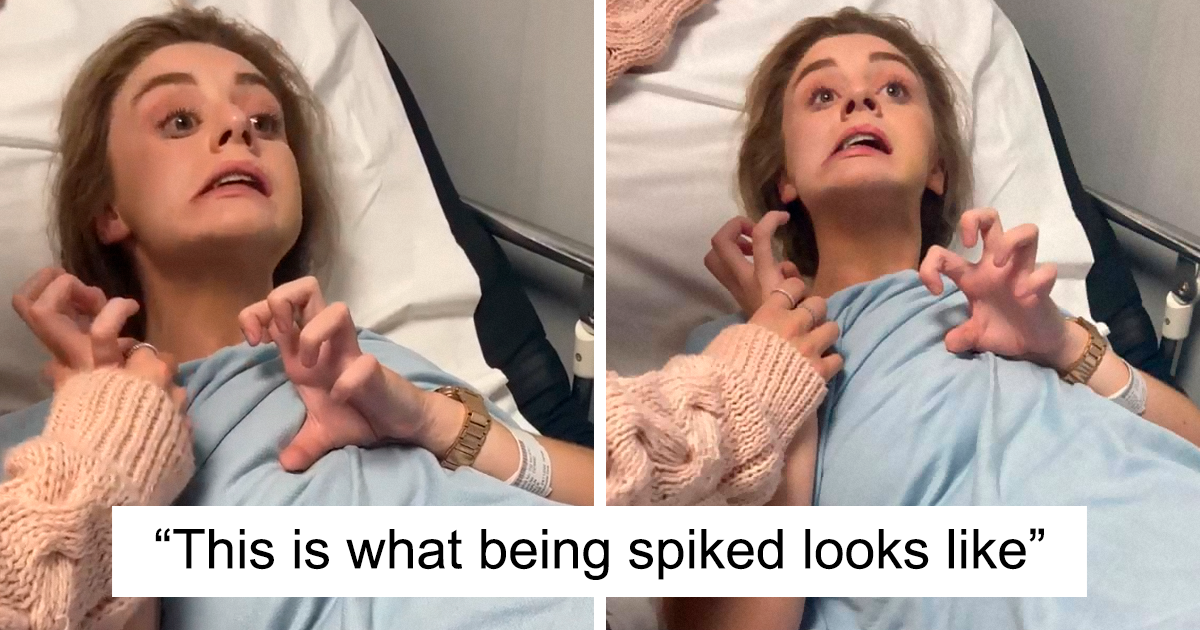
This is not the kind of viral video anyone wants to make. A mom films her 18-year-old daughter lying in a hospital bed, muscles locked, eyes glazed, after accepting what she thought was just another drink on her first big night out. The clip makes its way online, gets picked up by places like Bored Panda, and suddenly millions of strangers are watching a family’s worst nightmare in real time.
It is deeply uncomfortable to look at and that is exactly the point. This mom is not chasing views. She is doing what many parents quietly hope they will never have to do: turning a terrifying experience into a warning. Her message is simple and brutal at the same time: this can happen to your kid, too.
Drink spiking is not an urban legend or something that only happens “to other people, in other places.” Research and campus surveys across the United States show that a meaningful percentage of young adults report having their drink or food tampered with at some point, often in bars, clubs, or college parties. Behind every statistic is a real person who went out to have fun and ended up in an emergency room instead.
In this article, we will walk through what happened in this now-famous spiking case, what drink spiking actually is, how common it really seems to be, and most importantly what you, your friends, and your family can do to stay safer. The tone will be honest, practical, and occasionally a bit wry, because fear alone does not keep anyone safe. Clear information and realistic habits do.
The Story Behind the Disturbing Video
The viral video centers on an 18-year-old named Millie, out celebrating her first legal night in a club. According to coverage shared by outlets like Bored Panda and U.S. media sites, she had bought her own drinks but later accepted one offered by a man. It was presented as “just try it,” the kind of casual social interaction that happens thousands of times a night in bars around the world.
A few sips later, things went dramatically wrong. Back at a friend’s place, Millie felt suddenly, overwhelmingly unwell. Her body stiffened, her jaw clenched, and she could barely speak. She was rushed to the hospital, where doctors believed she had been given a combination of strong alcohol and other substances likely a fast-acting sedative or similar drug often associated with drink spiking.
Her mom filmed her hospital bed, not because she wanted to scare the internet, but because she wanted to show what drink spiking looks like in real life. No glossy TV drama, no dramatic soundtrack just a young woman who looks almost “possessed,” unable to control her own body.
Thankfully, she recovered physically. But the emotional aftermath, for both mother and daughter, is harder to measure. The mom later said she shared the video in hopes that other young people would think twice before accepting drinks from strangers and that other parents would talk openly with their teens and college-age kids about what can go wrong on a night out.
What Exactly Is Drink Spiking?
“Drink spiking” generally means adding alcohol or drugs to someone’s drink without their knowledge or consent. Sometimes it is “just” extra alcohol, meant to get someone far drunker than they planned. Other times, it involves sedatives, tranquilizers, or other drugs that can cause loss of coordination, blackouts, or complete unconsciousness.
Substances commonly mentioned in drink-spiking discussions include:
- High-proof alcohol added to an already alcoholic drink
- Sedatives and tranquilizers (for example, benzodiazepines)
- So-called “date rape drugs” like GHB (gamma-hydroxybutyrate)
- Other prescription medications misused to incapacitate someone
Many of these substances are colorless, odorless, and tasteless when slipped into a drink, especially if it is dark-colored or strongly flavored. That is why a person can go from “I feel totally fine” to “I can barely stand up” in a matter of minutes, even if they have had only a small amount of alcohol.
Surveys of students and young adults in the United States suggest that drink spiking is not rare. In some studies, around 6–8 percent of respondents report having been drugged by someone putting something in their drink at least once, and other surveys have found that about 1 in 13 college students say they have experienced drink or food spiking. In Boston, for example, police logged over 100 reports of suspected drink tampering in a single year. When you translate these percentages into real people, you end up with thousands of victims every year across the country.
How Drink Spiking Feels And Why It Is So Dangerous
One of the most frightening parts of being spiked is how quickly things can spiral. Victims often describe realizing that something is very wrong, but feeling powerless to do anything about it. They might know they need help but can no longer walk, speak clearly, or make sense of what is happening.
Common signs and symptoms of a spiked drink can include:
- Feeling much more drunk than expected, based on how much you drank
- Sudden dizziness, confusion, or disorientation
- Slurred speech or difficulty forming words
- Muscle weakness, trouble walking, or feeling “paralyzed” or rigid
- Blurred vision or strange visual distortions
- Nausea, vomiting, or feeling like your body is shutting down
- Memory gaps or blackouts, where you cannot recall stretches of time
Physically, spiking can lead to dangerous drops in blood pressure, breathing problems, seizures, or loss of consciousness. If someone is left alone or not taken seriously, they can choke, fall, or suffer other serious injuries.
Emotionally, the effects can be just as long-lasting. People who have been spiked often report lingering anxiety about socializing, panic around alcohol, nightmares, guilt (“Did I do something wrong?”), and shame even though they are absolutely not to blame. Some experience full-blown post-traumatic stress symptoms afterward.
Why Parents Are Sharing Videos Instead of Keeping Quiet
It is natural to wonder: is it really okay to share such a vulnerable moment online? That is a complicated ethical question, and different families will answer it differently. But for the mom whose video went viral, her reasoning was clear: she would rather deal with uncomfortable comments than stay silent and watch other families go through the same thing.
Sharing her daughter’s story:
- Makes the risk of drink spiking feel real, instead of theoretical
- Provides a visual example that schools and parents can use when talking about safety
- Shows other survivors they are not alone and that what happened to them is real and serious
- Pushes bars, clubs, and campuses to take the issue more seriously
Is it uncomfortable? Yes. Does it push some people out of their “I do not want to think about this” comfort zone? Also yes. But in a world where so much harmful content spreads online, it is hard to fault a mom for trying to make something good out of a horrible situation.
How Common Is Drink Spiking, Really?
Because many people never report what happened to them or are not sure whether they were spiked there is no perfect national number. But here is what various studies and reports suggest:
- In large surveys of U.S. college students, around 6–8 percent say they have been drugged by having something put into their drink at least once.
- Other research on drink and food tampering has found that more than half of reported spiking incidents happened during college years.
- Local police departments in major cities have recorded dozens to hundreds of suspected drink-spiking reports in a single year.
Those percentages might sound small, but imagine a campus of 20,000 students. Even 6 percent would mean over 1,000 students on that campus alone have experienced spiking at some point. Now scale that across multiple campuses, cities, and nightlife scenes, and you get a fuller, more troubling picture.
On top of that, many people are not sure what to call their experience. They might chalk it up to “I guess I got really drunk that night,” especially if they are embarrassed or worried they will not be believed. That underreporting means the true scope of the problem is almost certainly larger than official numbers suggest.
Practical Ways to Protect Yourself and Your Friends
Let us be clear: the blame for drink spiking lies 100 percent with the person who does the spiking, not the person holding the glass. Safety tips are about harm reduction, not victim blaming. You should be able to set a drink down and trust that it will not turn into a chemistry experiment.
Still, until the world catches up, some practical habits can reduce risk:
Smart Habits at Bars and Parties
- Watch your drink being made. Order directly from the bartender whenever possible. If a stranger offers to buy you a drink, walk with them to the bar and watch it poured.
- Never leave your drink unattended. If you go to the bathroom or dance floor, finish it or get a new one later.
- Avoid shared containers. Punch bowls, open pitchers, and communal jugs are prime targets for tampering.
- Stick with your group. Friends should keep an eye on one another’s drinks and behavior. If someone suddenly seems very off, take it seriously.
- Use drink covers or lids when available. Some bars now offer lids or anti-spiking covers, and there are products that can stretch over cups or test for certain drugs.
Know the Early Signs
If you or a friend suddenly feel far more intoxicated than you should based on what you have had to drink, or if symptoms like slurred speech, confusion, or difficulty moving come on quickly, treat that as a red flag. You do not need to “prove” a drink was spiked to take action.
What To Do If You Think a Drink Has Been Spiked
If you suspect that you or someone nearby has been spiked, time matters. Here is what experts generally recommend:
- Get to a safe place. Away from the crowd, noise, or anyone acting suspicious. Do not let the person leave with a stranger.
- Tell staff or security. Let bar staff, security, or event organizers know what is happening. They may be able to help, check cameras, or call emergency services.
- Call for medical help. If someone is vomiting, unresponsive, having trouble breathing, or cannot stand or talk, call emergency services immediately.
- Keep the drink if possible. If it is safe to do so, keep the glass do not throw it away. It might later be useful for testing.
- Stay with the person. Do not leave them alone. Monitor their breathing and responsiveness while waiting for help.
- Consider reporting to the police. Even if you are not sure, reporting suspected spiking helps build a record and can protect others.
Afterward, emotional support matters just as much as medical care. Survivors may need time, therapy, or support groups to process what happened. If sexual assault is involved, contacting a local crisis center or national helpline can connect them with advocates who understand both the medical and legal sides of the situation.
How Bars, Campuses, and Communities Are Responding
The good news: more people are taking drink spiking seriously. Bars in some U.S. states have started keeping drug-testing kits on hand and posting signs encouraging customers to speak up if they suspect tampering. In places like California, new laws require certain bars to offer drink lids upon request, adding one more layer of protection for patrons.
On college campuses, health and wellness offices are rolling out educational campaigns about drink spiking, training peer educators, and encouraging students to report suspicious incidents even if they are not sure what happened. These efforts are part of a larger movement to address consent, sexual violence, and substance misuse more honestly.
It is not perfect and no lid or poster can fix predatory behavior but it is a start. The more people talk about drink spiking as a real, preventable harm, the harder it becomes for perpetrators to hide behind myths and silence.
Talking to Your Teen or College Student About Nights Out
If you are a parent, you may be torn between wanting to warn your kid and not wanting to freak them out. Totally normal. Here are a few ways to make the conversation more useful and less lecture-y:
- Start from a place of trust. Make it clear that you are not assuming they are irresponsible; you simply know the world can be messy.
- Use real stories, not scare tactics. Sharing cases like Millie’s can be powerful, especially when you highlight that she did not do anything “wrong.”
- Keep it practical. Talk about specific habits: watching drinks being poured, sticking with friends, and what to do if someone seems suddenly very out of it.
- Promise support, not judgment. Tell them directly: “If something like this ever happens to you or a friend, you can call me, any time, and I will focus on getting you safe first, questions later.”
- Revisit the topic. A single talk is a monologue; revisiting it over time turns it into a real conversation.
The mom who put her daughter’s terrifying hospital video online did the world a strange kind of favor. You do not have to share your child’s hardest moments with millions of strangers but you can absolutely use her courage as a springboard for your own family’s safety plans.
Real-Life Experiences and Lessons From Survivors and Parents
To better understand what drink spiking looks like beyond a single viral clip, it helps to listen to the kinds of experiences survivors and families often describe. The stories below are composites inspired by patterns in news reports, campus interviews, and prevention resources not direct quotes from any one person. But the themes show up again and again.
“I Thought I Was Just Being Dramatic”
Jenna was a sophomore in college when she went to a friend’s twenty-first birthday at a busy off-campus bar. She remembers having one beer, then a second drink a friend handed her “from the guy at the bar.” Within twenty minutes, her legs felt like concrete and the room tilted every time she blinked.
“I kept thinking, ‘I only had two drinks, I can’t be this drunk,’” she later told a campus counselor. “Part of me thought I was just being dramatic or maybe I had not eaten enough.” Thankfully, her roommate noticed that something was very wrong Jenna was slurring her words and could not follow a basic conversation. They left immediately, got her home, and monitored her through the night while staying ready to call emergency services.
The next day, Jenna remembered almost nothing after that second drink. For weeks, she second-guessed herself: Did someone slip something into my glass? Was it my fault? Should I have known better? With support, she eventually reframed the story: the fault lay entirely with whoever tampered with her drink, and she and her friends actually did several things right they stayed together, trusted their instincts, and got her out quickly.
A Parent’s Night of Not-Knowing
For parents, one of the hardest parts of spiking is the helpless waiting. Miguel’s 19-year-old daughter, a freshman at a university two states away, called him at 2 a.m., sobbing and barely coherent. A friend grabbed the phone and said, “We think her drink was spiked. We are on the way to the ER.”
Miguel described that night as “the longest few hours of my life.” He booked a flight he was not even sure he would be able to make, kept his phone glued to his hand, and replayed every conversation he had ever had or not had about safety and alcohol. When doctors finally told him his daughter would recover, the relief was huge, but the questions remained.
Later, he and his daughter decided together to talk openly about what happened. They shared their story with her campus health center and participated in an awareness panel. “If what we went through makes even one person think twice about accepting a drink from someone they do not know,” Miguel said, “then at least something good came out of a really awful night.”
Why Many Survivors Never Report
Another pattern in spiking cases is silence. Many people never report to police, campus authorities, or even friends. Some worry they will not be believed, especially if they had been drinking voluntarily. Others fear judgment from family or classmates. And if sexual assault happened while they were incapacitated, the emotional stakes are even higher.
This silence is part of why real numbers are so hard to pin down. It is also why the mom in the Bored Panda story chose to go big and public. Her video is not just a warning; it is also a kind of permission slip: you are allowed to say, “I think my drink was spiked,” even if you do not have lab results or perfect memories to back it up.
When friends, families, and communities respond with empathy instead of skepticism, more survivors feel safe sharing what happened. That, in turn, helps schools and cities recognize patterns like specific venues, nights, or events where multiple complaints cluster and take stronger action.
From Viral Video to Everyday Safety
The reality is that most people will never end up in a viral clip, and that is a good thing. But the everyday choices we all make watching each other’s drinks, walking away from sketchy situations, checking in when someone suddenly seems “off,” and taking spiking seriously instead of joking about it are what really move the needle.
The mom who shared that disturbing video of her spiked daughter probably still wishes none of it had ever happened. But because she chose to hit “post,” thousands of young people and parents encountered a message they might otherwise have ignored: this is real, it is serious, and there are concrete steps you can take tonight to lower the risk.
Whether you are a parent, a student, a bartender, or just someone who likes a good night out, you are part of the equation. Talk about drink spiking. Believe people when they say something felt wrong. And remember that staying safe is not about paranoia it is about looking out for one another so more nights end with funny photos and group texts, not hospital wristbands and viral videos.
Conclusion: Turning One Family’s Nightmare Into a Wake-Up Call
The Bored Panda–style headline is eye-catching: “Mom Shares A Disturbing Video Of Her Spiked Daughter In Hopes That It Could Save Others From A Similar Situation.” Behind that headline is a very real family, a terrifying experience, and a mother’s desperate hope that by showing the worst, she might prevent it from happening again.
Drink spiking is not a myth, and it is not limited to any one country, campus, or club. It thrives in silence, shame, and confusion. The more we talk about it honestly, compassionately, and practically the less room it has to hide. Sharing stories, setting up simple safety habits, pushing institutions to do better, and believing survivors all help shift the culture.
You do not have to share your own disturbing video to make a difference. You just have to start the conversation, listen when someone says “something felt wrong,” and treat drink spiking as what it is: a serious, preventable act of harm, not a punchline. If one teen, one college student, or one parent changes how they handle a night out because of this story, then that mom’s difficult decision to hit “record” and “post” truly might save a life.

