
Hair Care
Meghan Markle Brutally Mocked For “Gross” Thanksgiving Turkey Faux Pas
May
Thanksgiving is supposed to be a cozy American holiday built on gratitude, carbs, and at least one relative loudly insisting they make the only acceptable stuffing. But when Meghan Markle shared a glimpse of her turkey prep ahead of Thanksgiving, the internet did what the internet does best: it grabbed a tiny detail, turned the volume all the way up, and made it a full-blown discourse event.
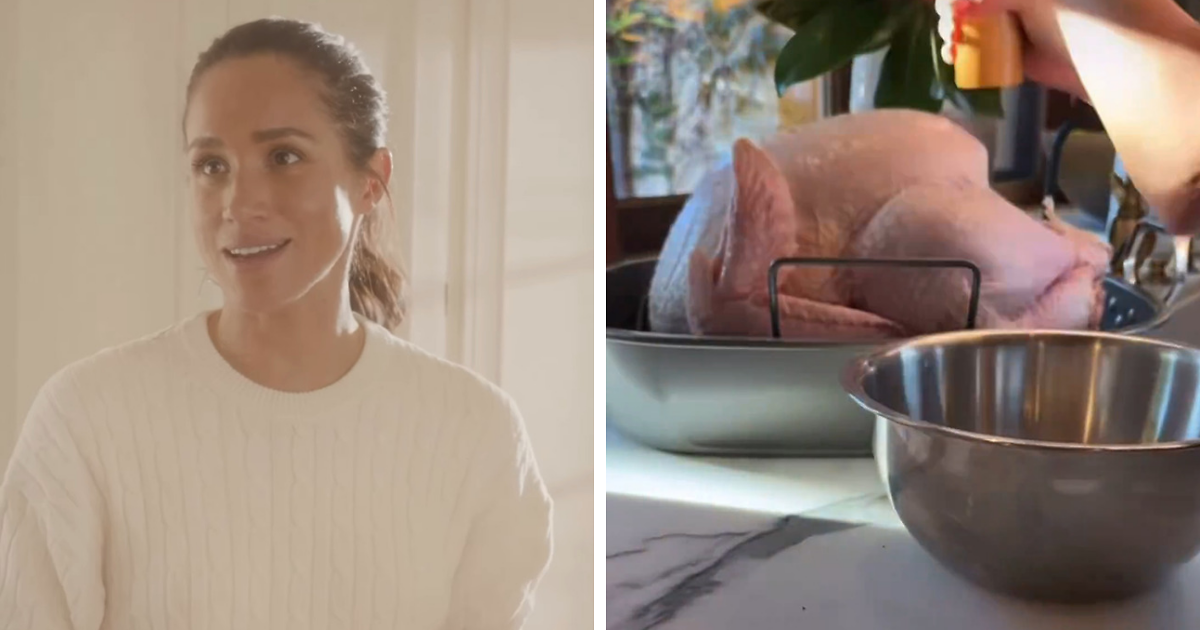
The Duchess of Sussex posted a light, playful clip of herself seasoning a turkey, adding lemon zest, and captioning the moment with a punny “Let the ‘game’ begin.” The mood seemed clear enough: domestic, festive, polished, and very on-brand for the lifestyle world she has been building through As Ever and her Netflix cooking-and-hosting series. Then came the backlash. Critics zeroed in on what they viewed as a kitchen hygiene mistake, calling the clip “gross” and using it as fresh fuel in the ongoing Meghan Markle internet bonfire.
So what exactly happened? Why did a turkey video become a social-media roast? And why do celebrity kitchen moments somehow end up feeling like a referendum on modern fame, food safety, and whether the internet can ever just let someone zest in peace? Let’s carve into it.
What Sparked the Backlash?
The controversy grew from a short Thanksgiving cooking clip that showed Meghan handling a raw turkey while seasoning it in a roasting pan. On its own, that might have been just another holiday lifestyle post. But viewers quickly noticed details they found questionable, especially that she appeared to be wearing jewelry while handling the bird and was not using gloves.
That was enough to send the comments section and social media into full dramatic-orchestra mode. Some critics argued that jewelry can trap bacteria and make raw poultry handling look careless. Others went further, mocking the moment as proof that the carefully curated domestic-goddess image did not match reality. In classic internet fashion, the reactions escalated from “Hmm, not ideal” to “Absolutely revolting” in about three seconds flat.
The incident landed with extra force because Meghan was not posting as a random home cook with 47 followers and a blurry kitchen light. She was posting as a public figure whose brand is now tied to cooking, hosting, entertaining, and thoughtful living. Fair or not, that raises expectations. When someone is building a lifestyle empire, people do not just watch. They inspect. Closely. Sometimes with the emotional energy of a health inspector who skipped breakfast.
Why Viewers Called It “Gross”
The Raw Poultry Problem
Raw turkey is not exactly a neutral object. It comes with all the glamour of a damp bowling ball and the food-safety risks to match. Public health guidance in the United States has long warned home cooks to treat raw poultry carefully because its juices can spread germs to hands, counters, utensils, and whatever innocent surface happens to be nearby.
That is why viewers reacted so strongly to the idea of rings and bracelets being involved in the process. The concern was less about elegance and more about contamination. Jewelry is one of those things that feels harmless until raw meat enters the chat. Then suddenly every bracelet looks like a tiny bacteria Airbnb.
To be fair, a short clip does not show everything that happened before or after. Viewers did not see whether she immediately washed her hands thoroughly, sanitized surfaces, or removed jewelry moments later. Social media gives fragments, not full kitchen timelines. But in the clipped, hyperreactive world of celebrity content, fragments are often all people need to form a verdict.
The Internet Loves a Food-Safety Panic
There is also a reason turkey-handling stories travel fast: Americans are deeply weird about Thanksgiving food. Not weird in a bad way, necessarily. Just deeply committed. Families have multigenerational feuds over gravy thickness, pie crust texture, and whether cranberry sauce should come from a can or a farm or a spiritual revelation.
Into this world steps a famous duchess with a raw turkey and visible jewelry. That is not just a cooking clip. That is content bait. It combines celebrity, domestic performance, holiday anxiety, and the possibility that someone is doing it “wrong.” In other words, it was destined to fly around the internet like a panicked turkey escaping the roasting tray.
The Meghan Factor: Why Small Moments Become Big Stories
If this had been posted by an unknown influencer, it might have earned a few side-eyes and moved on. But Meghan Markle exists in a media ecosystem where even a fruit bowl can become geopolitical commentary. She has spent years being watched through competing lenses: celebrity, ex-working royal, entrepreneur, podcast host, producer, feminist symbol, tabloid obsession, and internet Rorschach test.
That means even ordinary lifestyle content arrives preloaded with tension. Supporters see a woman sharing a holiday moment and building a brand around home, food, and family. Critics see performance, image management, or another chance to question authenticity. The turkey video became less about turkey and more about the ongoing battle over who Meghan is supposed to be.
That tension matters because Meghan’s current public identity is tied closely to homemaking and hospitality. Her rebranded lifestyle venture, As Ever, and her Netflix series With Love, Meghan both lean into cooking, gardening, entertaining, and intentional living. Her Thanksgiving content fit neatly into that strategy. But the downside of a polished lifestyle brand is obvious: the moment anything looks off, the audience does not just clock a mistake. They interpret it as a crack in the whole aesthetic.
Was the Criticism Fair?
Yes and no. The food-safety concern itself was not invented out of thin air. Americans are repeatedly told to handle raw poultry carefully, avoid cross-contamination, wash hands thoroughly, and cook turkey to a safe internal temperature. So when viewers saw something that looked inconsistent with those basics, it made sense that some would point it out.
But the scale and tone of the backlash were classic internet overkill. A brief cooking clip turned into mocking nicknames, dramatic declarations, and sweeping judgments about her competence. That leap says less about poultry and more about social media’s love of humiliation theater. The modern internet does not simply critique a moment. It wants a pile-on, a meme, a nickname, and preferably a trial by comment section before dessert.
There is also a strange performance standard at work in celebrity domestic content. Audiences expect stars to feel relatable and perfect at the same time. The meal should look homemade but camera-ready. The kitchen should feel casual but luxurious. The celebrity should seem warm, natural, and effortless while also never making a visible mistake. It is a standard no real person can meet, because real kitchens are messy and real humans are distractible. Sometimes the thyme goes in the wrong bowl. Sometimes the apron string snaps. Sometimes the internet decides your turkey is a character flaw.
What Safe Turkey Handling Actually Looks Like
For all the noise around the clip, the useful takeaway is simple: holiday turkey prep is one place where basic food safety really matters. Raw poultry can spread germs through splashing juices or contaminated hands. That is why health agencies recommend washing hands thoroughly after handling the bird, avoiding cross-contact with other foods and surfaces, and cooking turkey to a safe temperature.
One especially important point is that washing or rinsing raw turkey is not recommended. A lot of people still do it because of family traditions or old recipes, but food-safety experts have spent years warning that it can spread germs around the sink and kitchen. In other words, if your Thanksgiving ritual includes giving the bird a spa treatment, the experts would like a word.
Jewelry is not always the headline item in official consumer guidance, but the logic behind the criticism is easy to understand. Anything that makes raw poultry juices harder to clean off completely is worth reconsidering. Removing rings, washing hands well, cleaning surfaces, and using separate utensils for raw and cooked food are the kind of boring steps that save people from very unfun holiday consequences.
The truly glamorous part of turkey prep, sadly, is not the lemon zest. It is the meat thermometer. Turkey should reach a safe internal temperature before serving, and leftovers should be handled properly too. This is not the sexy influencer content anyone asked for, but it is the content your stomach will thank you for.
Why This Story Took Off So Fast
The answer is simple: it was the perfect internet cocktail. It mixed celebrity fascination, holiday timing, a lifestyle brand, a visual “gotcha” moment, and a topic everyone thinks they understand. Add Meghan’s uniquely polarized public image, and the result was almost guaranteed to spread.
The story also worked because it was easy to summarize. “Meghan Markle mocked over gross turkey mistake” is clicky, compact, and emotionally loaded. It invites outrage, curiosity, and smugness all at once. Readers do not need much context to jump in. They either think, “That’s ridiculous, leave her alone,” or “Nope, that is kitchen jail.” Either way, they click.
And there is one more reason the story had legs: it touched the gap between aspiration and reality. Lifestyle media sells a polished dream of home life. Beautiful counters. Beautiful produce. Beautiful golden turkey moments. But actual cooking is slippery, awkward, and occasionally gross. A celebrity accidentally reminding people of that will always trigger a reaction, especially when the image on sale is not “chaotic home cook” but “curated domestic calm.”
Beyond the Mockery: The Bigger Lesson
If there is a smarter way to read this whole episode, it is not as proof that Meghan Markle is uniquely terrible in a kitchen or uniquely persecuted on the internet. It is that the modern audience has become extremely skilled at turning tiny visual details into major symbolic battles.
One turkey clip became a referendum on hygiene, branding, authenticity, class, celebrity, domestic labor, and whether public women are allowed to be imperfect without being publicly barbecued. That is a lot to ask from one poor bird.
The healthier response is probably somewhere in the middle. You can acknowledge that the criticism had a reasonable food-safety basis while also recognizing that the internet’s delight in mockery tends to outrun common sense. Yes, people should handle raw poultry carefully. No, that does not require acting as though a holiday cooking clip is the collapse of civilization.
Related Experiences: Why This Story Felt So Familiar to So Many People
Part of the reason this story struck a nerve is that almost everyone who has cooked a major holiday meal has had at least one moment of kitchen panic. Maybe it was not turkey jewelry discourse, but it was something. The tray slid sideways. The butter burned. Someone used the good towel to wipe chicken juice and instantly transformed a peaceful morning into a full family emergency. Holiday cooking has a way of making people feel like they are starring in a festive disaster movie with better side dishes.
That is why the Meghan Markle turkey moment felt oddly relatable under all the celebrity gloss. Plenty of people have looked back at a rushed kitchen decision and thought, “Well, that was not my finest culinary hour.” The difference is that most of us do not have a global audience ready to replay it in slow motion and invent nicknames before the rolls are out of the oven.
There is also a generational aspect to these experiences. Many Americans grew up in homes where certain cooking habits were treated as unquestionable tradition. Someone always washed the turkey because Grandma did. Someone always stuffed the bird the same way because that is how the family has done it since cable television was considered new technology. Then newer food-safety guidance came along and suddenly people realized that some “classic” kitchen wisdom was not wisdom at all. It was just inherited chaos wearing an apron.
That creates a funny tension in many households. One person says, “The CDC says don’t rinse it.” Another says, “The CDC didn’t make my mother’s turkey.” A third person is just quietly trying not to be assigned dish duty. In that sense, Meghan’s moment tapped into something bigger than celebrity gossip. It touched the very American collision between family ritual and updated health guidance.
There is a social side to it too. Thanksgiving cooking is rarely just about food. It is about performance, hospitality, memory, pressure, and wanting everything to feel warm and special. Hosts often feel like they are managing a tiny holiday production company where the cast keeps asking where the napkins are. Under that kind of pressure, even smart, capable people can overlook little things. The turkey takes forever. The stuffing needs more stock. Somebody is texting that they are twenty minutes away. Suddenly a simple meal feels like a timed exam sponsored by butter.
That is why the harshest reactions to celebrity holiday clips can sometimes feel a little hypocritical. Many of the same people mocking a public figure’s kitchen mistake have probably committed at least one kitchen misdemeanor of their own. They reused a marinade. They forgot to sanitize a cutting board. They left the pie out too long because everyone got distracted arguing about politics, football, or who brought the inferior mashed potatoes. Holiday kitchens are messy because human beings are messy.
In the end, the most relatable part of this whole saga may be the gap between the ideal Thanksgiving and the real one. The ideal version is calm, beautiful, and lightly scented with sage. The real version involves timers beeping, family members wandering in at the worst possible moment, and at least one pan that looks suspiciously determined to sabotage the evening. Celebrity or not, anyone cooking a holiday meal is trying to create something warm out of a little chaos. Sometimes they nail it. Sometimes the internet notices the bracelet first.
Conclusion
Meghan Markle’s so-called Thanksgiving turkey faux pas became a viral story because it sat at the crossroads of food safety, celebrity branding, and the internet’s endless appetite for ridicule. The concern behind the backlash was not entirely baseless: raw poultry deserves careful handling, and viewers were reacting to a detail that looked off. But the pile-on also revealed how eagerly online culture transforms minor domestic moments into character judgments.
In the end, this was not just a turkey story. It was a story about scrutiny. Meghan’s every lifestyle post now operates under a microscope, especially because she is building a public identity around cooking, hosting, and home life. That means even a quick holiday clip can become a broader debate about authenticity, perfection, and whether anyone in the public eye is allowed a less-than-flawless moment.
The sensible takeaway is delightfully unglamorous: handle raw turkey carefully, wash your hands, trust the thermometer, and maybe remove the jewelry before you go full Thanksgiving mode. As for the internet, it will probably keep doing what it does. But your bird, at least, deserves a calmer ending.

