
Makeup
Learning From Peers’ Strengths
May
Learning from peers’ strengths sounds simple, almost suspiciously wholesome, like something printed on a classroom poster next to a cartoon pencil wearing sneakers. But beneath the friendly phrase is a powerful idea: people often grow faster when they study what others do well, not just what they themselves do wrong.
Whether you are a student improving an essay, a teacher building a stronger classroom culture, a manager developing a team, or a professional trying not to look confused during a spreadsheet meeting, peer strengths can become a living library of practical wisdom. A peer’s patience, clarity, creativity, organization, confidence, listening skill, or problem-solving style can teach lessons no textbook can fully capture.
The best part? Learning from peers does not require copying them like a human photocopier. It means observing, asking, adapting, and practicing. You borrow the strategy, not the personality. You learn the move, not the whole dance routine.
What Does “Learning From Peers’ Strengths” Mean?
Learning from peers’ strengths is the practice of noticing what classmates, coworkers, teammates, or colleagues do especially well and using those observations to improve your own thinking, habits, and performance. It is different from comparison, which often asks, “Why am I not as good as they are?” Peer learning asks a better question: “What can their strength teach me?”
This shift matters. Comparison can make people defensive, jealous, or discouraged. Strength-based peer learning creates curiosity. Instead of seeing someone’s talent as a threat, you treat it as evidence that a useful skill can be learned, practiced, and adapted. Your peer becomes less of a rival and more of a walking tutorialhopefully one with better jokes than a software manual.
Why Peer Strengths Are So Powerful
People often understand concepts better when they see them performed by someone close to their own level. A teacher, supervisor, or expert may be brilliant, but their mastery can feel distant. A peer, however, makes improvement look reachable. When a classmate explains a math shortcut in plain language or a coworker calmly handles a tense client call, the lesson feels practical and human.
Peer strengths also reveal multiple paths to success. One student may write beautiful introductions. Another may organize research like a tiny, determined librarian. One teammate may ask sharp questions. Another may make everyone feel heard. Seeing these different strengths helps learners understand that excellence is not one narrow road. It is more like a well-marked hiking trail system, except with fewer mosquitoes and more sticky notes.
The Science Behind Peer Learning
Educational research has long supported the value of active and collaborative learning. When learners discuss, problem-solve, explain, question, and revise together, they process information more deeply than they often do through passive listening alone. Peer interaction can help clarify misunderstandings, expose students to new perspectives, and strengthen communication skills.
Social and emotional learning also plays a major role. To learn well from peers, people need self-awareness, relationship skills, responsible decision-making, and the ability to receive feedback without emotionally collapsing into a puddle under the desk. These abilities help learners listen, reflect, revise, and contribute to a healthier group environment.
In workplaces, strengths-based development has become equally important. Employees who understand their own strengths and recognize the strengths of others are better positioned to collaborate effectively. A team becomes more adaptable when people know who is good at analysis, who can simplify complexity, who spots risks early, and who can keep a meeting from turning into a 90-minute fog machine.
Peer Feedback: The Bridge Between Strength and Growth
One of the most practical ways to learn from peers’ strengths is through structured feedback. The key word is “structured.” Without guidance, peer feedback can become either too vague“Good job!”or too brutal“This paragraph made my soul leave my body.” Neither is especially useful.
Strong peer feedback is kind, specific, and helpful. Kind feedback respects the person. Specific feedback names the exact strength or area for improvement. Helpful feedback gives the learner something they can actually use. For example, instead of saying, “Your presentation was nice,” a useful peer might say, “Your opening story made the topic easy to understand, and your slide titles helped me follow the argument.” That comment identifies transferable strengths: storytelling and clear organization.
Start With Strengths First
Beginning with strengths is not sugarcoating. It is orientation. When learners understand what is already working, they can build from a stable foundation. A student who hears, “Your evidence is strong, but your transitions need work,” knows what to preserve and what to revise. A coworker who hears, “Your data analysis is clear, but the executive summary needs a sharper takeaway,” knows where the gold is buried and where the shovel should go next.
Use Models of Excellent Work
Another powerful method is analyzing examples of high-quality work. Students can examine strong essays, scientific diagrams, project plans, presentations, or design samples and ask: What makes this effective? What choices did the creator make? What can we try in our own work?
This turns quality from a mystery into a map. Instead of “be better,” learners get visible evidence of what better looks like. That is a relief, because “be better” is not a strategy. It is a motivational mug with no instructions.
Examples of Learning From Peers’ Strengths
In the Classroom
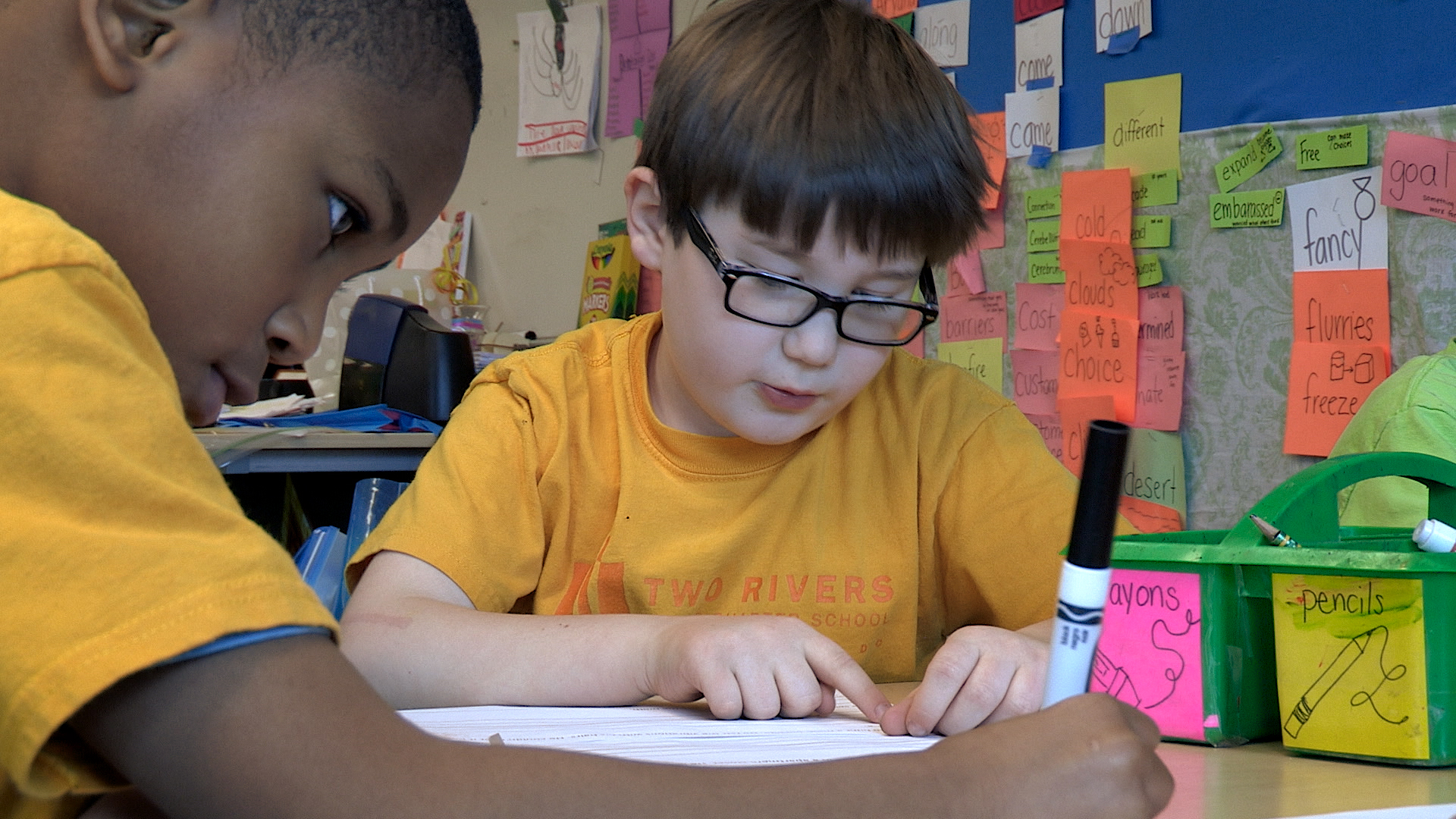
Imagine a middle school writing class. One student writes vivid sensory details. Another builds logical arguments. A third is excellent at titles. During peer review, the teacher asks students to identify one strength in each paper and explain why it works. Over time, students begin borrowing techniques. The “logical argument” student experiments with imagery. The “sensory detail” student learns to strengthen claims. The “great title” student becomes mildly famous for naming essays, which is not a bad classroom legacy.
In College
In a college study group, one student understands theories quickly, another creates flashcards, another asks questions that reveal hidden gaps, and another explains concepts through examples. If the group pays attention to strengths, members do more than divide homework. They learn how to learn. They observe note-taking systems, questioning habits, memory tools, and explanation techniques that can improve their own academic performance.
At Work
In a workplace team, one person may be excellent at planning, another at client relationships, another at technical troubleshooting, and another at presenting ideas. A strengths-aware team does not treat these differences as accidents. It studies them. Team members ask, “How do you prepare for that meeting?” or “What questions do you ask before solving the problem?” The answers become shared knowledge.
How to Learn From Peers Without Copying Them
Copying a peer’s strength exactly can feel unnatural. The goal is not to become someone else. It is to translate their method into your own style. A quiet student can learn from a confident presenter without becoming loud. A creative thinker can learn from an organized peer without turning into a color-coded calendar enthusiast overnight.
Try this four-step approach:
1. Observe the Strength
Notice what the peer does well. Is it clarity? Patience? Preparation? Humor? Precision? Calm under pressure? Look for the behavior behind the result.
2. Name the Strategy
Turn the strength into a clear sentence. For example: “She previews her main points before explaining details,” or “He asks clarifying questions before offering solutions.” Naming the strategy makes it easier to practice.
3. Ask Respectful Questions
Most people appreciate thoughtful questions about their strengths. Try asking, “How do you organize your notes so clearly?” or “What do you do before giving feedback?” This is also a great way to compliment someone without sounding like you are writing a fan letter with glitter.
4. Adapt and Practice
Choose one small behavior to try. Do not attempt a total personality renovation by Thursday. Practice one strategy, reflect on the result, and adjust it to fit your own voice.
Common Mistakes in Peer Learning
Turning Strengths Into Competition
The fastest way to ruin peer learning is to turn every strength into a scoreboard. If one student is a strong speaker, that does not mean everyone else is losing. It means the group has a model. Healthy peer learning celebrates excellence without creating a classroom or workplace version of a talent show with invisible judges.
Giving Vague Praise
“You’re smart” may feel nice, but it does not teach much. “Your explanation worked because you used a simple example before introducing the technical term” is much more useful. Specific praise helps others understand exactly what to repeat.
Ignoring Quiet Strengths
Some strengths are loud: public speaking, leadership, quick problem-solving. Others are quieter: listening carefully, noticing details, staying consistent, encouraging others, or asking thoughtful questions. Strong peer-learning cultures recognize both. The person who keeps the group calm before a deadline may be saving the project from becoming a group-text disaster.
How Teachers and Leaders Can Encourage Strength-Based Peer Learning
Teachers, managers, and team leaders can make peer learning more effective by designing routines that help people notice and discuss strengths. This does not have to be complicated. In fact, if it requires a 47-page handbook, a laminated flowchart, and three committee meetings, it may already be too complicated.
Start by setting norms. Encourage feedback that is respectful, specific, and focused on the work rather than the person’s worth. Use sentence starters such as “One strength I noticed is…” or “A strategy I might try from your work is…” These prompts help learners move beyond surface-level comments.
Next, make strengths visible. Display strong examples, invite students or employees to explain their process, and create opportunities for peer demonstrations. A student can show how they revised a paragraph. A coworker can explain how they prepare for a client call. A team member can walk through how they organize a project timeline.
Finally, build reflection into the process. Ask learners to identify one peer strength they observed and one action they will try. Reflection turns admiration into application.
Why This Skill Matters Beyond School
Learning from peers’ strengths is not just an academic strategy. It is a life skill. Adults learn constantly from peers: how to negotiate, manage time, communicate with difficult people, lead meetings, solve problems, parent, cook, budget, exercise, and survive group chats without losing faith in humanity.
In a fast-changing world, no one can master everything alone. The ability to learn from the strengths around you makes you more flexible and less isolated. It also makes you more generous, because once you begin noticing others’ strengths, you usually become better at recognizing your own.
Conclusion: Growth Is Better When It Is Shared
Learning from peers’ strengths turns everyday interaction into a practical classroom. It helps students produce stronger work, supports professionals in building better teams, and reminds everyone that improvement does not always begin with criticism. Sometimes it begins with noticing what is already workingin someone else’s essay, meeting, explanation, design, question, or quiet act of leadership.
The real magic is not that peers have strengths. Everyone does. The magic is learning to see those strengths clearly, talk about them respectfully, and adapt them wisely. When people do that, a group becomes more than a collection of individuals. It becomes a learning community, and thankfully, no one has to wear matching T-shirts unless the committee insists.
Experiences Related to Learning From Peers’ Strengths
One of the most memorable experiences connected to learning from peers’ strengths happens in group projects. At first, group work can feel like a social experiment designed by someone who enjoys chaos. One person wants to start immediately, another wants to think for three days, someone disappears into the digital wilderness, and someone else volunteers to “make the slides” with suspicious enthusiasm. But when the group begins noticing strengths instead of complaining about differences, the project changes.
For example, a student who struggles with public speaking may notice that a peer presents calmly because she practices the first two minutes several times, writes short cue cards, and uses pauses instead of filler words. That observation is practical. The quieter student does not need to become identical to the confident speaker. He can simply adopt one method: practicing the opening until it feels familiar. Suddenly, confidence becomes less mysterious. It is not magic; it is preparation wearing a nice jacket.
Another common experience happens during writing workshops. A student may feel stuck because their essay sounds flat. Then they read a peer’s draft and notice how the peer uses concrete examples, smoother transitions, or a stronger conclusion. The lesson becomes visible. Instead of hearing “add more detail,” the student sees how detail works. That kind of learning often sticks because it is attached to a real example, not an abstract rule floating around like a grammar ghost.
In professional settings, learning from peers’ strengths can be even more valuable. A new employee might watch an experienced coworker handle customer complaints with calm language: “I understand why that would be frustrating. Let me look into the options.” The new employee learns that calm communication is not passive. It is strategic. Another worker might notice that a colleague always sends meeting summaries with clear next steps. Soon, the whole team spends less time asking, “Wait, what did we decide?”a question that has haunted offices since the invention of meetings.
Peer strengths can also teach emotional habits. Some people recover quickly from mistakes. Some ask for help without shame. Some know how to disagree respectfully. These strengths are easy to overlook because they are not always measured by grades, awards, or performance dashboards. Yet they shape the quality of learning and work. Watching a peer say, “I misunderstood that; let me try again,” can teach resilience more effectively than a motivational poster featuring a mountain.
The best personal takeaway is this: every peer has something to teach, but you have to pay attention. The organized person can teach systems. The creative person can teach possibility. The careful listener can teach empathy. The bold question-asker can teach courage. The steady worker can teach consistency. When you begin looking for strengths, the people around you become less intimidating and more instructive. You stop asking, “How do I measure up?” and start asking, “What can I learn here?” That question can turn classrooms, teams, friendships, and workplaces into places where growth feels shared, practical, and surprisingly enjoyable.
SEO Tags

