
Beauty Unlocked
“Lady Gaga: I’m The Queen Of The Universe”: 35 Celebrity Quotes That Sparked Outrage
Jun
Celebrity quotes are tiny fireworks. Some sparkle, some fizzle, and some accidentally set the entire internet lawn on fire. One sentence, one caption, one interview answer, or one late-night livestream can travel faster than a publicist sprinting toward damage control. That is how a phrase like “I’m the queen of the universe” becomes more than a dramatic sound bite. It becomes a pop-culture fossil, preserved forever in the amber of outrage, screenshots, and group chats.
In Lady Gaga’s case, the line came during a legal dispute with a former assistant, not during a red-carpet speech while wearing a crown made of disco balls. Still, the quote spread because it sounded exactly like the kind of sentence the internet loves: bold, theatrical, slightly absurd, and easy to repeat while making popcorn. But Gaga is hardly alone. Celebrity quote controversies have become their own entertainment genre, somewhere between moral debate, media circus, and “did they really say that?” trivia night.
This article looks at 35 celebrity quotes that sparked outrage, why they landed badly, and what they reveal about fame in the age of instant reaction. Some comments were offensive. Some were tone-deaf. Some were clumsy jokes dragged into the unforgiving spotlight. Others became infamous because they confirmed what critics already suspected: that fame can build a very shiny bubble around a person’s sense of reality.
Why Celebrity Quotes Cause So Much Outrage
Famous people do not speak into normal air. They speak into microphones, headlines, fan accounts, stitched videos, and search engines. A sentence that might sound awkward at brunch becomes a trending topic when attached to a celebrity with millions of followers. The public is not only hearing the quote; it is judging the power behind it.
Celebrity backlash often happens when three ingredients mix: a sensitive topic, a famous speaker, and a quote that feels dismissive, arrogant, or wildly out of touch. Add social media, and suddenly everyone has a front-row seat, a hot take, and possibly a 12-tweet thread.
35 Celebrity Quotes That Sparked Outrage
1. Lady Gaga: “I’m the queen of the universe”
Lady Gaga’s “queen of the universe” line came during a deposition connected to a lawsuit filed by former assistant Jennifer O’Neill. The phrase became instantly headline-friendly because it sounded grandiose, even by pop-star standards. The controversy was not just about ego; it was about labor, power, and how assistants are treated behind the velvet curtain.
2. Kanye West: “Slavery was a choice”
Kanye West’s 2018 remark about slavery triggered intense criticism from fans, historians, celebrities, and commentators. He later tried to clarify his meaning, but the damage was already done. The backlash showed how quickly a provocative thought can become a cultural firestorm when it touches centuries of trauma.
3. Kim Kardashian: “Get your… up and work”
Kim Kardashian’s business advice to women went viral for all the wrong reasons. Critics argued that the quote ignored inherited fame, wealth, connections, childcare, burnout, low wages, and the small matter of rent being rude every month. The lesson: motivational quotes land differently when delivered from inside a luxury empire.
4. Justin Bieber: Anne Frank “would have been a Belieber”
After visiting the Anne Frank House, Justin Bieber wrote that he hoped Anne would have been a fan. Some defended the comment as a teenager trying to connect history to his world. Many others found it self-centered and deeply inappropriate. It became a textbook example of why reverence and branding should not share the same guestbook pen.
5. Vanessa Hudgens: COVID deaths were “inevitable”
During the early days of the COVID-19 pandemic, Vanessa Hudgens made comments on Instagram Live that many viewers heard as careless about death and public safety. She later apologized. The outrage came from timing: people were scared, hospitals were bracing, and nobody wanted pandemic commentary with the emotional texture of a shrug emoji.
6. Gal Gadot: “Imagine”
Gal Gadot’s celebrity sing-along video of John Lennon’s “Imagine” was intended to comfort people during lockdown. Instead, many viewers saw wealthy stars singing from mansions while ordinary people faced job losses, illness, and isolation. The quote was technically a song lyric, but the message became a symbol of celebrity tone-deafness.
7. Ellen DeGeneres: Quarantine felt like “jail”
When Ellen DeGeneres compared staying in her large home during quarantine to jail, viewers did not exactly gather around to pass a tiny violin. The backlash reflected a broader frustration with celebrities who seemed unaware that many people were locked down in cramped spaces, working risky jobs, or losing income.
8. Madonna: COVID was “the great equalizer”
Madonna’s bathtub video calling coronavirus a “great equalizer” drew criticism because the pandemic did not affect everyone equally. Wealth, healthcare access, job security, housing, and race all shaped risk. The statement sounded poetic, but critics argued it floated several miles above reality.
9. Mark Wahlberg: 9/11 “wouldn’t have went down like it did”
Mark Wahlberg apologized after saying that if he had been on one of the hijacked planes on September 11, the outcome would have been different. Families and observers criticized the comment as insensitive to victims and survivors. Action-movie confidence, it turned out, was not the right lens for a national tragedy.
10. John Mayer: His Playboy interview comments
John Mayer’s 2010 Playboy interview became infamous for remarks widely criticized as racist and sexist. He later apologized. The incident damaged his public image and remains one of the clearest examples of how “I was being candid” can become “I should have stopped talking 40 minutes ago.”
11. Paula Deen: Racial slur deposition fallout
Celebrity chef Paula Deen faced career-altering backlash after deposition details surfaced about her past use of racial slurs and plantation-themed event ideas. Sponsors distanced themselves, and her Food Network relationship ended. Her later apologies could not instantly repair the public trust that had evaporated.
12. Roseanne Barr: The racist tweet
Roseanne Barr’s offensive tweet about Valerie Jarrett led ABC to cancel the revived “Roseanne,” despite its strong ratings. Barr later said it was a bad joke, but the network and public response were swift. It remains a major case study in how one post can end a television comeback overnight.
13. Mel Gibson: Anti-Semitic remarks during arrest
Mel Gibson’s anti-Semitic comments during a 2006 arrest caused widespread condemnation and long-term damage to his reputation. He apologized, but the remarks became inseparable from public discussion of his career for years. Some quotes do not merely trend; they stain.
14. Alec Baldwin: Airline tweets and “Words With Friends”
Alec Baldwin was removed from a flight after a dispute involving his phone game. His subsequent comments about the airline and flight staff added fuel. The controversy was lighter than many on this list, but it showed that celebrity irritation can turn a travel delay into a national comedy sketch.
15. Katherine Heigl: “Knocked Up” was “a little sexist”
Katherine Heigl criticized the gender dynamics of “Knocked Up,” calling the film sexist. Some applauded her honesty; others argued it was ungrateful to criticize a hit movie that helped boost her career. The backlash revealed how Hollywood often rewards women for smiling through discomfort, then punishes them for explaining the discomfort later.
16. Megan Fox: Comparing Michael Bay to Hitler
Megan Fox’s comparison of director Michael Bay to Hitler created a major industry controversy and became tied to her exit from the “Transformers” franchise. The quote was extreme, and critics saw it as unprofessional. Supporters later reconsidered the backlash in light of broader conversations about young actresses and Hollywood power.
17. Chrissy Teigen: Old cyberbullying tweets
Chrissy Teigen apologized after old abusive tweets and messages directed at Courtney Stodden resurfaced. The backlash was intense because Teigen had built a brand around wit and relatability. When jokes cross into cruelty, the internet sometimes keeps receipts longer than a tax auditor with insomnia.
18. Cardi B: Admitting past robbery behavior
Cardi B faced criticism after an old video resurfaced in which she discussed drugging and robbing men during her past as a stripper. She responded by explaining the difficult circumstances of her life at the time, but many critics said the comments were disturbing regardless of context.
19. Lana Del Rey: “Question for the culture”
Lana Del Rey’s 2020 Instagram post criticized how women artists are judged, but it named several mostly women of color, triggering accusations of tone-deafness and racial insensitivity. Del Rey defended her intent, yet the phrase “question for the culture” became shorthand for a messy celebrity Notes-app moment.
20. Chris Pratt: “Healthy daughter” Instagram caption
Chris Pratt praised his wife and their “healthy daughter,” which some readers interpreted as insensitive because his son with Anna Faris was born prematurely and faced health challenges. Pratt later said the backlash hurt him deeply. The controversy showed how even affectionate family captions can be judged through complicated personal histories.
21. Blake Lively: “L.A. face with an Oakland booty”
Blake Lively’s Instagram caption quoting a famous lyric drew criticism from people who saw it as racially insensitive and careless. Defenders said it was a pop-culture reference. Critics argued that not every lyric becomes harmless when placed under a glamorous celebrity photo.
22. Taylor Swift: “A special place in hell”
Taylor Swift’s comment about women not helping other women, made after a joke at her expense, caused debate about feminism, humor, and celebrity sensitivity. Some saw it as a valid frustration. Others thought it was an overreaction to a mild awards-show joke.
23. Gwyneth Paltrow: “Conscious uncoupling”
When Gwyneth Paltrow and Chris Martin announced their split using the phrase “conscious uncoupling,” the internet pounced. The quote was not offensive, but it sounded so elite-wellness polished that ordinary divorce suddenly felt underdressed. Sometimes outrage is really just collective eye-rolling in formalwear.
24. Kendall Jenner: The Pepsi protest message
Kendall Jenner’s Pepsi ad suggested a soda could soften protest tension, sparking outrage for trivializing activist movements. Though the controversy centered on an ad rather than a single interview quote, its message became infamous: social justice is complicated, and cola is not a conflict-resolution strategy.
25. Kevin Hart: Old homophobic tweets
Kevin Hart stepped down from hosting the Oscars after old homophobic tweets and jokes resurfaced. He apologized, but debate continued over accountability, growth, and whether old comments should determine current opportunities. The controversy became part of a larger cultural argument about comedy and consequences.
26. Liam Neeson: Revenge story backlash
Liam Neeson faced outrage after recounting a disturbing story about once seeking a Black man to harm after someone close to him was assaulted. He said he was ashamed of the episode, but many critics questioned why he shared it the way he did. Confession does not automatically equal absolution.
27. Matt Damon: Diversity comments
Matt Damon received backlash after comments about diversity in filmmaking during “Project Greenlight.” Critics argued that his remarks minimized the importance of inclusive decision-making behind the camera. The moment became a reminder that even smart people can explain themselves directly into a hole.
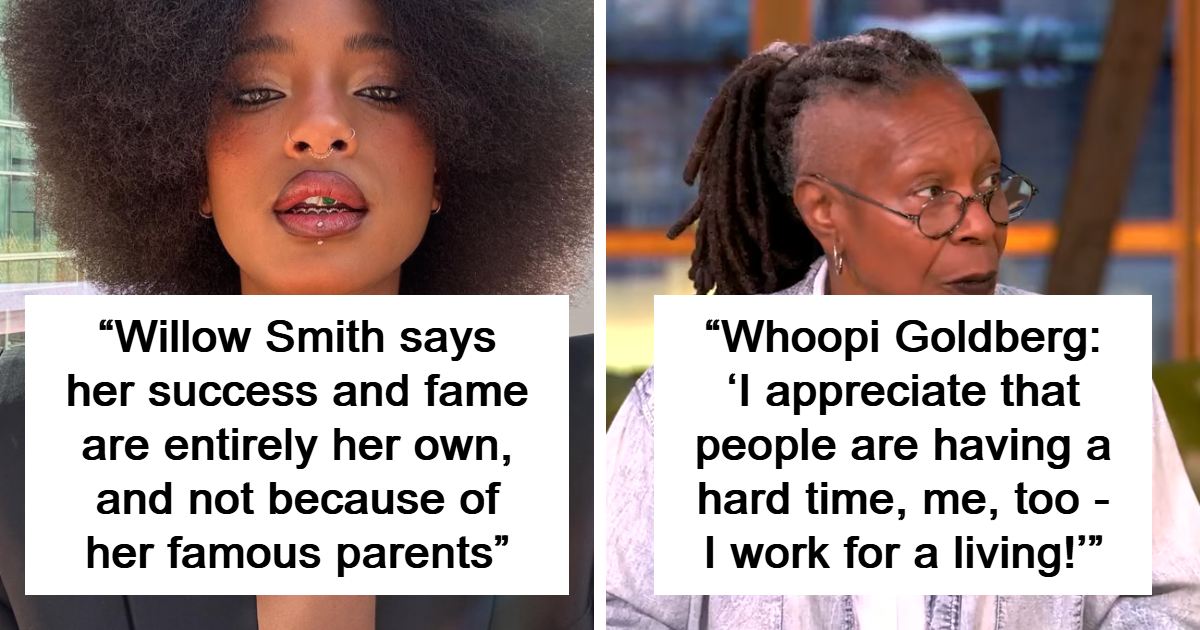
28. Whoopi Goldberg: Holocaust comments
Whoopi Goldberg was suspended from “The View” after comments suggesting the Holocaust was not about race. She apologized and said she stood corrected. The backlash highlighted how historical topics require precision, especially when spoken by influential public figures.
29. Gina Carano: Social media posts
Gina Carano’s social media posts comparing political division to historical persecution contributed to her removal from “The Mandalorian.” Supporters framed it as free-speech punishment; critics saw the posts as offensive and trivializing. The controversy showed how celebrity speech can collide with employer brand risk.
30. Doja Cat: Online chatroom controversy
Doja Cat faced backlash over old online behavior, chatroom participation, and a song title critics found offensive. She denied some allegations and apologized for parts of the controversy. The episode demonstrated how internet pasts are never truly buried; they are just waiting for someone with Wi-Fi and motivation.
31. Iggy Azalea: Old tweets
Iggy Azalea’s old tweets sparked accusations of racism and cultural insensitivity during her rise in hip-hop. The backlash became part of a broader debate over appropriation, authenticity, and who profits from Black musical traditions.
32. Camila Cabello: Old racist posts
Camila Cabello apologized after racist posts from her younger years resurfaced. She said she was ashamed and had grown since then. The controversy reflected a common modern celebrity challenge: proving growth when the internet can replay the worst version of you forever.
33. Billie Eilish: “I love girls” video interpretation
Billie Eilish faced criticism after fans debated whether a caption and video were queerbaiting. The backlash was more about ambiguity than a traditional scandal, but it revealed how closely fans analyze celebrity self-presentation, identity, and marketing.
34. Harry Styles: “People like me” in movies
Harry Styles drew criticism for a comment about gay sex in film promotion that some listeners found awkward or uninformed. The backlash showed that even beloved stars can stumble when discussing representation, especially when audiences expect nuance rather than vague press-tour poetry.
35. Jennifer Lawrence: Sacred-rock story
Jennifer Lawrence apologized after telling a story about scratching herself on sacred rocks while filming in Hawaii. Some viewers found the anecdote disrespectful to Hawaiian culture. Lawrence said she meant it as self-deprecating humor, but the backlash proved that cultural sites are not props for funny stories.
What These Celebrity Backlash Moments Have In Common
These celebrity quotes did not all cause outrage for the same reason. Some were criticized because they were racist, sexist, homophobic, or historically ignorant. Others were condemned because they sounded privileged during moments of public suffering. A few became infamous because they were simply too strange to survive contact with the internet.
The pattern is clear: celebrities get in trouble when they forget the size of the room they are speaking to. A private joke becomes public evidence. A clumsy metaphor becomes a moral referendum. A casual caption becomes a headline. And once the quote is separated from tone, context, facial expression, and the rest of the conversation, it has to survive on its own. Many do not.
Why Outrage Spreads Faster Than Apologies
An outrageous quote is short, emotional, and easy to share. An apology is usually longer, defensive, and less fun to meme. That is why the first version of a scandal often becomes the permanent version. Even when celebrities clarify their intent, the public may remember the screenshot more than the statement.
This does not mean apologies are useless. A sincere apology can slow the fire. It can show growth. It can matter to the people harmed. But apologies work best when they do not sound like they were assembled in a publicist laboratory from recycled phrases: “learning,” “journey,” “context,” “not who I am,” and “deeply regrettable.” Audiences have seen that movie. They know the twist.
The Experience Of Watching Celebrity Outrage In Real Time
There is a strangely familiar rhythm to a celebrity quote scandal. First comes the quote. Someone posts it with the digital equivalent of a gasp: “Did you see this?” Then come the replies, the stitched videos, the explainers, the defenders, the critics, the “actually, context matters” crowd, and the “context makes it worse” crowd. By lunchtime, a sentence has become a courtroom, and everyone with a phone has appointed themselves judge, jury, and snack vendor.
For readers, these controversies can feel oddly addictive. We know we are watching a messy cycle, but we keep scrolling because it offers drama with a moral framework. It is not just gossip; it feels like a debate about values. Was the quote offensive? Was the apology enough? Are people too sensitive, or are celebrities finally being held accountable? The comment section becomes a tiny civilization, and like many civilizations, it collapses by paragraph three.
For fans, the experience is more complicated. When a favorite celebrity says something hurtful or foolish, fans often feel personally embarrassed, as if they co-signed the quote by liking an album in 2016. Some rush to defend the star, sometimes fairly and sometimes with the energy of a lawyer being paid in concert tickets. Others step back and reassess. That is one reason celebrity backlash matters: public figures are not only entertainers; they are identity accessories. People attach memories, aesthetics, and personal meaning to them.
For celebrities, the experience must be brutal, though not always undeserved. Imagine saying one dumb thing and watching it become a permanent search result. Now imagine that the “dumb thing” was not merely dumb but genuinely harmful. Fame magnifies both mistakes and accountability. The public may be unforgiving, but the platform is also enormous. A celebrity’s words can normalize attitudes, dismiss pain, or influence millions of fans who treat them as cultural weather.
The healthiest way to read these scandals is not to enjoy cancellation like a sport, but to ask what the reaction is trying to protect. Sometimes people are protecting historical memory. Sometimes they are protecting marginalized communities from lazy stereotypes. Sometimes they are protecting workers from billionaire advice that sounds like it was engraved on a gold treadmill. And sometimes, yes, people are just bored and looking for a villain of the day.
The best celebrity responses usually contain three things: clarity, humility, and changed behavior. Not a vague “sorry you were offended,” not a Notes-app fog machine, and not a sudden spiritual retreat announced beside a skincare launch. Just a direct acknowledgment, a real understanding of the harm, and proof over time that the lesson stuck. In a culture built on attention, growth may be the rarest performance of all.
Conclusion: Famous Words Have Real Weight
Celebrity quotes spark outrage because fame gives ordinary words extraordinary reach. A sentence from a singer, actor, influencer, or reality star can travel across platforms in minutes and become part of public memory. Sometimes the backlash is excessive. Sometimes it is overdue. Either way, these controversies remind us that public speech is never just sound. It is power, branding, timing, and responsibility all wearing sunglasses indoors.
Lady Gaga’s “queen of the universe” quote may be theatrical enough to headline a pop opera, but it belongs to a much larger pattern. Celebrities live in public, speak in public, and occasionally learn in public. The rest of us watch, react, criticize, forgive, or refuse to forget. And somewhere, a publicist feels a mysterious chill every time a celebrity says, “Can I be honest?”

