
Skincare
Jeff Bezos 10,000-Year Clock
May
Some billionaires buy yachts. Some buy sports teams. Jeff Bezos helped fund a mechanical clock inside a mountain that is designed to keep time for 10,000 years. Subtle? Not exactly. Fascinating? Absolutely.
The Jeff Bezos 10,000-Year Clock, also known as the Clock of the Long Now, is one of the most unusual engineering projects on Earth. It is part monument, part timepiece, part philosophical prank on our short attention spans. Built deep inside a mountain in West Texas, the clock is designed to tick once a year, mark centuries, and keep asking a gloriously uncomfortable question: what are we doing today that will matter thousands of years from now?
At a time when most of us panic when a phone battery drops below 20 percent, the idea of building a machine for the next ten millennia feels almost rebellious. The 10,000-Year Clock is not meant to help anyone get to a meeting on time. It is meant to stretch the human imagination beyond quarterly earnings, election cycles, viral trends, and whatever app update just moved the button again.
What Is the Jeff Bezos 10,000-Year Clock?
The Jeff Bezos 10,000-Year Clock is a massive mechanical timekeeping project developed by the Long Now Foundation, an organization dedicated to encouraging long-term thinking. The idea was originally conceived by computer scientist and inventor Danny Hillis, who began imagining a clock that could operate for 10,000 years as a symbol of civilization-scale responsibility.
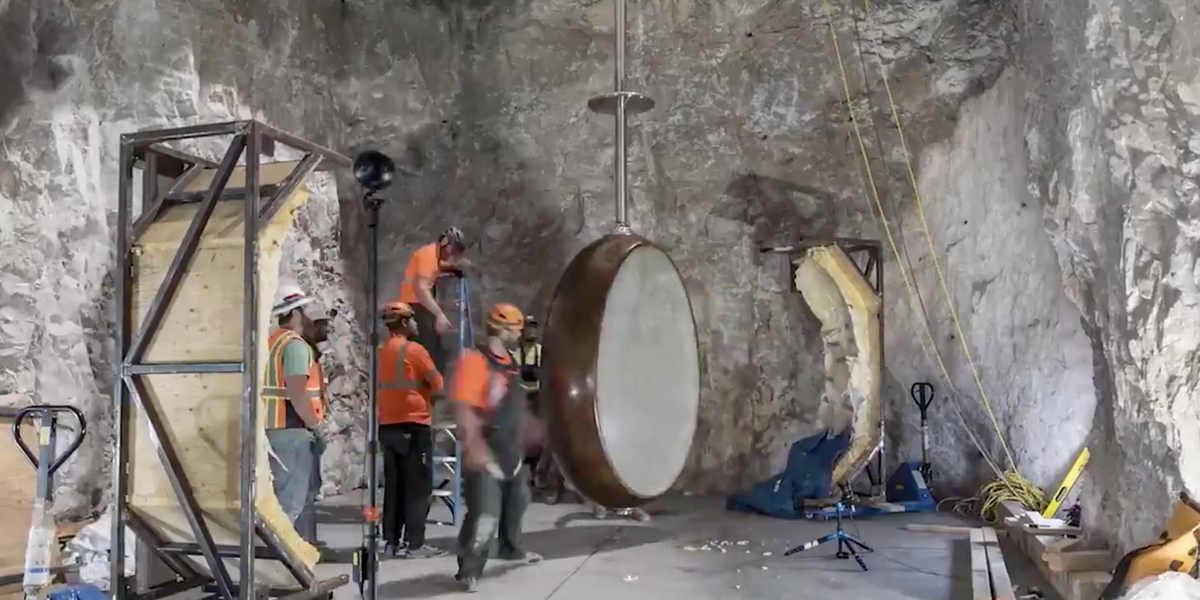
The clock is being built inside a remote mountain on land owned by Jeff Bezos in the Sierra Diablo range of West Texas, near Van Horn. Bezos has reportedly committed about $42 million to the project, making it one of the strangest and most ambitious examples of billionaire-backed engineering. Instead of launching rockets, buying media companies, or naming a building after himself, Bezos backed a clock that may still be ticking when every current brand slogan has turned into archaeological confetti.
The clock is sometimes called the Clock of the Long Now because it is designed to shift how people think about “now.” Not now as in this week, this quarter, or this school year. Long Now means the present as part of a much bigger timeline: the past 10,000 years of human civilization and the next 10,000 years we may still shape.
Why Build a Clock That Lasts 10,000 Years?
The simple answer is: to make people think. The more interesting answer is: to make people think longer.
Modern life rewards short-term behavior. Businesses chase quarterly numbers. Politicians focus on the next election. Social media rewards whatever gets a reaction in the next seven seconds. The 10,000-Year Clock pushes in the opposite direction. It asks people to imagine a future so distant that today’s headlines become dust, yet close enough that our choices may still echo into it.
Danny Hillis wanted the clock to become a cultural symbol, something like the pyramids or Stonehenge, but aimed forward instead of backward. Ancient monuments remind us that people lived, built, organized, dreamed, and argued long before us. The Clock of the Long Now is meant to remind us that people may live, build, organize, dream, and argue long after us too. Some of them may even complain that our era’s user interfaces were terrible. They would not be wrong.
How the 10,000-Year Clock Works
The 10,000-Year Clock is not a giant digital display hiding a rechargeable battery in a cave. It is designed to be mechanical, durable, and understandable by future generations. That matters because 10,000 years is a very long warranty period, and customer support may be difficult to reach in the year 12026.
A Mechanical Machine for Deep Time
The clock is built from long-lasting materials such as stainless steel, titanium, ceramics, quartz, and sapphire. These materials were chosen because the clock must survive corrosion, temperature changes, dust, and the slow but relentless drama of time itself. Ordinary clocks fail because parts wear out, batteries die, electronics become obsolete, and someone eventually loses the charging cable. The 10,000-Year Clock tries to avoid those problems by staying slow, simple, and physically robust.
The clock’s core mechanism includes large gears, weights, a pendulum, a winding system, and displays that show astronomical and calendrical time. It is designed to measure not just hours and days, but larger natural cycles such as years, centuries, and millennia.
Powered by Sunlight and Human Effort
One of the most clever features of the Jeff Bezos 10,000-Year Clock is the way it uses sunlight. The clock can synchronize itself with solar noon, using the sun as a long-term reference point. Sunlight enters the mountain and helps correct the clock’s timing so that it does not drift endlessly away from reality.
The clock also uses stored mechanical energy. Visitors who reach the clock can help wind it by turning a large mechanism. That act is not just practical; it is symbolic. The clock is designed to involve people. It does not merely run for humanity; it asks humanity to participate.
In other words, the clock is not a passive gadget. It is a relationship. A very slow, very heavy, mountain-sized relationship.
Ticks, Chimes, and the Brian Eno Connection
The 10,000-Year Clock is designed to tick once per year. Its century hand advances once every 100 years, and the famous “cuckoo” concept is meant for the millennium mark. The chime system, developed with the help of musician Brian Eno, can generate millions of unique bell sequences. The idea is that the clock can play a different melody for visitors over thousands of years without repeating itself in the ordinary human sense.
This is where the project becomes more than engineering. A clock that chimes differently across deep time becomes a kind of musical message to the future. It is a reminder that technology does not have to be only efficient. It can also be poetic, strange, and slightly ridiculous in the best possible way.
Where Is the 10,000-Year Clock Located?
The first full-scale 10,000-Year Clock is being installed inside a mountain in West Texas. The location is deliberately remote. Reaching the clock is expected to require effort, including a rugged hike through desert terrain. This is not a theme park attraction with a gift shop selling “I survived the millennium cuckoo” T-shirtsthough honestly, those would sell.
The remoteness serves several purposes. It protects the clock from casual vandalism, urban development, and environmental interference. It also turns the visit into a pilgrimage. If someone makes the journey, they are already stepping outside normal time. They have invested effort before they even see the gears.
Inside the mountain, the clock is housed in a vertical shaft hundreds of feet tall. Visitors are expected to move through tunnels and stairways, encountering the mechanism as both machine and architecture. The experience is meant to feel like entering a monument, not checking a wristwatch.
Who Created the 10,000-Year Clock?
The original concept came from Danny Hillis, a computer scientist, inventor, and entrepreneur known for thinking at unusual scales. Hillis began developing the idea in the late 20th century, when the year 2000 felt like a psychological border. Instead of building faster machines, he imagined one of the slowest machines possible.
The Long Now Foundation was established to support this kind of long-term thinking. Its founders and contributors include figures such as Stewart Brand, Kevin Kelly, Brian Eno, and others interested in civilization, technology, culture, and the future. Jeff Bezos became closely associated with the project by funding the Texas clock and providing the land where it is being built.
Bezos has often been linked with long-term projects, from Amazon’s patient business strategy to Blue Origin’s space ambitions. The 10,000-Year Clock fits that pattern, though it is less about commerce and more about imagination. It is a physical argument that the future deserves a seat at the table, even if it cannot vote, spend money, or leave a five-star review.
The Engineering Challenge: Making “Forever” Less Impossible
Building anything for 10,000 years is almost absurd. That is exactly why the project is interesting. A normal engineering project asks, “Will this work?” The 10,000-Year Clock asks, “Will this still make sense to people whose languages, governments, religions, tools, and snack preferences may be completely different from ours?”
The design follows several important principles: longevity, maintainability, transparency, evolvability, and scalability. Longevity means the clock should physically endure. Maintainability means future people should be able to repair it without needing advanced modern technology. Transparency means its operation should be understandable by inspection. Evolvability means it should allow improvement over time. Scalability means prototypes and full-scale versions should teach engineers how the design behaves at different sizes.
That combination is rare. Most modern devices are sealed black boxes. When they break, we replace them. The 10,000-Year Clock is the opposite. It is meant to be seen, understood, maintained, and respected. It is not disposable technology; it is durable technology with a philosophical mustache.
Criticism: Visionary Project or Billionaire Vanity Clock?
Not everyone admires the Jeff Bezos 10,000-Year Clock. Critics argue that spending tens of millions of dollars on a symbolic clock inside a private mountain can look tone-deaf in a world facing poverty, climate change, inequality, and other urgent problems. That criticism deserves attention. A clock that asks us to think about the future should not become an excuse to ignore the present.
The strongest defense of the clock is that symbols matter. Human beings make decisions not only through spreadsheets but through stories, rituals, monuments, and shared images of what matters. A civilization that cannot imagine a future may struggle to protect one. In that sense, the clock is not trying to solve every problem directly. It is trying to change the time horizon in which problems are considered.
Still, the tension remains. Is the 10,000-Year Clock a profound act of optimism or an extravagant object lesson in billionaire privilege? The answer may be both. Great monuments often carry mixed meanings. The pyramids are wonders of human organization and also reminders of hierarchy. Cathedrals inspire awe and also reflect power. The Clock of the Long Now may become a similar artifact: part masterpiece, part debate, part mirror.
Why the 10,000-Year Clock Matters for Technology
The clock matters because it challenges one of technology’s most common assumptions: newer is always better. Most devices today are designed around speed, convenience, and rapid replacement. The 10,000-Year Clock asks designers to think about durability, repairability, and legibility.
Imagine if more technology were designed with even one percent of that mindset. Phones might be easier to repair. Buildings might be designed for adaptation instead of demolition. Software might be built with clearer documentation, fewer dark patterns, and less “Surprise! We changed everything!” energy.
The clock also reminds us that long-term engineering is not just technical. It is cultural. A machine can be built to last, but it will survive only if people continue to care about it. That may be the clock’s deepest insight: the future is not protected by metal alone. It is protected by meaning.
Lessons From the Jeff Bezos 10,000-Year Clock
1. Long-Term Thinking Is a Skill
Thinking long-term does not come naturally in a noisy world. The clock trains the imagination to stretch. It invites us to ask what choices will still matter in 100 years, 1,000 years, or even 10,000 years.
2. Slow Can Be Powerful
The 10,000-Year Clock is powerful precisely because it is slow. It refuses to compete with notifications, trending topics, or market panic. Its slowness is the message.
3. Good Design Includes Future Users
Most products are designed for current buyers. The clock is designed for people who do not exist yet. That is a radical design brief, and it makes ordinary product planning look like ordering lunch.
4. Symbols Shape Behavior
A clock in a mountain will not fix civilization by itself. But symbols can influence what people value. If the clock helps even a small number of leaders, builders, scientists, artists, and citizens think beyond short-term gain, it has done something meaningful.
Experience-Related Reflections: What the 10,000-Year Clock Teaches in Real Life
The most valuable experience connected to the Jeff Bezos 10,000-Year Clock may not be visiting it physically. Most people will never hike to a remote mountain in West Texas, enter a tunnel, climb a long spiral staircase, and stand beside giant gears designed to outlast empires. But the clock still offers a practical experience: a mental one. It changes the scale of thought.
Consider the experience of planning a business, a family project, a garden, a school, or a community. Most people ask, “What can I get done this month?” That is useful, but incomplete. The clock suggests another question: “What am I starting that someone else might continue?” That question changes decisions. A business built with long-term trust in mind behaves differently from one built only for fast profit. A city planned for grandchildren looks different from a city planned only for traffic this year. Even a garden planted with shade trees becomes an act of confidence in the future.
The clock also offers an emotional experience: humility. Standing beside the idea of 10,000 years makes a human lifetime feel brief, but not meaningless. In fact, it can make daily choices feel more meaningful. If we are temporary, then what we pass forward matters. The emails, meetings, bills, and errands may feel small, but the values behind them accumulate. Honesty, care, craftsmanship, patience, and repair are all long-term technologies too.
There is also a useful lesson in maintenance. The modern world loves launches: launch a company, launch a product, launch a campaign, launch a rocket. Maintenance gets less applause. Yet anything that lasts requires care. The 10,000-Year Clock is a monument to maintenance as much as invention. It says that building is only the first chapter. Keeping something alive, useful, understandable, and repairable is the longer story.
For creators, the clock is a reminder to make work that does not expire instantly. Writers can create articles that remain useful beyond one news cycle. Engineers can document systems so future teams are not trapped in a haunted maze of mystery code. Parents and teachers can pass down habits of curiosity rather than only answers. Investors can support projects that strengthen the world instead of merely extracting from it. None of these acts require a mountain, a titanium pendulum, or a billionaire’s checkbook.
The clock’s greatest experience may be the pause it creates. It invites people to stop rushing long enough to ask better questions. What deserves to last? What should be repaired instead of replaced? What are we borrowing from the future without asking? What would a good ancestor do today?
Those questions are the real mechanism. The gears are impressive, the shaft is dramatic, and the chimes are wonderfully theatrical. But the deeper clock is the one it starts inside the mind. Once that begins ticking, it can travel far beyond West Texas.
Conclusion
The Jeff Bezos 10,000-Year Clock is more than an eccentric billionaire project. It is a machine, a monument, a provocation, and a test of imagination. Built inside a mountain and designed to keep time across millennia, it challenges the culture of instant results and disposable technology. Whether viewed as visionary, excessive, inspiring, or all three at once, the Clock of the Long Now succeeds at one thing immediately: it makes the future feel real.
And perhaps that is the point. We do not need to know exactly who will hear its bells thousands of years from now. We only need to care enough to build as if someone might.

