
Hair Care
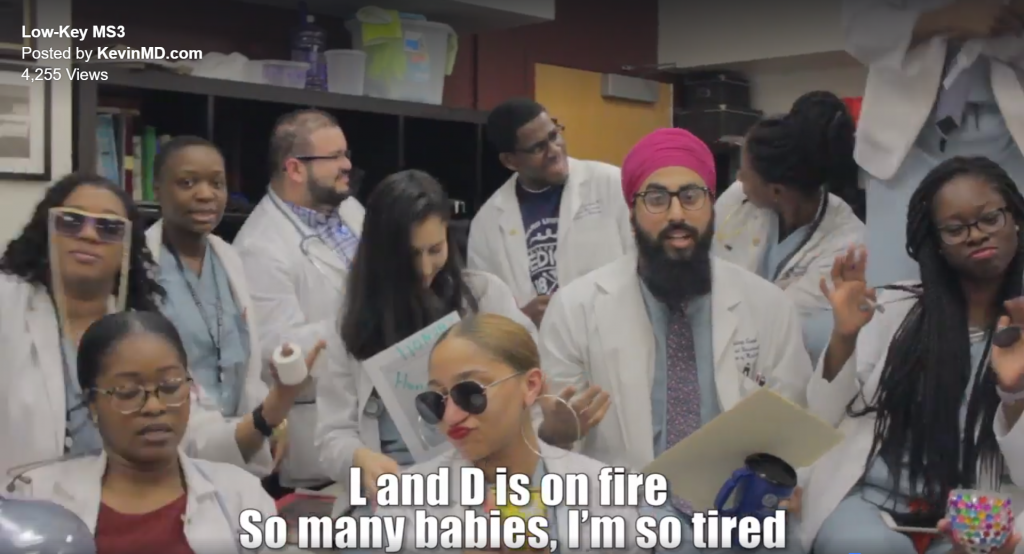
It’s nearing the end of the year. These third-year medical students celebrate with this rap video.
Jul
Every spring, medical students start to look a little different. Their eyes still carry the classic “I memorized 147 things before breakfast” stare, but there is also something else in the mix: relief. Third year is nearly done. The hospital badge has a few more scratches. The white coat has survived coffee, call rooms, and one suspiciously aggressive pen leak. And somewhere between shelf exams, pre-rounding, and learning how to look calm while secretly panicking, students realize they made it through one of the toughest stretches of medical school.
That is exactly why a rap video from third-year medical students lands so well. It is funny, sure. It is clever, rhythmic, and just self-aware enough to make classmates laugh and outsiders nod. But underneath the punch lines and swagger, it captures something real about clerkship year: the exhaustion, the bonding, the weird inside jokes, and the stubborn insistence on keeping a personality alive while training for one of the most demanding professions on earth.
The video at the center of this story, “Low Key MS3,” was created by medical students at Howard University College of Medicine. On the surface, it is a playful parody. On a deeper level, it is a tiny act of rebellion against the idea that future doctors must become robotic to become competent. That message matters. In an era when medical education talks constantly about burnout, empathy, resilience, and wellness, this kind of creativity does not feel like a side quest. It feels like part of the mission.
Why This Rap Video Works So Well
A good medical school parody video works because it is built on a simple truth: the audience does not need an explanation. Third-year students already know the language of long hours, unpredictable attendings, scrub caps, and shelf exams. They understand the small victories, like getting a smile from a resident who usually communicates in grunts, and the very large defeats, like realizing you studied the wrong topic for tomorrow’s pimp questions. A rap video turns all of that pressure into something shareable.
That transformation is powerful. Stress, when left alone, tends to grow teeth. Stress, when converted into music, humor, choreography, and collective storytelling, becomes easier to hold. Instead of being swallowed by the year, students narrate it. They shape it. They laugh at it before it gets the last laugh at them. That is not trivial. That is survival with a beat.
The best part is that the joke does not erase the seriousness of medical training. It actually highlights it. Nobody makes a parody about nothing. The reason “Low Key MS3” feels earned is because third year is intense enough to deserve its own soundtrack.
Third Year Is Where Medicine Gets Real
Clinical Rotations Change Everything
In the preclinical years, medicine can feel like an endless mountain of facts. Third year is when those facts start walking, talking, hurting, healing, and occasionally ignoring your carefully prepared differential diagnosis. Students move from lecture halls into clinical rotations, where they begin cycling through specialties, interacting with patients, and figuring out where their interests, values, and skills actually fit. It is exciting, but it is also a major identity shift.
One month you are on surgery trying to act like 5 a.m. is a normal human hour. The next month you are on pediatrics learning that children can be both adorable and terrifyingly honest. Then comes internal medicine, psychiatry, OB-GYN, family medicine, neurology, and other rotations that each seem to require a slightly different version of your brain. If medical school were a streaming series, third year would be the season where the writers clearly decided the protagonist needed more character development and less sleep.
The Stress Is Not Imaginary
There is a reason so many medical education organizations talk about third year with a mix of pride and concern. Clerkship year is not just academically difficult. It is physically demanding and emotionally loud. Students are evaluated constantly. They are trying to impress teams, absorb clinical knowledge, perform well on shelf exams, and decide which specialty may shape the rest of their lives. It is hard to feel “low key” when your whole existence feels like a rotating audition.
That pressure can be intensified by the learning environment itself. Students do not learn in a vacuum. They learn inside a culture. Supportive mentors, constructive feedback, and healthy team dynamics can help students thrive. Poor communication, high workload, mistreatment, and a chaotic emotional climate can do the opposite. When people say medical education is about more than textbooks, this is what they mean. Culture teaches too.
So when a rap video appears near the end of the year, it is not random. It is a pressure release valve. It says, “Yes, this was hard. Yes, we are still standing. And yes, we are going to rhyme about it because that is cheaper than group therapy and easier to choreograph than a collective breakdown.”
Humor Is More Than Comic Relief
Humor has always been part of medical culture, although the best version of it punches up at the system, not down at patients. That distinction matters. A parody like this works because it is about the student experience: the awkwardness, the fatigue, the uncertainty, the hustle. It creates solidarity without losing compassion.
That is one reason student-made videos often spread so quickly. They validate experience. They tell classmates, “You are not the only one who feels like clerkship year is equal parts calling, chaos, and caffeine.” In high-pressure environments, being seen is not a luxury. It is fuel.
Medical students also use humor as a way to metabolize the contradictions of training. One hour they may witness a deeply moving patient interaction. The next hour they may be googling shoe insoles that can withstand a 14-hour shift. The work is noble, but it is also messy, repetitive, and occasionally ridiculous. Humor makes room for all of that.
And frankly, medicine needs more people who can recognize absurdity without losing tenderness. A student who can laugh at the awkwardness of presenting on rounds is not less serious about patient care. In many cases, that student is building the emotional flexibility needed to stay engaged in the profession for the long haul.
Why Music and Creativity Matter in Medical Education
Art Is Not the Opposite of Science
One of the laziest myths about medicine is that science and creativity live on opposite sides of the building and do not speak. In reality, good medicine requires imagination all the time. Physicians interpret incomplete information, notice subtle patterns, tell stories that make sense of symptoms, and communicate clearly with people who may be scared, confused, or in pain. That is not just science. That is also art.
This is why arts and humanities keep showing up in conversations about medical education. Programs that incorporate music, writing, visual art, narrative medicine, and reflective practice are not trying to make doctors “cute” or “cultured.” They are trying to make them better observers, listeners, communicators, and teammates. Creativity can strengthen empathy, deepen reflection, and give students healthier ways to process what they experience.
A Rap Video Teaches More Than Rhythm
Think about what it takes to make a parody video with classmates. You need timing, collaboration, editing, shared references, and enough courage to look slightly ridiculous on camera. You also need trust. Nobody records themselves dancing in a clinical parody unless the group dynamic has at least some joy in it.
That collaborative energy matters because medicine is a team sport, not a solo recital. Students who build together often learn together more effectively too. A rap video may not appear on a shelf exam, but the skills underneath it, such as communication, listening, emotional intelligence, improvisation, and mutual support, have real value in clinical settings.
Even music itself has something to teach future physicians. Good music trains attention. It sharpens listening. It teaches pauses, rhythm, tone, and response. Those are not far from the skills required in patient encounters. Sometimes the most important part of medicine is not what a doctor says next. It is what the doctor is able to hear first.
Howard’s Mission Adds Another Layer of Meaning
This story becomes even richer when viewed through the lens of Howard University College of Medicine. Howard’s mission has long centered on preparing physicians to serve underserved communities and address health disparities. That matters because the students in the video are not performing in a vacuum. They are training inside an institution with a strong sense of purpose, history, and public responsibility.
So the celebration is not just “we survived another rotation block.” It is also a moment inside a larger tradition of service. These are future physicians being shaped not only by anatomy labs and clerkships, but also by a school culture that frames medicine as both profession and obligation. A funny video does not cancel that seriousness. It humanizes it.
In fact, that may be why the video feels so appealing. It shows that commitment to underserved communities and commitment to joy do not compete. They coexist. The students are not less mission-driven because they made a parody video. They may actually be showing one of the qualities that mission-driven medicine requires most: the ability to stay human while the work gets hard.
What This Video Says About the Future of Medical Culture
Future Doctors Need Room to Be People
There is growing recognition that medical schools cannot talk about wellness on one hand while rewarding depletion on the other. Students do not become compassionate, grounded physicians by being stripped of every personal interest that once made them interesting. They need structure, yes. Standards, absolutely. But they also need room for hobbies, reflection, art, friendship, and the occasional deeply unserious group project that keeps the whole machine from feeling soul-crushing.
That does not mean every student must start rapping in the hallway. Please, for the sake of public peace, no. It means schools should recognize that creativity is not wasted energy. It can be a meaningful form of self-care, identity preservation, and community building.
Celebration Is a Milestone, Not a Distraction
Medical education is full of formal rituals: white coats, match envelopes, graduations, oaths. But informal rituals matter too. The end of third year deserves its own kind of acknowledgment because it marks a major transition. Students have spent months learning not just diseases, but how hospitals feel, how patients grieve, how teams function, and how they themselves respond under pressure.
A rap video is a very 21st-century way to mark that milestone. It is public enough to share, personal enough to feel genuine, and funny enough to keep the sentiment from becoming syrupy. In other words, it is exactly the kind of celebration this generation would invent: half performance, half coping mechanism, all heart.
Additional Experiences That Make This Story So Relatable
Ask enough people about third year and a pattern appears. Many students remember their first day on the wards with cinematic clarity. The shoes feel too new. The badge feels too official. The hospital seems to run on a secret language no one bothered to teach in orientation. Then someone asks a question during rounds and the student gives an answer that is half medicine, half prayer. That feeling, the strange combination of ambition and terror, is part of what makes a year-end rap video so relatable. It is a victory lap for people who spent months feeling one step behind but kept showing up anyway.
There is also the emotional whiplash. Third-year students can go from delivering a polished patient presentation to eating crackers over a trash can because lunch did not happen again. They may witness a birth in the morning, a difficult diagnosis in the afternoon, and then spend the evening trying to remember antibiotic coverage while their group chat fills with memes. This constant switching between profound and absurd is one of the defining experiences of clinical training. A parody video captures that rhythm better than a formal essay ever could.
Then there is the friendship factor. Clerkship year can be isolating because schedules rarely align and everyone is being pulled in different directions. Yet students often form intense bonds precisely because the work is so demanding. The people who understand why you are thrilled about correctly placing “appendicitis” near the top of a differential are usually the same people who understand why you cried in your car after a brutal shift. Making a rap video together becomes more than entertainment. It becomes proof that the group survived the year with its sense of humor intact.
Another common experience is discovering that confidence in medicine is rarely loud. Sometimes it looks like finally speaking up on rounds without your voice wobbling. Sometimes it looks like comforting a patient even when you are nervous. Sometimes it looks like knowing when to ask for help instead of pretending to understand everything. The students in a video like “Low Key MS3” may look playful, but that playfulness often rests on hard-earned growth. They are not the same people they were at the start of the year.
And maybe that is the real magic of stories like this one. They remind us that future physicians are built not only through exams and evaluations, but through the shared culture of training: the jokes, the music, the debriefs, the mutual encouragement, the tiny celebrations after impossible weeks. By the time third year ends, students have seen enough to be humbled, learned enough to be useful, and endured enough to deserve a little noise. If that noise happens to rhyme, even better.
Conclusion
“It’s nearing the end of the year. These third-year medical students celebrate with this rap video” sounds like a light headline, and in one sense it is. The video is funny. It is catchy. It is exactly the kind of thing that makes classmates grin and non-medical friends say, “So this is what you people do instead of sleeping.” But the bigger story is about what creativity reveals. It reveals how demanding third year can be, how much students need each other, and how humor can protect humanity in a training system that often runs hot.
At its best, medical education does not ask students to choose between competence and personality. It teaches them how to build both. That is why a rap video from third-year students matters. It is not just content. It is evidence that even inside one of the hardest years of medical school, joy can still find a microphone.

