
Beauty Unlocked
It’s A Microphone And A Spring Reverb All In One
Jun
Note: This is an experimental, character-focused audio device rather than a neutral studio microphone. Its imperfections are not bugs hiding under the sofa; they are a large part of the instrument’s appeal.
“`
Modern musicians can summon a cathedral, tiled bathroom, underground tunnel, or suspiciously enormous spaceship by clicking a reverb plugin. That convenience is wonderful, but it can make us forget that artificial reverberation once involved actual vibrating objects, bulky hardware, amplifiers, and enough exposed metal to concern a reasonably cautious insurance company.
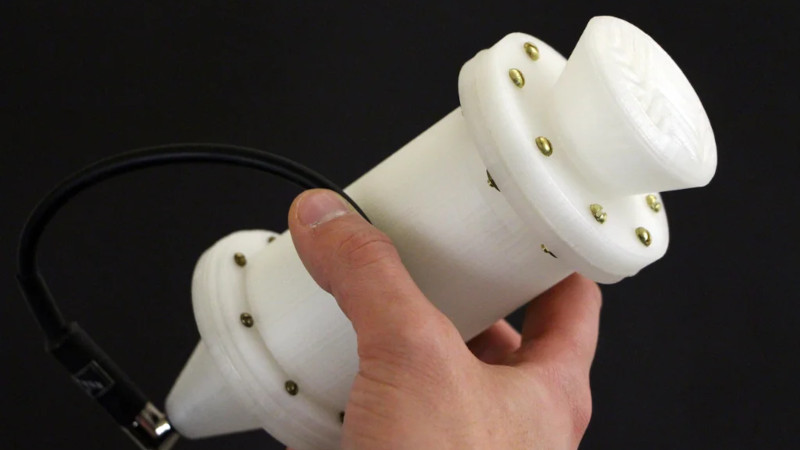
The 3D-printed spring reverb microphone created by maker Ham-made returns to that delightfully physical approach. Instead of capturing a clean voice and sending it through a separate effects processor, the microphone places a mechanical spring directly in the sound path. The user speaks into a diaphragm, the diaphragm excites a hand-wound spring, and the spring carries its complex vibrations to a piezoelectric disc that converts them into an electrical signal.
The result is part microphone, part reverb chamber, and part experimental musical instrument. It is compact, mechanically understandable, and proudly uninterested in sounding pristine. In a world full of perfect digital presets, that stubbornly analog personality is refreshing.
What Is a Spring Reverb Microphone?
A spring reverb microphone combines two jobs that are normally handled by separate devices. First, it receives airborne sound like a microphone. Second, it adds resonant coloration and reverberation using a physical spring before producing its electrical output.
A conventional microphone attempts to translate sound waves into a usable signal with as much accuracy as its design allows. Different microphone types use different transducers, but the general idea remains familiar: sound moves a diaphragm, and that movement becomes electricity.
A traditional spring reverb tank works differently. An electrical audio signal drives a transducer attached to one end of one or more springs. Mechanical waves travel along those springs, reflect, interfere, and gradually decay. A pickup transducer at the opposite end converts the motion back into an electrical signal. That processed signal is normally mixed with the original dry audio.
This experimental microphone folds those processes together. It does not need a separate loudspeaker-like driver to inject a previously recorded signal into the spring. The incoming voice or instrument moves the microphone’s diaphragm directly, and that mechanical energy travels into the spring. In other words, the spring does not receive a copy of the performance. It participates in capturing the performance from the beginning.
How the 3D-Printed Reverb Microphone Works
1. The Diaphragm Receives the Sound
When someone speaks, sings, claps, or plays an instrument near the microphone, changes in air pressure push and pull its diaphragm. This is the acoustic starting point, just as it is in a conventional microphone.
The project’s diaphragm is relatively heavy compared with the extremely light membranes used in commercial studio microphones. That extra mass limits sensitivity and high-frequency accuracy, but it also gives the device a distinctive response. It behaves less like an invisible recording window and more like a tiny resonant surface with opinions.
2. The Spring Becomes a Mechanical Delay Line
The diaphragm’s movement is transferred to a hand-wound spring mounted inside the 3D-printed body. Vibrations do not travel through the spring as a single, orderly copy of the original sound. Multiple wave modes move along the coil, reflect at its ends, interact with one another, and lose energy at different rates.
This complicated motion creates the familiar metallic splash associated with spring reverb. Sharp transients can produce a pronounced “drip” or “boing,” while sustained sounds develop a textured halo. A spring does not recreate the reflections of a real room accurately, but accuracy is not the point. It creates an artificial acoustic signature that listeners have associated with guitar amplifiers, organs, dub production, surf music, and science-fiction sound effects for decades.
3. A Piezo Disc Converts Vibration Into Electricity
At the receiving end of the spring, a piezoelectric disc acts as the pickup. Piezoelectric materials generate electrical charge when they are bent, squeezed, or otherwise mechanically stressed. The spring’s movement flexes the disc, producing a voltage that follows the vibration.
This makes a piezo element a natural choice for a mechanical microphone. It is inexpensive, compact, and sensitive to direct physical vibration. It is also responsible for some of the device’s bright, hard-edged tone. Piezo pickups rarely have ruler-flat frequency response, especially when they are attached to resonant structures. Their peaks and dips become part of the sound.
4. The Body Holds the Acoustic System Together
The microphone’s enclosure can be fabricated with a 3D printer, allowing the diaphragm, spring, piezo disc, cable connections, and threaded sections to fit into one compact assembly. Components screw together, making the design easier to open, adjust, repair, or revise.
The printed body does more than protect the internal parts. Its stiffness, wall thickness, material, and mounting points can influence how energy moves through the device. A rigid enclosure may preserve more spring vibration, while a softer or poorly supported body may absorb energy or introduce unwanted rattles. In experimental audio, even the housing joins the band whether it was invited or not.
Why Spring Reverb Has Such a Recognizable Sound
Natural reverberation occurs when sound reflects from walls, ceilings, floors, furniture, and other surfaces. The reflections arrive at different times and gradually become a dense, decaying field of sound. Our brains interpret those reflections as information about the size and character of a space.
A spring reverb creates no believable three-dimensional room. Its sound comes from waves traveling through a narrow mechanical structure. Because different frequencies and wave modes move through the spring differently, the output develops dispersion, resonant peaks, rapid fluttering reflections, and an uneven decay.
That is why spring reverb sounds metallic and lively rather than smooth and architectural. A plate reverb often produces a denser, more polished tail. A digital hall algorithm may create the illusion of a concert venue. A spring behaves like a springand does so with tremendous confidence.
The physical system is also nonlinear. A gentle input may produce a subtle resonance, while a loud transient can excite the spring much more dramatically. Tapping the enclosure, moving the microphone, or touching the spring assembly may generate additional noises that would be considered faults in a clean recording chain. In sound design, those same noises can be the best part.
What Controls the Tone?
Spring Length and Construction
A longer spring generally offers more room for mechanical waves to develop and can produce a more extended, complex decay. A short spring tends to create a tighter and more immediate effect. Wire thickness, coil diameter, material, and winding consistency also affect resonance.
A hand-wound spring will not behave exactly like a precision-manufactured reverb tank. Small irregularities create additional resonances and may make the sound less predictable. For a measurement microphone, unpredictability would be bad news. For an experimental reverb microphone, it is practically a feature request.
Spring Tension
Changing the spring’s tension alters its resonant behavior. A spring that is too loose may rattle, sag, or produce an uncontrolled low-frequency wobble. Excessive tension can shorten the decay, shift resonances upward, and reduce the dramatic splash that makes the design interesting.
An adjustable mounting system would therefore be a valuable modification. Even a small change in tension could move the microphone from a dark, floppy rumble to a bright, nervous twang.
Diaphragm Mass and Flexibility
A thinner, lighter diaphragm can respond more easily to delicate high-frequency sound, but it may not transfer enough energy into the spring. A thicker diaphragm can drive the mechanical system more strongly while sacrificing detail and sensitivity.
The ideal choice depends on the intended use. A microphone designed for whispered vocals needs different behavior from one intended for shouted phrases, hand percussion, guitar amplifiers, or theatrical sound effects.
Piezo Mounting
A piezo disc responds differently depending on where and how firmly it is attached. A rigid bond may transfer strong vibration but emphasize narrow resonances. A more flexible mounting layer may soften harsh peaks while reducing output. Position also matters because different points in the structure may contain different vibration modes.
This means the piezo should not be treated as a simple electronic component that either works or does not. It is part of the acoustic tuning system.
Connecting the Piezo Output Correctly
Piezo pickups typically behave as high-impedance sources. Plugging one directly into an input with insufficient impedance can load the element, reduce bass response, and make the signal sound thinner than the mechanical design intended.
A high-impedance instrument input, active direct box, piezo preamplifier, or suitable buffer is usually a better match than a standard low-impedance microphone input. Keeping the first cable short and shielded can also help reduce hum and noise. Once the signal has been buffered, it can travel through longer cables more reliably.
Gain staging deserves attention as well. The microphone may produce strong peaks when the enclosure is tapped or the spring is excited abruptly. Set the preamp conservatively, test with the loudest expected sound, and leave headroom. Clipping may be entertaining for five seconds and exhausting for the remaining three minutes of a recording.
Where This Analog Reverb Microphone Could Shine
Experimental Vocals
Spoken words, whispers, chants, and shouted phrases can acquire an immediate vintage-science-fiction quality. Because the reverb is created during capture, the performer can react to the resonance instead of waiting for an engineer to add an effect later.
Percussion and Foley
Handclaps, woodblocks, shakers, snaps, and small metal objects can excite the spring dramatically. Short transients reveal the structure’s decay more clearly than smooth, sustained sources. The microphone can also become a Foley prop: tapping, scraping, rotating, or gently shaking it creates sounds suitable for robots, machinery, horror scenes, and imaginary control rooms with very questionable maintenance records.
Guitar and Amplifier Recording
Placed near a small guitar amplifier, the microphone could add a rough spring character without requiring an amplifier that already contains a reverb tank. The output would not replace a conventional microphone in every mix, but it could be blended with a clean dynamic or condenser microphone to provide an unusual parallel texture.
Synthesizers and Re-Amping
Although the device is designed as a microphone, recorded tracks could be played through a loudspeaker and recaptured with it. Drum machines, monophonic synthesizers, voice samples, and electronic percussion are especially promising. This turns the microphone into a miniature mechanical re-amping processor.
Live Performance
Onstage, the device could function as both a vocal effect and a playable object. A performer might sing into it, strike its housing, or manipulate its angle and movement. Feedback would need to be managed carefully because the resonant body and high-gain piezo output can create enthusiastic squeals when placed near a loud monitor.
Advantages of Combining the Microphone and Reverb
- No digital processing is required: The effect is created through physical vibration.
- Immediate character: The signal emerges with a recognizable mechanical texture.
- Compact construction: It provides a spring-based effect without a traditional external tank.
- Repairable and modifiable: A printed, screw-together enclosure encourages experimentation.
- Performance interaction: Movement, impact, and playing technique can influence the result.
- Unique variation: Different springs, diaphragms, bodies, and piezo mounts can produce genuinely different instruments.
The biggest advantage is not convenience. A plugin is still more convenient. The advantage is physical interaction. The device has mass, inertia, resonances, and limitations that encourage performers to change how they make sound.
Limitations to Expect
This design should not be confused with a high-fidelity vocal microphone. The heavy diaphragm and mechanical transmission path are likely to reduce sensitivity and alter frequency response. Handling noise can be substantial because the piezo pickup hears vibration traveling through the body. Mechanical rattles, spring noise, hum, and resonant peaks may all appear in the recording.
The effect is also largely committed at capture. With a normal studio workflow, an engineer can record a clean signal and change the reverb later. Here, the microphone’s coloration is built into the track. That encourages decisive performances, but it can complicate mixing.
There is no simple wet/dry knob unless the design is expanded to include a separate clean capsule or the performance is recorded simultaneously with another microphone. For flexible production, pairing the spring microphone with a conventional mic is sensible. One captures clarity; the other captures the haunted plumbing.
Ideas for Improving the Design
A future version could include adjustable spring tension, interchangeable springs, and swappable diaphragm materials. Internal rubber isolation might reduce handling noise, while a sturdier cable strain relief could protect the delicate piezo connections.
An integrated high-impedance buffer would make the output easier to connect to mixers and audio interfaces. A transformer-balanced or electronically balanced output could improve noise rejection over long cables. Builders might also add a second piezo pickup at another point in the structure, creating two outputs with different resonant responses.
A particularly useful upgrade would be a dual-path system. One transducer could capture a relatively dry signal while the spring and piezo provide the mechanical effect. Separate output controls would allow the performer or engineer to blend clarity with chaos.
The enclosure itself offers another playground. Printing bodies with different wall thicknesses, materials, internal chambers, or shapes could reveal how much the housing contributes to the finished sound. Even damping materials such as foam, felt, rubber, or removable clips could function as acoustic controls.
A Practical Experience With a Spring Reverb Microphone
A first session with a device like this would begin with an important adjustment: stop expecting it to behave like a normal microphone. Place it on a stand, speak at a moderate level, and the first surprise is likely to be how strongly the device emphasizes texture over accuracy. Consonants may trigger bright metallic details, while vowels produce a shorter, cloudier resonance. The voice remains recognizable, but it sounds as though it has traveled through a small machine before reaching the recorder.
Clapping near the diaphragm is an excellent way to learn the spring’s response. Each clap sends a clear transient through the mechanism, revealing the initial attack, the metallic scattering that follows, and the point where the vibration disappears into the noise floor. Moving closer increases the direct mechanical impact. Moving farther away may create a softer, more integrated effect.
Next comes the inevitable experiment: tapping the body. A gentle fingernail tap can produce an outsized electronic “boing,” often louder than expected. A rub across the enclosure may become a deep scraping drone. Rotating the microphone while a sound decays can change how gravity, mounting pressure, and cable movement affect the spring. At this point the device stops feeling like a microphone with an effect and starts feeling like an instrument that happens to accept vocals.
Recording hand percussion is especially rewarding. A shaker creates many small transients that keep the spring continuously active, producing a bright, animated wash. A woodblock or rim click generates a sharper splash. A tambourine may become wonderfully excessive, as though every metal component has invited three additional metal components to the party.
Acoustic guitar presents a different challenge. Positioning the microphone too close to the sound hole may overload the resonant system with low-frequency energy, making the result boxy or indistinct. Moving it toward the 12th fret can produce a clearer attack with a more useful metallic tail. Blending this signal beneath a clean guitar microphone can add movement without sacrificing note definition.
Vocals reward experimentation with distance and delivery. A soft whisper may not drive the spring strongly enough unless the microphone is close and the preamp gain is high. A loud spoken phrase can create a dramatic burst of resonance. Sustained singing may produce less obvious “reverb” than expected but more tonal coloration, with certain pitches exciting the spring more strongly than others.
The most productive mindset is to record many short passes rather than force the microphone to handle an entire polished performance. Capture one whispered phrase, one shout, several taps, a few claps, and a handful of mechanical scrapes. Those fragments can be edited into transitions, layered behind clean vocals, reversed, pitch-shifted, or used as rhythmic effects.
The experience also teaches a broader lesson about analog audio. Physical systems do not offer perfect recall. A spring may settle differently, a screw may loosen slightly, or the performer may hold the body at another angle. The next take may not match the previous one exactly. That unpredictability can be inconvenient, but it can also create moments that no preset menu would have suggested.
Conclusion
The 3D-printed spring reverb microphone is a clever reminder that audio effects do not have to begin as software. By directing sound from a diaphragm through a hand-wound spring and into a piezoelectric pickup, the design turns a microphone into a compact electromechanical sound processor.
It will not replace a dependable studio microphone, a polished reverb plugin, or a professional spring tank. It offers something different: a direct relationship between sound, material, motion, and electricity. Every spring resonance, diaphragm limitation, piezo peak, and accidental rattle contributes to the output.
For builders, it is an approachable platform for testing springs, printed enclosures, piezo pickups, damping methods, and preamplifiers. For musicians and sound designers, it is a source of distinctive vocals, percussion textures, mechanical effects, and happy accidents. Most importantly, it makes reverb visible and touchable again. Sometimes the quickest route to an interesting recording is not another plugin. Sometimes it is a microphone with a spring inside, cheerfully going “boing.”

