
Beauty Tools & Accessories
How We Treat Opioid Abuse in the LGBTQ+ Community Is Changing and That’s a Good Thing
Aug
For years, opioid treatment followed a tired script: shame the patient, make them jump through flaming hoops, hand them a phone number, and act surprised when they did not come back. Thankfully, that script is being rewritten.
For LGBTQ+ people living with opioid use disorder, the change matters even more. Addiction care is no longer just about asking, “How much are you using?” The better question is, “What has made it hard to feel safe, healthy, and supportedand what would make treatment workable today?”
That may sound like a small shift in wording. In reality, it is a major change in how clinicians, treatment centers, families, and communities approach recovery. It means recognizing that LGBTQ+ people are not a single, uniform group. It means treating opioid use disorder as a health condition, not a moral failing. And it means making care easier to enter, safer to stay in, and more respectful of the full person sitting in the exam room.
Why “Opioid Abuse” Is Not the Whole Story
The phrase “opioid abuse” is still widely searched online, which is why it appears in this article’s title. But in medical settings, more precise language is usually better. “Opioid use disorder” describes a treatable medical condition involving compulsive opioid use despite harmful consequences. It does not turn a person into a label or suggest that they are somehow beyond help.
Language is not just a public-relations accessory. It shapes whether people seek care, whether families respond with support, and whether clinicians offer treatment with urgency instead of suspicion. Calling someone “an addict” can make them sound like a problem to be removed. Saying “a person with opioid use disorder” keeps the human being in the sentence. That is not political correctness with a clipboard. It is basic clinical respect.
For LGBTQ+ patients, respectful language also includes using the person’s name, pronouns, and identity accurately. Recovery is difficult enough without having to correct the receptionist, explain your relationship to your partner, or wonder whether a provider sees your gender identity as a medical issue to “fix.”
Why LGBTQ+ People May Face Distinct Opioid Risks
LGBTQ+ people are not automatically destined to develop substance use problems. Most do not. But many face stressors that can increase vulnerability, including discrimination, family rejection, bullying, violence, housing instability, employment barriers, isolation, and unequal access to mental health care.
Researchers often describe this as minority stress: the added, ongoing strain of living in a society where bias, exclusion, or danger may be part of everyday life. That stress does not “cause” opioid use disorder by itself. But it can raise the risk of anxiety, depression, trauma-related symptoms, and substance use as a way to cope, numb, sleep, socialize, or simply survive another exhausting day.
There is also no single LGBTQ+ experience. A gay man in a large city, a transgender woman facing housing discrimination, a bisexual parent in a rural community, and a nonbinary college student who is not out to family may encounter very different risks and barriers. Race, disability, immigration status, income, age, geography, and HIV status can add more layers. A one-size-fits-all program is about as useful as a raincoat made of tissue paper.
Data Gaps Still Matter
One persistent problem is that LGBTQ+ people have often been underrepresented in opioid research and poorly counted in health data. Many systems do not collect sexual orientation and gender identity information consistently, while others collect it without creating enough privacy or trust for patients to answer honestly.
Better data can help identify inequities, but data collection must be voluntary, confidential, and clearly explained. Nobody seeking help for opioid use disorder should feel forced to disclose personal information just to receive medication, counseling, or overdose-prevention supplies.
The Old Treatment Model Left Too Many People Behind
Historically, substance use treatment often relied on abstinence-only thinking, rigid program rules, long waitlists, and a suspicious attitude toward medication. Patients could be told to “come back when you are ready,” as though readiness appears like a coupon in the mailbox.
For LGBTQ+ people, the old model could be especially alienating. Some treatment environments ignored gender identity, treated sexuality as a side issue, tolerated harassment from peers, or expected patients to hide important parts of their lives. Others offered therapy without addressing the practical reasons someone might return to use: an unsafe home, untreated trauma, no transportation, unstable employment, or lack of affirming health care.
Recovery cannot flourish in an environment where people are expected to become invisible. A treatment center that offers medication but misgenders a patient all day is not providing fully competent care. A program that insists someone attend groups but ignores their fear of harassment is not removing barriers. It is repainting them.
What Is Changing in LGBTQ+ Opioid Treatment?
1. Medication Is Being Treated as Treatment, Not a Shortcut
One of the most important advances is wider recognition that medications for opioid use disorder can save lives. Methadone, buprenorphine, and naltrexone are evidence-based options used in different situations. They are not interchangeable, and the right choice depends on a person’s medical history, opioid use pattern, goals, access to care, and personal preferences.
Medication should not be framed as “replacing one drug with another.” That old line has done a remarkable amount of damage for such a flimsy sentence. Properly prescribed medication can reduce withdrawal symptoms, cravings, overdose risk, and the chaotic cycle that makes stability feel impossible.
For LGBTQ+ patients, quality care means discussing medication without judgment and without forcing a false choice between addiction treatment and other essential care. People should not have to choose between buprenorphine and gender-affirming hormones, between methadone and HIV care, or between counseling and keeping their identity private.
2. Harm Reduction Is Becoming a Front Door, Not a Side Door
Harm reduction meets people where they are and helps them stay alive long enough to have choices. It does not require a patient to promise abstinence before receiving help. It recognizes a simple truth: dead people cannot attend treatment appointments.
Practical harm-reduction services may include naloxone distribution, overdose-response education, sterile supplies for people who inject drugs, HIV and hepatitis testing, referrals for medical care, fentanyl-awareness education, and connections to medication treatment. These services can reduce immediate risks while helping people build trust with providers.
Naloxone deserves special attention. It can rapidly reverse an opioid overdose, and it should be as ordinary to discuss as a fire extinguisher. Friends, roommates, partners, family members, bar staff, outreach workers, and community organizations can all play a role. If someone is unresponsive or breathing very slowly, call 911, give naloxone if available, and stay with them until help arrives.
3. Trauma-Informed Care Is Replacing Interrogation
Trauma-informed care does not mean treating every LGBTQ+ patient as fragile or assuming everyone has the same history. It means recognizing that trauma is common, asking permission before sensitive questions, explaining what will happen next, and avoiding practices that recreate shame or loss of control.
A trauma-informed clinician might say, “You do not have to tell me anything you are not comfortable sharing today. I want to understand what support would make treatment safer for you.” That is a much better opening than treating the appointment like an airport security interview with fewer snacks.
This approach is especially important for transgender and gender-diverse patients who may have experienced discrimination in health care. Respecting names and pronouns, maintaining privacy, offering inclusive forms, and training staff are not decorative gestures. They help determine whether a person returns for their next appointment.
4. Integrated Care Is Replacing the Referral Maze
In the past, a person might be sent to one office for opioid treatment, another for depression, another for HIV prevention or treatment, another for hepatitis testing, another for primary care, and perhaps a fifth office for gender-affirming care. At some point, the health system starts to resemble a scavenger hunt designed by a villain.
Integrated care brings services together or coordinates them closely. A patient may be able to receive medication for opioid use disorder, mental health support, sexual health services, HIV care, hepatitis screening, primary care, and referrals for housing or legal support through connected providers.
This model recognizes that opioid use disorder rarely travels alone. Depression, anxiety, PTSD, chronic pain, stimulant use, alcohol use, sleep problems, HIV risk, hepatitis C, and housing insecurity may all be part of the picture. Treating only one piece is better than doing nothing, but treating the whole picture gives recovery more room to work.
5. Peer Support Is Finally Being Taken Seriously
Peer recovery specialists, community health workers, and LGBTQ+-affirming support groups can help make treatment feel less clinical and less lonely. A person who has lived through addiction, stigma, or recovery may offer practical insight that a brochure simply cannot deliver.
Peer support is not a substitute for medical care. It is a bridge: someone who can help a patient understand what to expect from medication, navigate appointments, find transportation, respond after a relapse, or walk into a meeting without feeling like they have landed on the wrong planet.
What LGBTQ+-Affirming Opioid Care Looks Like in Practice
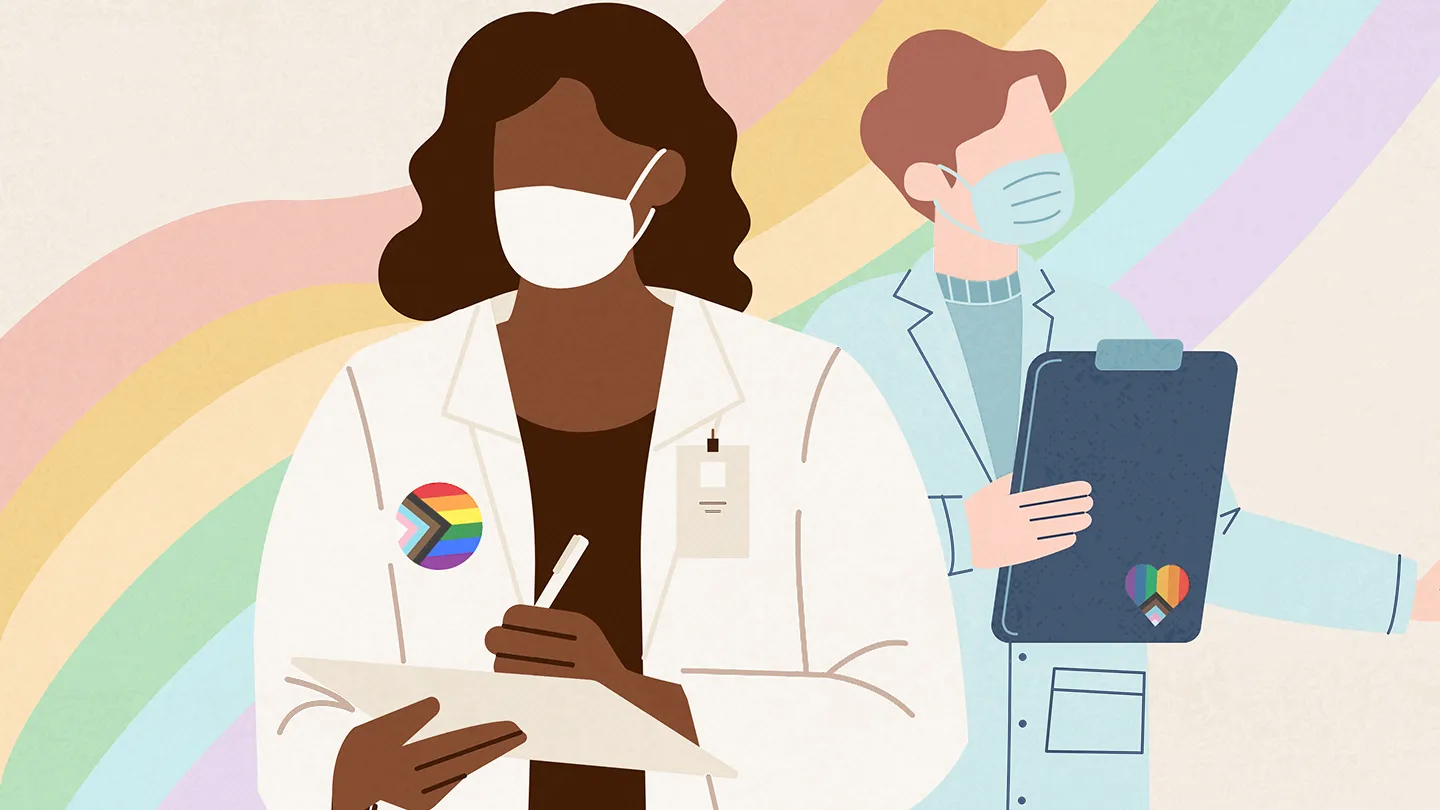
A strong program does not need rainbow stickers on every wall, although a visible sign of inclusion can help. What matters is whether the program’s everyday practices make care safer and more accessible.
- Same-day or rapid access to medication for opioid use disorder whenever possible.
- Staff who consistently use correct names and pronouns.
- Private, optional sexual orientation and gender identity questions with clear explanations of why they are asked.
- Trauma-informed screening for depression, anxiety, PTSD, and suicide risk.
- Naloxone education and distribution for patients and their support networks.
- Linkage to HIV prevention and treatment, hepatitis services, primary care, and gender-affirming care.
- Flexible scheduling, telehealth options when appropriate, and help with transportation or insurance navigation.
- Policies that address harassment, discrimination, and safety in group settings.
- Support for housing, employment, food access, and legal needs that can affect recovery.
The goal is not to build a separate universe for LGBTQ+ patients. The goal is to make mainstream opioid treatment competent enough that people do not need to search three counties away for basic dignity.
What Providers Can Do Better Right Now
Health professionals do not need to become experts in every LGBTQ+ identity overnight. They do need to be teachable, respectful, and willing to correct course. Small actions can have outsized effects.
Use Better Questions
Instead of asking, “Are you sexually active?” ask, “Do you have sexual partners, and are there any health concerns you would like to discuss?” Instead of assuming a partner’s gender, ask, “Who are the important people in your support system?” Instead of saying, “What is your real name?” ask, “What name would you like us to use?”
Do Not Make Identity the Entire Appointment
An LGBTQ+ patient may want to discuss identity-related stress. They may also want to talk about cravings, sleep, pain, medication side effects, rent, or the fact that their cat has become emotionally judgmental. Competent care makes room for the person’s identity without reducing every health concern to it.
Plan for Relapse Without Treating It as Failure
Return to opioid use can happen during recovery. It should trigger reassessment, safety planning, medication adjustments, and renewed supportnot discharge, humiliation, or a lecture that could have been printed on a coffee mug. Recovery is often nonlinear. The treatment plan should be sturdy enough to handle that reality.
What Families, Friends, and Communities Can Do
Supportive relationships can be protective, especially when someone feels isolated. Families and friends do not need perfect words. They need a willingness to stay connected.
Useful phrases include:
- “I am glad you told me.”
- “You deserve treatment that respects who you are.”
- “Let’s find options together.”
- “Would you like me to go with you to the appointment?”
- “I can learn how to use naloxone.”
Avoid threats, ultimatums, jokes about addiction, and treating someone’s identity as the source of their substance use. LGBTQ+ identity is not the problem. Stigma, trauma, isolation, and barriers to care are often much closer to the truth.
Experiences That Show Why the Shift Matters
The following examples are composite scenarios based on common barriers and treatment experiences reported in LGBTQ+ health and addiction care. They are not stories of identifiable individuals.
A Transgender Woman Gets Care Without Being Asked to Disappear
Imagine a transgender woman named Maya who has been using opioids to cope with anxiety, unstable housing, and the constant exhaustion of being treated as a debate topic by strangers. She finally visits a treatment clinic after a friend survives an overdose.
At an older-style program, Maya might have been misgendered at check-in, placed in a group where no one addressed the disrespect, and told to focus on “sobriety first” before discussing hormones, housing, or trauma. It would not take many appointments for her to decide that treatment felt like another place where she had to defend her existence.
At a better program, the front desk uses her chosen name. The intake form allows her to describe her identity in her own words. A clinician offers buprenorphine, explains how it works, asks about her goals, and helps coordinate mental health care and gender-affirming services. She receives naloxone and leaves with a follow-up appointment before the day is over.
The medication matters. The respectful language matters. The housing referral matters. None of these is “extra.” Together, they make it more likely that Maya will come back tomorrow, next week, and next month.
A Gay Man Learns That Harm Reduction Is Not a Lecture
Consider Daniel, a gay man who uses stimulants in social settings and does not think of himself as someone at risk for opioid overdose. He has never intentionally used heroin or fentanyl. But the unregulated drug supply is unpredictable, and counterfeit pills or stimulants may contain fentanyl.
In a judgment-heavy clinic, Daniel might be told to stop using drugs, avoid nightlife, and “make better choices.” That kind of advice may be technically tidy, but it does not help much at 1:00 a.m. when someone is at a party, worried about a friend, and unsure what is in a pill.
In a harm-reduction setting, Daniel can receive naloxone, learn overdose-response basics, discuss safer-use strategies, and get connected to mental health support without being forced into a label that does not fit his experience. He may later decide to reduce or stop his use. The point is that he stays alive and connected to care long enough to make that decision.
A Nonbinary Young Adult Finds a Team Instead of a Maze
Now picture Alex, a nonbinary young adult with chronic pain, depression, and a growing dependence on prescription opioids. Alex is terrified that seeking help will lead to judgment from family or a provider who treats their pronouns like optional software updates.
An integrated clinic changes the experience. Alex meets a provider who discusses pain management and opioid use disorder together, not as competing problems. A behavioral health clinician helps with depression and stress. A care navigator explains insurance options. Alex’s partner receives naloxone training. The team creates a plan that includes medication, therapy, follow-up, and clear instructions for what to do if cravings spike or opioid use returns.
None of this guarantees a perfectly smooth recovery. Real life does not come with background music and a neat final montage. But it gives Alex something that outdated systems often failed to offer: a realistic path forward that does not require abandoning identity, relationships, or dignity.
The Big Lesson: Respect Is a Clinical Tool
These experiences show why LGBTQ+-affirming opioid treatment is not a niche concern. Respect improves communication. Better communication improves trust. Trust makes it easier to start medication, disclose risks, return after a setback, and accept help before a crisis becomes fatal.
That is the direction opioid care should keep moving: less punishment, fewer hoops, more evidence, more humanity, and far more chances to survive.
Conclusion: Better Opioid Care Means More Than Better Medication
The way we treat opioid use disorder in the LGBTQ+ community is changing because it has to. Shame-based treatment, identity-blind programs, and endless referral loops have not served people well. Evidence-based medication, naloxone access, harm reduction, trauma-informed practice, peer support, and integrated LGBTQ+-affirming care offer a more practical and compassionate alternative.
The best treatment does not ask people to become less queer, less trans, less complicated, or less human before they deserve help. It meets them where they are, helps them stay alive, and supports them in building the life they want.
That is not lowering the bar. That is finally putting the bar where it belongs.

