
Makeup
How to Make Your Home the Right Place for You, According to Bobby Berk
Jul
Some people decorate a home to impress guests. Some decorate for resale value. Some decorate because they saw a beige sofa online and briefly convinced themselves that beige was a personality. Bobby Berk’s approach is different. His design philosophy is less about chasing a showroom-perfect look and more about building a home that helps you live better, think clearer, sleep deeper, and exhale like you mean it.
That is what makes his advice so refreshing. He does not start with “What’s trending?” He starts with “What makes you feel good?” That shift sounds small, but it changes everything. Suddenly, your home is not a stage set. It is a support system. It is the place that helps you recover from a rough day, focus on work, host people you love, and feel more like yourself when the outside world gets loud.
If you want to make your home the right place for you, Bobby Berk’s playbook is surprisingly practical. It is not about throwing money at a problem and hoping a designer lamp fixes your life. It is about being intentional with function, lighting, comfort, color, storage, and the little personal details that make a room feel like yours instead of a catalog page with Wi-Fi.
Why Bobby Berk’s Design Advice Resonates
Berk’s appeal is simple: he treats design like a tool, not a trophy. In his world, a well-designed home is not just attractive. It works hard. It helps reduce friction in your day. It supports your routines. It can even improve your mood. That is why his advice often connects home design with mental wellness, habits, and the emotional weight of everyday spaces.
In other words, he is not just asking whether your room looks good. He is asking whether your room is helping you. That is a much better question, and frankly, one that more coffee tables should be prepared to answer.
1. Start With What Makes You Happy, Not What Looks Expensive
Your home should reflect your life
One of Berk’s biggest ideas is that a home should be personal. Not “personal” in a cluttered-every-surface-with-random-trinkets way, but personal in a meaningful, curated, memory-rich way. The right home includes the objects, colors, and visual cues that make you feel grounded. That can be art, travel mementos, a favorite throw blanket, framed photos, handmade pottery, books you actually read, or even a rock from a beach trip that still makes you smile.
This is a helpful antidote to trend fatigue. You do not need your living room to look like it was approved by five influencers and one algorithm. You need it to feel right when you walk into it. That means choosing pieces that tell your story instead of blindly copying someone else’s. Berk’s style advice keeps coming back to the same truth: your home works best when it reflects what makes you tick.
So before buying anything, ask a few better questions. What places calm you down? What colors make you breathe easier? What textures make a room feel comfortable? What kind of evenings do you want to have at home? If your answers point toward soft lighting, warm woods, and a giant reading chair, congratulations: that is your design direction. No mood board certification required.
2. Declutter First, Because Chaos Is Loud
Small wins matter more than dramatic overhauls
Berk often emphasizes that organization is one of the best places to start. That is not glamorous advice, but it is extremely useful. It is hard to create a peaceful home when every horizontal surface looks like it is hosting a garage sale. Clutter creates visual stress, decision fatigue, and a nagging sense that you are always behind.
The trick is not to declare war on your entire house in one weekend. That usually ends with one cleaned drawer, three piles on the floor, and a sudden need to “take a break” that somehow lasts until next month. Berk’s approach is smarter: start small. Make the bed. Clear one nightstand. Organize one shelf. Replace a mismatched set of kitchen basics that make the room feel messy. Edit the worn-out furniture that no longer earns its keep.
Those little wins change the emotional tone of a home. They make it easier to move through your day without tiny annoyances ambushing you from every corner. A functional home is not one with zero stuff. It is one where the stuff is serving you instead of heckling you.
3. Treat Lighting Like Mood Architecture
One overhead light is not a personality
If there is one part of home design people consistently underestimate, it is lighting. Berk does not underestimate it at all. He treats lighting as one of the most powerful tools in a home because it affects everything from focus to relaxation to sleep quality.
His advice is clear: layer your lighting. Do not rely on a single ceiling fixture that makes the room feel like an interrogation scene. Combine overhead light with table lamps, floor lamps, sconces, accent lighting, and dimmers. Spread light around the room so it feels balanced. Mix heights, materials, and bulb types so the space feels warm, flexible, and lived in.
Warm bulbs help create a softer atmosphere, especially in the evening. Dimmers help your body transition out of “go mode” and into “please stop emailing me mode.” Smart plugs and smart bulbs can also help automate mood and routine without tearing open your walls or your budget. That is classic Bobby Berk: high impact, low drama.
Lighting is also emotional. A room with thoughtful lighting feels safer, calmer, and more flattering. A room with one harsh fixture overhead feels like it is disappointed in you. Choose wisely.
4. Design for All Five Senses, Not Just the Camera
A great home should feel good, not just photograph well
Berk’s broader philosophy goes beyond what you see. He often talks about design in a more sensory way, and that is where his advice becomes especially smart. The right home is not just visually pleasing. It supports how you feel in your body.
That might mean a bedroom with soft bedding, blackout curtains, and a calming scent. It might mean playing ocean sounds at night if that helps you unwind. It might mean adding plants, because they bring life and freshness to a room. It might mean displaying objects that connect you to happy memories. It might mean choosing weighted textiles, layered fabrics, or natural materials that make a room feel more grounded and less sterile.
This is an especially useful reminder in the social media era. A room can look fantastic online and still feel cold in real life. Berk’s advice pushes back against that. He wants a home to support daily living, not just occasional posting.
5. Let Function Boss the Room Around
Design should support the life you actually live
Another recurring Bobby Berk principle is that function comes first. If a room is beautiful but inconvenient, it is not done. The best design choices reduce friction. They make everyday routines easier. They turn a home into a place that works with you instead of against you.
That means creating a dedicated work zone if you work from home, even if it is just a small corner with good support, focused lighting, and fewer distractions. It means using storage pieces that do double duty. A coffee table can become seating. A storage cube can hide clutter and still be useful. Hooks can create extra organization where square footage is tight. In a small home, every piece needs a job, and the overachievers get promoted.
Berk is also a fan of thoughtful layouts. Furniture should encourage conversation, movement, and comfort. In social spaces, that means creating intimate groupings rather than scattering seating like awkward party guests. In highly used rooms, it means thinking about how people move, sit, work, cook, and rest. In short: if you have to fight the room every day, the room needs a redesign.
6. Turn the Bedroom Into a Recharge Zone
Sleep-friendly design is not indulgent; it is useful
Berk has been especially vocal about bedrooms because they play such a direct role in health and mental well-being. His message is simple: sleep is not a luxury reward for finishing your to-do list. It is a basic need, and your bedroom should be designed accordingly.
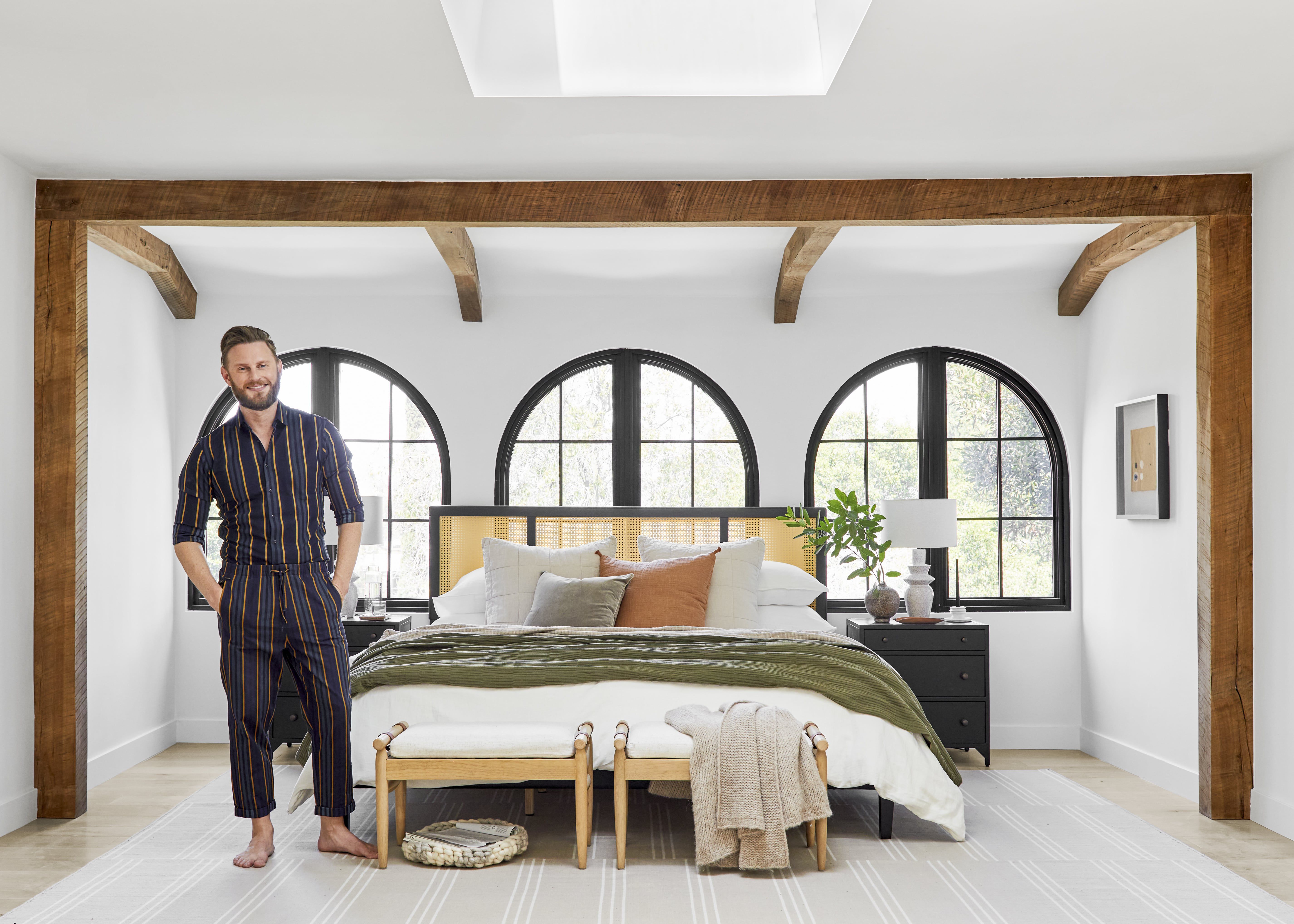
That means making the room calmer, quieter, and less visually noisy. Start with color. Many people respond well to soothing shades like blue, green, cream, camel, and other muted tones, though Berk also makes the point that color is personal. What matters is choosing shades that help you relax instead of revving up your nervous system.
Then consider lighting. In the evening, dim the room. Use lamps instead of bright overhead lights. Reduce blue-light exposure where possible. Add soft, tactile layers to the bed. If your mattress is past its prime, upgrade it. Good bedding and good towels may sound like small luxuries, but Berk often frames them as quality-of-life investments. He is right. Few things improve a home faster than items you touch every day actually feeling good.
7. Use Color and Texture to Build Mood
Neutral does not have to mean boring
One thing Bobby Berk does particularly well is balancing calm with character. He often works with neutral foundations, then adds interest through texture, warmth, contrast, and materials. That means light wood cabinetry, darker counters with movement, woven details, layered fabrics, matte finishes, and natural fibers that keep a room from feeling flat.
If you love color, use it intentionally. Paint remains one of the biggest high-impact, lower-cost tools in design. Berk has pointed out that it can add character fast, whether through murals, trim in a slightly darker shade, or a cohesive palette that ties the home together. And if your space is small, avoid breaking it up too aggressively. A more consistent design language across rooms can make a home feel larger, calmer, and more cohesive.
Texture matters just as much as color. When you layer wood, linen, cotton, metal, paper, glass, stone, and woven pieces together, the room feels more finished and more human. It also keeps a neutral palette from turning into a yawn.
8. Take Your Time and Let the Home Evolve
The right home is collected, not rushed
Berk has also given one piece of advice that should be engraved on the wall of every newly moved-in apartment: your home does not need to be perfect immediately. A good room is often built over time. You collect pieces you love. You figure out what works. You learn what you need more of and what you never use. You edit. You refine.
That matters because rushed decorating often produces expensive regret. When you panic-buy everything in stock just to “finish” a room, you usually end up with a space that is technically furnished but emotionally dead. Berk encourages a slower, more thoughtful approach. Invest in what you love. Let the house tell you what it needs. Leave room for personality to develop.
A home that evolves with you will almost always feel richer than one assembled in a single frantic weekend fueled by takeout and unrealistic optimism.
Conclusion: Home Should Feel Like Relief
The most useful thing Bobby Berk teaches is that home design is not about status. It is about support. Your home should help you rest, function, focus, host, work, heal, and feel like yourself. That means starting with happiness, editing what adds stress, using lighting with intention, designing around real life, and choosing details that actually make your days better.
You do not need a huge budget, a celebrity contractor, or a suspiciously pristine living room to get there. You need clarity. You need honesty about how you live. And you need the confidence to make your space feel like you, even if that means your favorite decorative object is a lopsided ceramic mug from a weekend trip instead of something labeled “artisan” with an alarming price tag.
In Bobby Berk’s world, the right home is not the most impressive one. It is the one that recharges you. And honestly, that sounds a lot better than owning a couch nobody is allowed to sit on.
Related Experiences: What This Looks Like in Real Life
In real homes, Bobby Berk’s advice often lands because it solves problems people feel every day but do not always know how to name. Take the person working from a dining table under one blinding ceiling light. They may think they need a bigger home, when what they really need is a defined work corner, a supportive chair, a lamp with softer light, and a simple storage basket to keep paperwork from colonizing the whole room. The home feels better not because it got larger, but because it got smarter.
Or think about the renter who keeps buying trendy decor but still feels unsettled. The room looks fine, technically. The issue is that nothing in it says anything about them. Once they swap generic prints for framed photos, put out books they love, add a throw from a meaningful trip, and choose colors that feel familiar, the apartment suddenly stops feeling temporary. It becomes a place with emotional gravity. That shift is hard to measure, but easy to feel.
Families experience this too. A busy household can feel chaotic even when everyone means well. Backpacks pile up, shoes migrate, the kitchen counter disappears under paperwork, and by Thursday everyone is acting like the house personally offended them. Berk’s kind of thinking helps because it favors systems over perfection: hooks by the door, double-duty storage, a better landing zone for daily clutter, more comfortable seating, warmer light in the evening, and rooms arranged around how the family actually moves through the day. Suddenly the house is not fighting back so much.
Small-space living may be where this philosophy shines brightest. In a studio or compact apartment, every item needs to contribute. People who live well in smaller homes often describe the same lesson: when furniture is proportional, storage is built in, lighting is layered, and the palette is cohesive, the home feels calmer and more spacious. When every piece is random, oversized, or purely decorative, the room feels crowded and cranky. Berk’s advice respects the fact that beauty and practicality have to be roommates.
There is also an emotional layer to all of this. People going through stress, grief, burnout, or major life changes often discover that home becomes more important, not less. A soothing bedroom, a chair in the right corner, a less cluttered entryway, or a familiar scent at night can make a difficult season feel more manageable. That does not mean design fixes everything. It means your environment can either add friction or offer relief. Bobby Berk’s core message is that relief is worth designing for.
That is why his advice sticks. It is not really about furniture. It is about making daily life softer around the edges. It is about creating a place that welcomes you back, supports your routines, and reminds you that comfort is not laziness and function is not boring. A home can be stylish, personal, and practical at the same time. In fact, that is usually when it is at its best.
SEO Tags

