
Beauty Unlocked
How to Make Pennsylvania Dutch Style Red Beet Eggs
Aug
Note: This recipe is for refrigerator-style Pennsylvania Dutch red beet eggs, not shelf-stable canned pickled eggs. Keep them cold, use clean jars, and do not store them at room temperature unless you are actively serving them.
Introduction: The Pink Egg That Steals the Picnic
If you have ever opened a refrigerator in Pennsylvania Dutch country and found a jar of purple-red eggs staring back like tiny pickled moons, congratulations: you have met red beet eggs. Also called pickled red beet eggs, Pennsylvania Dutch pickled eggs, or beet-pickled eggs, this classic dish turns simple hard-boiled eggs into a sweet, tangy, jewel-toned snack that looks fancy even when it was made with a can opener and a saucepan.
Pennsylvania Dutch style red beet eggs are beloved because they are practical, affordable, colorful, and strangely addictive. The basic idea is simple: hard-boiled eggs are peeled and soaked in a brine made from beet juice, vinegar, sugar, salt, and sometimes spices like cloves, cinnamon, allspice, peppercorns, or bay leaf. The beets stain the egg whites a vivid pink or magenta, while the vinegar and sugar give the eggs that signature sweet-and-sour flavor. It is the kind of recipe that says, “I am humble,” while showing up to the table wearing a hot-pink suit.
This guide explains how to make Pennsylvania Dutch style red beet eggs at home, how long to marinate them, what ingredients matter most, how to adjust the flavor, and how to serve them without making your guests wonder whether Easter eggs have joined a gym and developed an attitude.
What Are Pennsylvania Dutch Red Beet Eggs?
Pennsylvania Dutch red beet eggs are hard-boiled eggs marinated with red beets and a sweet-tangy vinegar brine. The dish is closely associated with Pennsylvania Dutch and Amish-style cooking, especially in parts of Pennsylvania where simple, make-ahead foods are part of everyday family tables, holiday meals, covered-dish suppers, picnics, and church gatherings.
The name “Pennsylvania Dutch” can be a little confusing. It does not mean Dutch from the Netherlands. It refers largely to German-speaking settlers and their descendants in Pennsylvania. Their cooking traditions often favor resourceful ingredients, preserved foods, hearty sides, and recipes that stretch well for family meals. Red beet eggs fit that personality perfectly: they use eggs, beets, vinegar, sugar, and salt to create something bright, flavorful, and ready when hunger walks through the kitchen door.
The flavor is not aggressively sour like a sharp dill pickle. Traditional red beet eggs usually lean sweet and tangy, with earthy beet flavor and a gentle vinegar bite. Some families add onion. Some swear by cloves and cinnamon. Some keep it plain with beets, vinegar, sugar, and salt. In other words, every family recipe is “the real one,” which is how you know you are dealing with comfort food.
Ingredients for Pennsylvania Dutch Style Red Beet Eggs
Main Ingredients
- 12 large eggs: Hard-boiled, cooled, and peeled.
- 2 cans sliced or whole red beets, 15 ounces each: Reserve the beet juice. You can also use cooked fresh beets.
- 1 cup apple cider vinegar: Gives the brine its tangy backbone.
- 3/4 cup granulated sugar: Creates the traditional sweet-and-sour balance.
- 1/2 cup water: Softens the vinegar and helps create enough brine.
- 1 teaspoon kosher salt: Rounds out the flavor.
- 1 small yellow or sweet onion, thinly sliced: Optional but highly recommended.
Optional Spices
- 6 whole cloves
- 1 small cinnamon stick
- 6 black peppercorns
- 3 allspice berries
- 1 small bay leaf
Spices are where the recipe becomes personal. Cloves and cinnamon give red beet eggs an old-fashioned Pennsylvania Dutch flavor. Peppercorns add mild warmth. Allspice gives a holiday-table aroma. Bay leaf adds depth without shouting. If you prefer a cleaner beet-and-vinegar taste, skip the spices. The eggs will still be delicious, and nobody will call the pickle police.
Equipment You Need
- A medium saucepan
- A large pot for boiling or steaming eggs
- A slotted spoon
- A large clean glass jar or covered glass container
- A cutting board and knife
- Measuring cups and spoons
Glass is the best container because beet brine is bold, dramatic, and not shy about staining plastic. If you use plastic, choose one you do not mind turning into “the beet container” forever.
How to Make Pennsylvania Dutch Style Red Beet Eggs
Step 1: Cook the Eggs
Place the eggs in a pot and cover them with water by about 1 inch. Bring the water to a boil, then turn off the heat, cover the pot, and let the eggs sit for 10 to 12 minutes. Transfer them to an ice bath and cool completely before peeling.
For easier peeling, use eggs that are not brand-new. Very fresh eggs often cling to their shells like they are signing a long-term lease. Cooling the eggs in ice water also helps separate the shell from the egg white.
Step 2: Prepare the Beets
Drain the canned beets and reserve the beet juice. If using whole beets, slice them into bite-size pieces. If using fresh beets, cook them until tender, peel them, slice them, and save some of the cooking liquid to help color the brine.
Canned beets are traditional in many home kitchens because they are convenient, consistent, and already tender. Fresh beets give a deeper earthy flavor, but they add extra cooking time. Both options work well.
Step 3: Make the Sweet-and-Sour Beet Brine
In a medium saucepan, combine the reserved beet juice, apple cider vinegar, water, sugar, salt, and optional spices. Warm the mixture over medium heat, stirring until the sugar dissolves. Bring it just to a gentle simmer, then turn off the heat.
You do not need to boil the brine aggressively. The goal is to dissolve the sugar and wake up the spices. A gentle simmer is enough. Think warm bath, not volcano.
Step 4: Layer the Eggs, Beets, and Onion
Place a layer of peeled hard-boiled eggs in the bottom of a clean glass jar. Add some sliced beets and onion. Continue layering until everything is in the jar. Pour the warm brine over the eggs and beets, making sure the eggs are fully submerged.
If the eggs float, press them down gently with a clean spoon. You can also add a few extra beet slices on top to help keep them covered. Full contact with the brine gives better color and flavor.
Step 5: Cool, Cover, and Refrigerate
Let the jar cool slightly at room temperature, then cover it and place it in the refrigerator. Do not leave the eggs out for long. Pennsylvania Dutch style red beet eggs are refrigerator pickles, which means the refrigerator is not optional decoration. It is part of the recipe.
Step 6: Wait for the Color and Flavor
The eggs will begin turning pink within a few hours. After 24 hours, they will have a bright outer ring and a mild pickled flavor. After 48 hours, the color deepens and the flavor becomes more balanced. After 3 days, the eggs are usually at their best: tangy, sweet, earthy, and beautifully stained.
If you slice one too early, no shame. It is called quality control. Just know that the longer they rest, the more dramatic the color becomes.
Best Recipe Ratio for Red Beet Eggs
A reliable Pennsylvania Dutch style brine ratio is:
- 1 cup beet juice
- 1 cup vinegar
- 1/2 cup water
- 1/2 to 3/4 cup sugar
- 1 teaspoon salt
Use less sugar if you prefer sharper pickled eggs. Use more sugar if you want the classic sweet-and-sour flavor often found at family gatherings and holiday tables. Apple cider vinegar gives a rounder, fruitier tang, while white vinegar creates a cleaner, sharper bite.
How Long Do Red Beet Eggs Need to Pickle?
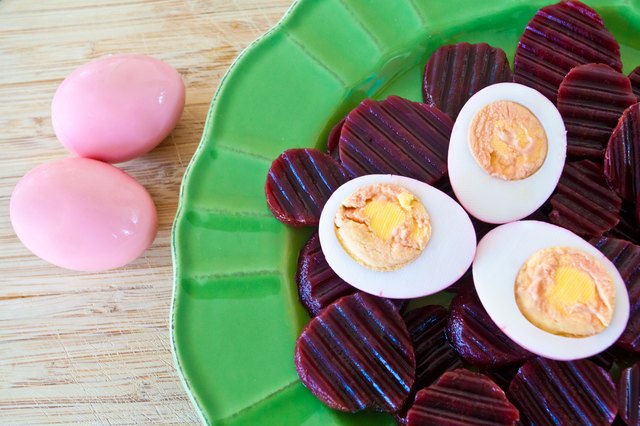
For good flavor, refrigerate red beet eggs for at least 24 hours. For better flavor, wait 48 hours. For the best Pennsylvania Dutch style red beet eggs, wait about 3 days. The egg whites will turn pink first, then the color slowly moves inward. The yolks usually stay yellow, creating a beautiful contrast when sliced.
After several days, the texture can become firmer. Some people love that dense pickled-egg bite. Others prefer the eggs at the 2- to 3-day mark when they are flavorful but still tender. Try one each day and call it research. Delicious, purple research.
Flavor Variations
Classic Pennsylvania Dutch Style
Use apple cider vinegar, sugar, salt, beet juice, sliced beets, onions, cloves, and a cinnamon stick. This version is sweet, tangy, warmly spiced, and perfect for Easter, picnics, and potlucks.
Simple Lancaster-Style Red Beet Eggs
Use only eggs, beets, beet juice, vinegar, sugar, and salt. This version is clean, bright, and easy. It lets the beet flavor shine without spice cabinet drama.
Less Sweet Version
Reduce the sugar to 1/3 cup. The result is tangier and more pickle-forward. This is a good option if you plan to serve the eggs with rich foods like potato salad, ham, smoked sausage, or deviled egg filling.
Spicy Beet Pickled Eggs
Add a sliced jalapeño, crushed red pepper flakes, or a few garlic cloves to the jar. This is not the most traditional version, but it is excellent for snack boards and people who believe every recipe deserves a little mischief.
How to Serve Pennsylvania Dutch Red Beet Eggs
Red beet eggs are excellent straight from the jar, sliced in half with a pinch of salt and black pepper. They also fit beautifully into meals where you want color, acidity, and protein.
- Serve them beside ham, roast chicken, or smoked sausage.
- Add sliced red beet eggs to a salad with greens, bacon, onions, and a mustard vinaigrette.
- Place them on a relish tray with pickles, olives, cheese cubes, and crackers.
- Chop them into egg salad for a pink twist.
- Turn them into beet-pickled deviled eggs for a party appetizer.
- Serve with potato salad at a cookout.
- Pack them as a protein-rich snack for lunch.
They are especially popular around Easter because they are colorful and make great use of hard-boiled eggs. But honestly, limiting red beet eggs to Easter is like only eating pie on your birthday. Technically possible, emotionally suspicious.
Common Mistakes to Avoid
Using Warm Eggs in the Jar
Let the eggs cool before peeling and layering. Warm eggs are more delicate and may tear, which can make the finished eggs look rough.
Not Covering the Eggs Completely
Eggs need to stay submerged in brine for even color and flavor. If part of an egg sticks out, it may stay pale and taste less seasoned.
Skipping the Refrigerator
Homemade red beet eggs should be refrigerated. They are not shelf-stable just because vinegar is involved. Treat them like a perishable food.
Expecting Instant Flavor
Red beet eggs improve with time. If you taste one after two hours and feel underwhelmed, relax. The brine has barely introduced itself.
Using Too Much Spice
Cloves and cinnamon can dominate quickly. Start small. You want warm spice, not an egg that tastes like it got lost in a Christmas candle shop.
Storage and Food Safety Tips
Store Pennsylvania Dutch style red beet eggs in a covered container in the refrigerator. Keep the eggs fully submerged in brine and use clean utensils when removing them from the jar. Do not return half-eaten eggs to the brine. That is not rustic; that is chaos in a jar.
For home kitchens, the safest habit is to enjoy red beet eggs within about a week, especially when serving family, guests, or anyone with a sensitive immune system. Always discard the batch if it smells off, looks fizzy, develops mold, or has been left out too long.
Why This Recipe Works
This recipe works because it balances four important elements: acidity, sweetness, salt, and color. Vinegar gives the eggs brightness. Sugar softens the vinegar’s sharp edge. Salt keeps the flavor from tasting flat. Beet juice brings earthiness and that unmistakable pink-red color.
The eggs themselves are mild, so they absorb flavor slowly. That is why resting time matters. A freshly boiled egg dropped into beet brine is still mostly just an egg wearing pink socks. After two or three days, it becomes a real red beet egg: tangy at the edges, creamy in the middle, and bold enough to brighten any plate.
Personal Experience: What Making Red Beet Eggs Teaches You
Making Pennsylvania Dutch style red beet eggs is one of those kitchen projects that feels almost too easy at first. You boil eggs, heat brine, pour, chill, and wait. There is no complicated dough, no candy thermometer, no dramatic moment where butter must be “cold but emotionally available.” Yet the result feels special. A plain egg becomes something colorful, flavorful, and memorable.
The first experience many people have with red beet eggs is visual. You open the jar and see that shocking pink-purple color, and your brain needs a second. It is not the gentle pastel of dyed Easter eggs. It is bold. It looks like the egg has been pickled by a sunset. When sliced, the white has a pink ring and the yolk stays golden, which makes the whole thing look more impressive than the effort required.
The second experience is patience. Red beet eggs teach you that some foods are better when left alone. On day one, they are pretty good. On day two, they are better. On day three, they taste like they finally read the assignment. The vinegar softens, the sugar settles, the beet flavor spreads, and the egg becomes balanced. That waiting period is part of the charm. It is a small reminder that not every recipe needs to sprint from pan to plate.
The third experience is family variation. Ask five people from Pennsylvania Dutch country how to make red beet eggs and you may get six opinions. One person adds cloves. Another insists cloves ruin everything. One uses white vinegar. Another uses cider vinegar. Someone’s grandmother used canned beets because she had things to do. Someone else roasts fresh beets because they enjoy scrubbing magenta fingerprints from their cutting board. None of these versions are wrong. They are all part of the dish’s personality.
Red beet eggs are also a lesson in serving simple food confidently. Put plain boiled eggs on a table and people may nod politely. Put red beet eggs on a platter and suddenly everyone has questions. “How long did they soak?” “Are they sweet?” “Why are they that color?” “Can I have another one?” This is the magic of traditional food: it starts conversation without needing fancy ingredients.
For the best experience, make them before you need them. Prepare a jar two or three days ahead of a picnic, Easter meal, barbecue, or Sunday supper. Slice them just before serving, sprinkle with black pepper, and place a few beet slices beside them. The plate will look cheerful, nostalgic, and slightly dramaticin the best way.
And if someone at the table says they are not sure about pickled eggs, offer them half of one. Red beet eggs have a way of converting skeptics. They are not harsh, not fussy, and not trying to be trendy. They are simply sweet, tangy, colorful, and satisfying. In a world full of complicated appetizers, that is refreshing. Also, they make your refrigerator look like it contains a jar of edible rubies, which is never a bad thing.
Conclusion
Pennsylvania Dutch style red beet eggs are proof that simple ingredients can create unforgettable food. With hard-boiled eggs, beets, vinegar, sugar, salt, and a little patience, you can make a bright, tangy, sweet-and-sour classic that belongs on picnic tables, holiday spreads, lunch plates, and midnight snack missions.
The key is balance. Use enough vinegar for tang, enough sugar for traditional sweetness, enough salt for depth, and enough time in the refrigerator for the beet brine to work its colorful magic. Whether you prefer the classic spiced version or a clean, simple beet-and-vinegar style, this recipe is easy to customize and even easier to love.
Make a jar, wait a couple of days, slice one open, and enjoy the tiny kitchen miracle: an ordinary egg transformed into a Pennsylvania Dutch favorite with a color loud enough to have its own marching band.

